English
Custom Automated Roll Forming Lines & Coil Processing Equipment
Professional Customization · Full-line Integration · Global Industrial Service
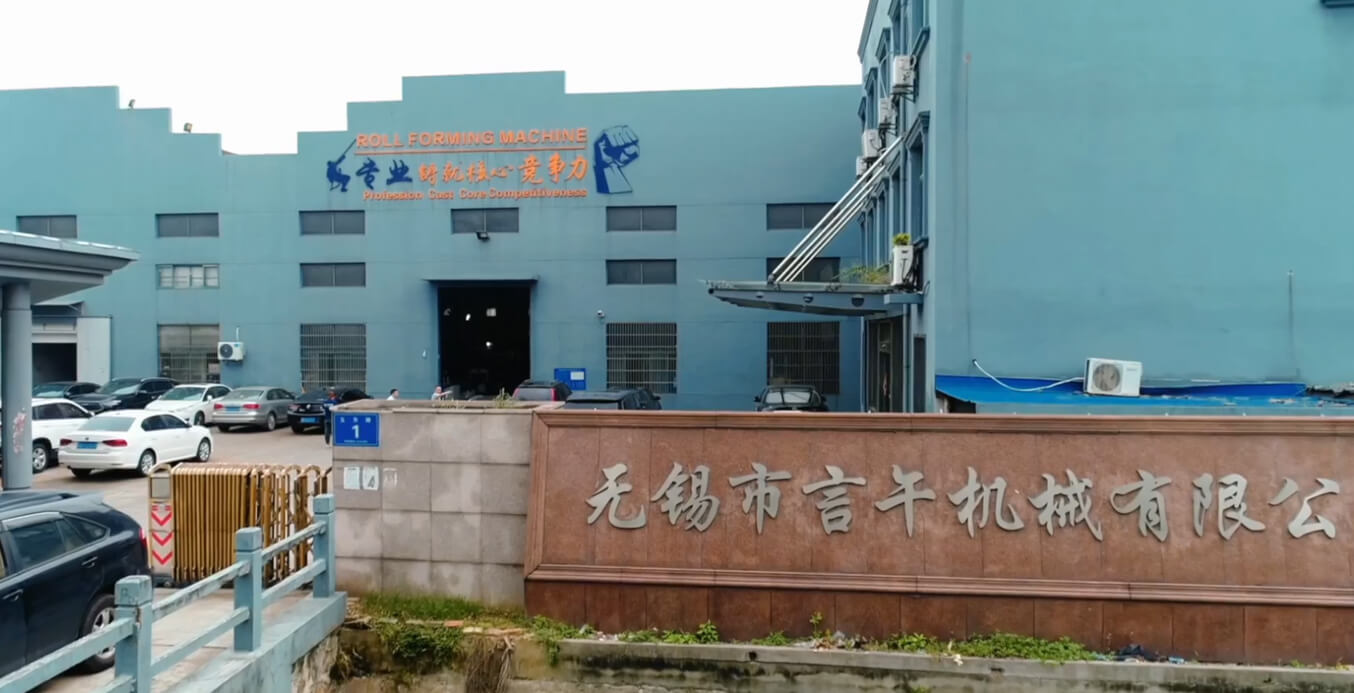
Established in 2012, Wuxi Yanwu Machinery Co., Ltd., is a professional manufacturer specializing in the R&D, design, manufacturing, and servicing of cold roll forming equipment. The company is dedicated to providing global customers with integrated solutions for automated cold roll forming production lines.
Our main products include cable tray forming machines, racking forming machines, C/Z purlin machines, solar mounting bracket forming machines, floor deck machines, door frame machines, automotive profile equipment, and cut-to-length/slitting lines.
These products are widely used in the construction, electrical power, logistics and warehousing, automotive manufacturing, new energy, and infrastructure sectors.



I. Equipment Overview
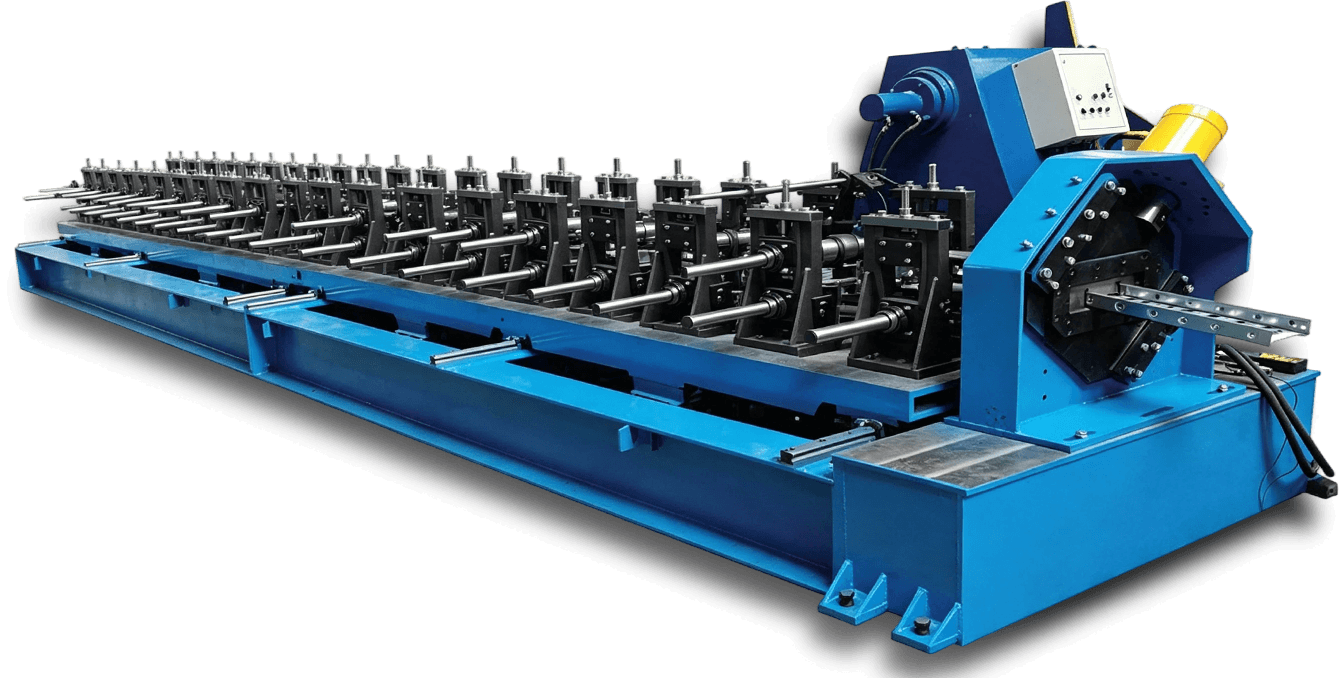
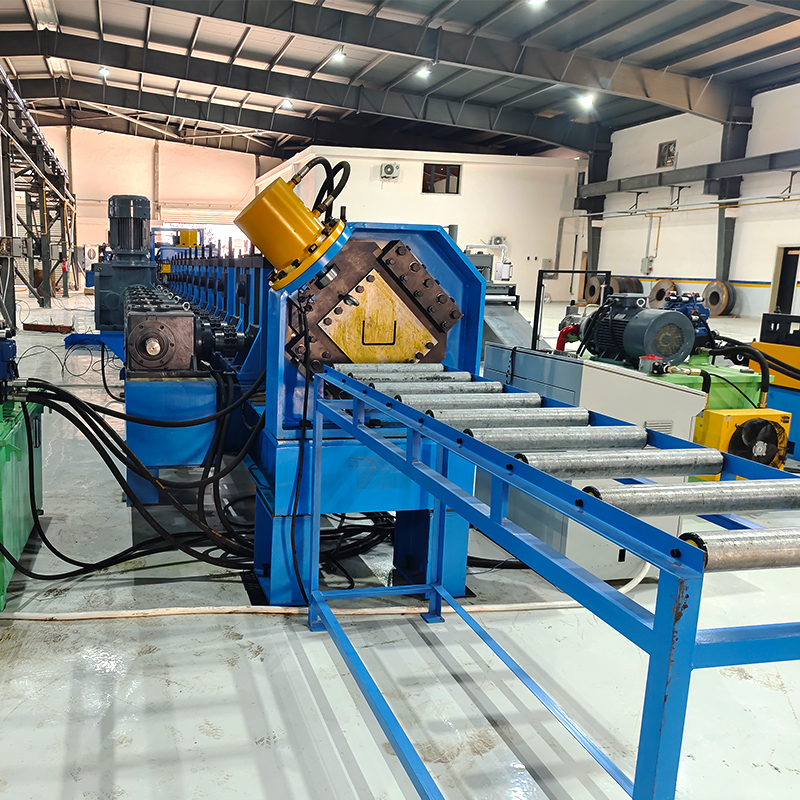
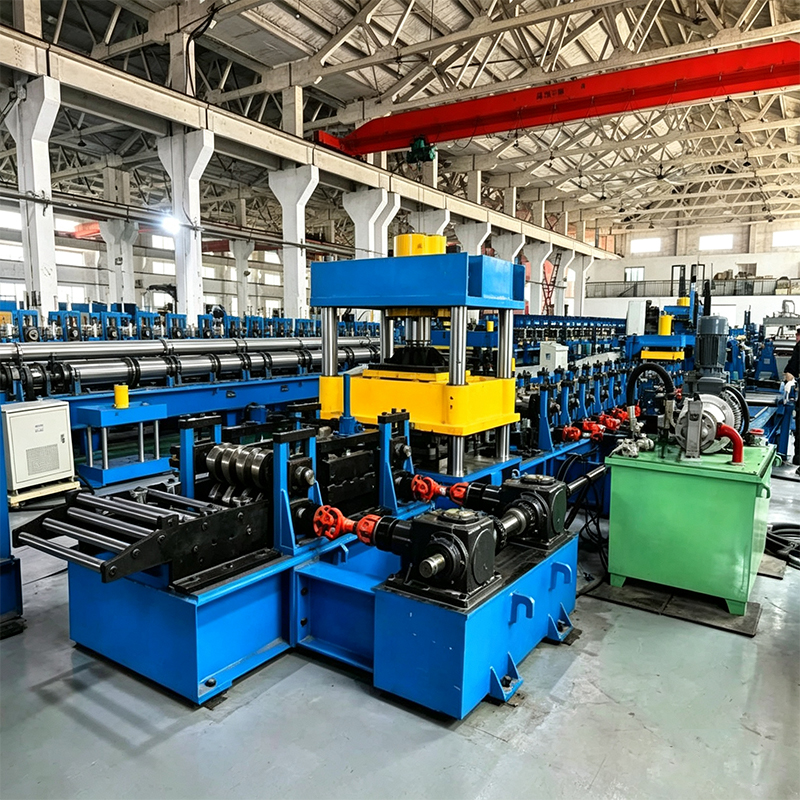
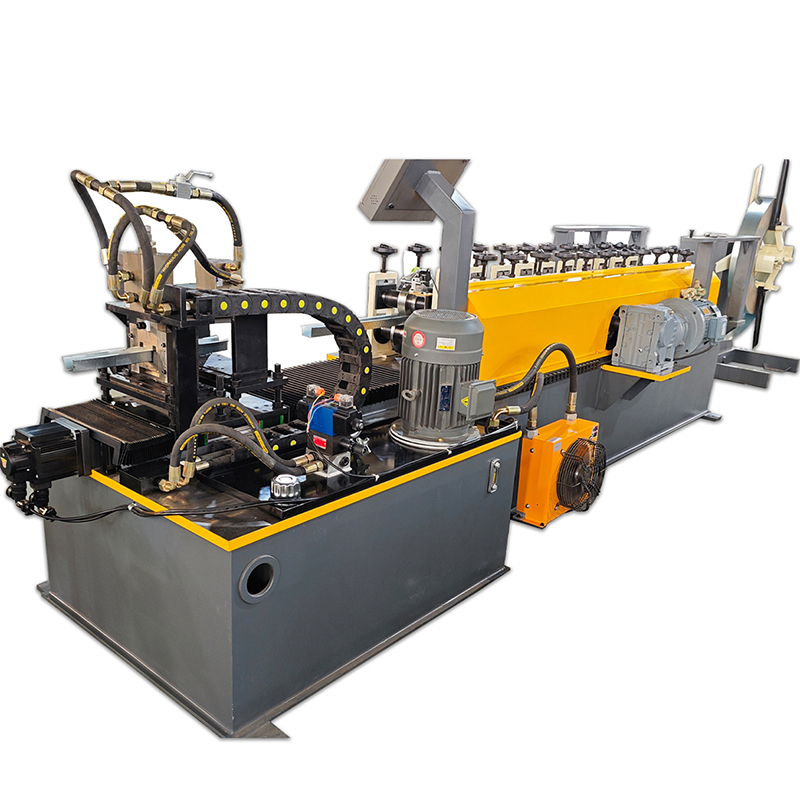
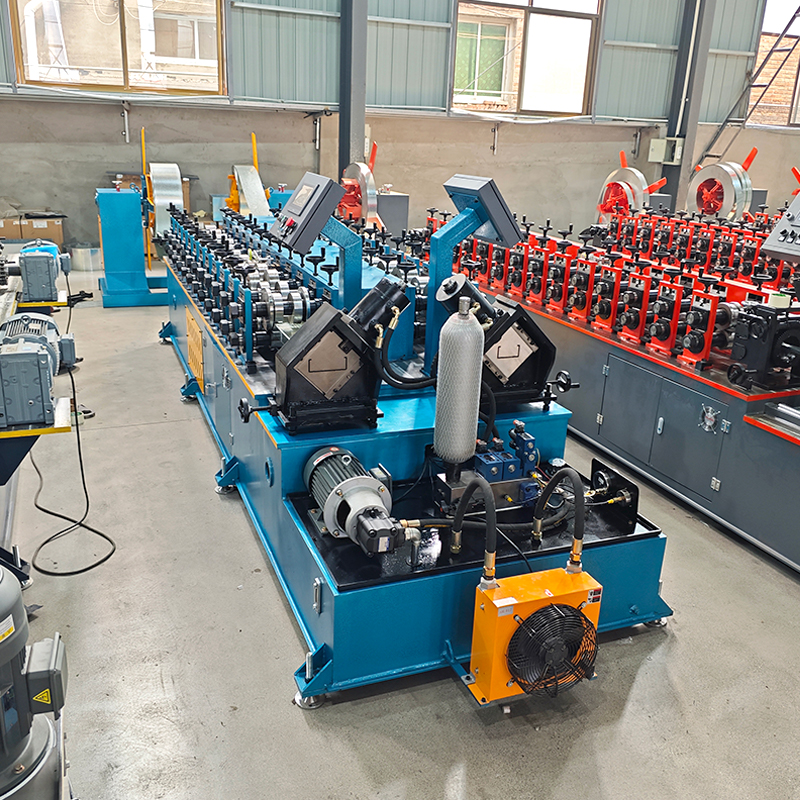
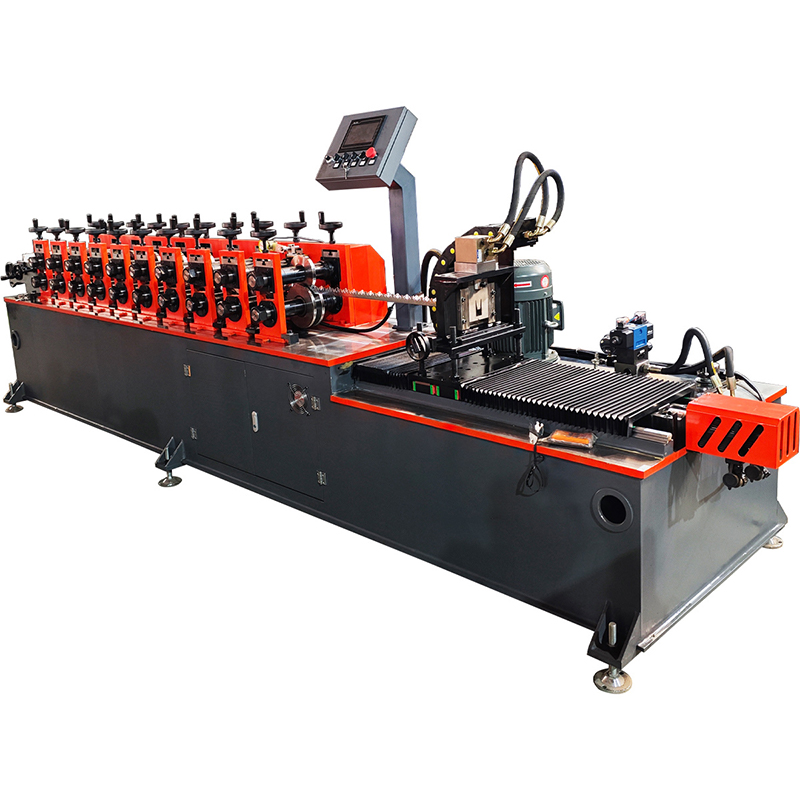
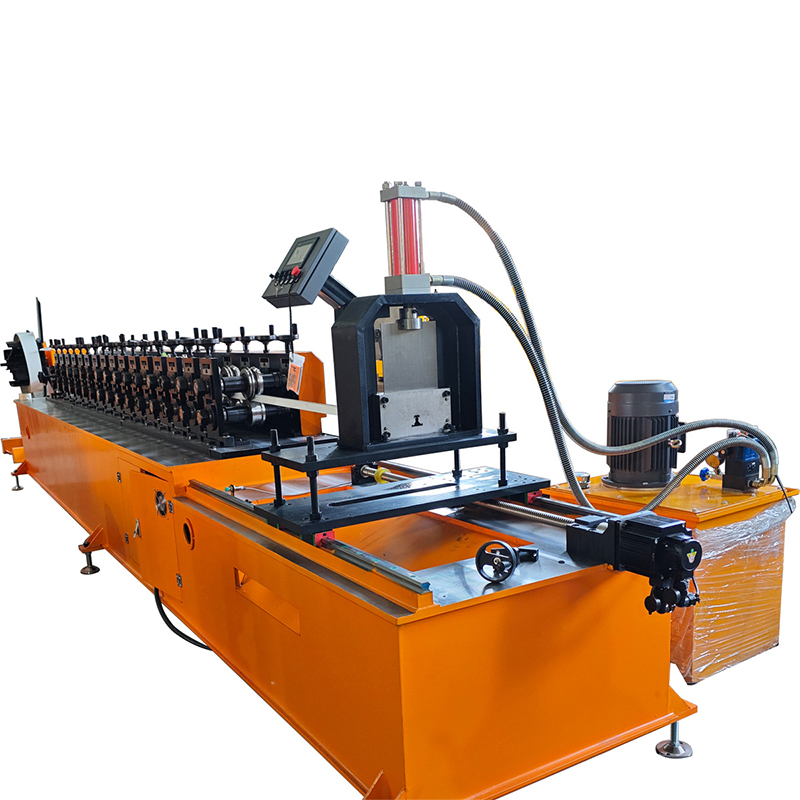
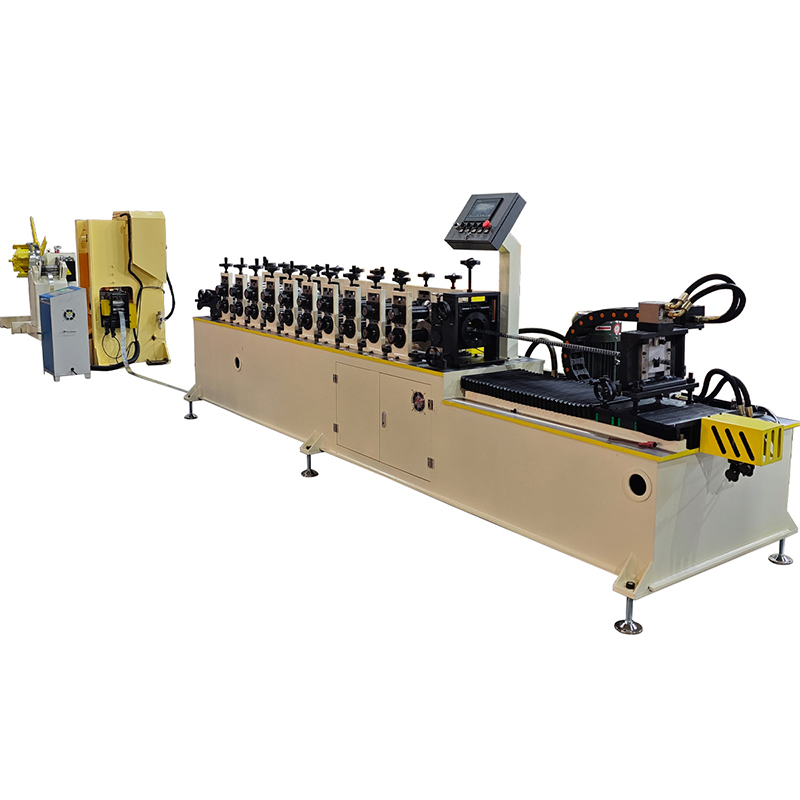
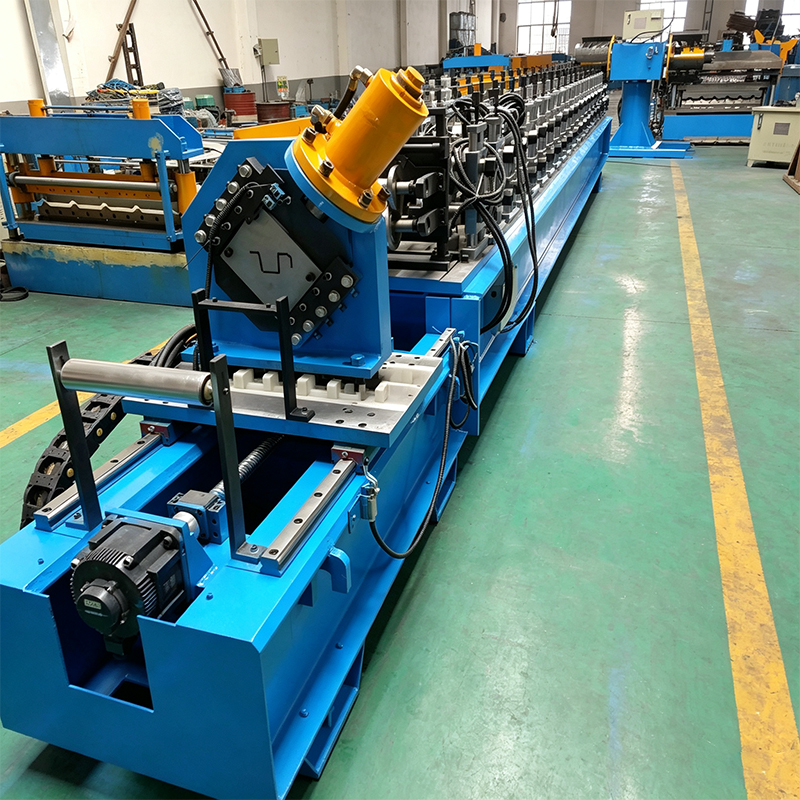
The Cable Tray Roll Forming Machine Series is an automated cold-roll forming production line specifically designed for manufacturing cable trays. Through a continuous cold-roll forming process, the equipment transforms steel strip coils into various types of cable tray products—such as trough, tray, ladder-side, and cover plate styles—in a single pass.
The integrated production line combines multiple processes—including uncoiling, leveling, punching, forming, and cutting—into one system. It utilizes a fully automated PLC control system and features core capabilities such as automatic profile switching, rapid width adjustment, and continuous high-speed forming. The equipment is compatible with a wide range of raw materials, including galvanized steel strip, cold-rolled sheet, hot-rolled sheet, stainless steel, and aluminum. It accommodates strip widths from 60mm to 950mm and thicknesses from 0.6mm to 2.5mm, meeting the production requirements for diverse cable tray products.
Key components are sourced from renowned domestic and international brands, ensuring superior overall performance and long-term operational stability.
II. Application Areas
Cable trays are essential auxiliary products in the electric power and construction industries, widely used in:
Power Systems: Cable laying and support for power plants, substations, and power transmission and distribution projects.
Construction Projects: Power and low-voltage cabling systems for commercial buildings, office complexes, hospitals, schools, and other facilities.
Industrial Facilities: Cable management for power and control systems in various factories and mines.
Rail Transit: Cable tray installations for large-scale infrastructure projects such as high-speed railways and subways.
Communication Facilities: Cable management and protection for data centers and communication base stations.
New Energy Projects: Power transmission and cabling systems for photovoltaic power plants and wind farms.
The equipment is capable of producing a wide range of cable tray types—including trough, solid-bottom (tray), ladder, and covered styles—to meet diverse requirements across various specifications and application scenarios.
III. Production Process
The process flow of the entire production line is as follows:
Uncoiling → Leveling/Flattening → Servo Feeding/Punching → Guided Infeed → Roll Forming → Cut-to-Length → Finished Product Discharge
Description of each stage:
Process Function Description
Uncoiling: Hydraulic uncoiler supports the steel coil (max. load: 10 tons) and is equipped with a pneumatic hold-down arm.
Leveling/Flattening: Multi-roller leveler performs precision flattening of the steel strip, eliminating internal stress to ensure forming accuracy.
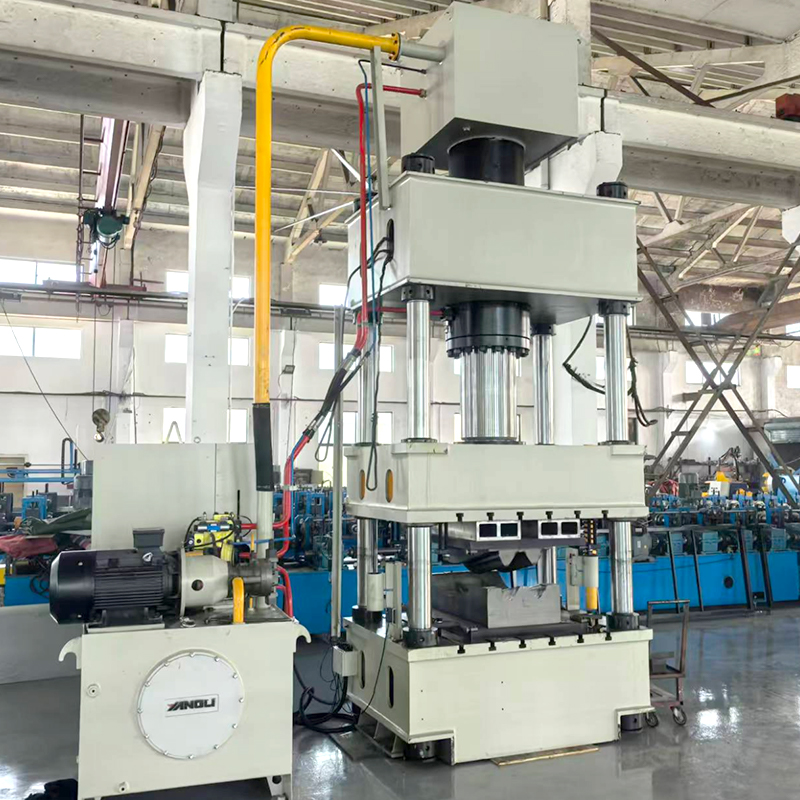
Servo Feeding + Punching: The servo system ensures precise feeding positioning; the punch press forms bottom stiffening ribs or various hole patterns.
Guided Infeed: The guiding device automatically aligns and feeds the material, accommodating smooth infeed for steel strips of varying widths.
Roll Forming Modular adjustable forming unit; a single set of rollers produces multiple cable tray specifications, with size changes achieved by adjusting the roll gap and roller settings.
Cut-to-Length: Automatic cutting based on preset lengths using hydraulic or mechanical systems; ensures high precision and clean cut edges.
Finished Product Discharge: Discharge platform receives finished products; ensures a smooth and efficient workflow.
The entire line supports both automatic and manual operation modes, allowing for either synchronized or segmented operation, offering flexibility and ease of use.
IV. Service and Support
As a professional manufacturer of cold roll forming equipment, we provide comprehensive, full-lifecycle services—from initial needs analysis to operational startup:
1. Preliminary Technical Consultation and Solution Design
We provide personalized equipment selection and production line layout plans based on customer product drawings, production capacity requirements, and site conditions.
2. Customized Design and Manufacturing
We support non-standard customization, designing complex, specialized cold roll forming units tailored to specific customer requirements. Every stage—from roll tooling design and forming process simulation to equipment manufacturing—is fully controlled.
3. Installation, Commissioning, and Operational Training
Following equipment delivery, we dispatch professional engineers to the site for installation and commissioning. We also provide systematic training for the customer's operators to ensure rapid startup and stable production line operation.
4. After-Sales Technical Support
We offer long-term technical consultation and spare parts supply services to ensure the equipment operates reliably throughout its entire lifecycle.
5. Continuous Optimization and Upgrading
We provide value-added services—such as equipment retrofitting and capacity enhancement—to adapt to changing production needs.
V. Core Advantages
1. Multi-functional and Flexible Production
The equipment utilizes a modular, adjustable forming structure; a single set of rollers can produce cable trays of various specifications. Size adjustments are achieved by modifying the forming machine's opening width and roller settings. Products of different widths and heights can be accommodated via automatic motor adjustments, with changeovers completed simply by entering parameters on the touchscreen—truly realizing the concept of "one set of tooling, multiple products."
2. High Speed and Efficiency; Industry-Leading Capacity
In-line punching speed: 2.5–5 m/min
Continuous forming speed: 10–15 m/min
Punching rate: 60–90 strokes/min, significantly boosting production efficiency
3. Robust, Durable, and Reliable
Forming stands feature a cast-iron structure subjected to tempering treatment, ensuring high strength and a long service life.
Roller shafts are made of 40Cr steel, heat-treated (quenched and tempered) to a hardness of HB280.
Forming dies are made of GCr15 steel, hardened (quenched) to HRC 56–62.
The drive system utilizes gearboxes; each forming stand is equipped with an independent gearbox, ensuring stable, high-intensity operation over long periods.
The machine bed is a welded steel plate structure subjected to tempering to eliminate internal stress and prevent deformation.
4. Intelligent Control and Easy Operation
Features fully automatic PLC control with multiple safety protection systems. The touchscreen HMI allows for intuitive and convenient parameter setting, significantly reducing operator skill requirements.
5. Space-Saving and Compact Layout
The entire line features a rational, compact design with a small footprint, making it suitable for various factory layouts.
6. Eco-friendly, Low-Noise, and Energy-Efficient
Low operating noise; meets green, eco-friendly, and energy-saving production standards.
Shelving Production Line — Professional Manufacturer, Complete Line Integration, One-Stop Solution
I. Overview
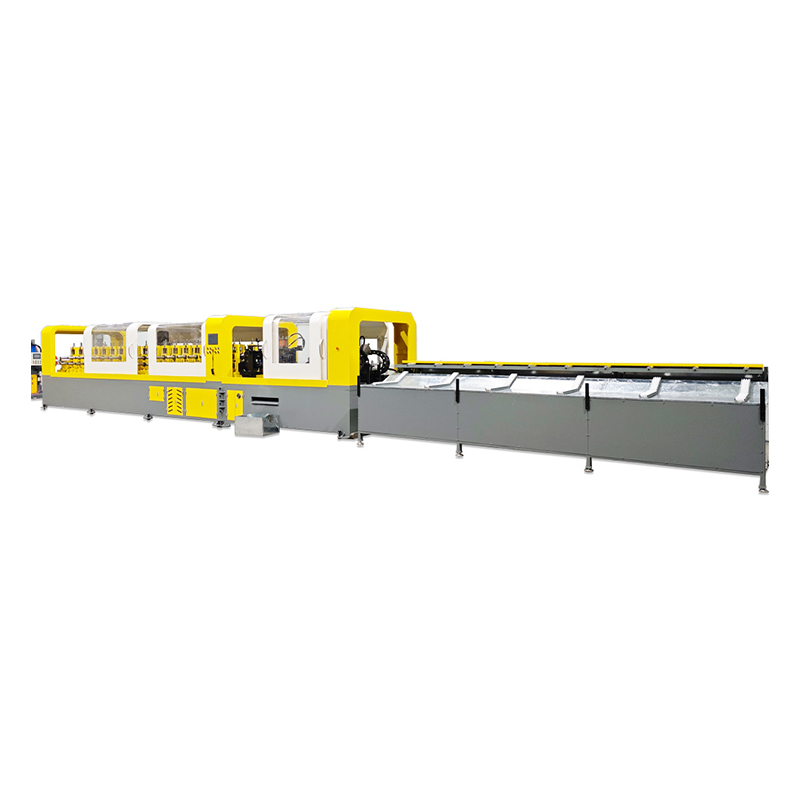
The Shelving Production Line is an integrated system composed of multiple specialized machines, covering the cold-roll forming, welding, and stamping processes for all core components—such as uprights, beams (box beams/P-beams), shelves, and bracing. Guided by the core principles of specialized division of labor, coordinated integration, and intelligent efficiency, the line provides customers with comprehensive equipment solutions spanning the entire process from profile forming to welding and assembly.
The equipment suite is compatible with a wide range of raw materials—including galvanized strip steel, cold-rolled sheet, hot-rolled sheet, and high-strength steel—in thicknesses ranging from 0.4 mm to 4.0 mm. It meets production requirements for the full spectrum of light-, medium-, and heavy-duty storage shelving, making it particularly well-suited for high-standard projects such as intelligent automated warehouses, e-commerce logistics centers, and large-scale storage facilities.
II. Equipment Series Overview
1. Cold Roll Forming Machine for Rack Uprights
Specialized equipment designed for manufacturing rack uprights (vertical load-bearing components). Uprights serve as the core load-bearing elements of the racking system; they typically feature C-shaped, U-shaped, or octagonal cross-sections and are perforated with dense patterns of "butterfly" or diamond-shaped holes to facilitate precise connection with beams and other components.
Perforation: Continuous, single-pass punching of dense hole patterns (butterfly or diamond shapes) with a positional accuracy of ±0.1mm.
Forming Process: Progressive cold roll forming; cumulative length error for a 16-meter upright is controlled within ±1mm.
Cutting Method: Inline flying hydraulic cutting or sawing, ensuring clean, burr-free edges.
Specifications: Height 50–200mm, Width 40–120mm, Thickness 1.2–4.0mm.
2. Cold Roll Forming Machine for Rack Beams (Box Beams / P-Beams)
Specialized equipment designed for manufacturing rack beams (horizontal load-bearing components). Beams are the components that directly support the cargo. Common cross-section types include box beams (interlocking beams) and P-beams, both characterized by high strength and superior load-bearing capacity. Box beams are formed by roll-forming two symmetrical profiles and locking them tightly together via an automated interlocking mechanism; this results in a tight seam and high structural integrity, offering better load-bearing performance than standard single-piece beams. P-beams feature a single-piece closed cross-section and are suitable for medium-duty racking systems. Interlocking Beam: Formed from separate upper and lower sections that are automatically interlocked and clamped together by a joining mechanism, ensuring a tight, gap-free seam.
P-Beam: Formed as a single closed-section profile; features a simple structure and is suitable for medium-duty shelving.
Hook/Tab Punching: Optional beam hook/tab punching equipment available (see Item 7 for details).
Specifications: Height 40–120mm, Width 30–50mm, Thickness 0.8–2.0mm.
3. Cold Roll Forming Machine for Shelving Decking
Specialized forming equipment for producing shelving decking (horizontal shelves). Decking supports small or loose items and typically features a flat, reinforced-rib, or flanged profile, providing a smooth surface and uniform load distribution.
Reinforced Rib Forming: Base plate and ribs are roll-formed as an integrated unit, enhancing load-bearing capacity.
Flanging: Edge flanging increases structural strength and provides a neat, aesthetic appearance.
Specifications: Width 200–1200mm, Thickness 0.4–1.5mm.
Optional Configurations: Can be equipped with automatic flanging and stacking units to enhance automation levels.
4. Cold Roll Forming Machine for Shelving Diagonal Braces
Specialized forming equipment for producing shelving diagonal braces (diagonal reinforcement components). These braces reinforce the rear of the shelving unit, enhancing overall stability and lateral load resistance; profiles are typically C-shaped, U-shaped, or tubular.
End Flattening/Punching: In-line flattening and mounting hole punching at both ends; eliminates the need for secondary processing.
Fixed-Length Cutting: Automatic cutting to specified lengths with a precision of ±0.5mm.
Specifications: Width 20–50mm, Thickness 0.8–2.5mm.
5. Automatic Welding Machine for Shelving Beams
Automated welding equipment designed for attaching connector plates to both ends of the beam. Beam welding is a critical step in shelving production, directly impacting assembly precision and overall load-bearing safety. Weld quality determines the strength of the connection between the beam and the upright. Dual-Gun Automatic Welding: Simultaneous welding at both ends significantly boosts efficiency; ideal for high-volume, continuous production.
High Positioning Accuracy: Pneumatic positioning fixtures ensure precise placement of connectors and consistent weld quality.
Ease of Operation: PLC control with touchscreen parameter settings and one-touch startup; no specialized welder required.
Applications: Welding of various beam end connectors (hooks/teeth); designed for use with beam hook stamping/forming equipment.
6. Automatic Welding Machine for Rack Uprights
Automated welding equipment designed specifically for connecting components at the base or top of uprights. It welds base plates, top plates, or stiffeners, ensuring secure connections between the upright and the floor or other structures, thereby guaranteeing the overall safety of the racking system.
High Level of Automation: Features automatic positioning, clamping, and welding—a fully automated process.
Multi-Position Welding: Capable of welding base plates, top plates, stiffeners, and other points.
Applications: Welding of upright base plates, top plates, and stiffeners.
7. Stamping and Forming Equipment for Rack Beam Hooks
Stamping and forming equipment dedicated to producing the hooks (connectors) found at both ends of the beam. These hooks—metal tabs that connect the beam to the upright—require high dimensional accuracy and strength, as these factors directly determine the stability of the connection.
Integrated Multi-Station System: Combines punching, forming, bending, and cutting into one unit; stamping speed of 60–90 strokes per minute.
High Precision: Hook dimensional accuracy of ±0.1mm ensures precise alignment with upright slots.
System Integration: Formed hooks are welded to both ends of the beam using the automatic beam welding machine (Item 5).
Can be paired with a beam cold-roll forming machine to create a complete beam production line: Beam forming → In-line conveying → Automatic hook feeding → Automatic welding → Finished product output.
III. Production Line Configuration Overview
No. Equipment Name Primary Purpose Applicable Specifications
1 Upright Roll Forming Machine Upright forming (C/U/Octagonal profiles) Thickness: 1.2–4.0 mm
2 Beam Roll Forming Machine Box beam/P-beam forming Thickness: 0.8–2.0 mm
3 Shelf Panel Roll Forming Machine Shelf panel forming (flat/reinforced rib types) Thickness: 0.4–1.5 mm
4 Brace/Tie-rod Roll Forming Machine Brace and tie-rod forming. Thickness: 0.8–2.5 mm
5 Automatic Beam Welding Machine: Automatic welding of beam end connectors for use with beams
6 Automatic Upright Welding Machine: Welding of upright base plates/top plates. For use with uprights
7 Beam Connector Stamping Machine Stamping/forming of beam connectors (hooks) Stamping speed: 60–90 strokes/min
IV. Core Advantages
1. Integrated Line, One-Stop Solution
The complete equipment suite covers the forming, welding, and punching processes for the four core components of storage racks (uprights, beams, shelves, and braces). This eliminates the need for multi-vendor sourcing; the equipment is highly compatible and efficient, shortening the time to production.
2. Specialized Roles, Multiplied Efficiency
Each machine operates independently yet collaboratively, enabling an integrated, intelligent management system for the entire line. A single line requires only 3–5 operators, reducing labor costs by 60% compared to traditional segmented processing methods.
3. High Precision, Ensuring Rack Safety
For 16-meter uprights, the cumulative error is < ±1 mm and hole position accuracy is ±0.1mm; the connection precision between beams and uprights is strictly controlled. High precision ensures smooth installation, structural stability, and safe load-bearing capacity.
4. Automatic Tooling Change, Flexible Production
All machines feature automatic tooling change capabilities—PLC-controlled motors automatically adjust the opening width and roll positions. Switching specifications simply requires entering new values, a process completed in just 3 minutes. This is ideal for rapidly switching between orders involving diverse product types and specifications.
5. Robust, Durable, and Reliable
Machine frames undergo tempering to eliminate internal stress, ensuring high rigidity and resistance to deformation.
Rollers are made from Cr12MoV special steel, treated with vacuum quenching and cryogenic processing to achieve a hardness of HRC58–62.
Key electrical components are sourced from Japanese or German brands to ensure long-term, stable operation.
6. Intelligent Control, Easy Operation
Features fully automatic PLC control and a touchscreen HMI; parameter settings are intuitive and convenient, and the system includes automatic fault diagnosis and alarms, reducing the skill requirements for operators.
V. Application Areas
The series of intelligent warehouse racking equipment is widely used in:
Intelligent automated warehouses: High-precision racking components ensure the efficient operation of automated storage systems.
E-commerce logistics centers: Meeting the need for efficient storage and retrieval of massive product inventories.
Manufacturing warehouses: Customized mass production of heavy-duty racking components.
Cold chain warehousing: Weather-resistant materials suitable for low-temperature, high-humidity environments.
Retail and supermarkets: Display shelving and medium-duty racking systems.
VI. Service & Support
Solution Design: Personalized equipment selection and production line layout based on customer product drawings and capacity planning.
Custom Manufacturing: Support for non-standard customization, with full oversight from roll design to complete machine fabrication.
Installation & Commissioning: On-site installation, commissioning, and operator training provided by engineers to ensure rapid production startup.
After-Sales Support: Long-term technical consultation and spare parts supply; engineers hold valid visas and are available for on-site service worldwide at any time.
VII. Why Choose Us
Nearly 20 years of manufacturing experience: Mature technology, refined processes, and reliable quality.
Comprehensive production line capabilities: Equipment covering the forming and welding of all core racking components.
Direct manufacturer: No middlemen, offering excellent value for money.
Strong custom engineering capabilities: Ability to design various complex cold-roll forming lines tailored to specific customer needs.
Global service network: Engineers with ready-to-use visas and rapid response capabilities.
Contact us for detailed proposals and quotations!
Solar Mounting Structure Equipment Series – A professional manufacturer offering comprehensive solutions covering the entire spectrum of mounting and tracking brackets, from steel strips to finished products – one-stop delivery.
I. Series Overview
The Solar Mounting Structure Equipment Series is a complete cold-bending forming production line specifically designed for manufacturing various core components of solar photovoltaic (PV) mounting systems. Solar PV mounting systems are metal frames made from continuous steel strips through a cold-bending process, used to place, install, and fix solar panels in solar power generation systems. PV mounting systems are crucial structural components of solar support systems, characterized by their versatility, robustness, aesthetics, and ease of installation and adjustment.
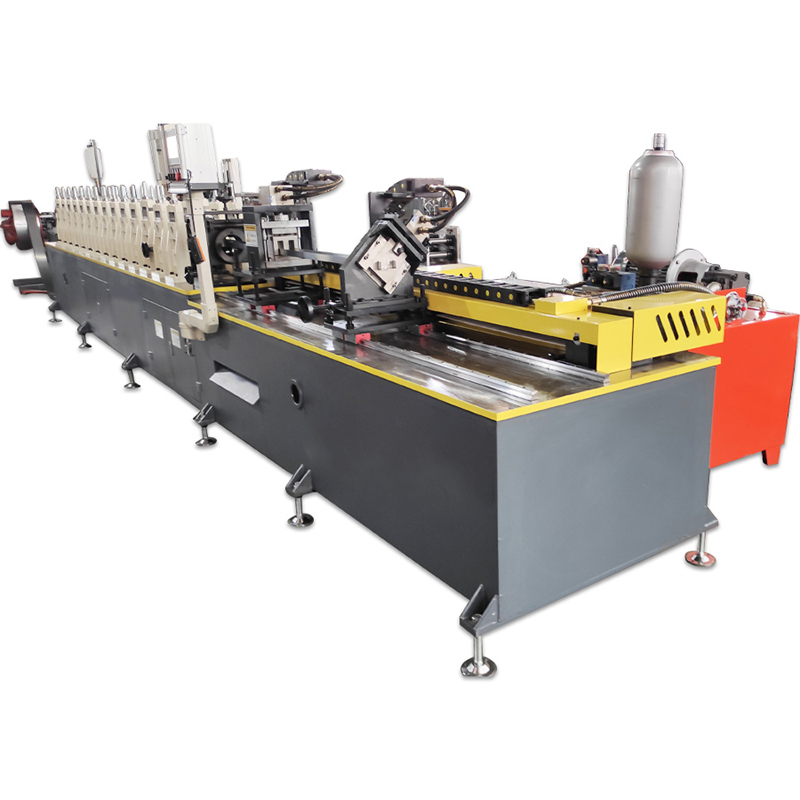
This series of equipment uses a continuous cold-bending and rolling process to complete the entire process of uncoiling, leveling, punching, roll forming, length cutting, and outputting metal coils in one go, directly producing various finished PV mounting profiles. The equipment adopts PLC fully automatic control and a touchscreen human-machine interface, enabling fully automated continuous operation from uncoiling to finished product output.
In 2025, China's newly installed PV capacity exceeded 250GW, driving a significant increase in demand for PV mounting cold-bending equipment. In 2025, the market size of cold-bending forming equipment in my country exceeded 28 billion yuan, with an average annual compound growth rate of around 12%. Among these, photovoltaic brackets, light steel keels, and metal sheet roll forming equipment were the fastest-growing sub-sectors.
This series of equipment covers four main categories in photovoltaic bracket manufacturing: open-type steel frames for solar panels, closed-type steel frames for solar panels, photovoltaic column cold bending machines (C-type/U-type/Omega type), and 21-82×41 photovoltaic bracket cold bending machines. It is suitable for various materials such as carbon steel, galvanized sheet, aluminized zinc-magnesium sheet, and aluminum alloy, and can process thicknesses ranging from 0.8 to 4.0 mm. The equipment adopts PLC fully automatic control and touch screen human-machine interface operation, enabling fully automated continuous operation from uncoiling to finished product output.
II. Introduction to Various Equipment Types
1. Solar Panel Opening Steel Frame Cold Bending Forming Equipment
Equipment Overview
The solar panel opening steel frame cold bending forming equipment is a specialized cold bending forming production line for producing opening steel frames for photovoltaic modules. The steel frame is a core component of photovoltaic module encapsulation; its cross-sectional accuracy and structural strength directly determine the installation quality and service life of the module. The equipment uses a continuous cold bending and rolling process to complete the entire process in one go: uncoiling, leveling, shearing and welding, servo feeding, roll forming, straightening, tracking flying shear, and unloading of metal coils.
Core Advantages
Significant Cost Advantage: Replacing traditional aluminum frames with galvanized aluminum-magnesium steel reduces costs by approximately 40%.
Outstanding Strength Advantage: Steel frames boast ultra-high mechanical strength, twice that of traditional aluminum frames.
High Efficiency and Environmental Protection: Galvanized aluminum-magnesium materials are highly efficient and environmentally friendly, with carbon emissions far lower than aluminum frames.
High-Speed Production: Production speeds can reach 40m/min, resulting in high product straightness and consistency.
High-Precision Forming: Length dimensions are completed in one step according to drawing tolerances, eliminating the need for secondary processing.
Applications: Frame encapsulation for various single-glass and double-glass photovoltaic modules—steel frames offer high strength and low cost, making them an ideal replacement for traditional aluminum frames.
2. Solar Panel Closed-End Steel Frame Cold Bending Forming Equipment
Equipment Overview
The solar panel closed-end steel frame cold bending forming equipment is a specialized cold bending forming production line for producing closed-end steel frames for photovoltaic modules. Closed-end steel frames offer better torsional strength compared to open-end steel frames. The closed cross-section design creates a closed load-bearing structure, resulting in more uniform stress distribution under external forces such as wind loads, snow loads, and thermal expansion and contraction. The China Photovoltaic Industry Association and the China Iron and Steel Industry Association have jointly spearheaded the development of a group standard for "Zinc-coated Aluminum-Magnesium Closed-Type Cold-Formed Steel for Photovoltaic Module Frames."
Core Advantages
High Strength with Closed Sections: The closed section forms a closed tubular structure, resulting in torsional strength far exceeding that of open frames, leading to a more stable structure.
Industry Standard Leadership: Leading companies in the industry have spearheaded the development of relevant group standards for closed-type cold-formed steel.
Cost Reduction of Approximately 40%: Replacing traditional aluminum frames with galvanized aluminum-magnesium galvanized steel significantly reduces overall costs.
Twice the Strength of Aluminum Frames: Steel frames possess ultra-high strength mechanical properties, with an elastic modulus up to three times that of aluminum frames.
High Efficiency and Environmental Protection: Carbon emissions from production are far lower than those of aluminum frames, and the steel has a high recycling rate.
Applications: Closed-type steel frames are particularly suitable for high-strength applications such as large-scale ground-mounted power plants, coastal high-wind-speed areas, and tracking bracket systems, for various single-glass and double-glass photovoltaic module frame encapsulation.
3. Photovoltaic Column Cold Bending Machine (C-type/U-type/Omega type)
Equipment Overview
The photovoltaic column cold bending machine is a specialized cold bending forming equipment used for producing C-type, U-type, and Omega (V-shaped) photovoltaic support columns, main beams, purlins, and other core structural components. The photovoltaic column is the core load-bearing component of the support system; its cross-sectional accuracy and structural strength directly determine the safety and service life of the entire photovoltaic power station. The production line can process photovoltaic supports made of mainstream materials in the industry, such as carbon steel, aluminized magnesium-zinc coated steel, and aluminum alloy, producing all major components of carbon steel series fixed supports and tracking supports, including columns, main beams, and purlins.
Core Advantages
Multiple Types in One Machine: A single production line can produce photovoltaic support columns with various cross-sections, including C-shaped, U-shaped, and Omega (几) shapes.
High-Precision Forming: Bending angle and dimensional tolerances can be controlled within 0.5 mm.
High-Strength Steel Processing Capability: Can process thicknesses from 6-8.0 mm, covering both common and high-strength materials.
Widely Compatible: Suitable for ground support systems, rooftop support systems, fish-solar hybrid support systems, agricultural-solar hybrid support systems, adjustable support systems, tracking support systems, etc.
Intelligent Punching: Equipped with intelligent feeding and linkage hydraulic punching equipment.
C-shaped/U-shaped Photovoltaic Support Specifications:
Type Common Specifications
U-shaped Photovoltaic Support 41×41 / 41×52 / 41×62 / 41×72
C-shaped Photovoltaic Support C70 / C80 / C100 / C120
Application Scope: C/U-shaped steel is the most important raw material for photovoltaic supports, used in the core structural components such as columns, main beams, and purlins of various photovoltaic power stations, and is in high demand in the market.
4. 21-82×41 Photovoltaic Bracket Cold Bending Machine
Equipment Overview
The 21-82×41 photovoltaic bracket cold bending machine is a specialized cold bending forming machine for producing C-shaped steel series products for solar photovoltaic brackets. This equipment can produce a full range of photovoltaic bracket profiles in sizes including 41×21, 41×41, 41×52, 41×62, 41×72, and 41×82. The equipment uses a continuous cold bending and rolling process to complete the entire process of uncoiling, leveling, clamping and punching, roll forming, length cutting, and material collection in one operation.
Core Advantages
Full Range Coverage: One machine handles all specifications from 41×21 to 41×82, eliminating the need for repeated investment.
Quick Changeover: Convenient and efficient specification switching to meet diverse order requirements.
High-Precision Forming: High forming accuracy and consistency with sheet thicknesses of 1.5- 2.5 mm.
Optimal Speed Matching: Production line speed 4-8m/min, main machine forming speed 10-15m/min.
Applications: C-shaped steel series products for solar photovoltaic brackets—41 series, 62 series, 82 series, etc.—are widely used in the construction of large-scale solar photovoltaic power plants.
III. Equipment Series Technical Parameters
Equipment Type Material Thickness Production Speed Roll Material Main Features
Open Steel Frame 1.0mm 30-40m/min Cr12MoV 40% cost reduction, double strength
Closed Steel Frame Customizable Customizable Cr12MoV High strength, excellent torsional resistance
Column Cold Bending Machine 6.0-8.0mm Customizable Customizable One machine, three types (C/U/Omega)
21-82×41 Support Machine 1.5-2.5mm 4-15m/min Customizable Full series coverage, quick changeover
IV. Production Process
Uncoiling → Leveling → Punching → Roll Forming → Cutting to Length → Unloading
Process Description
Uncoiling: Load the metal coil into a hydraulic or umbrella-type uncoiler for stable feeding.
Leveling: A multi-roller leveler precisely levels the material, eliminating internal stress.
Punching: A servo feeding system precisely positions the material, and hydraulic punching completes the precise punching of mounting holes, connecting holes, etc.
Roll Forming: Multi-pass progressive cold bending forming gradually shapes the standard cross-section of the photovoltaic bracket.
Cutting to Length: Hydraulic cutting to length ensures high precision and a clean cut.
Unloading: Finished products are unloaded neatly.
V. Application Areas
The photovoltaic support system products manufactured in our photovoltaic support equipment series are widely used in the following fields:
Ground-mounted Photovoltaic Power Stations
Large-scale ground-mounted power stations, desert and Gobi photovoltaic projects—the support column is the core load-bearing component of the support system.
Rooftop Distributed Photovoltaics
Commercial and industrial rooftop photovoltaic systems, residential rooftop photovoltaic systems—lightweight design adapts to roof load-bearing requirements.
Agricultural Photovoltaic/Fishery Photovoltaic Complementary Systems
Photovoltaic support systems above agricultural greenhouses and fishponds—U-shaped steel columns adapt to large-span structures.
Tracking Support Systems
Horizontal single-axis, inclined single-axis, and other tracking support systems—high-precision molding ensures long-term stable operation of the tracking system.
Adjustable Support Systems
Angle-adjustable support systems—C/U-shaped steel adapts to flexible adjustment needs.
Building Integrated Photovoltaics (BIPV)
Building-integrated photovoltaic projects—steel frames are tightly integrated with the building structure.
VI. Market Prospects
PV Installations Continue to Rise: In 2025, China's newly installed PV capacity exceeded 250GW, driving a significant increase in demand for PV bracket cold bending equipment. The demand for solar brackets is experiencing explosive growth.
The Cold Bending Equipment Market is Growing Rapidly: In 2025, the market size of my country's cold bending equipment exceeded 28 billion yuan, with an average annual compound growth rate of around 12%. PV brackets, light steel keels, and metal sheet roll forming equipment are the fastest-growing sub-sectors. The pain points of traditional cold bending equipment—slow changeover, poor precision, and low efficiency—are becoming obstacles to enterprise expansion. Equipment suppliers not only need to provide standardized CNC roll forming machines but also need the ability to develop fully automated roll forming production lines for specific application scenarios (such as PV, warehousing, and construction).
The Trend of Steel Frames Replacing Aluminum Frames is Obvious: Using galvanized aluminum-magnesium alloys to replace traditional aluminum frames in steel frame products reduces costs by approximately 40% while doubling the strength of traditional aluminum frames. Leading companies in the industry, in conjunction with the China Photovoltaic Industry Association and the China Iron and Steel Association, have spearheaded the development of group standards for "Galvanized Aluminum-Magnesium Steel Frames for Photovoltaic Modules" and "Galvanized Aluminum-Magnesium Closed-Type Cold-Formed Steel Frames for Photovoltaic Modules." As steel frame technology matures and standards improve, the penetration rate of steel frames in photovoltaic modules will continue to increase.
Intelligent and Flexible Upgrades: Photovoltaic bracket cold-forming production lines equipped with 9-axis servo punching machines, featuring "high-precision punching + fully automatic form changeover," have become the preferred equipment for photovoltaic companies to reduce costs and increase efficiency. By introducing laser online measurement technology, key parameters of the profiles can be monitored in real time, and the forming molds can be automatically adjusted to ensure product accuracy reaches ±0.2mm.
VII. Service Support
Solution Design: We provide customized equipment selection and production line layout based on customer product drawings, capacity requirements, and target markets.
Customized Manufacturing: We support non-standard customization. Customers can provide cross-sectional drawings or samples for customization. The entire process, from roll design to complete machine manufacturing, is under our control.
Installation and Commissioning: Engineers provide on-site installation and commissioning, and train operators to ensure rapid production.
After-sales Guarantee: Long-term technical consultation and spare parts supply. Engineers have complete certifications and can provide global on-site service at any time.
Continuous Optimization: We can provide equipment modification and capacity upgrade services according to changes in customer production needs.
VIII. Why Choose Us
Nearly 20 Years of Manufacturing Experience: Mature Technology, Perfected Processes, Reliable Quality
Full Product Coverage: One-stop supply of all photovoltaic profiles including open-end steel frames, closed-end steel frames, photovoltaic columns (C/U/Omega), and brackets ranging from 21-82×41mm.
High-Precision Manufacturing: Forming accuracy ±0.2mm, far exceeding industry standards.
Leading Steel Frame Technology: 40% cost reduction, twice the strength of aluminum frames.
Multiple Models on One Machine: The same production line can produce C-shaped, U-shaped, Omega-shaped, and other cross-sections.
Intelligent Control: PLC fully automatic + touchscreen operation, equipped with 9-axis servo punching, fully automatic changeover.
Direct Factory: No intermediaries, high cost-performance ratio.
Purlin Quick-Change Equipment Series — Professional manufacturer offering comprehensive solutions; rapid profile switching on a single machine; one-stop delivery from steel strip to finished product.
I.Series Overview
The Purlin Quick-Change Equipment Series consists of complete, quick-change cold-roll forming production lines designed specifically for manufacturing various cold-formed purlin profiles used in steel structure buildings. Purlins serve as critical structural supports for roofs and walls in steel buildings; the precision of their cross-sections and their structural strength directly determine the load-bearing capacity and safety performance of the entire structure. Utilizing a continuous cold-roll forming process, this equipment series transforms metal coils into finished purlin profiles through an integrated workflow—encompassing uncoiling, leveling, punching, roll forming, cut-to-length shearing, and discharge—in a single pass.
This series supports the production of the four mainstream purlin profiles used in steel construction—C-sections, U-sections, Z-sections, and M-sections—and accommodates a wide range of materials, including hot-rolled, cold-rolled, and galvanized steel, as well as high-strength steel, with thicknesses ranging from 0.8 mm to 4.0 mm. The equipment features fully automatic PLC control and a stepless, rapid profile-changing system, operated via a touchscreen HMI, ensuring a fully automated, continuous workflow from uncoiling to finished product discharge.
As demand for steel structure buildings, industrial plants, and prefabricated construction continues to rise, the purlin processing industry is undergoing significant transformation. Traditional production methods—reliant on single specifications and fixed models—struggle to meet the requirements of today’s market, which demands diverse specifications, multi-batch production, and rapid delivery. By enabling quick profile switching, this equipment series drastically reduces downtime and enhances the continuous operational capability of the production line, serving as core equipment for steel processing enterprises aiming to achieve flexible and intelligent manufacturing.
II. Introduction to Equipment Types
1. Quick-Change C-Section Purlin Equipment
Equipment Overview
The quick-change C-section purlin equipment is a specialized cold-roll forming production line designed for manufacturing lipped C-section cold-formed thin-walled steel (C-section purlins). C-section steel is the most widely used type of purlin in steel structure buildings; it is formed by cold-roll forming thin-walled steel sheets. This equipment can produce finished C-section purlins in various specifications using a single set of rollers.
Key Advantages
Excellent Straightness: The produced C-section purlins exhibit superior compressive and flexural strength.
Quick Change (No Roller Swapping): Different specifications can be produced via stepless adjustment, eliminating the need to replace forming rollers.
Wide Application: Suitable for purlin systems in roofs and walls of industrial plants, warehouses, vehicle garages, aircraft hangars, stadiums, and other structures.
Intelligent Control: Automatically performs punching, cutting, and forming based on input parameters such as purlin length, longitudinal hole spacing, and quantity.
Common Specifications: Web width 80–300 mm, web height 30–80 mm, flange lip 10–20 mm.
2. Quick-Change U-Section Purlin Equipment
Equipment Overview
The quick-change U-section purlin equipment is a specialized cold-roll forming production line designed for manufacturing U-section purlins. The U-section steel features a U-shaped cross-section with both flanges extending vertically upwards, offering a simpler cross-sectional profile compared to C-section steel. The machine utilizes a design featuring a fixed frame on one side, an adjustable frame on the other, and a semi-automatic profile-changing mechanism; adjustments to the web width and web height are achieved semi-automatically via manual control buttons.
Key Advantages
Multi-purpose capability: Capable of producing both C-section and U-section purlins simultaneously, saving on equipment investment and floor space.
Simple structure: The U-section profile is simple, requiring fewer forming passes and resulting in high production efficiency.
Flexible configuration: Equipped with both pre-cutting and post-cutting mechanisms; shears can be configured as fixed-type or universal-type based on user requirements.
High material utilization: The cold-forming process requires no heating, resulting in low energy consumption and minimal waste.
Common specifications: 68×30×3.0mm, 190×75×3.0mm, 200×75×25×3.0mm, etc.
3. Quick-Change Z-Section Purlin Equipment
Equipment Overview
This is a specialized quick-change cold-roll forming production line designed for Z-section steel purlins. The Z-section features parallel flanges pointing in opposite directions, offering the unique advantage of reversible overlapping installation; it is widely used in large-span steel structure buildings.
Key Advantages
Reversible overlapping installation: Z-section steel allows for reversible overlapping, enhancing connection strength.
Suitable for large spans: Particularly ideal for large-span structures or for constructing factory buildings in areas with poor geological conditions.
Quick change without roller replacement: The same equipment can produce both C-section and Z-section purlins through stepless adjustment.
Automated control: Integrates functions such as automatic uncoiling, leveling, hydraulic punching, automatic length measurement, and automatic cutting.
Common specifications: Web width 35–80mm, web height 120–300mm, flange lip 10–20mm.
4. Quick-Change M-Section Purlin Equipment
Equipment Overview
This is a specialized cold-roll forming production line designed for M-section truss purlins. Named for its M-shaped cross-section, this profile is primarily used for M-section truss purlins and serves as an important special-profile component in steel structure construction.
Key Advantages
Specialized for Truss Structures: M-shaped purlins are a critical component of M-shaped truss structures, offering high structural strength.
Scalable Production: Executes the entire process—from steel strip feeding and initial forming to final shaping and cutting—in a single pass.
High Production Efficiency: The integrated line encompasses the complete workflow, including uncoiling, leveling, forming, shaping, and cutting.
Broad Applicability: Beyond steel structures, it is suitable for applications such as W-shaped supports in the coal mining industry.
Application Scenarios: M-shaped truss purlins, steel structure bracing members, coal mine W-shaped supports, etc.
III. Core Technical Advantages
1. Rapid, Stepless Profile Switching (No Mold Changes Required)
This is the core advantage distinguishing this series of equipment from traditional single-specification production lines. Traditional equipment requires machine downtime to dismantle rollers and recalibrate parameters when switching profile specifications—a process taking 2–4 hours that severely disrupts production continuity. This series utilizes a stepless adjustment system, allowing for precise, millimeter-level adjustments within the specified range to produce both standard and non-standard profiles. No forming roller changes are required; semi-automatic switching takes just 8 minutes, while fully automatic switching takes only 3 minutes.
2. Multi-Profile Capability and Flexible Production
A single production line can manufacture various types of purlins, such as C- and Z-sections (interchangeable) or C- and U-sections (interchangeable). Unlike traditional setups that require separate production systems for different profiles, this series reduces equipment investment while enhancing production flexibility and equipment utilization. Its ability to roll-form two different profiles saves the user both purchasing costs and floor space.
3. Fully Automated PLC Control and Intelligent Production
The equipment features fully automated PLC control, integrating functions such as automatic decoiling, leveling, hydraulic punching, automatic length measurement, and automatic cutting. It automatically performs punching, cutting, and forming based on input parameters like purlin length, longitudinal hole spacing, and quantity. Key parameters—such as rolling force, current, and temperature—are monitored in real-time; the system triggers an immediate alarm and halts operation upon detecting anomalies, thereby preventing batch defects.
4. High-precision forming and superior quality
Roll shafts are made of 40Cr steel, heat-treated (quenched and tempered) to a hardness of HB280.
Forming dies are made of GCr15 steel, heat-treated (quenched) to a hardness of HRC 56–62.
The transmission system utilizes a gearbox drive; each forming stand is equipped with a dedicated gearbox, ensuring the equipment can operate continuously under high-intensity conditions.
Forming speeds reach up to 15–30 m/min.
Precision during product changeovers is maintained within ±0.1 mm.
5. Robust, durable, stable, and reliable
The machine base is a welded steel structure that has undergone tempering to eliminate internal stress and prevent deformation.
Forming stands feature a cast-iron structure that has been tempered, ensuring high strength and a long service life.
The drive system employs a gear motor with variable frequency control, ensuring accurate and reliable speed regulation, cut-to-length precision, and positioning.
The fully automatic electrical control system includes error-detection capabilities to ensure the safety and stability of the production line.
IV. Technical Parameters of Equipment Series
Item C-Section Equipment U-Section Equipment Z-Section Equipment M-Section Equipment
Applicable Materials: Hot-rolled/Cold-rolled/Galvanized sheet; Hot-rolled/Cold-rolled/Galvanized sheet; Hot-rolled/Cold-rolled/Galvanized sheet; Hot-rolled/Cold-rolled sheet
Material Thickness 1.5–4.0 mm 1.5–4.0 mm 1.5–4.0 mm 1.5–3.0 mm
Forming Stations: 16–22 stations 14–18 stations 16–22 stations 18–24 stations
Production Speed 15–30 m/min 15–20 m/min 15–30 m/min 10–20 m/min
Motor Power 18.5–22 kW 15–22 kW 18.5–22 kW 22–30 kW
Profile Changeover Time: 3–8 minutes Semi-automatic changeover 3–8 minutes Customized upon request
Control System Fully automatic PLC Fully automatic PLC Fully automatic PLC Fully automatic PLC
V. Production Process
Uncoiling → Leveling → Punching → Roll Forming → Cut-to-Length → Discharge
Process Description
Uncoiling: Metal coil is loaded onto a decoiler stand or hydraulic uncoiler for stable material feeding.
Leveling: Precision leveling via a multi-roller leveler to eliminate internal material stress.
Punching: Two hydraulic punching units perform precise punching for mounting holes, connection holes, etc.
Roll Forming: Multi-stage progressive cold-roll forming; specifications are automatically adjusted via a stepless profile-changing system.
Cut-to-Length Hydraulic cutting ensures high length accuracy and clean, smooth cut edges.
Discharge: Finished products are discharged in an orderly manner.
VI. Application Areas
The various purlin products manufactured by the quick-change purlin equipment series are widely used in the following fields:
C-Section Steel Purlins: Purlins for large-scale steel industrial workshops and warehouses; long-span structural buildings; factory construction in areas with poor geological conditions.
U-Section Steel Purlins: Machinery manufacturing; automotive chassis beams and side frame profiles; photovoltaic mounting system components.
Z-Section Steel Purlins: Large-scale steel industrial workshops; long-span structural buildings; applications requiring reverse-lap installation.
M-Section Steel Purlins: M-shaped truss purlins; steel structure bracing struts; W-shaped supports for coal mines.
Photovoltaic & New Energy: C-section steel for solar PV mounting systems (41, 80, and 100 series, etc.), widely used in the construction of large-scale solar PV power plants.
Warehousing & Logistics: Structural components for logistics and warehousing, such as heavy-duty rack uprights, beams, and tie rods.
VII. Market Outlook
Rapid Growth of the Steel Structure Industry: Driven by the rising demand for steel-structured buildings, industrial plants, and prefabricated construction, the purlin processing industry is undergoing significant transformation. Increasingly, manufacturers of cold-roll forming equipment are prioritizing the application of automation and intelligent technologies.
Strong Demand for Flexible Production: Enterprises are increasingly facing complex production requirements rather than just standardized, high-volume orders; these include frequent changes in project specifications, compressed delivery schedules, and heightened expectations for processing precision and production efficiency. Quick-change purlin equipment enables rapid specification switching, thereby minimizing downtime and enhancing the continuous operational capability of the entire production line.
Trend Toward Intelligent Development: As the steel structure manufacturing industry advances toward digitalization, quick-change purlin equipment will see further improvements in intelligence. Integrated control systems can monitor critical parameters—such as rolling force, current, and temperature—in real time, triggering immediate alarms and halting operations upon the detection of anomalies.
VIII. Service & Support
Solution Design: Personalized equipment selection and production line layout based on customer product drawings, capacity requirements, and target markets.
Custom Manufacturing: Support for non-standard customization; production can be initiated from cross-sectional drawings or samples, with full oversight from roll design to complete machine manufacturing.
Installation & Commissioning: On-site installation, commissioning, and operator training provided by engineers to ensure rapid production startup.
After-Sales Support: Long-term technical consultation and spare parts supply; engineers hold valid visas and are available for on-site service worldwide at any time.
Continuous Optimization: Equipment modification and capacity upgrade services available to adapt to changing production needs.
IX. Why Choose Us
Nearly 20 years of manufacturing experience: Mature technology, refined processes, and reliable quality.
Comprehensive product range: One-stop supply of C, U, Z, and M-type purlins.
Stepless, rapid profile switching: Fully automatic changeover in 3 minutes—no mold replacement required; precision within ±0.1mm.
Multi-profile capability: A single production line produces various purlin cross-sections, saving on equipment investment and floor space.
High-precision manufacturing: GCr15 quenched rollers (HRC 56–62), 40Cr heat-treated shafts, and gearbox transmission.
High-efficiency production: Speeds of 15–30 m/min; the entire line can be operated by just 1–2 people.
Intelligent control: Fully automatic PLC with touchscreen interface; features one-touch setup, automatic counting, and cloud data synchronization.
Direct manufacturer: No middlemen, offering excellent cost-performance value.
Global service network: Engineers hold all necessary visas, ensuring rapid response.
Corrugated Sheet Roll-Forming Line — A professional manufacturer offering comprehensive solutions covering the entire spectrum of roofing and flooring applications, with one-stop delivery from steel coil to finished product.
I.Series Overview
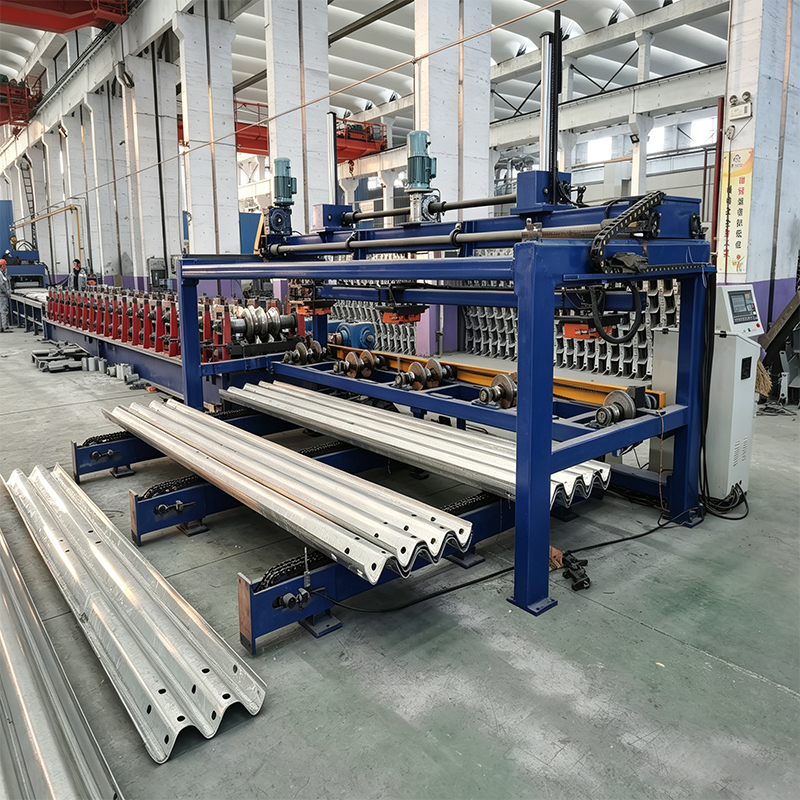
The Corrugated Sheet Roll Forming Line is a complete cold-roll forming production system designed for manufacturing various metal corrugated sheets, roofing panels, and floor decking used in construction. Metal corrugated sheets are created by processing metal materials through cold-roll forming or press forming to produce a surface featuring a regular, repeating corrugated rib structure. Utilizing a continuous cold-roll forming process, this equipment series integrates the entire workflow—uncoiling, guided feeding, roll forming, cut-to-length shearing, and discharge—into a single pass, directly producing finished corrugated sheets.
Cold-roll forming is a high-speed, continuous manufacturing process that shapes metal coils or strips into profiles—such as corrugated sheets, trapezoidal sheets, glazed-style tiles, and floor decking—by progressively bending the material transversely through a series of forming rollers. Compared to traditional stamping or bending methods, cold-roll forming offers significant advantages, including high material utilization, superior forming precision, high production efficiency, and lower costs.
In 2025, global revenue from metal corrugated sheets stood at approximately RMB 75.19 billion; this figure is projected to reach nearly RMB 106.61 billion by 2032, representing a compound annual growth rate (CAGR) of 5.1%. Metal roofing machines are specialized equipment used to process and install metal roofing panels; they are widely employed in roofing construction for industrial plants, commercial buildings, and large-scale public facilities.
This equipment series covers four major product categories for roofing and flooring applications: corrugated roofing sheets, T-profile roofing sheets, glazed-style roofing tiles (3D roofing panels), and floor decking. It is compatible with a wide range of materials—including color-coated steel, galvanized steel, Al-Zn coated steel, stainless steel, and aluminum-magnesium-manganese alloys—and handles material thicknesses ranging from 0.3 mm to 1.5 mm. The equipment features fully automatic PLC control and a touchscreen HMI, ensuring a continuous, automated workflow from uncoiling to the discharge of finished products.
II. Equipment Introduction
1. Roof Corrugated Sheet Roll Forming Equipment
Equipment Overview
The roof corrugated sheet roll forming equipment is a specialized cold-bending forming production line for producing metal corrugated roof panels and wall panels. Corrugated sheets are produced by processing metal coils into sheet products with a continuous corrugated shape through a roll forming process. The corrugated design significantly increases the strength and rigidity of the sheet. The corrugated sheet forming equipment can be customized to produce water ripples, small waves, etc., suitable for applications such as color steel tiles and metal roofs.
This equipment uses a continuous cold-bending roll forming process to complete the entire process of uncoiling, guiding feeding, roll forming, length cutting, and unloading of metal coils in one go, directly producing finished corrugated sheets.
Core Advantages
High-precision forming, effectively overcoming springback: Through a multi-pass progressive forming process, the metal sheet is gradually bent into a standard corrugated section, effectively overcoming the material springback problem.
High production speed and efficiency: Production speed can reach 10-60m/min (conventional), with a matching tracking cutter to achieve continuous production without stopping the machine.
Multi-type production: The machine can change the roll dies to produce corrugated sheet products with different wave heights and pitches, meeting diverse needs.
Robust equipment structure: The machine body adopts an H-beam welded structure, which is tempered to eliminate internal stress, ensuring no deformation during long-term operation.
Applications: Metal roofing and wall cladding for industrial plants, commercial buildings, and residential buildings; roofing and wall systems for large-span buildings such as stadiums, exhibition halls, and airport terminals; roofing and enclosure structures for industrial buildings such as locomotive depots and aircraft hangars.
Equipment Composition: Uncoiler, guiding feeding device, multi-pass roll forming main unit, hydraulic cutting system, discharge table, and PLC electrical control system. This production line has no length limit. Multiple sets of different data can be set on the computer controller according to construction requirements. After one-click confirmation, the equipment automatically produces finished products of different lengths according to the set data.
2. Roofing T-shaped Panel Roll Forming Equipment
Equipment Overview
The roofing T-shaped panel roll forming equipment is a specialized cold-bending forming production line for producing T-shaped roof panels and T-shaped keels, among other building profiles. T-shaped roof panels are a new type of roof structure combining beams and slabs, featuring large span, light weight, convenient construction, good seismic performance, novel design, and easy roof waterproofing.
The T-shaped forming machine belongs to cold-bending forming equipment. Relying on a continuous roll forming process, it processes metal coils into T-shaped profile components, applicable to indoor ceiling keels, building support profiles, photovoltaic brackets, decorative frames, and other processing scenarios.
Core Advantages
Large Span and High Load-Bearing Capacity: T-shaped roof panels integrate beams and slabs, meeting the needs of large-span buildings.
Convenient Construction: Prefabricated production allows for rapid on-site installation.
Lightweight and High-Strength: Cold-formed thin-walled steel is made from 0.5- 3.5 mm thick ordinary steel plates or galvanized steel plates through cold pressing or cold bending, resulting in lightweight and high strength.
Multi-Purpose Machine: Can produce T-shaped roof panels, T-shaped joists, and other profiles.
Applications: Suitable for large-span industrial plants, warehouses and logistics facilities, garages and parking lots, exhibition halls and conference centers, hydropower stations and power plants, public and commercial buildings, and residential buildings. Cold-formed steel can be used as load-bearing components such as steel frames, trusses, beams, and columns, as well as roof purlins, wall frames, beams, columns, joists, doors and windows, roof panels, and floor slabs.
3. Roofing Glazed Tile (3D Roofing Panel) Roll Forming Equipment
Equipment Overview
The roofing glazed tile roll forming equipment is a specialized cold-bending forming production line for producing metal antique-style glazed tiles (color steel glazed tiles, 3D roofing panels). Antique-style glazed tiles are formed using color steel sheets as the substrate through special processing and special baking paint. The color steel glazed tile equipment perfectly blends the traditional tile shape with modern color steel technology, resulting in a product that is both dignified and elegant, as well as beautiful and novel.
The equipment uses a continuous roll forming process to complete the entire process of uncoiling, guiding, feeding, roll forming, punching, cutting, and unloading in one go.
Core Advantages
Realistic Antique Effect: Rolls of steel sheets are precisely rolled and transformed into antique-style glazed tiles with delicate, hand-carved textures within seconds.
Multiple Models in One Machine: Capable of producing various tile types and specifications, including 800, 828, 840, 860, and 1050 models.
Flawless and Smooth Surface: 13 rows of forming plates ensure a smooth surface free of wrinkles and scratches.
Highly Efficient Construction: Short construction time for curved glazed tiles reduces costs, lowers labor intensity, and increases construction efficiency. Construction is unaffected by seasonal changes.
Robust Machine Body: The machine body is welded with 250mm H-steel, and the middle plate is welded with a 14mm steel plate.
Applications: Suitable for garden-style factories, tourist attractions, pavilions, hotels, villas, exhibition halls, resorts, homes, and other architectural and outdoor decoration projects.
Equipment Components: Loading rack, loading rack support, feeding guide device, forming main unit (including rolling mechanism and punching device), cutting system, and electrical control system. The forming shaft is made of 45# steel with a tempering process, and the rollers are made of 45# steel with a 0.05mm electroplating thickness.
4. Floor Decking Roll Forming Equipment
Equipment Overview
The floor decking roll forming equipment is a specialized cold-bending forming production line for producing steel floor decking (profiled steel sheets, composite floor decking). Floor decking, also known as steel decking, is a composite structural material used in construction, made from galvanized steel sheets through roll forming, with a cross-section in V-shape, U-shape, trapezoidal, or similar corrugated shapes.
This equipment uses a continuous cold-bending roll forming process to complete the entire process of uncoiling, leveling, roll forming, length cutting, and output in one go. The floor decking cold-bending production line can reach a production speed of 25 meters per minute, and adding forming units can produce various sheet types.
Core Advantages
Construction Phase: Serves as permanent formwork and bears the load.
Usage Phase: Works alongside concrete, acting as bottom tensile reinforcement.
Significant Economic Benefits: In high-rise buildings, it eliminates the need for steel formwork and reduces floor load, achieving the same capacity while reducing steel usage and thus saving investment.
Lightweight and High-Strength: The product is lightweight, high-strength, has a high load-bearing capacity, and good seismic resistance.
Applications: Multi-story and high-rise steel structure office buildings, residences, apartments; stadiums, exhibition halls, airport terminals, and other large public buildings; various industrial plants, steel structure plants, logistics centers, large supermarkets, etc.
III. Equipment Series Technical Parameters
Equipment Type Forming Rows Material Thickness Production Speed Applicable Materials Main Features
Roof Corrugated Sheet 9-24 rows 0.3-1.0mm 10-60m/min Color-coated steel sheet, galvanized sheet, stainless steel, aluminum sheet Corrugated for enhanced strength, high-precision forming
Roof T-Shaped Sheet Customizable 0.5-3.5mm Customizable Galvanized sheet, cold-rolled sheet Large span, beam and slab combined
Roof Glazed Tile 11-13 rows 0.2-0.8mm 8-15m/min Color-coated steel sheet Realistic antique effect, multi-type machine
Floor Decking 18-26 rows 0.8-1.5mm 8-25m/min Galvanized sheet, aluminized zinc sheet Permanent formwork, steel and formwork saving
IV. Production Process
Uncoiling → Guided Feeding → Roll Forming → Cutting to Length → Discharge
Process Description
Uncoiling: Load the metal coil into the uncoiler and feed it stably.
Guided Feeding: The lateral roller guide ensures the sheet enters the forming machine in the correct position.
Roll Forming: Multi-pass progressive cold bending to gradually form a standard cross-section.
Cutting to Length: Hydraulic or tracking cutting for high precision and clean cuts.
Discharge: Finished product output, neatly discharged.
V. Application Areas
The various corrugated sheet products manufactured by the corrugated forming production line equipment series are widely used in the following fields:
Industrial Buildings: Roofing and wall cladding systems for various industrial plants, steel structure plants, locomotive depots, and aircraft hangars—corrugated sheets and floor decking are the core materials for steel structure buildings.
Large Public Buildings: Roofing and wall cladding systems for large-span buildings such as stadiums, exhibition halls, concert halls, airport terminals, and railway stations—corrugated sheets are lightweight and high-strength, suitable for large-span designs.
Commercial and Residential Buildings: Roofing and wall cladding for shopping malls, office buildings, hotels, and residences—glazed tiles are suitable for high-end decorative roofs.
Warehousing and Logistics: Roofing and floor cladding systems for large warehouses and logistics centers—floor decking offers fast construction speed and significant economic benefits.
Cultural Tourism and Antique Buildings: Tourist scenic spots, pavilions, hotels, villas, exhibition halls, and resorts—glazed tiles are simple and elegant, harmonizing with the scenic environment.
Power and Energy: Plant buildings for power plants, power equipment companies, and hydropower stations—T-shaped roof panels have large spans and strong load-bearing capacity.
VI. Market Outlook
Continued growth in the global metal corrugated sheet market: Global revenue for metal corrugated sheets stood at approximately RMB 75.19 billion in 2025 and is projected to approach RMB 106.61 billion by 2032, with a compound annual growth rate (CAGR) of 5.1% from 2026 to 2032.
Rapid development of steel structure construction: Cold-formed steel is an economical, lightweight, thin-walled material. To date, my country operates over 1,000 cold-formed steel production lines with an annual capacity of 15 million tons. Driven by the national promotion of prefabricated and steel structure buildings, market demand for corrugated sheets, roofing panels, and floor decking—core materials in steel construction—continues to rise.
Trends toward technological upgrades and intelligent manufacturing: Equipment is evolving toward greater intelligence and higher speeds. PLC systems centrally control the entire line—including uncoiling, forming, cutting, and discharging—enabling automated production based on pre-set data for multiple product specifications. The market penetration of fully automated, intelligent corrugated forming equipment continues to increase.
VII. Service & Support
Solution Design: Personalized equipment selection and production line layout based on customer product drawings, capacity requirements, and target markets.
Custom Manufacturing: Support for non-standard customization, including various panel and profile shapes; end-to-end control from roll design to complete machine manufacturing.
Installation & Commissioning: On-site installation, commissioning, and operator training provided by engineers to ensure rapid production startup.
After-Sales Support: Long-term technical consultation and spare parts supply; engineers hold valid visas and are available for on-site service worldwide at any time.
Continuous Optimization: Equipment modification and capacity upgrade services available to adapt to changing production needs.
VIII. Why Choose Us
Nearly 20 Years of Manufacturing Experience: Mature technology, refined processes, and reliable quality.
Comprehensive Product Range: One-stop supply of all types of architectural corrugated panels, including corrugated roofing sheets, T-profile roofing sheets, glazed-style roofing tiles, and floor decking.
High-Precision Manufacturing: Multi-stage precision forming ensures consistent dimensions and stable product quality.
High-Efficiency Production: Production speeds reach 15–60 m/min; the entire line can be operated by just 1–2 people.
Smart Control: Fully automatic PLC control with touchscreen interface; features one-touch settings and automatic counting.
Versatile Capability: A single machine produces multiple panel and tile profiles, eliminating the need for repeated investment.
Rugged Durability: Features a welded H-beam frame, tempered components, and chrome-plated rollers to ensure no deformation during long-term operation.
Direct Manufacturer: No middlemen, offering excellent value for money.
Door and Window Frame Roll Forming Line — A professional manufacturer offering comprehensive solutions covering the entire door and window sector, with one-stop delivery from steel strip to finished product.
I.Series Overview
The Door and Window Frame Roll Forming Line is a complete cold-roll forming production system designed specifically for manufacturing various steel door and window frame profiles. As core structural components of architectural door and window systems, the cross-sectional precision and structural strength of these frames directly determine installation quality, sealing performance, and service life. Utilizing a continuous cold-roll forming process, this equipment transforms metal coils into finished profiles through an integrated workflow—encompassing uncoiling, leveling, punching, roll forming, cutting, and discharging—in a single pass.
The cold-roll forming process employs a series of sequentially arranged forming rollers to continuously bend metal strips (such as coils) transversely, rapidly shaping them into open or closed profiles. Compared to traditional stamping or bending methods, cold-roll forming offers significant advantages, including high material utilization, superior dimensional accuracy, high production efficiency, and low costs.
This series provides comprehensive cold-roll forming solutions for the full range of door and window frame profiles—including open-type frames, closed-type frames, and inner window frames. It is compatible with various materials, such as cold-rolled steel, galvanized steel, and stainless steel, handling thicknesses ranging from 0.8 mm to 2.0 mm. The equipment features fully automated PLC control and a touchscreen HMI, ensuring a continuous, automated workflow from uncoiling to the discharge of finished products.
The products strictly comply with the industry standard JG/T 152-2003, "Steel Profiles for Multi-functional Residential Door Frames." This standard applies to multi-functional residential door frame profiles manufactured from cold-rolled steel sheets or strips using cold-roll forming processes.
II. Introduction to Various Equipment Types
1. Cold Bending Forming Equipment for Open Door and Window Frames
Equipment Overview
The cold bending forming equipment for open door and window frames is a specialized cold bending forming production line for producing open-type steel door and window frame profiles. Open-section cold-bent steel profiles have relatively simple cross-sectional shapes and mature forming processes, making them one of the most widely used door and window frame profile types on the market. The equipment can produce various open-section profiles such as security door frames, fireproof door frames, and ordinary door frames.
Core Advantages
Multiple Profiles in One Machine, Flexible Production: Enables the production of multiple profile types on a single machine, meeting the production needs of different specifications of door and window frames.
High Efficiency and Stability: The production line speed can reach 0-15m/min, with stable and reliable performance.
High-Precision Forming: The roller material is GCr15, quenched (HRC58-62), with high hardness and good wear resistance.
Fully Automatic Control: The PLC automatic control system enables full-process digital management.
Equipment Composition
The equipment mainly consists of a feeding machine, guiding section, leveling section, punching device, forming main unit, cutting machine, receiving table, electrical control cabinet, and other components. The hydraulic station utilizes accumulators and PLC control, enabling high-speed punching and shearing. Equipped with various hydraulic punching and grooving devices, it can cut/punch all necessary holes/grooves online, allowing products to be directly bent into complete door or window frames without further processing.
Applications: Security door frames, fireproof door frames, ordinary door frames, PVC window steel linings, door lining steel profiles, etc.
2. Closed-section door and window frame cold bending forming equipment
Equipment Overview
The closed-section door and window frame cold bending forming equipment is a specialized cold bending forming production line for producing closed-section steel door and window frame profiles. Compared to open-section cold bending steel, closed-section cold bending steel has a more complex and generally asymmetrical cross-sectional shape, resulting in significant differences in welding quality control, dimensional control, and forming equipment. Closed-section profiles offer significant advantages such as high structural strength, good torsional resistance, and aesthetic appeal, making them the preferred profile type for high-quality steel doors and windows.
Core Advantages
High Strength with Closed Sections: The closed section forms a closed tubular structure, resulting in more even stress distribution under external forces and significantly higher structural strength than open profiles.
Advanced Welding Technology: Closed profiles utilize two closure methods: welding and interlocking. Welding is primarily used in the production of closed cold-formed profiles made from carbon structural steel strips and alloy steel strips, with common methods including high-frequency induction welding, high-frequency resistance welding, and tungsten inert gas welding. Interlocking is mainly used in the production of closed cold-formed profiles made from thin coated strips.
Multiple Precision Forming Passes: Closed profile forming requires more passes (approximately 41 passes) and auxiliary deformation tools to ensure stable closed section dimensions and tight joints.
Stable Forming Quality: Utilizing appropriate forming and welding processes ensures stable and reliable forming and welding quality.
Applications: High-quality security door frames, fireproof door frames, closed window frames, and high-end residential and commercial building door and window frame systems.
3. Cold Bending Forming Equipment for Inner Window Frames
Equipment Overview
The cold bending forming equipment for inner window frames is a specialized cold bending forming production line for producing steel inner window frame profiles and PVC window steel liners. The inner window frame is the frame structure surrounding the window opening on both sides and top in a door and window system; its cross-sectional accuracy directly determines the installation quality and sealing performance of the window.
Core Advantages
Professional Inner Window Frame Forming: Specifically designed for the cross-sectional characteristics of inner window frame profiles, resulting in high forming accuracy and good consistency.
PVC Window Support: Can produce PVC window steel liners, a key supporting equipment in PVC door and window manufacturing.
Multi-Type Production: Can produce multiple panel types on a single machine, with high production efficiency and good straightness.
Compact Equipment: The entire line has a compact design, small footprint, and is suitable for various factory layouts.
Equipment Composition
The equipment mainly consists of a feeding machine, guiding section, leveling section, punching, forming main unit, cutting machine, receiving table, and electrical control cabinet. The production process is: feeding → leveling → punching → forming → cutting → receiving.
Applications: PVC window steel lining, steel inner window frame, door and window inner steel lining, etc.
III. Technical Parameters of the Equipment Series
Item Parameter
Applicable materials: Cold-rolled sheet, galvanized sheet, stainless steel, Q235, etc.
Material thickness: 0.8–2.0 mm (customizable)
Material strength ≤350 MPa
Production line speed: 0–15 m/min (up to 20 m/min)
Number of forming stations: 18–41 (depending on profile complexity)
Shaft diameter Φ60–Φ80 mm
Roller material: GCr15/Cr12MoV, quenched (HRC 58–62)
Main motor power: 5.5–15 kW
Cutting precision ±0.5 mm
Control system: Fully automatic PLC control
Operators 1 person
IV. Production Process
Uncoiling → Leveling → Punching → Roll Forming → Cutting → Discharge
Process Description
Uncoiling: Load the metal coil onto the uncoiler for stable material feeding.
Leveling: Precision leveling using a leveler to eliminate internal material stress.
Punching: Hydraulic punching unit performs precise punching for mounting holes, lock holes, etc.
Roll Forming: Multi-stage progressive cold-roll forming to gradually shape standard door and window frame profiles.
Cutting: Hydraulic fixed-length cutting ensures high precision and clean, smooth edges.
Discharge: Output of finished products in an orderly manner.
V. Application Areas
The door and window frame profiles produced by this equipment series are widely used in the following sectors:
Residential and Civil Buildings: Door and window frame systems for offices, retail stores, private homes, and apartments—featuring high strength, corrosion resistance, and high dimensional precision.
Commercial and Public Buildings: Door and window frame systems for shopping malls, hotels, office buildings, hospitals, and schools—meeting high architectural standards.
Security and Fire-Rated Doors: Fully automated production of security and fire-rated door frames—serving as the core structural components of these doors.
UPVC (Steel-Reinforced) Doors and Windows: Production of steel reinforcement profiles for UPVC doors and windows—key auxiliary equipment for their manufacture.
Industrial Buildings: Door and window frame profiles for industrial plants, warehouses, and similar facilities.
Export Projects: Production of door and window frame profiles destined for international markets.
VI. Market Outlook
Driven by the continuous growth of the global construction industry and rising quality standards for doors and windows, the market for cold-roll forming equipment for door and window frames is showing a positive growth trend.
Continued growth in the cold-roll forming equipment market: By 2025, the market size for cold-roll forming equipment in China exceeded RMB 18 billion, with a compound annual growth rate (CAGR) of approximately 7.2%. Domestic production of cold-formed steel rose by about 8.3% year-on-year, with particularly strong demand in sectors such as construction door frames and light-gauge steel framing. High-speed, high-precision, and fully automated cold-roll forming lines have become the mainstream choice for purchasers.
Significant advantages of steel door and window profiles: Cold-formed steel profiles for door and window frames offer benefits such as optimized cross-sectional shapes, high dimensional accuracy, and lightweight characteristics. Steel door frame profiles are manufactured from cold-rolled steel sheets or strips using cold-bending and rolling processes, adhering to established industry standards.
Cold-roll forming replacing traditional processes: Cold-roll forming technology enables rapid processing of metal materials, significantly boosting production efficiency while reducing energy consumption and manufacturing costs. High-precision processing ensures stability and consistency, meeting the construction industry's stringent requirements for component accuracy.
Expanding export markets: Chinese cold-roll forming equipment for door frames has successfully entered European markets, such as Spain, and international demand for China's high-quality door and window frame forming equipment continues to grow.
VII. Service & Support
Solution Design: Personalized equipment selection and production line layout based on customer product drawings, capacity requirements, and target markets.
Custom Manufacturing: Support for non-standard customization; orders can be placed using cross-sectional drawings or samples, with full oversight from roll design to complete machine fabrication.
Installation & Commissioning: On-site installation, commissioning, and operator training provided by engineers to ensure rapid production startup.
After-Sales Support: Long-term technical consultation and spare parts supply, along with online technical support throughout the product lifecycle; engineers hold all necessary visas and are available for on-site service worldwide.
Continuous Optimization: Equipment modification and capacity upgrade services available to adapt to changing production needs.
VIII. Why Choose Us?
Nearly 20 Years of Manufacturing Experience: Mature technology, refined processes, and reliable quality.
Comprehensive Product Range: One-stop supply of all door and window frame profiles, including open-type frames, closed-type frames, and inner window frames.
High-Precision Manufacturing: Cutting precision of ±0.5mm, far exceeding industry standards.
Efficient Production: Line speeds of 0–15m/min; the entire line can be operated by a single person.
Fully Automated Intelligent Control: PLC automation with touchscreen interface; features one-touch setup and automatic counting.
Industry Standard Compliance: Products strictly adhere to the JG/T 152-2003 standard for "Steel Multifunctional Residential Door Frame Profiles."
Rugged Durability: Quenched GCr15/Cr12MoV rollers (HRC 58–62) ensure long service life and consistent precision.
Direct Manufacturer: No middlemen, offering excellent value for money.
Automotive Profile Roll-Forming Equipment Series—A specialized manufacturer offering comprehensive solutions covering the entire spectrum of vehicle body and structural components, with one-stop delivery from steel strip to finished product.
I.Series Overview
The Automotive Profile Roll Forming Equipment Series comprises complete production lines designed specifically for manufacturing various cold-formed profiles used in automotive bodies and structural components. Cold-formed steel refers to finished steel products with diverse cross-sectional shapes, created by bending steel plates or strips at ambient temperature; it is an economical, lightweight, thin-walled steel product. Cold-formed steel is widely utilized in the automotive industry, where it has replaced traditional stamped parts in many vehicle models.
The roll forming process employs a series of sequentially arranged forming rollers to continuously bend metal coils or strips transversely, enabling the rapid, continuous production of profiles with open, closed, or wide-section geometries. Compared to traditional stamping, roll forming offers significant advantages, including lower initial equipment investment, high production efficiency, superior material utilization, minimal springback, precise dimensional control, and consistent product quality.
This equipment series provides comprehensive roll forming solutions for a wide range of automotive profiles—including crash beams, fenders, chassis side rails, cargo body panels (box-type and fence-type), and window frames. It is compatible with various materials such as cold-rolled sheets, hot-rolled sheets, galvanized sheets, and high-strength steel, accommodating thicknesses from 0.8 mm to 6.0 mm and yield strengths up to 1180 MPa.
The products strictly comply with national standards such as GB/T 6726-2008 ("Dimensions, shape, weight and permissible deviations for cold-formed steel sections for automobiles") and YB/T 4623-2017 ("Cold-formed steel sections for automobile longitudinal beams").
II. Introduction to Equipment for Various Profiles
1. Automotive Anti-collision Beam Cold Bending Forming Equipment
Equipment Overview
The automotive anti-collision beam cold bending forming equipment is a specialized cold bending forming production line for producing front and rear bumper beams and energy-absorbing boxes for passenger cars and commercial vehicles. Anti-collision beams are core components of the automotive passive safety system, absorbing collision energy through deformation during low-speed collisions to protect the vehicle's main structure and occupant safety. The market demand for automotive anti-collision beams in China was approximately 625 million yuan in 2023 and is projected to reach 750 million yuan by 2026.
Core Advantages
Front Beam Online Curving, Rear Beam Straight Beam: Dual-machine independent forming design, front bumper beam online curved to match the vehicle's front-end shape, rear bumper beam straight output.
Ultra-High Strength Steel Forming Capability: Adaptable to DP980, MS1300, and other ultra-high strength steels with yield strength < 1180 MPa.
26-Pass Ultra-Precision Forming: Cr12MoV quenched rolls (HRC58-62), Φ80mm large shaft diameter, Harbin bearings.
Integrated Laser Welding: Online continuous laser welding, weld strength ≥95% of the base material.
Turkish Straightening Head + Spray Cooling: Each roll pass is equipped with a spray cooling device to ensure forming accuracy.
Applications: Front and rear bumper beams, door bumper beams, energy-absorbing boxes, B-pillars, and other body safety structural components for passenger vehicles.
2. Automotive Mudguard Cold Bending Forming Equipment
Equipment Overview
The automotive mudguard cold bending forming equipment is a specialized cold bending forming production line for producing metal mudguards for various commercial vehicles, heavy trucks, and trailers. Mudguards are essential protective devices installed in front of vehicle wheel hubs to block mud, water, stones, bricks, and other debris splashed during driving. Metal mudguards are more than 10 times harder and stronger than plastic ones, making them less prone to breakage, unaffected by weather, and with a service life of at least 5 to 8 years.
Core Advantages
Cast iron arch-type gearbox transmission: High rigidity, high precision, and long service life.
20 precision forming steps + online bending: One-time bending forming, no need to change molds, minimum radius up to 600mm.
Single/Double/Triple axle full coverage: Adaptable to various vehicle models, no need to change bending molds.
Multi-process integrated: Material feeding → hydraulic punching → roll forming → bending → cutting, all completed in one machine.
Efficiency increased by 5-10 times: Significantly higher production efficiency than traditional processes.
Applications: Metal mudguards for heavy-duty trucks, trailers, semi-trailers, construction machinery vehicles, buses, and special vehicles.
3. Automotive Frame Cold Bending Forming Equipment
Equipment Overview
The automotive frame cold bending forming equipment is a specialized cold bending forming production line for producing core structural components such as longitudinal beams, cross beams, and reinforcing beams of commercial vehicles and passenger cars. The automotive frame is the core load-bearing component in the frame system that bears the load and impact of the entire vehicle; its cross-sectional accuracy and structural strength directly determine the vehicle's load-bearing capacity, safety performance, and service life.
Core Advantages
Gearbox with universal joint transmission: High rigidity, high precision, and long service life
10000W high-power laser welding: High weld strength and small heat-affected zone
22 precision forming steps (including straightening): Precise and stable cross-sectional dimensions
Servo-tracking cold saw cutting: Online cutting without stopping the machine, accuracy ±0.5mm
Continuous production without stopping shearing and welding: Completely eliminates downtime waiting time when changing coils
The global high-strength cold-formed steel market was approximately RMB 30.91 billion in 2024 and is projected to reach nearly RMB 41.52 billion by 2031. Cold-formed steel for automotive chassis beams is produced from hot-rolled steel plates or strips with a thickness of not less than 4mm using a continuous roll forming unit. It is projected that by 2030, China's demand for automotive chassis beams will rise from 180 million tons in 2025 to approximately 240 million tons.
Applications: Longitudinal and transverse beams of heavy-duty truck, medium-duty truck, and light-duty truck frames; reinforcing beams for passenger car chassis; structural components for new energy vehicle frames; and structural components for construction machinery chassis.
4. Automobile Body Panel Roll Forming Equipment
Equipment Overview
The automobile body panel roll forming equipment is a specialized cold-forming production line for producing side panels and floor panels for truck bodies, trailers, semi-trailers, agricultural tricycles, and electric tricycles. The body panel is a core structural component of the truck body; its flatness, strength, and dimensional accuracy directly determine the load-bearing capacity and service life of the truck body.
4.1 Box-Type Cargo Box Production Equipment
Suitable for the production of fully enclosed cargo boxes and container-type carriages:
26-step precision roll forming: GCr15 hardened rolls (HRC58-62), Φ120mm large shaft diameter
Online laser welding: High weld strength and minimal deformation
Servo-tracking hydraulic shearing: Online cutting without stopping the machine, dimensional accuracy ±1.0mm
22KW×2 dual-motor drive: Ample power, forming speed 2-15m/min
4.2 Fence-type Truck Body Panel Equipment
Suitable for the production of fence-type truck bodies, agricultural tricycle bodies, and electric tricycle bodies:
22-step precision roll forming: Gearbox drive, Φ140mm/Φ110mm differentiated shaft diameter design
Post-forming hydraulic shearing: Cr12MoV hardened blades (HRC58-62)
Length accuracy ±1.0mm: Far exceeding industry standards
Efficiency increased by 5-10 times: Replaces multiple independent processes such as traditional shearing, slitting, punching, and bending
Applications: Side and floor panels of truck bodies, trailer and semi-trailer bodies, agricultural tricycle bodies, electric tricycle bodies, container side and top panels, dump truck and engineering vehicle bodies.
5. Automotive Window Frame Cold Bending Forming Equipment
Equipment Overview
The automotive window frame cold bending forming equipment is a specialized cold bending forming production line for producing passenger car door glass window frame profiles. Automotive window frames are a crucial component of the car door system. Their cross-sectional precision and geometric dimensions directly determine the smoothness of window glass operation, the matching quality of sealing strips, and the overall appearance quality of the door.
Core Advantages
Gearbox Transmission: High rigidity, high precision, and long service life
10-12 Precision Forming Steps: D2 hardened rolls (HRC58-62), Φ55mm precision spindle
Inline Roll Bending Integration: Roll forming and bending are completed simultaneously, eliminating the need for secondary clamping
Length Accuracy ±1.5mm: Uniform finished product dimensions and stable quality
Successfully Served High-End Brands such as BMW: Product quality has undergone rigorous market testing
Applications: Passenger car door glass window frames, commercial vehicle window frames, side window glass rails, sunroof frames.
6. Modular Cold Bending Forming Equipment for Automotive Profiles
Equipment Overview
The modular cold bending forming equipment for automotive profiles is a universal platform designed for the flexible production of various types and specifications of automotive profiles. This equipment, using four sets of hoisting forming modules, can produce automotive profiles in four cross-sections and twelve specifications, covering various materials such as hot-rolled steel, cold-rolled steel, and galvanized steel, with a yield strength of < 590 MPa.
Core Advantages
110 cast iron archway type + Z180 gearbox transmission: Can process high-strength steel up to 2mm thick.
4 sets of hoisting forming modules: One machine covers four cross-sections and twelve specifications.
One-line coupling + pneumatic shift fork: One-button separation, reducing changeover time from several hours to less than 30 minutes.
Turkish straightening head (standard per set): No adjustment required after changeover.
Successfully served the Mexican automotive profile market: Mexico is the world's sixth-largest automobile producer, with approximately 90% of its automobiles exported overseas.
III. Overview of Technical Parameters for the Equipment Series
Equipment Type Forming Stations Material Thickness Forming Speed Shaft Diameter Roller Material Cut-to-Length Precision
Crash Beam 26 stations + auxiliary rollers 1.0/1.6 mm 0–20 m/min Φ80 mm Cr12MoV ±0.5 mm
Mudguard 20 stations 1.5–2 mm 0–15 m/min Φ80 mm Cr12 —
Vehicle Main Beam 22 stations 1.5–3 mm 0–15 m/min Φ90/110 mm Cr12MoV ±0.5 mm
Cargo Body Panel (Box Type) 26 stations 2.0 mm 2–15 m/min Φ120 mm Cr12MoV ±1.0 mm
Cargo Body Panel (Fence Type) 22 stations 2.0 mm 2–15 m/min Φ140/110 mm GCr15 ±1.0 mm
Vehicle Window Frame 10–12 stations 1 mm approx. 15 m/min Φ55 mm D2 ±1.5 mm
Modular Profile 18–20 stations 0.8–2 mm 0–20 m/min Φ80 mm D2 —
IV. Application Areas
Automotive profiles produced by this series of equipment are widely used in the following sectors:
Passenger Vehicles: Body structural components, door impact beams, window frames, seat frames, and bumper impact beams for sedans, SUVs, and MPVs.
Commercial Vehicles: Chassis side rails, cargo body panels, fenders, and door/window frames for heavy, medium, and light-duty trucks.
New Energy Vehicles (NEVs): Body frames, battery pack brackets, and chassis components for electric and hybrid vehicles—driven by the significant trend toward lightweighting in NEVs, the usage of cold-formed steel per vehicle has increased by 30%.
Trailers and Semi-trailers: Cargo body panel systems and chassis structural components for various types of trailers and semi-trailers.
Construction Machinery and Special-purpose Vehicles: Structural components for special vehicles such as dump trucks, concrete mixer trucks, cranes, fire trucks, and military vehicles.
Buses and Coaches: Body frameworks, window frames, and seat rails for large buses and city buses.
V. Market Outlook
Continued growth in the global cold-forming market: The market is projected to expand from $24.6 billion in 2024 to $38.9 billion by 2034, representing a compound annual growth rate (CAGR) of approximately 4.7%.
Strong demand for cold-formed steel in China: Driven by the significant trend toward lightweighting in new energy vehicles (NEVs), the amount of cold-formed steel used per vehicle has increased by 30%; demand in this sector is expected to exceed 5 million tons by 2025. A surge in demand for high-strength steel (tensile strength ≥ 800 MPa) in high-end equipment manufacturing is driving a shift in the product mix toward high-end applications.
Continued growth in automotive production and sales: As the world's largest automobile producer, China consistently ranks at the forefront globally in terms of annual production and sales volume. The rapid development of commercial vehicles and NEVs has led to rising demand for automotive structural components, thereby fueling the need for high-quality cold-forming equipment.
Trend of cold-forming replacing traditional stamping: Cold-formed steel components are increasingly replacing traditional stamped parts across many vehicle models. Thanks to advantages such as high material utilization, superior forming precision, high production efficiency, and low costs, the cold-forming process is gradually becoming the mainstream method for manufacturing automotive profiles.
VI. Service & Support
Solution Design: Personalized equipment selection and production line layout based on customer product drawings, capacity requirements, and target markets.
Custom Manufacturing: Support for non-standard customization; production can be initiated from cross-sectional drawings or samples, with full oversight from roll design to complete machine manufacturing.
Installation & Commissioning: On-site installation and commissioning by engineers, including operator training, to ensure rapid production startup.
After-Sales Support: Long-term technical consultation and spare parts supply; engineers hold valid visas and are available for on-site service worldwide at any time.
Continuous Optimization: Equipment modification and capacity upgrade services available to adapt to changing production needs.
VII. Why Choose Us
Nearly 20 Years of Manufacturing Experience: Mature technology, refined processes, and reliable quality
Comprehensive Product Range: One-stop supply of automotive profiles, including crash beams, mudguards, chassis rails, cargo body panels, window frames, and more
High-Strength Steel Forming Experts: Capable of processing ultra-high-strength steel with yield strengths up to 1180 MPa, meeting automotive lightweighting requirements
Modular & Flexible Production: A single machine handles multiple cross-sections and specifications; rapid changeovers significantly boost equipment utilization
Integrated Laser Welding: Continuous in-line laser-tailored welding; weld seam strength reaches ≥95% of the base material
High-Precision Manufacturing: Cut-to-length precision up to ±0.5 mm, far exceeding industry standards
Smart Control: Fully automated PLC system with touchscreen interface; the entire line can be operated by just 1–2 people
Industry Standard Compliance: Products strictly adhere to national standards such as GB/T 6726-2008 and YB/T 4623-2017
Proven Global Track Record: Successfully serving premium brands like BMW and international markets, including Mexico
Direct Manufacturer: No middlemen, offering excellent cost-performance value
Global Service Network: Engineers hold all necessary visas, ensuring rapid response times
Steel Keel Cold Roll Forming Machine – A professional manufacturer offering comprehensive solutions covering the entire spectrum of architectural and decorative keel production, from steel strip to finished product delivery in one stop.
I. Series Overview
The Steel Keel Cold Roll Forming Machine is an automated cold-bending production line specifically designed for producing various light steel keel profiles for the building decoration industry. Light steel keel is a lightweight, thin-walled steel structure profile made primarily from galvanized steel strip and cold-rolled steel strip through a continuous cold-bending process. It features lightweight, high strength, fire resistance, moisture resistance, and high construction efficiency.
With the development of modern industrialized construction, prefabricated buildings, and green buildings, traditional wooden keel systems and some wet construction methods are gradually being replaced by light steel keel systems. Light steel keel, with its standardized production, rapid installation, dimensional stability, and excellent structural performance, has been widely used in interior partition walls and ceiling systems of residential buildings, commercial spaces, public buildings, and industrial buildings.
The cold-bending process uses multiple sets of precisely arranged forming rollers to gradually bend and deform a continuous steel strip, forming metal materials into structural profiles with different cross-sections. Compared to traditional stamping and bending methods, cold bending forming offers advantages such as high production continuity, high material utilization, low processing costs, good dimensional consistency, and high automation.
This series of equipment covers a full range of light steel keel production solutions for the building decoration industry, including CU-type keels, CU-opening keels, L-corner keels, triangular keels, clip-type keels, double-outlet keels, and cap-type keels.
The equipment is compatible with various materials such as galvanized steel strip and cold-rolled steel strip, and can process steel with a thickness range of 0.3- 1.5 mm. It can be configured with automatic punching systems, automatic shape-changing systems, servo feeding systems, online cutting systems, and automatic material receiving systems according to customer needs, achieving one-stop automated production from raw steel coils to finished keels.
II. Introduction to Various Types of Light Steel Keel Equipment
CU Type Light Steel Keel Machine
Equipment Overview:
The CU type light steel keel machine is a professional cold-bending forming production line specifically designed for producing C-type vertical keels (Stud) and U-type top and bottom keels (Track) in building partition wall systems. CU keels are the core structural material of modern light steel partition wall systems. The C-type keel primarily supports the wall frame, while the U-type keel is used for top and bottom fixing connections. Through proper combination, a stable and high-strength light steel wall structure can be formed.
Core Advantages:
Multi-stage Precision Roll Forming: Employs multiple sets of precision rollers for progressive forming, ensuring stable keel cross-sectional dimensions.
Automatic Punching System: Can be configured with continuous punching according to customer needs, enabling automatic processing of pipeline installation holes.
Rapid Specification Adjustment: Supports the production of keels of different widths and heights, improving equipment utilization.
High-Precision Fixed-Length Cutting: Ensures consistent finished product length, facilitating subsequent construction and installation.
Applications:
Residential partition systems, office building partitions, hotel renovations, commercial buildings, industrial plant interior partitions, prefabricated buildings.
CU Opening/Closing Light Steel Keel Machine
Equipment Overview:
The CU opening/closing light steel keel machine is a specialized piece of equipment developed for the needs of new prefabricated buildings and rapid installation. It is used to produce opening/closing light steel keel profiles with a special connection structure. This type of keel improves installation convenience through an optimized cross-sectional structure, enabling rapid positioning and assembly during wall construction.
Core Advantages:
Special cross-section design capability: Customized forming rollers can be designed according to customer product drawings.
Strong connection performance: The opening/closing structure improves the stability of the keel assembly.
Adaptable to modular building needs: Meets the requirements of rapid construction in modern buildings.
Continuous automated production: Completes the process from steel coil to finished product in one go, improving production efficiency.
Applications:
Prefabricated buildings, modular houses, rapid installation partition systems, commercial space renovation projects.
L-Shaped Corner Light Steel Keel Machine
Equipment Overview:
The L-shaped corner light steel keel machine is a specialized cold-bending machine used to produce L-shaped edge trim keels for building ceiling and decoration systems. L-shaped corner keels are mainly used for ceiling edge finishing, wall corner connections, and decorative structure fixing, requiring high precision in profile dimensions and appearance quality.
Core Advantages:
L-shaped cross-section is formed in one step, reducing subsequent processing steps.
Stable rolling process, reducing surface damage to profiles.
Precise finished product angle, improving on-site installation results.
Supports customized production of different sizes and specifications.
Application Scope:
Integrated ceilings, commercial decoration, office building ceilings, hotel decoration, public building decoration.
Triangular Light Steel Keel Machine
Equipment Overview:
The triangular light steel keel machine is used to produce triangular structure light steel keel profiles, forming a stable triangular cross-section structure through special forming rollers. Triangular keels are characterized by structural stability, convenient installation, and strong aesthetics, making them an important component of modern integrated ceiling systems.
Core Advantages:
Stable triangular cross-section forming.
High-speed continuous production, improving production efficiency.
Uniform finished product dimensions, ensuring installation quality.
Supports rapid adjustment of multiple product specifications.
Applications:
Integrated ceiling systems, commercial ceilings, kitchen and bathroom ceilings, decoration and renovation projects.
Clip-on Light Steel Keel Machine
Equipment Overview:
The clip-on light steel keel machine is an automated device specifically designed for producing clip-on ceiling keels. The clip-on keels produced by this equipment achieve rapid installation through a special clip-on structure, offering advantages such as higher construction efficiency and installation precision compared to traditional installation methods.
Core Advantages:
Automatic continuous forming, improving production efficiency.
Precise clip-on structure, ensuring stable installation.
Reduced on-site construction time.
Suitable for large-scale standardized production.
Applications:
Commercial ceilings, office spaces, airports, shopping malls, hotels, and other large-scale decoration projects.
Double-Outlet Light Steel Keel Machine
Equipment Overview:
The double-outlet light steel keel machine adopts a dual-channel synchronous production design, capable of simultaneously outputting two light steel keels of the same or different specifications, significantly improving production efficiency. This equipment is particularly suitable for large-scale building material manufacturers, effectively reducing unit product production costs.
Core Advantages:
Synchronous production at two workstations.
Significantly increased output per unit time.
Reduced labor input.
Increased equipment utilization.
Application Scope:
Large keel manufacturing enterprises, building material production bases, and large-scale decoration material suppliers.
Hood-Shaped Light Steel Keel Machine
Equipment Overview:
The hat-shaped light steel keel machine is used to produce high-strength light steel keel profiles with a hat-shaped cross-section. Compared to ordinary open profiles, the hat-shaped structure has better bending resistance and stability, and can be used in special wall structures and reinforced building systems.
Core Advantages:
High-strength cross-section design.
High forming stability.
Supports processing of thick materials.
Customizable special structural profiles.
Applications:
Partition wall reinforcement structures, industrial buildings, prefabricated buildings, and special decoration projects.
III. Technical Features of the Equipment Series
The light steel keel cold bending forming equipment adopts a high-precision roller design, a multi-pass continuous forming process, and an automated control system, enabling stable, efficient, and continuous production. The equipment supports the production of products with different material thicknesses, cross-sectional structures, and specifications. Punching, cutting, shape changing, and automated packaging systems can be configured according to customer needs.
IV. Application Areas
The light steel keel products manufactured by this series of equipment are widely used in residential buildings, commercial buildings, office buildings, hotels, hospitals, schools, airports, industrial plants, and prefabricated buildings.
Main application products include:
Residential partition wall keel.
Commercial space ceiling keel.
Hotel and office building decorative keel.
Public building interior partition wall systems.
Industrial building interior partition structures.
Prefabricated building light steel structure systems.
V. Market Prospects
As the global construction industry moves towards green, industrialized, and prefabricated construction, the market demand for light steel keel, as a high-efficiency and environmentally friendly building material, continues to grow.
Compared to traditional construction methods, light steel keel systems offer advantages such as faster construction speed, lighter weight, easier installation, better fire resistance, and higher material utilization. Their application in residential decoration, commercial buildings, and public works is increasingly prominent.
Simultaneously, rising global construction labor costs and the rapid development of prefabricated buildings are driving a sustained increase in demand for automated light steel keel production equipment. High-efficiency, high-precision, and intelligent keel production lines are becoming an important development direction for future building material manufacturing.
VI. Service Support
Solution Design: We provide customized equipment selection and production solutions based on customer product drawings, capacity requirements, and target markets.
Customized Manufacturing: We support non-standard equipment customization, providing complete solutions from product cross-section design and roll development to complete machine manufacturing.
Installation and Commissioning: We provide equipment installation, commissioning, and operator training services to help customers quickly put their equipment into production.
After-sales Guarantee: We provide long-term technical support, equipment maintenance, and spare parts supply services.
Production Line Upgrade: We provide equipment upgrade and automation transformation solutions based on changes in customer production needs.
VII. Why Choose Us
Nearly 20 years of experience in cold bending equipment manufacturing; mature technology and perfected production processes.
Comprehensive light steel keel production solutions to meet diverse building application needs.
Supports production of multi-specification and multi-section profiles, improving equipment utilization.
High-precision roll design ensures stable product dimensions.
Automated control system reduces labor costs and improves production efficiency.
Supports non-standard customization to meet the needs of different global markets.
One-stop production line delivery from steel coil to finished product.
Provides global installation, commissioning, and long-term after-sales technical support.
Highway Guardrail Roll Forming Equipment Series – Complete Solutions for Road Safety Infrastructure
Series Overview
The Highway Guardrail Roll Forming Equipment Series is a comprehensive range of specialized production lines designed for manufacturing W-beam (2-wave) and three-beam (3-wave) guardrails, as well as all related accessories including C/U channel posts, transition joints, and 2-wave to 3-wave transition stamping equipment. These are the critical safety barriers installed along highways, bridges, median dividers, and mountain roads worldwide to prevent vehicles from straying into dangerous areas.
Every W-beam or three-beam section must meet rigorous, non-negotiable road safety standards—such as the U.S. AASHTO M180 / NCHRP 350 or Europe‘s EN 1317. Our equipment is engineered to deliver the precision, speed, and durability required to comply with these global standards.
With over 20 years of manufacturing experience, we provide fully automatic, PLC-controlled production lines that integrate decoiling, leveling, punching, continuous roll forming, hydraulic cutting, and automatic stacking into a single continuous operation.
Equipment Range
1. 2-Wave (W-Beam) Guardrail Roll Forming Machine
The most widely installed highway barrier profile in the world. The 2-wave guardrail features two symmetrical corrugations creating the characteristic “W” shape. Standard W-beam profiles are typically 312 mm in total width with a depth of approximately 82–85 mm.
Applications: Highways, national roads, rural roads, and standard protection grade sections.
2. 3-Wave (Three-Beam) Guardrail Roll Forming Machine
The 3-wave guardrail is a newer profile that provides higher containment capacity—essentially two W-beam sections combined into a single, stronger barrier. It is designed for high-protection grade sections requiring superior crash resistance.
Applications: High-speed highways, bridge approaches, tunnels, mountain roads with challenging terrain, and high-protection grade sections.
3. 2-Wave & 3-Wave Integrated Guardrail Roll Forming Machine
A dual-function integrated machine featuring a modular changeover design that supports rapid switching between 2-wave and 3-wave production. Changeover time is less than 20 minutes. This maximizes equipment utilization and eliminates the need for separate production lines.
Applications: Manufacturers handling diversified orders with varying profile requirements; ideal for “2-to-3” upgrade projects.
4. C/U Channel Guardrail Post Roll Forming Machine
Dedicated equipment for producing C-type and U-type guardrail posts—the core support members of the guardrail system that bear impact loads during collisions and absorb crash energy through soil interaction.
Applications: Guardrail post production matching 2-wave and 3-wave barrier systems.
5. Guardrail Transition Joint Stamping Equipment
Specialized stamping equipment for producing transition connectors used between different guardrail profiles and between guardrail sections and terminals.
Applications: Transition sections between 2-wave and 3-wave guardrails, guardrail-to-terminal connections.
6. 2-Wave to 3-Wave Transition Stamping Equipment
Dedicated stamping equipment for producing transition connection panels between 2-wave and 3-wave guardrails. With the nationwide “2-to-3” upgrade trend accelerating, demand for transition components is growing rapidly.
Applications: Highway upgrade projects replacing 2-wave barriers with higher-spec 3-wave systems.
Key Technical Specifications
Parameter Specification
Length Tolerance: ±1 mm
Forming Speed: 5 – 20 m/min (adjustable )
Leveling Rolls: 5 – 9 rolls
Forming Stations: 12 – 20 stations
Material Thickness: 2.0 – 4.5 mm
Material Grades: Q235 / Q355 / galvanized steel / weather-resistant steel
Profile Options: 2-wave (W-beam) / 3-wave (three-beam) / 2-in-1 switchable
Roller Material: GCr15 / Cr12MoV, HRC58-62, surface chrome-plated
Shaft Diameter: Φ76 – Φ110 mm
Motor Power: 15 – 44 kW (2 × 22 kW)
Control System: PLC fully automatic with touchscreen HMI
Core Advantages
1. Uncompromising Precision – ±1 mm Length Tolerance——±1mm
Industry-leading cutting accuracy ensures consistent product quality and seamless on-site installation. The servo flying shear technology delivers sub-millimeter length accuracy at high line speeds. Every guardrail section is cut to exact specifications, minimizing waste and eliminating rework.
2. High-Speed Production – 5–20 m/min Forming Speed——5-20m/min
Flexible speed control adapts to different material thicknesses and profiles, balancing productivity with quality. The machine maintains tight tolerances even at higher speeds, enabling 24-hour continuous production.
3. Precision Leveling – 5–9 Leveling Rolls
The independent leveling device eliminates material stress before forming, ensuring flat, straight input material for optimal forming accuracy. Available configurations include 3-up/4-down and other roll arrangements depending on material thickness requirements.
4. Multi-Stage Forming – 12–20 Forming Stations
Multi-stage progressive roll forming ensures smooth, distortion-free profile shaping. More stations mean better control over complex cross-sections, resulting in superior waveform consistency and structural integrity. 16 forming stations is a typical configuration with GCr15 rollers (HRC58-62) and chrome-plated surfaces.
5. 2-in-1 Integrated Design – One Machine, Two Profiles
Our 2-wave & 3-wave integrated machine allows operators to switch between profiles in under 20 minutes. This significantly reduces capital investment, saves factory floor space, and improves equipment utilization for manufacturers handling diverse order portfolios.
6. Pre-Punching & Pre-Cutting Process
Pre-punching and pre-cutting processes improve efficiency, save raw materials, and ensure accurate hole positioning. The punching unit delivers precise bolt hole and slot patterns with minimal burr to prevent interference with bolt fit and potential weakening of the steel cross-section.
7. Heavy-Duty Construction
Rigid cast-iron stands with H-beam steel frames
40Cr hardened shafts (Φ76–Φ110 mm) with CNC precision machining
GCr15/Cr12MoV rollers (HRC58-62) with chrome-plated surfaces
Gearbox transmission with universal joint drive
Dual-motor configuration (2 × 22 kW) for balanced power distribution
Emergency stop buttons and protective mesh covers on all drive parts
8. Fully Automatic PLC Control
Panasonic PLC with Omron encoder for precise length measurement
Delta or Siemens touchscreen HMI
Operators can set length, quantity, hole positions, and all production data
Recipe memory for quick profile and coil parameter recall
Overload protection and automatic shutdown upon order completion
Multi-language interface (English/Chinese standard; other languages customizable)
International Standards Compliance
Our guardrail roll forming machines are engineered to comply with major international specifications:
Standard Region / Application
AASHTO M180 U.S. standard for corrugated sheet steel beams for highway guardrail
EN 1317 European standard for road restraint systems restraint systems
MASH / NCHRP 350 U.S. crash test standards for roadside safety hardware
GB/T 31439.1-2025 / GB/T 31439.2-2025 Chinese national standards for W-beam and three-beam guardrails
This ensures seamless integration into infrastructure projects across North America, Europe, Southeast Asia, Africa, the Middle East, South America, and beyond.
Standard hole patterns (AASHTO/EN bolt and slot layouts) are supported via servo die sets. Quality assurance includes geometry verification (wave depth, web width, hole pitch vs. standard drawings), coating verification (zinc mass test, bend test, adhesion checks), and material certification (yield/tensile strength alignment to design class).
Global Market Context
The global guardrail roll forming machine market was valued at $2.369 billion in 2025 and is projected to reach $3.400 billion by 2032, growing at a CAGR of 5.3%. Global sales reached 12,800 units in 2025, with an average selling price of approximately $185,000/unit.
The broader highway guardrail market exceeded $7.26 billion in 2024 and is forecast to surpass $9.6 billion by 2031. China‘s roadside safety barriers construction market alone is projected to reach $2.63 billion by 2031, growing at a CAGR of 5.43%.
This growth is driven by continuous investment in road infrastructure, highway network expansion, and safety standard upgrades worldwide. Markets in Southeast Asia, the Middle East, Africa, and South America are expanding highway networks rapidly, driving procurement of both W-beam and thrie-beam forming equipment.
Applications
Highway guardrail systems – W-beam and three-beam profiles along expressways and national highways
Bridge safety barriers – Transition sections and terminals
Road median barriers – Central reservation protection
Tunnel and mountain road safety – Curved sections and challenging terrain
Infrastructure upgrade projects – “2-to-3” wave conversion replacing outdated barriers with higher-spec systems
Logistics parks and ring roads – Perimeter and internal road safety
Service & Support
20+ years of manufacturing experience – Proven track record in roll forming technology
Full compliance with international standards – AASHTO, EN 1317, GB/T
Customizable solutions – Tailored to your specific profile drawings and project requirements
Factory-direct pricing – No middleman, competitive quotes
Installation & commissioning – On-site setup and operator training
Global service network – Engineering team holds valid visas, ready to deploy worldwide for installation, commissioning, training, and technical support
Warranty – 1-year machine warranty
Lifetime technical support – Online technical support and spare parts availability
Lead time – Standard 80 days, negotiable
Why Choose Us
Over 20 years of manufacturing experience – Mature technology, reliable quality
Complete product range – 2-wave, 3-wave, 2-in-1 integrated, C/U posts, transition joints, and stamping equipment – one-stop supply
2-in-1 integrated machine – One machine, two profiles, quick changeover (<20 min), no duplicate investment
High precision – ±1 mm length tolerance, GCr15/Cr12MoV hardened rollers (HRC58-62), Φ76–Φ110 mm large shaft diameter
High speed – 5–20 m/min forming speed, 24-hour continuous production capability
Pre-punching/pre-cutting process – High efficiency, material savings, accurate hole positioning
Fully automatic – PLC control + touchscreen HMI, 1–2 operators only
International standards compliant – AASHTO M180, EN 1317, GB/T
Factory direct – No middleman, competitive pricing
Global service network – Engineers ready to travel worldwide
Contact us today for detailed specifications, reference videos, or a customized quotation based on your project requirements!
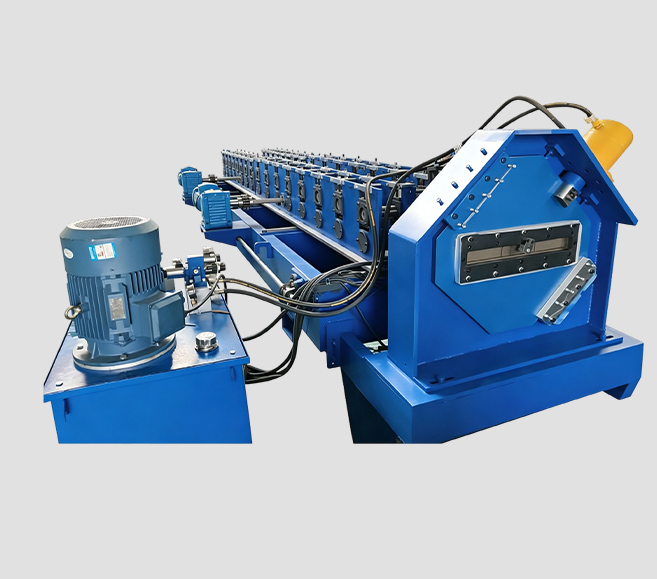
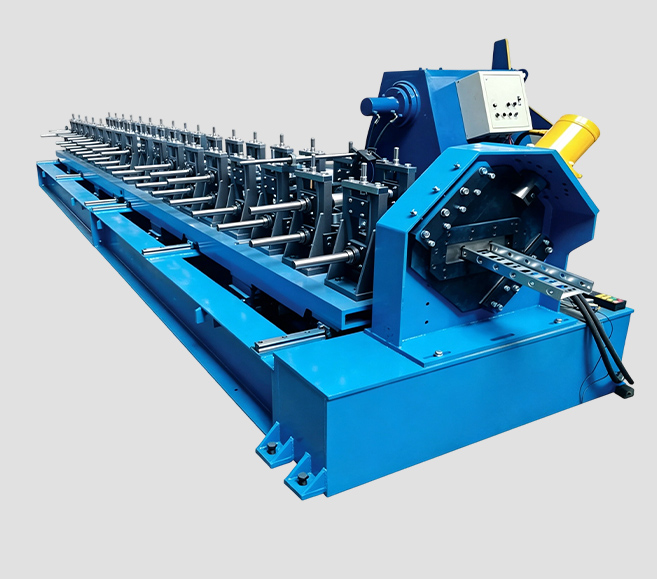
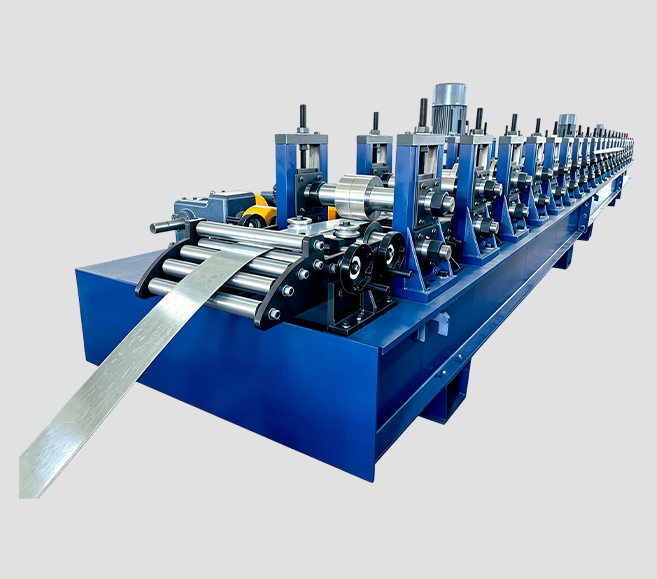
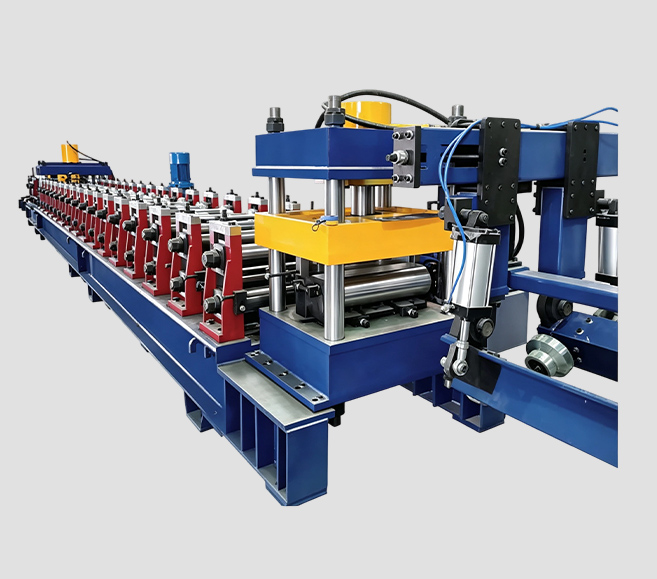
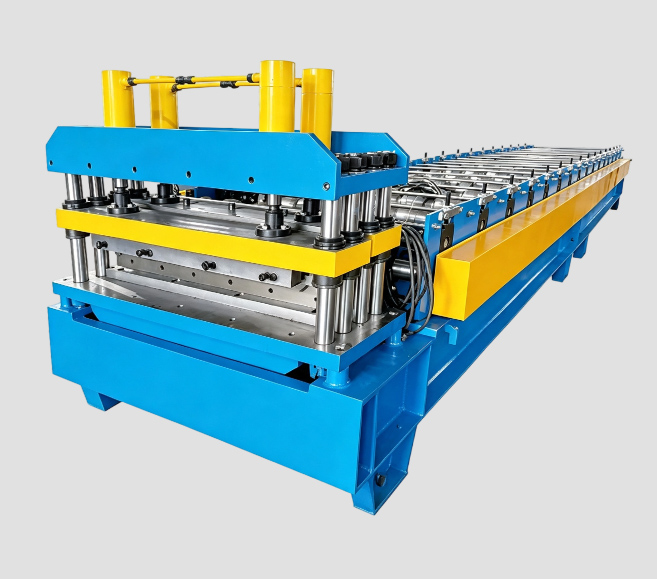
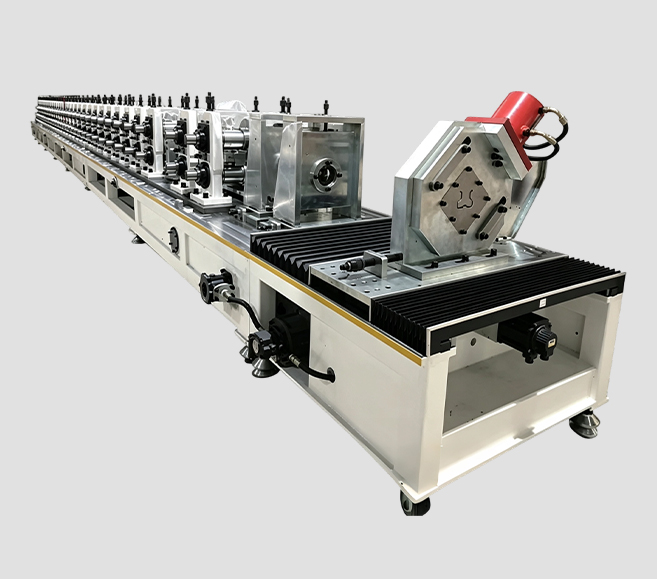
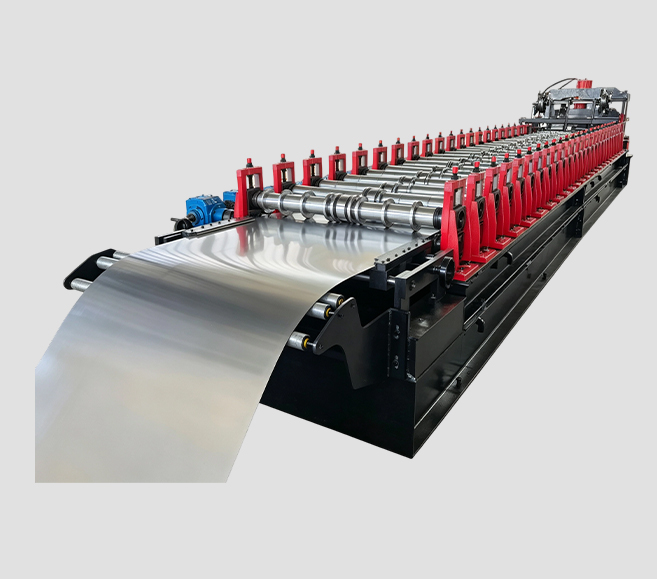
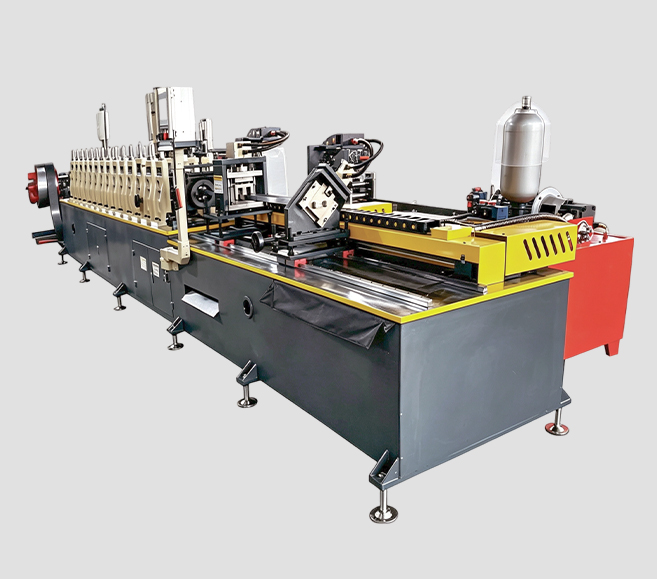
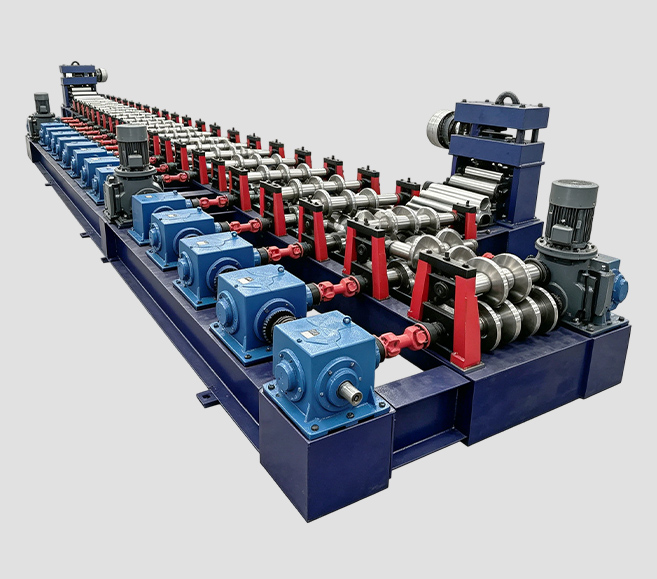
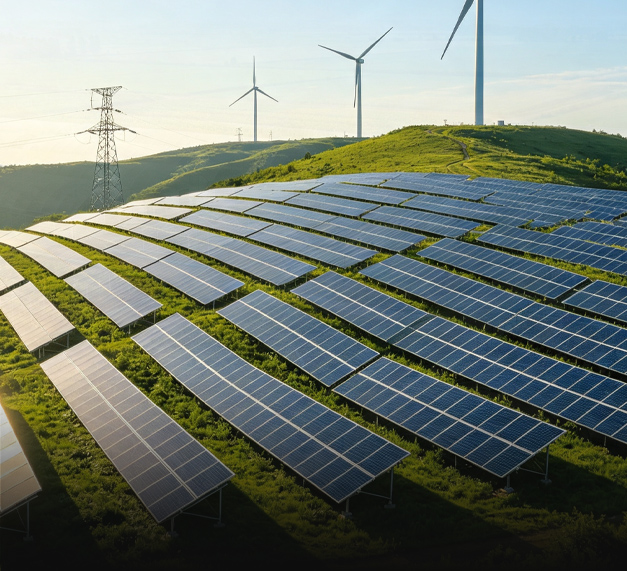
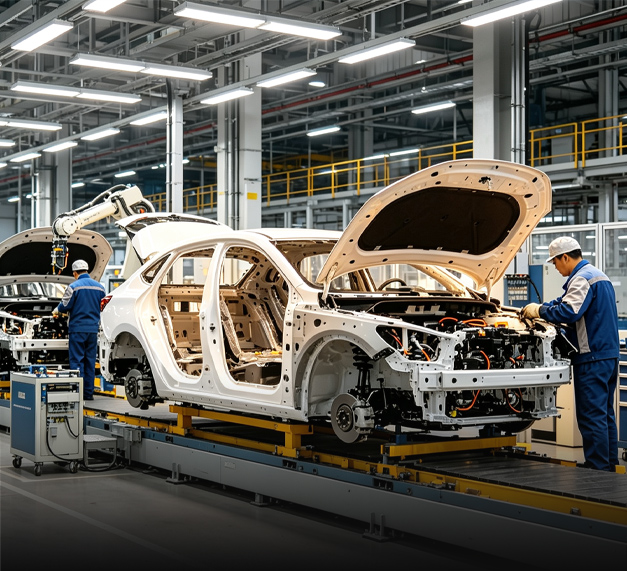
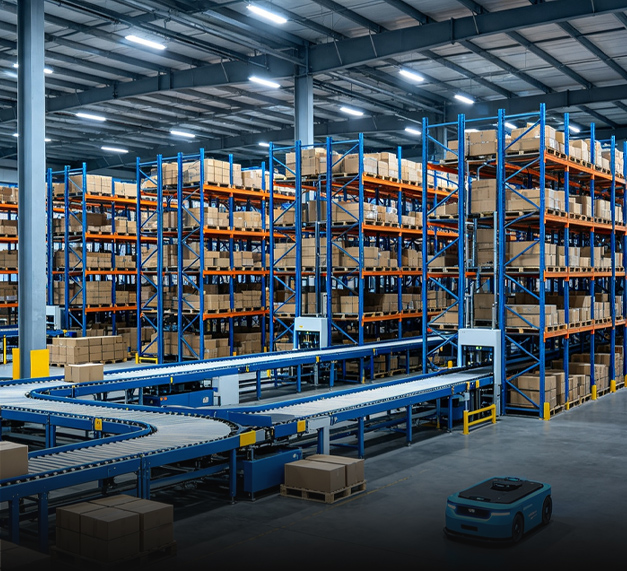
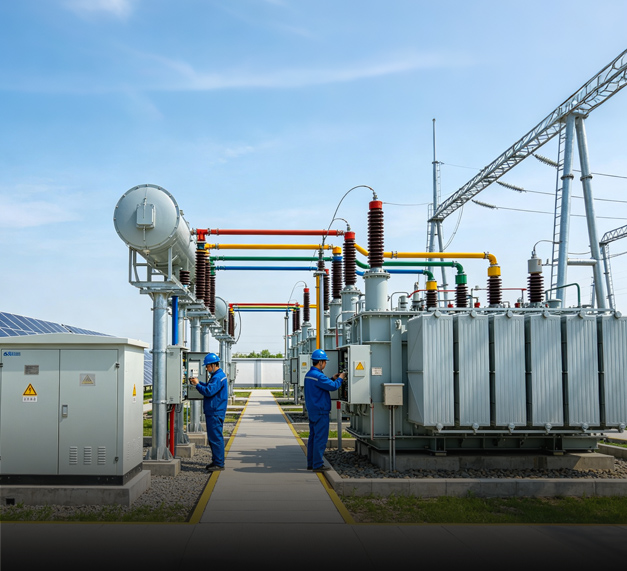
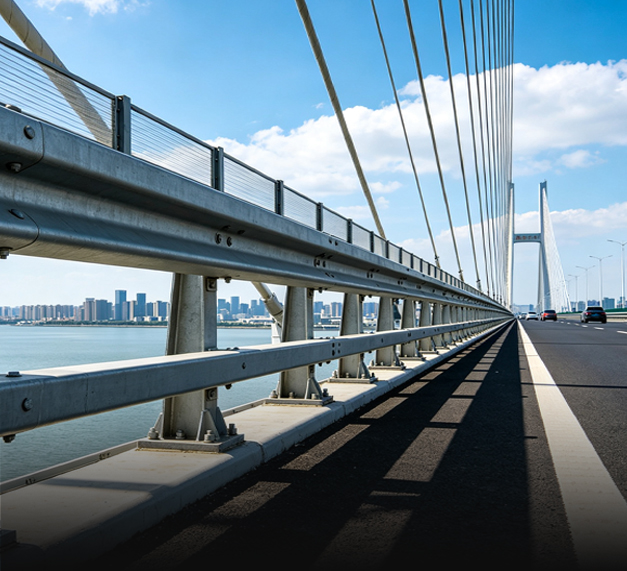
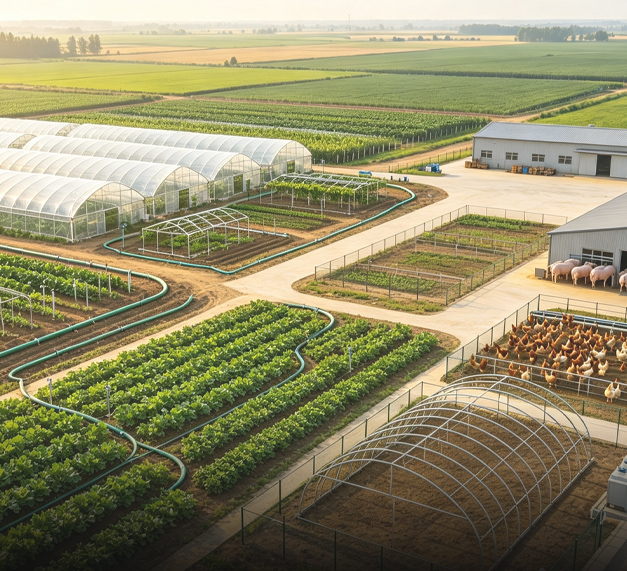
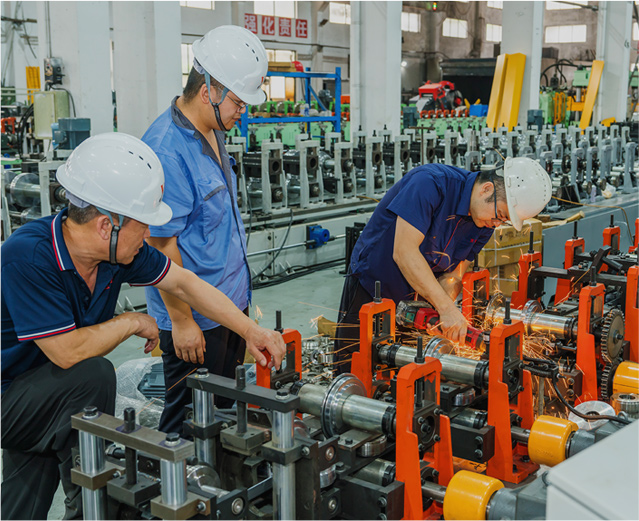


Copyright © Wuxi Yanwu Xinhui Technology Co., Ltd. All Rights Reserved.