Equipment Overview
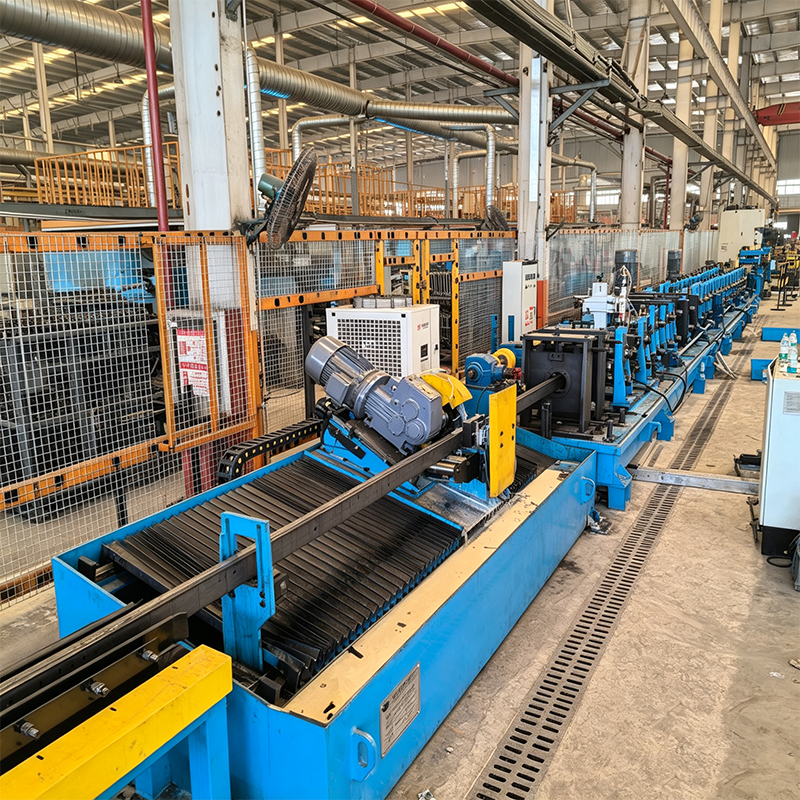
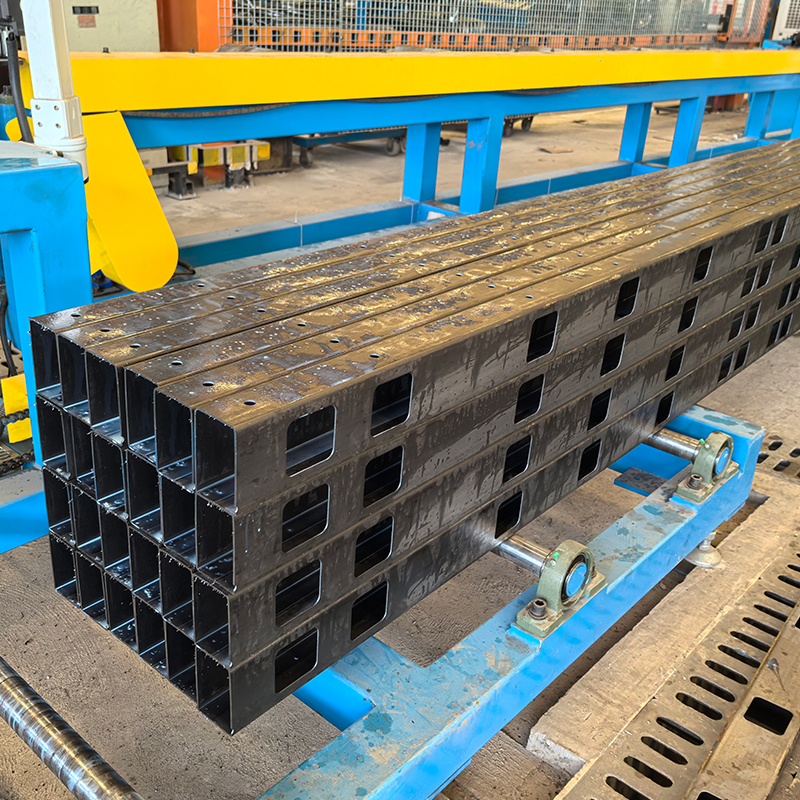
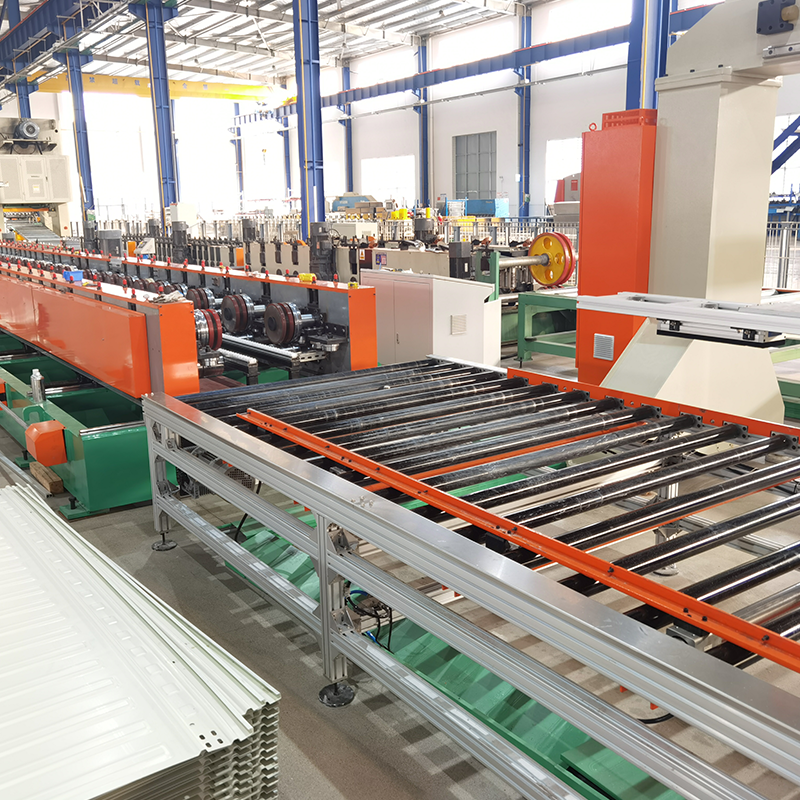
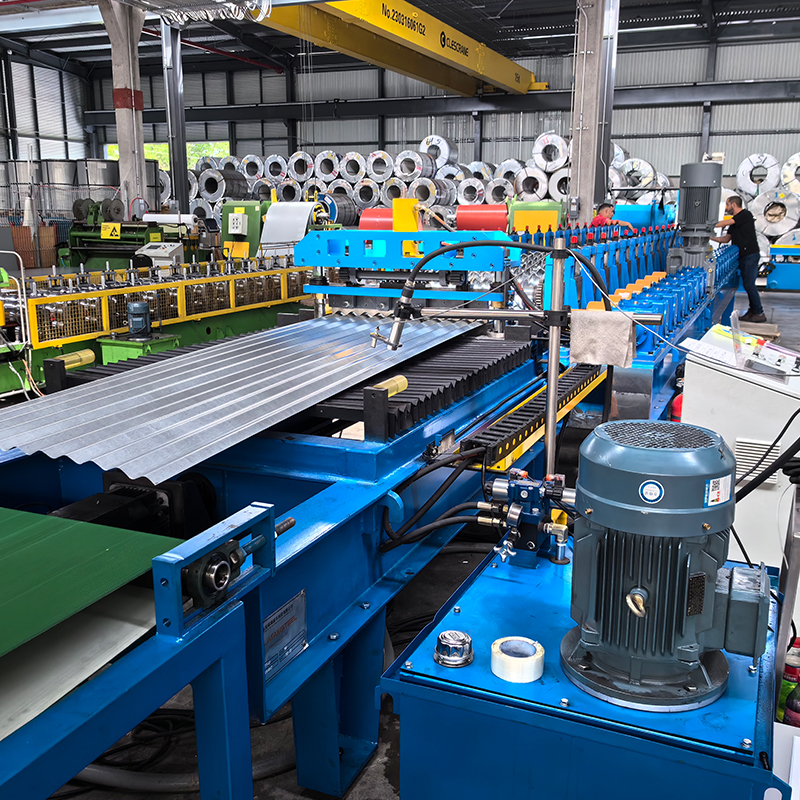
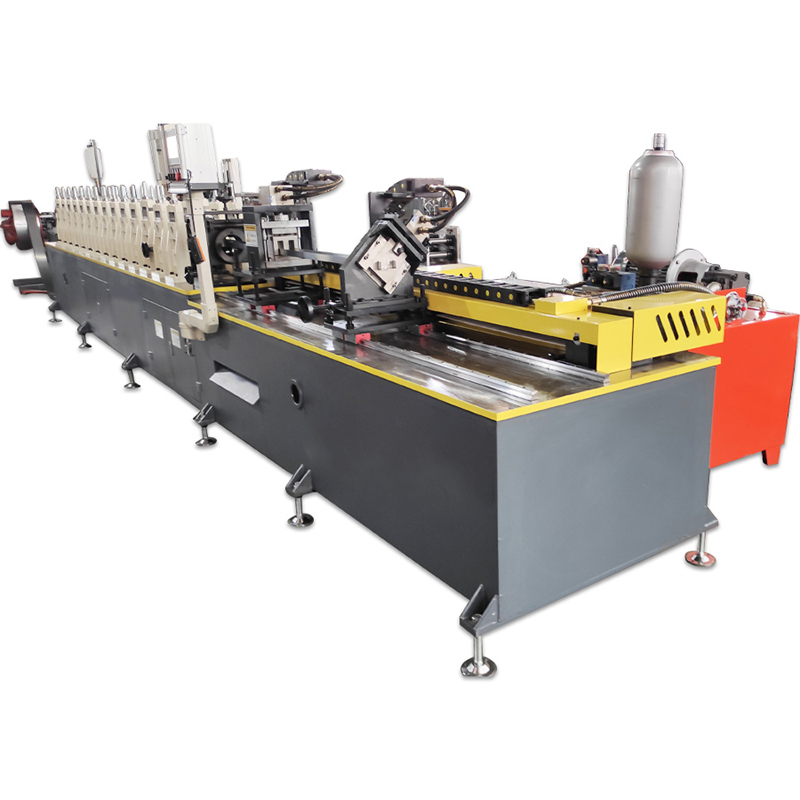
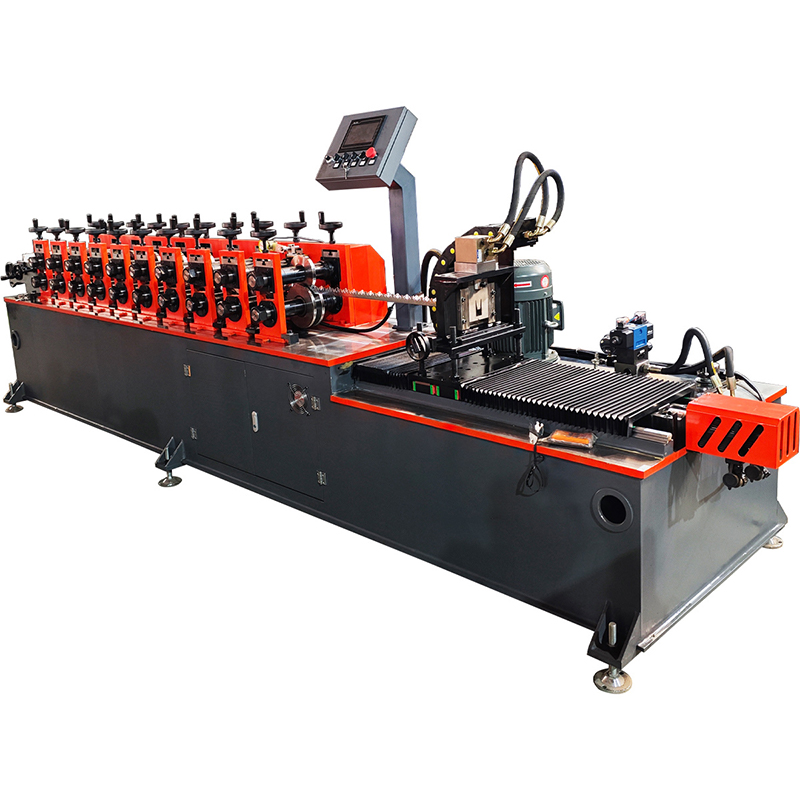
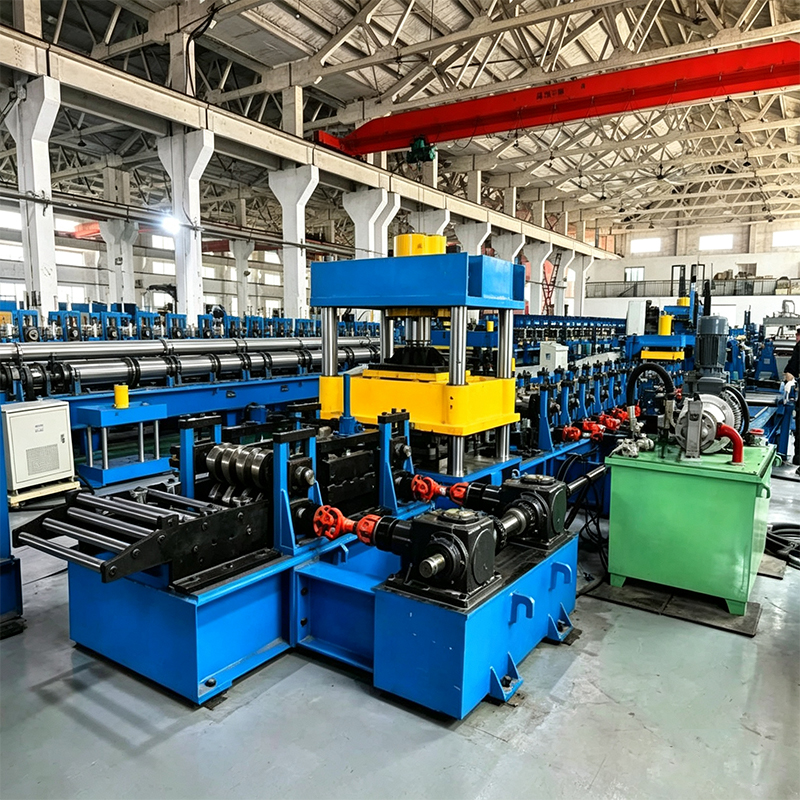
The Steel Straight Beam Roll Forming Machine is a specialized cold-roll forming production line designed for manufacturing core structural components—such as longitudinal beams, crossmembers, and reinforcement beams—for commercial and passenger vehicles. Automotive beams are the primary load-bearing components within the chassis system, responsible for supporting the vehicle's total load and absorbing impacts; their cross-sectional precision and structural strength directly determine the vehicle's load-bearing capacity, safety performance, and service life. Utilizing a continuous cold-roll forming process, the equipment transforms hot-rolled or cold-rolled steel coils into finished automotive beam profiles. It integrates a complete workflow—including hydraulic uncoiling, shearing and butt-welding, leveling, servo feeding with servo/hydraulic punching, guided entry, roll forming, servo-tracking cold-saw cutting, and automatic stacking—into a single, streamlined operation.
The entire line features fully automated PLC control and a touchscreen HMI, ensuring continuous, automated operation from uncoiling to finished product stacking. The system integrates core units such as 10,000W high-power laser welding, 22 stages of precision forming (including straightening), servo-tracking cold-saw cutting, and automatic stacking. It employs a housing-style gearbox and universal joint transmission structure, offering high rigidity, precision, and durability. The equipment is compatible with various high-strength steel materials—such as Q235A, B610L, and HC700LA (yield strength ≥700 MPa)—handling thicknesses of 1.5–3.0 mm and producing beam profiles with cross-sectional dimensions up to 100 mm × 100 mm. Requiring only 1–2 operators, this system is essential equipment for automotive manufacturers and parts processors aiming to achieve large-scale, standardized, and intelligent production.
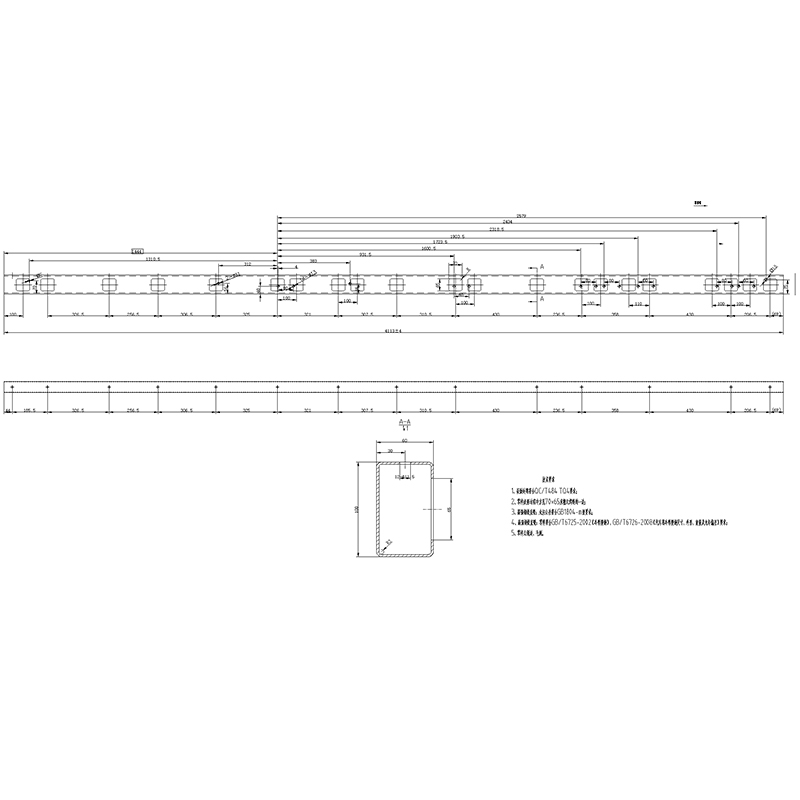
Cold-formed steel for automotive beams refers to profiles used for vehicle longitudinal beams and crossmembers, produced via continuous roll-forming units from hot-rolled steel plates or strips with a thickness of at least 1.5 mm. The vehicle frame beam products manufactured by this equipment strictly comply with the industry standard YB/T 4623-2017 "Cold-formed steel sections for automotive longitudinal beams" and the national standard GB/T 6726-2008 "Dimensions, shape, weight and permissible deviations of cold-formed steel sections for automobiles."
Core Advantages and Selling Points
(1) High-power 10,000W laser welding: High weld strength and minimal heat-affected zone
This is a key technical advantage distinguishing this equipment from conventional automotive chassis rail production lines.
The system is equipped with an HY-C10000W laser welding unit, delivering a maximum laser power of 10,000W. Laser welding offers significant advantages, including high energy density, rapid welding speeds, a small heat-affected zone, and a high weld depth-to-width ratio. Compared to traditional arc or resistance welding, laser welding produces stronger welds with less deformation, making it particularly suitable for high-strength steel (e.g., HC700LA with a yield strength ≥700 MPa). The resulting welds are aesthetically pleasing and robust, requiring no post-weld grinding, thereby effectively ensuring the structural integrity and fatigue life of the chassis rail.
(2) 22-stage precision forming (including straightening): Precise and stable cross-sectional dimensions
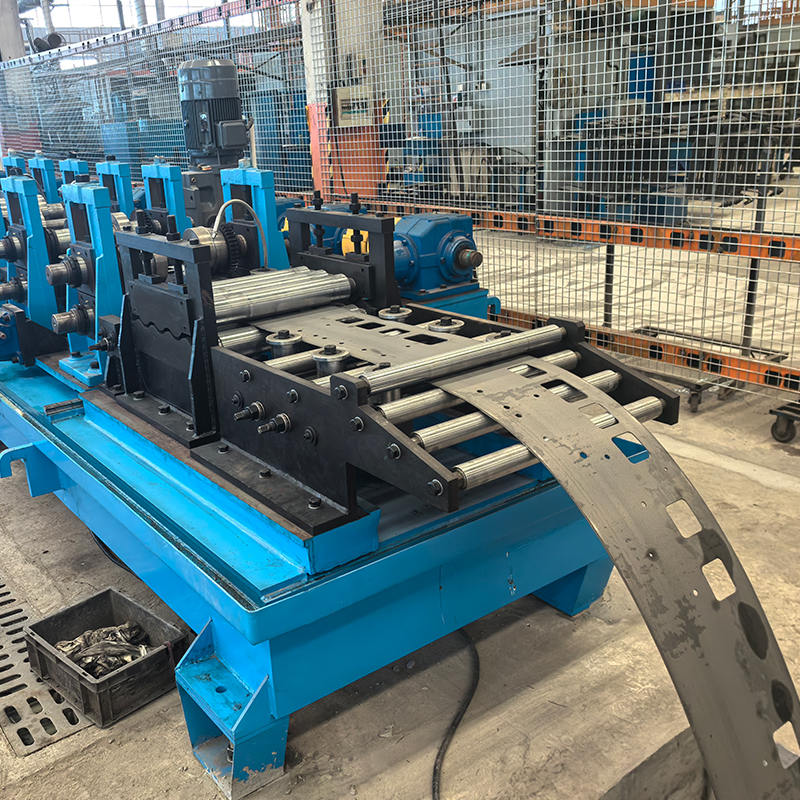
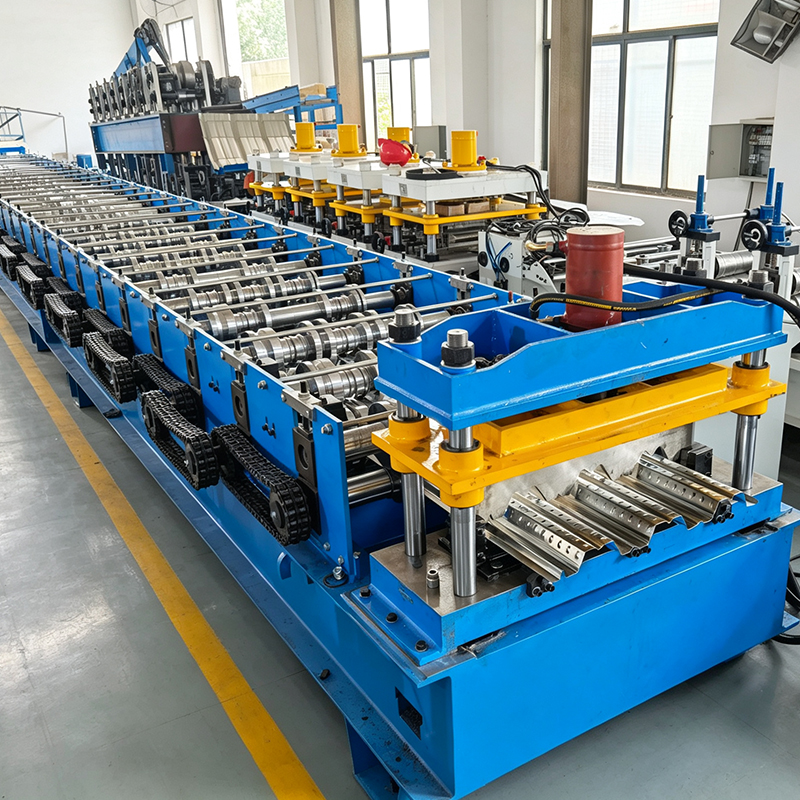
The system utilizes a 22-stage progressive cold roll forming process (including straightening). The layout of the forming stages is scientifically optimized; through precision algorithms, mold designs and forming parameters are fine-tuned to gradually bend 1.5–3.0 mm high-strength steel sheets into standard chassis rail cross-sections. This 22-stage progressive forming effectively minimizes material stress concentration, ensuring stable cross-sectional dimensions and precise angles. Vertical roll stands—critical components of the forming and sizing unit—assist the horizontal rolls in shaping the material and prevent strip spring-back; they feature single-screw adjustment and top-access roll changing for convenient maintenance.
(3) Arch-style gearbox and universal joint drive: High rigidity and precision
The forming machine employs an arch-style gearbox combined with a universal joint drive system—a core advantage distinguishing it from equipment using conventional chain drives or single-gearbox transmissions.
The arch-style frame offers superior rigidity and resistance to deformation, while the gearbox drive ensures smooth operation, high precision, and a long service life. The universal joint drive effectively compensates for angular deviations between stages, ensuring synchronization and precise alignment of the rollers throughout the multi-stage forming process. The forming machine features two 22 kW main motors, providing ample power to ensure stable and efficient operation while processing 1.5–3.0 mm high-strength steel sheets across 22 forming passes. The lateral adjustment system utilizes two 0.75 kW motors and one 1.5 kW motor, enabling precise lateral positioning of the rollers at each pass.
(4) High-precision roller shaft system for superior quality
The equipment incorporates high-precision manufacturing standards for its roller shaft system:
Shaft material: 40Cr steel, subjected to quenching and tempering (HB 220–260) to achieve excellent comprehensive mechanical properties.
Shaft diameter: Large-diameter shafts (Φ90 mm / Φ110 mm) offering high load-bearing capacity and superior torsional rigidity.
Shaft processing: CNC turning followed by precision cylindrical grinding to ensure dimensional accuracy and surface finish.
Bearing brand: Harbin Bearing (HRB), a renowned domestic brand known for smooth operation and long service life.
Spacer design: To minimize shaft runout, spacers are machined from thick-walled tubing to ensure tight geometric tolerances and maximize contact area with the rollers; the inner bore features a clearance fit with the shaft.
(5) Rollers made of Cr12MoV steel with quenching treatment and CNC precision machining
Includes one set of rollers made from Cr12MoV steel, hardened via quenching (HRC 58–62).
Cr12MoV is a premium cold-work die steel characterized by high hardness, excellent wear resistance, and good hardenability.
Roller processing: CNC turning ensures precise control over circular and radial runout.
High-precision CNC machining guarantees the concentricity and cylindricity of each roller, ensuring seamless and accurate transitions between forming passes.
The tooling offers long service life and stable precision, effectively ensuring consistent quality during long-term, high-volume production.
(6) Precision-designed vertical roller stands to prevent strip springback
The vertical roller stand is a critical component of the forming and sizing unit; it assists the horizontal rollers in shaping the material and prevents the steel strip from springing back. The vertical roll stand utilizes a single-screw adjustment mechanism for ease of operation; the top-access roll-changing design ensures quick and convenient maintenance.
Vertical roll shaft material: 40Cr; processing sequence: rough turning → quenching and tempering → finish turning → high-frequency quenching → post-quenching grinding.
Multi-stage precision machining ensures high hardness and accuracy for the vertical roll shaft, effectively guaranteeing long-term operational stability.
(7) Straightening mechanism ensures product straightness
The equipment is equipped with a dedicated straightening mechanism designed to straighten the formed steel pipe or profile, ensuring the straightness of the finished product. By applying reverse bending deformation via multiple sets of staggered straightening rolls, the mechanism effectively eliminates longitudinal bending and torsional deformation caused during the forming process. Meeting straightness standards for the main beam effectively ensures precision in subsequent frame welding and assembly.
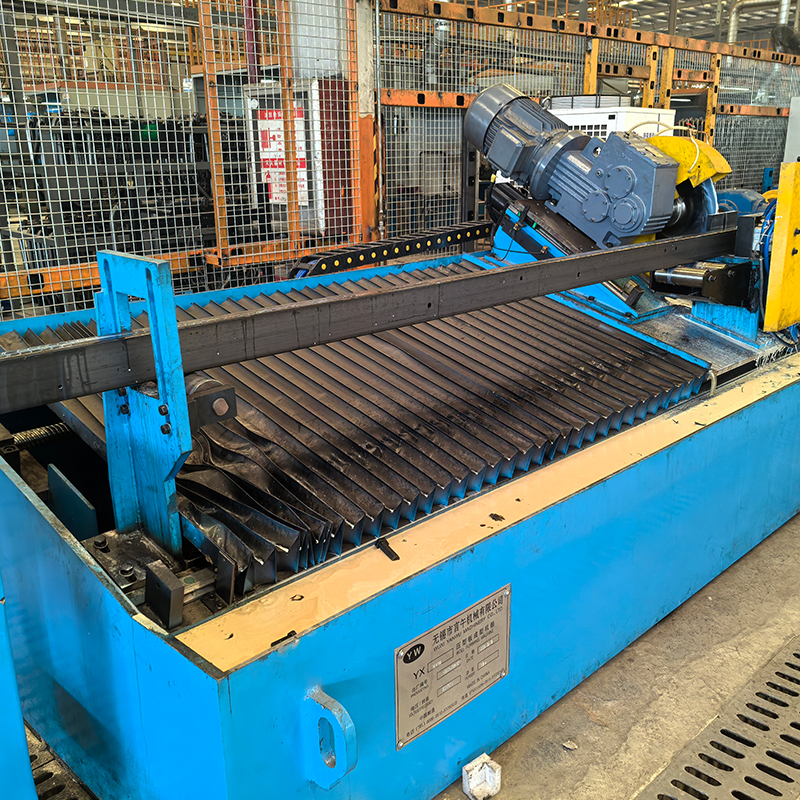
(8) Servo-tracking cold saw cutting; precise cutting without stopping the line
Utilizes a servo-tracking cold saw cutting system that automatically tracks the moving speed of the profile during continuous operation and performs synchronized fixed-length cutting.
Sawing structure: Servo-tracking + sawing
Sawed material specifications: Q235A-3.0, Q235A-2.5, B610L-2.5, HC700LA-2.0 (yield strength ≥ 700 MPa)
Product cross-section dimensions: ≤ 100mm × 100mm
Sawing mechanism base: Welded carbon steel plate subjected to vibration or tempering stress relief, then machined on a CNC gantry machining center to ensure rigidity and precision
Sawing motor power: 11 kW (K-series gear reducer)
Number of saw blades: 1
Clamping fixture: Dual-cylinder clamping; provides high clamping force and reliable positioning
Servo motor power: 4.5 kW
(9) Full-process automation significantly reduces labor requirements
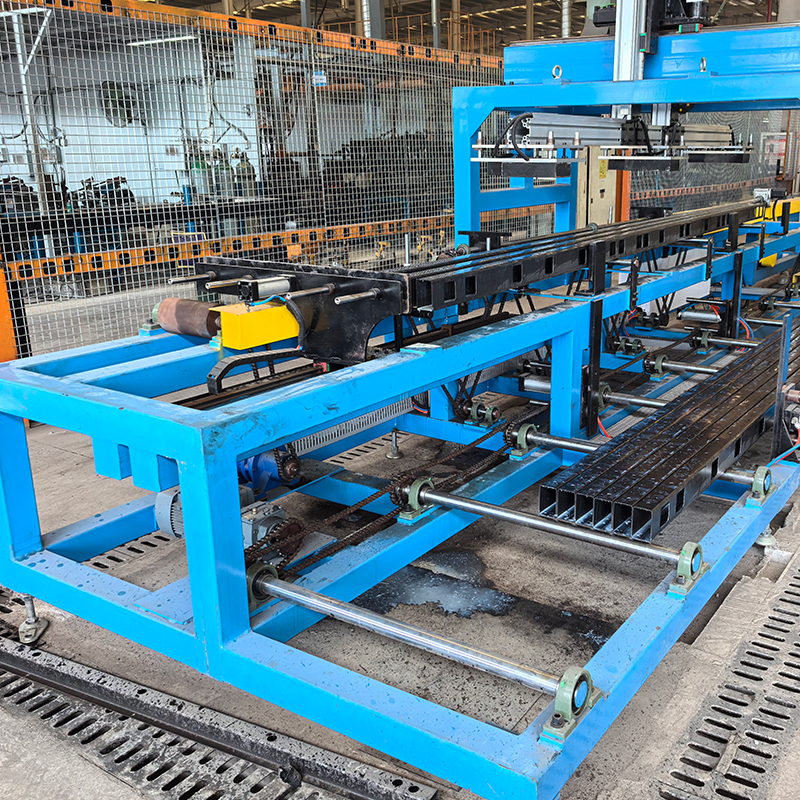
The entire line integrates fully automated processes, including hydraulic uncoiling, shearing and butt-welding, leveling, servo feeding & punching, forming, sawing, and palletizing. Fully automated production requires only 1–2 operators for monitoring, resulting in efficiency several times higher than traditional production methods. The equipment features a compact footprint, making it suitable for various factory layouts.
(10) Intelligent control and ease of operation
Equipped with a fully automated PLC control system and a touchscreen HMI, the equipment enables comprehensive digital process management. Operators can configure parameters—such as production speed and cut length—with a single touch. It offers both manual and automatic operating modes to meet diverse production requirements. A real-time monitoring and fault warning system is included; the machine automatically triggers an alarm and displays the specific cause of any malfunction. Operators can become proficient enough to work independently after just 1–2 days of training, significantly reducing skill requirements.
Technical Parameters
Item | Parameter
Applicable materials | Q235A, B610L, HC700LA (yield strength ≥700 MPa), etc.
Material thickness | 1.5–3.0 mm
Product cross-section dimensions | ≤100 mm × 100 mm
Forming machine structure | Arch-style gearbox + universal joint drive
Roller shaft material | 40Cr, quenched and tempered (HB 220–260)
Shaft diameter | Φ90 mm / Φ110 mm
Roller shaft processing | CNC turning followed by precision cylindrical grinding
Bearing brand | Harbin Bearing (HRB)
Main forming motor power | 22 kW × 2
Lateral movement motor power | 0.75 kW × 2 units + 1.5 kW × 1 unit
Forming line speed | 0–15 m/min (actual speed depends on workpiece length)
Number of forming passes | 22 passes (including straightening)
Vertical roller stand adjustment | Single-screw adjustment; top-access roller change
Vertical roller shaft material | 40Cr; quenched & tempered → precision turning → high-frequency quenching → grinding
Rolling thickness | 1.5–3.0 mm
Rolling material | Hot-rolled sheet, cold-rolled sheet
Roller material | Cr12MoV, quenched (HRC 58–62)
Roller processing | CNC turning (ensuring radial runout and concentricity tolerances)
Spacer sleeves | Machined from thick-walled tubing; ensures geometric tolerances
Safety guards | Protective covers installed on the drive side
Straightening mechanism | Specialized straightening unit ensuring product straightness
Laser welding model | HY-C10000W
Max. laser power | 10,000 W
Sawing structure | Servo-tracking + sawing
Sawing motor power | 11 kW (K-series gear reducer)
Number of saws | 1
Clamping fixture | Dual-cylinder clamping
Servo motor power | 4.5 kW
Sawing mechanism base: Post-welding stress relief (vibration or tempering) for carbon steel plates; machining via CNC gantry machining center
Saw-cut tube materials: Q235A-3.0, Q235A-2.5, B610L-2.5, HC700LA-2.0
Control system: Automatic PLC control system
Operators: 1–2 persons
Production Process
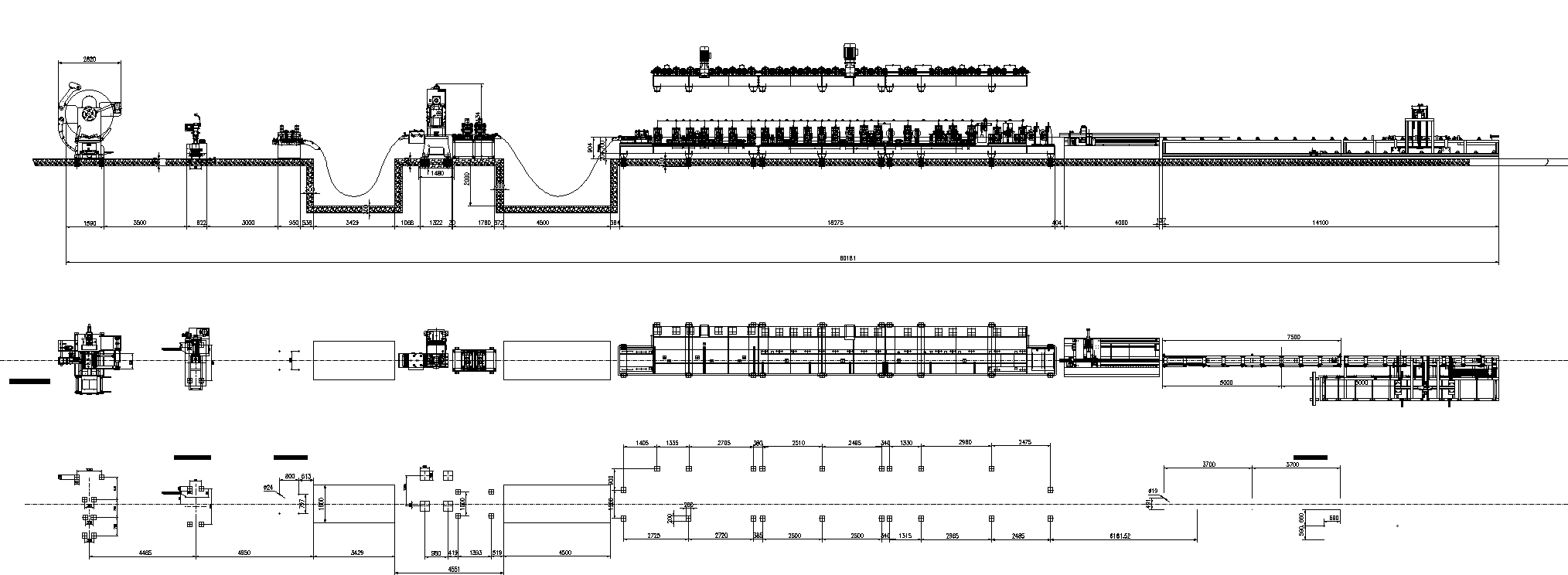
Hydraulic Uncoiling → Shearing & Butt-Welding → Leveling → Servo Feeding & Punching → Guided Infeed → Roll Forming → Servo-Tracking Cold Saw Cutting → Automatic Stacking
Process | Description
Hydraulic Uncoiling | Hydraulic uncoiler supports the steel coil and ensures stable feeding; maximum load capacity is customizable.
Shearing & Butt-Welding | Automatic shearing and butt-welding of coil ends enables continuous production without stopping the line.
Leveling | Multi-roller leveler performs precision leveling to eliminate internal material stress and ensure forming accuracy.
Servo Feeding & Punching | Servo system ensures precise positioning; press machine performs punching for mounting holes, connection holes, etc.
Guided Infeed | Automatic material guiding and alignment ensure the steel strip enters the main forming unit in the correct position.
Roll Forming | 22-stage progressive cold roll forming (including straightening) gradually shapes the high-strength steel sheet into the main beam profile.
Servo-Tracking Cold Saw Cutting | Servo-tracking system synchronizes the cut, allowing for fixed-length cutting without stopping the line.
Automatic Stacking | Finished products are automatically stacked and neatly discharged.
Application Areas
Chassis beam profiles produced by automotive cold-roll forming equipment are widely used in the following areas:
Commercial vehicle frames: Longitudinal and transverse beams for heavy, medium, and light-duty trucks—the chassis beam is the core structural component supporting the vehicle's total weight.
Passenger vehicle chassis structures: Reinforcement beams and longitudinal beams for sedans and SUVs—high-precision forming ensures chassis safety performance.
New energy vehicles: Frame structural components for electric trucks and buses—lightweight designs suited to new energy vehicle models.
Special-purpose and specialized vehicles: Frames for dump trucks, concrete mixer trucks, box trucks, and other specialized vehicles—high-strength beams ensure load-bearing capacity.
Automotive components: Frame structural parts such as crossmembers, side rails, and through-beams.
Construction machinery: Chassis structural components for construction vehicles—high-strength steel beams suited to heavy-load operating conditions.
Market Outlook
With the continuous development of the global automotive industry, the market for cold-roll forming equipment for automotive chassis side rails is showing steady growth.
Continued growth in automotive production and sales: As the world's largest automobile producer, China consistently ranks at the forefront globally in annual production and sales volume. Annual production and sales of heavy-duty trucks exceed 1.2 million units. The rapid development of commercial vehicles and new energy vehicles drives a sustained increase in demand for chassis structural components, thereby boosting the demand for high-quality side rail forming equipment.
Lightweighting trends drive the application of high-strength steel: High-strength steel reduces component weight and fuel consumption; it represents the future direction of structural steel development and aligns with international and domestic energy conservation and emission reduction requirements. Ultra-high-strength hot-rolled coils (700 MPa grade and above) have been a key focus of international research into thin-gauge, ultra-high-strength steel sheets in recent years. As high-strength steel becomes widely used in automotive side rails, the demand for cold-roll forming equipment capable of processing such materials (e.g., HC700LA with a yield strength ≥700 MPa) continues to rise.
Industry standards and specifications: The industry standard YB/T 4623-2017, *Cold-formed Steel Sections for Automotive Side Rails*, specifies dimensions, shapes, and technical requirements for these components. The national standard GB/T 6726-2008, *Dimensions, Shape, Weight and Permissible Deviations for Cold-formed Steel Sections for Automobiles*, provides a unified technical basis for the industry. The implementation of these standards imposes higher precision requirements on cold-roll forming equipment.
Trends in flexible manufacturing: Digital workshops for the flexible manufacturing of automotive side rails—comprising equipment such as CNC roll-forming lines and robotic plasma cutting lines—enable flexible, efficient, lean, green, and intelligent mixed-model production. Flexible cold-roll forming lines process coils of fixed width through uncoiling and leveling stages before cold-forming them into U-shaped truck side rails and reinforcement beams. The roll-forming line speed is continuously adjustable, ranging from 0 to 24 m/min. As the automotive industry increasingly demands flexible manufacturing and intelligent production, the need for high-precision, intelligent cold-roll forming equipment will continue to grow.
Service & Support
Solution Design: Personalized equipment selection and production line layout based on customer product drawings, capacity requirements, and target markets.
Custom Manufacturing: Support for non-standard customization, with full control over the process from roll design to complete line manufacturing.
Installation & Commissioning: On-site installation, commissioning, and operator training provided by engineers to ensure rapid production startup.
After-Sales Support: Long-term technical consultation and spare parts supply; engineers hold valid visas and are available for on-site service worldwide at any time.
Continuous Optimization: Equipment modification and capacity upgrade services available to adapt to changing production needs.
Why Choose Us
Nearly 20 years of manufacturing experience: Mature technology, refined processes, and reliable quality
High-strength steel forming experts: Compatible with high-strength steels such as HC700LA (yield strength ≥700 MPa), meeting automotive lightweighting requirements
10,000W high-power laser welding: High weld strength and minimal deformation; ideal for welding high-strength steel
22-stage precision forming: Includes straightening; ensures precise, stable cross-sectional dimensions and excellent product straightness
Arch-style gearbox with universal joint drive: High rigidity, high precision, and long service life
High-precision roller system: Quenched and tempered 40Cr rollers; CNC machined and super-precision ground; equipped with HRB bearings
Cr12MoV quenched rolls: HRC 58–62 hardness; CNC machined for long life and consistent precision
Servo-tracking cold saw cutting: Continuous online cutting without stopping the line; reliable dual-cylinder clamping and positioning
Fully automatic intelligent control: PLC automation with touchscreen interface; the entire line can be operated by just 1–2 people
Industry standard compliance: Products strictly adhere to YB/T 4623-2017 and GB/T 6726-2008 standards
Direct manufacturer: No middlemen; excellent cost-performance ratio
Global service network: Engineers hold all necessary visas; rapid response capabilities
 English