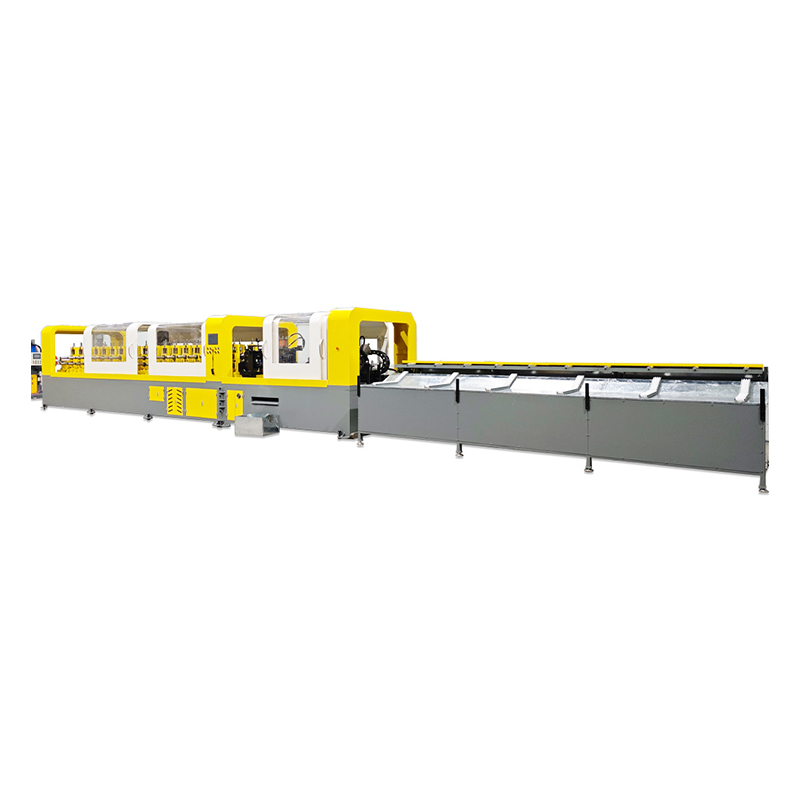
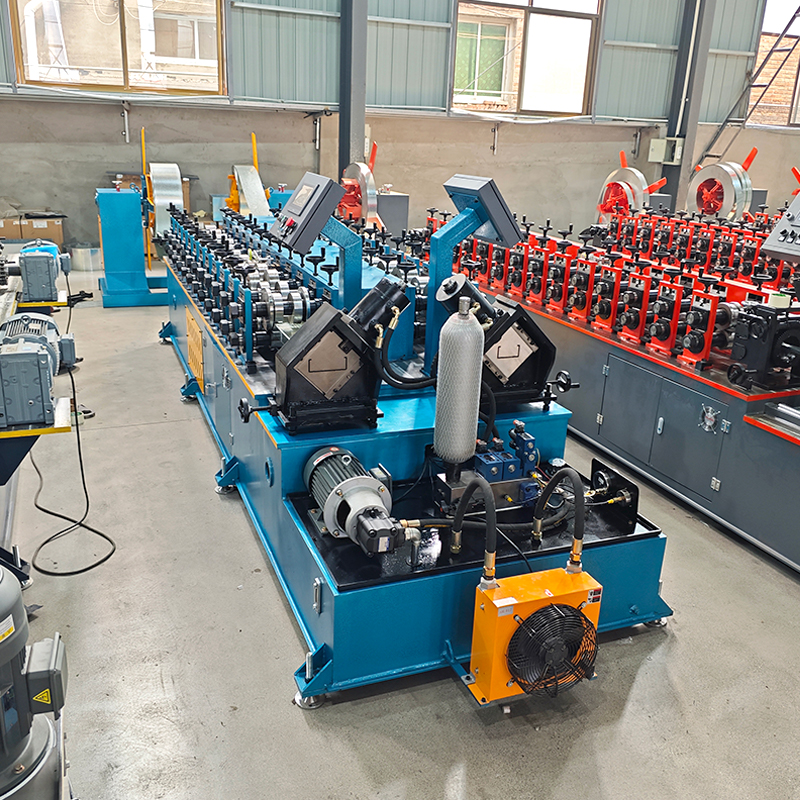
I. Equipment Introduction
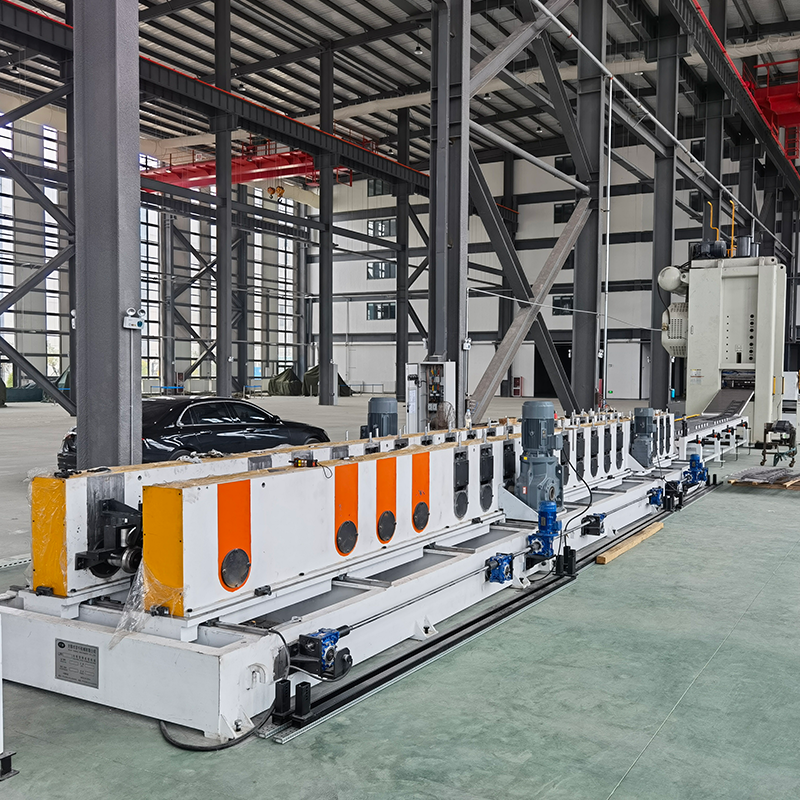
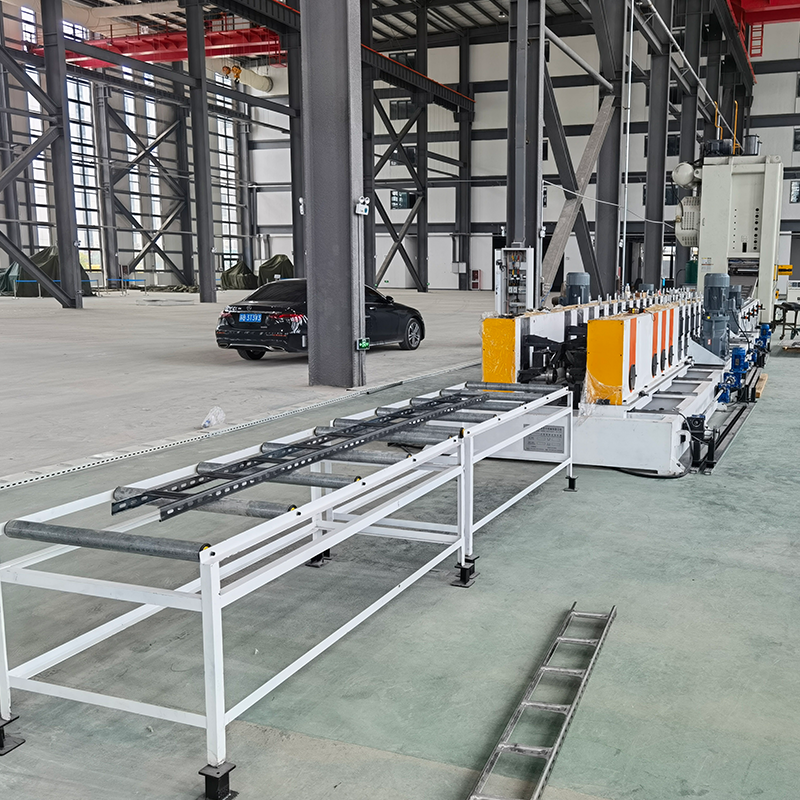
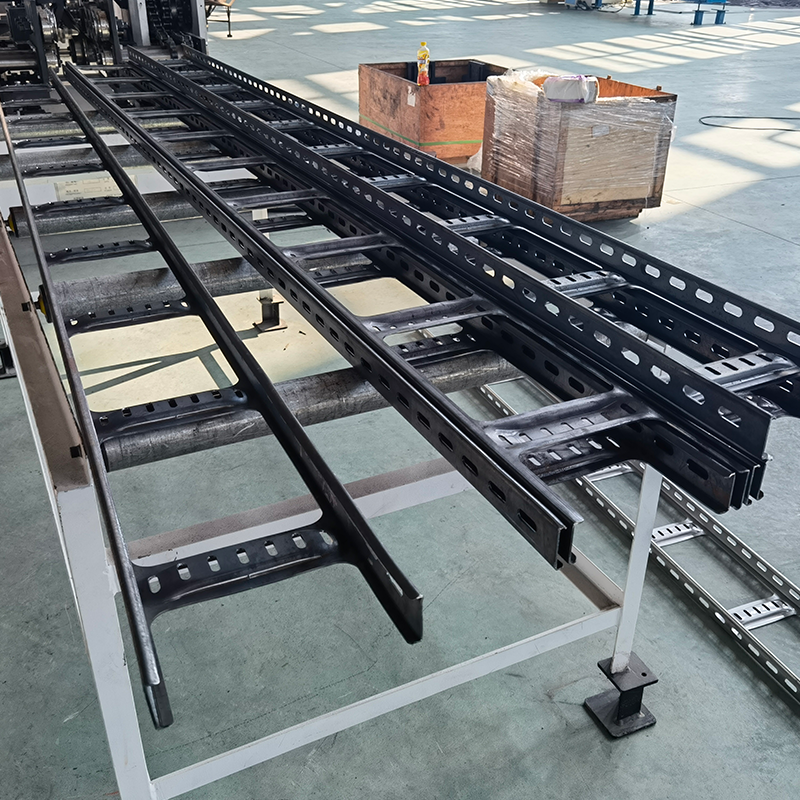
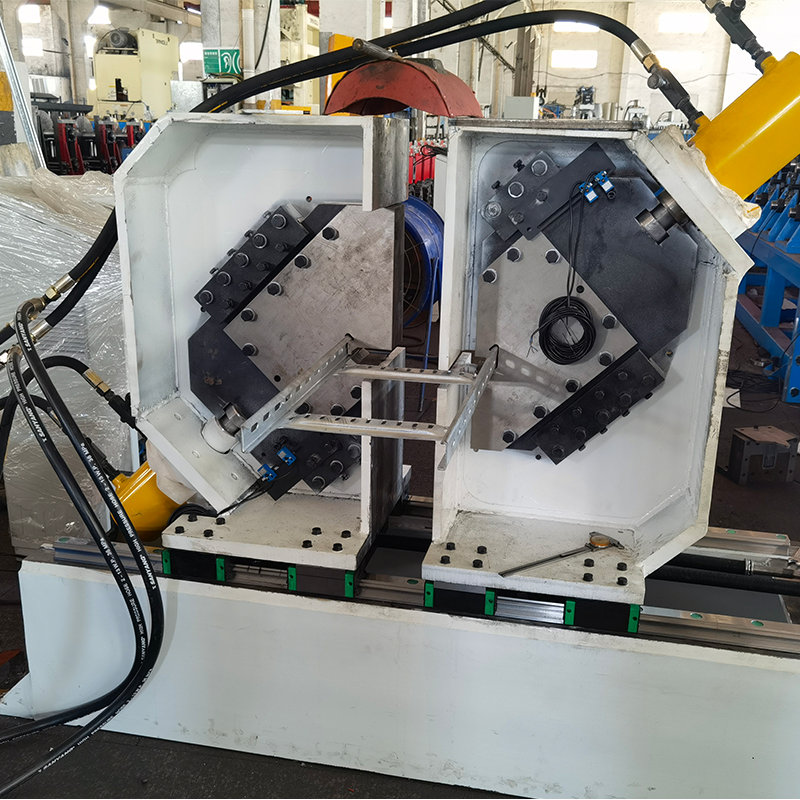
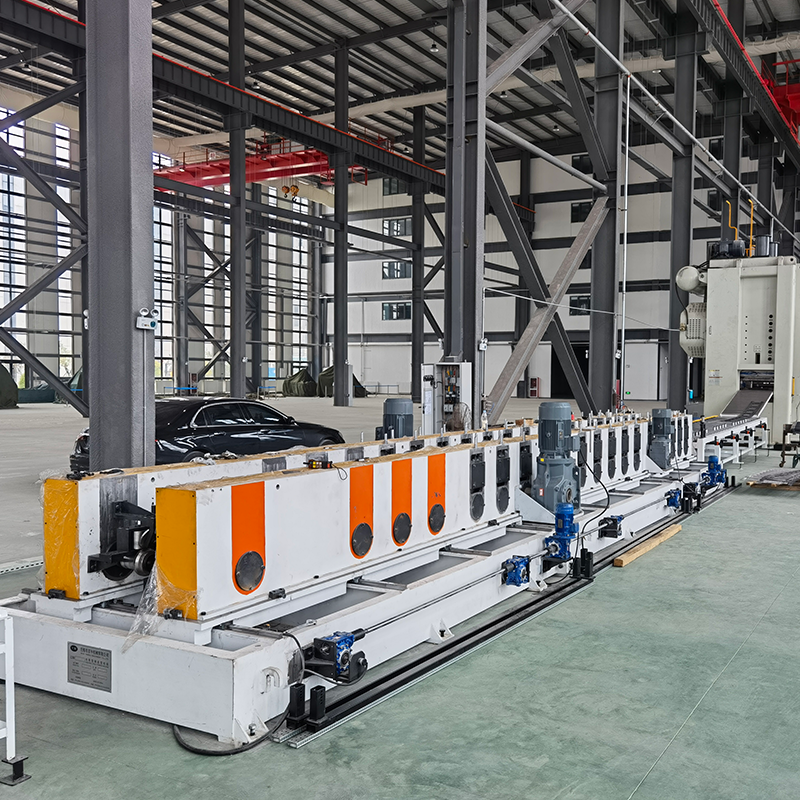
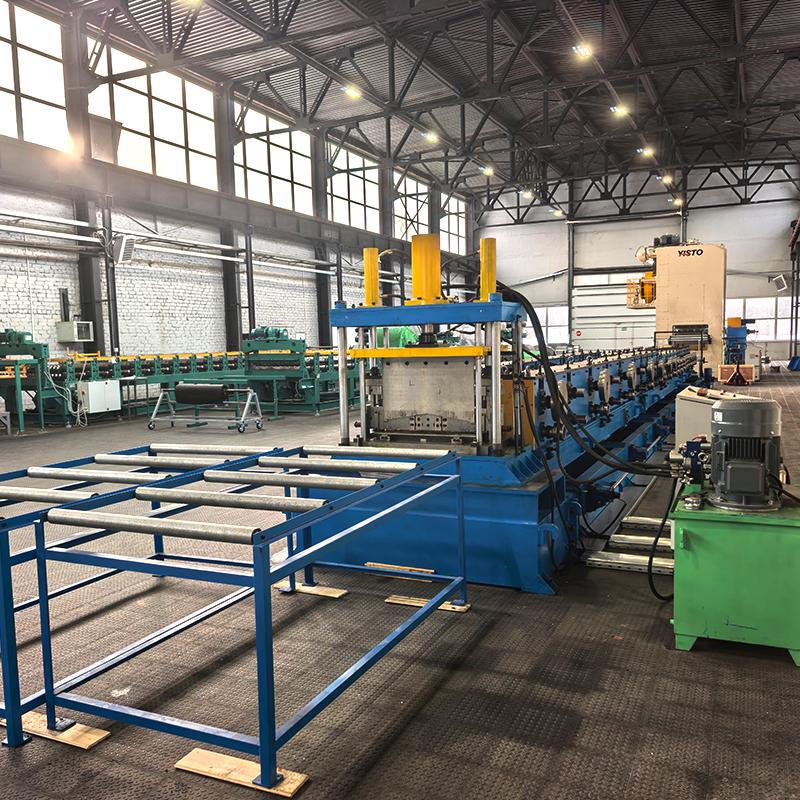
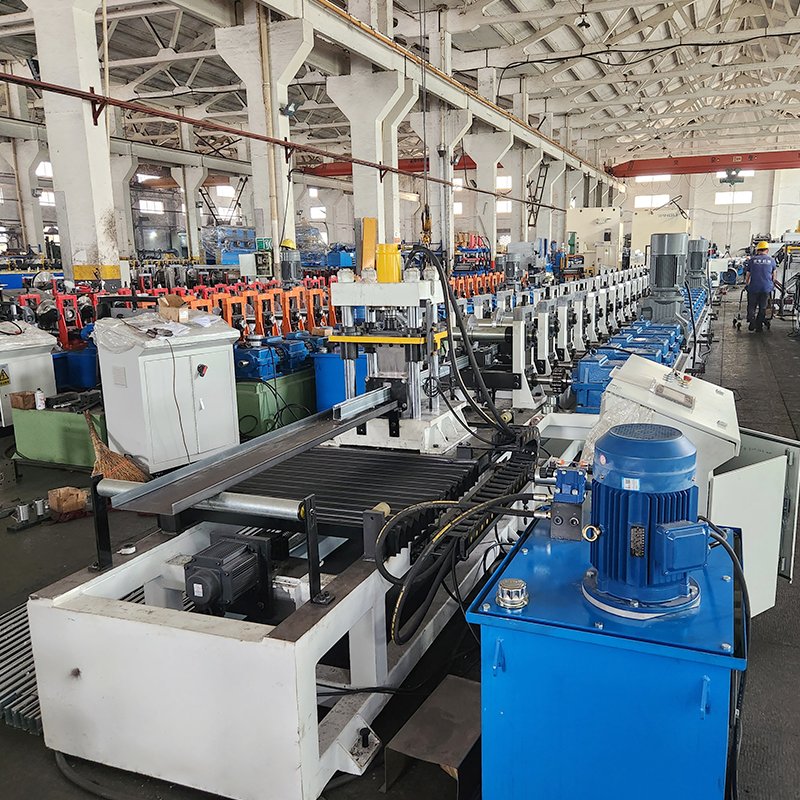
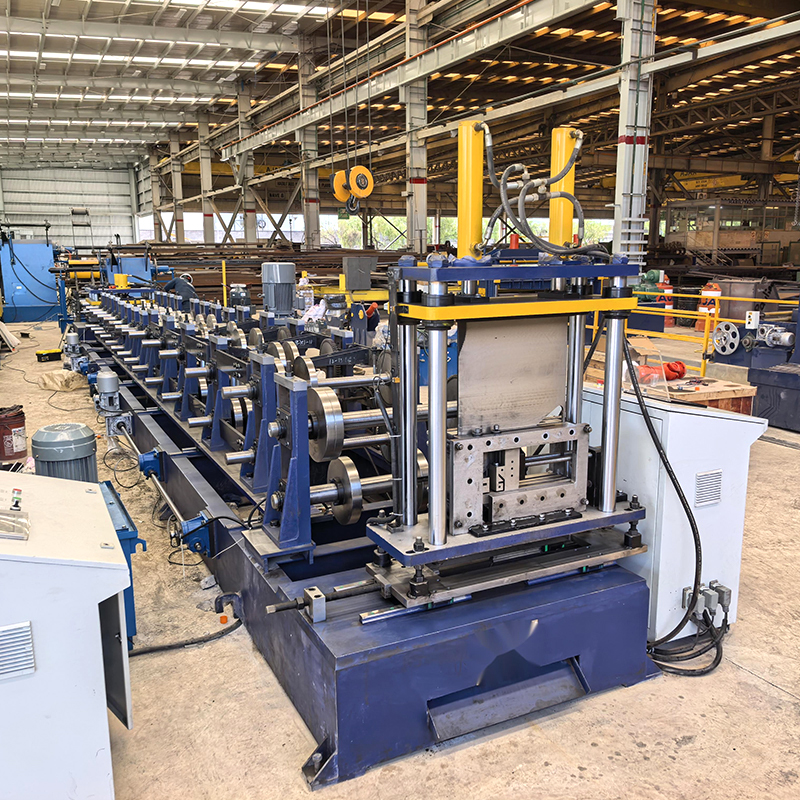
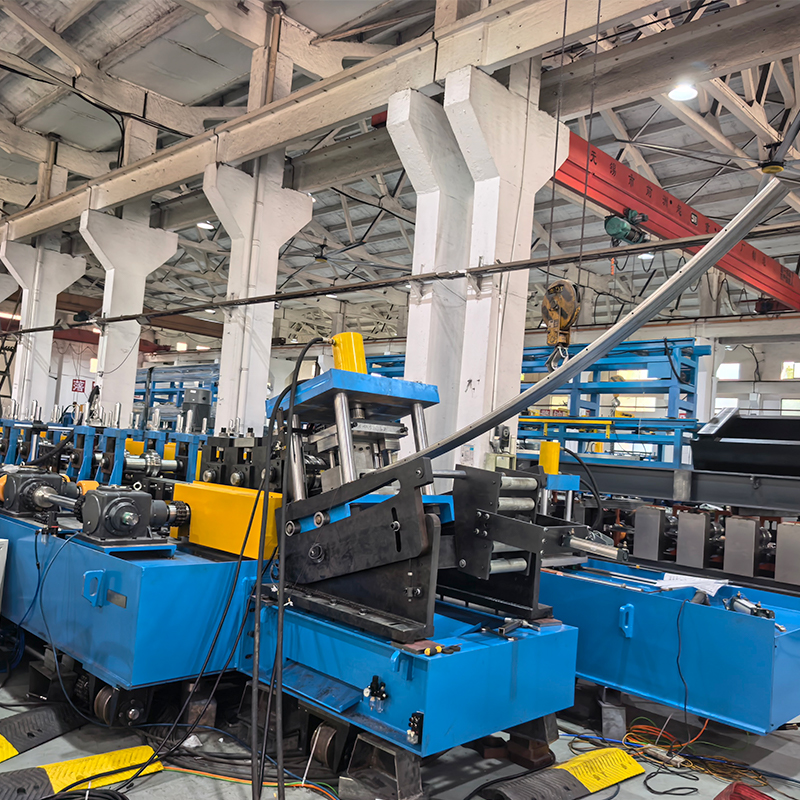
The Integrated Ladder-Type Cable Tray Roll Forming Machine is an automated cold-roll forming system designed specifically for producing integrated ladder-type cable trays (also known as unitary ladder trays). Utilizing a continuous cold-roll forming process, the machine transforms steel strip coils into finished integrated ladder trays in a single pass, encompassing uncoiling, leveling, punching, forming, and cutting. The entire line features fully automatic PLC control and is equipped with a modular, adjustable forming unit; a single set of rollers accommodates multiple specifications, with width and height adjustments performed automatically by motors, enabling rapid profile changes via touchscreen parameter input.
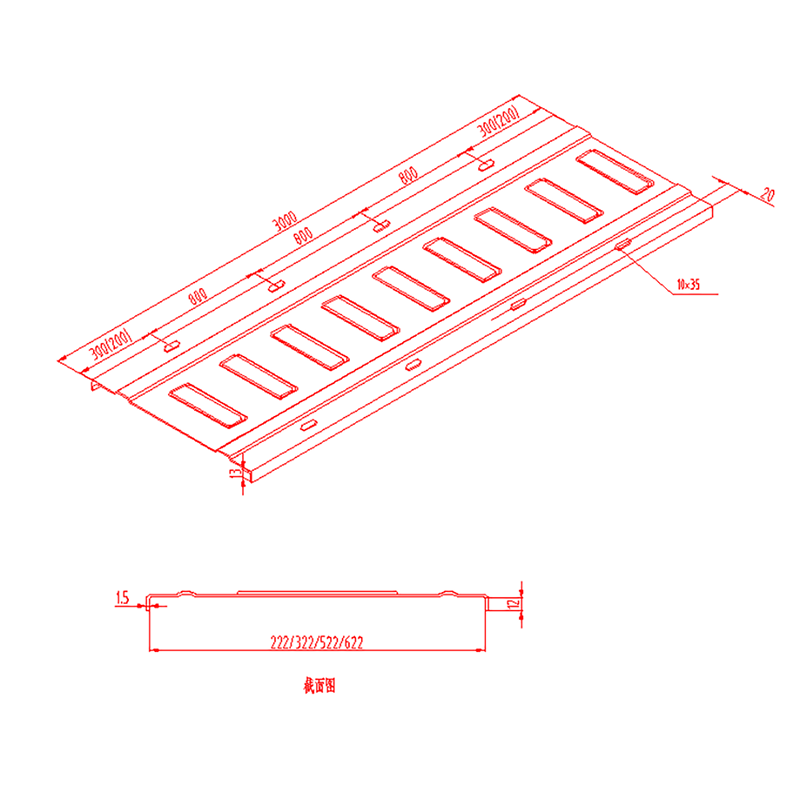
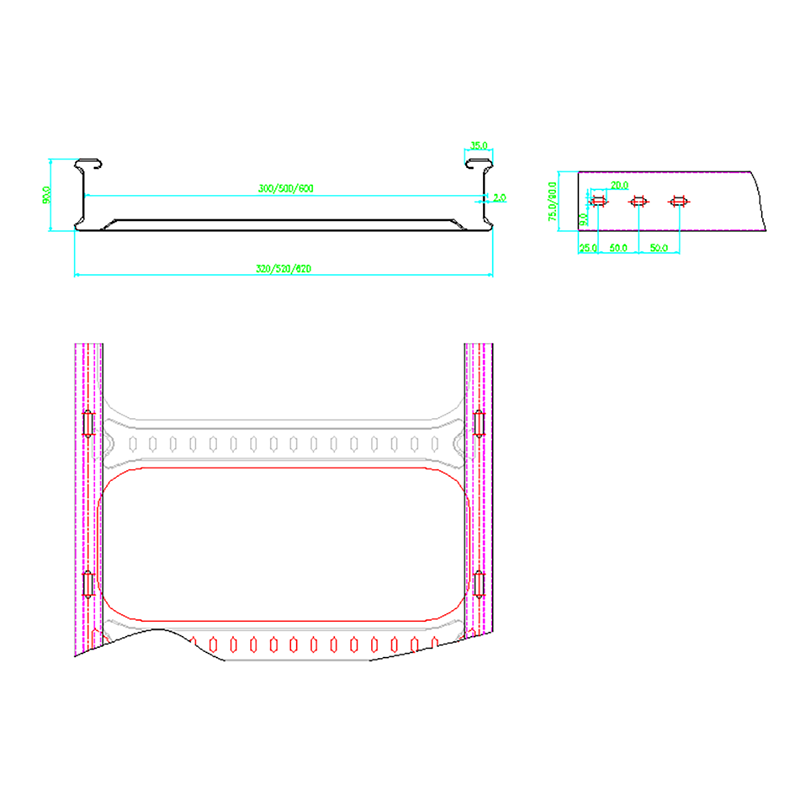
The side rails and rungs of the integrated ladder tray are formed from a single sheet of material through a punching process, eliminating the need for welding. The rungs feature channel-shaped stiffening ribs and a trapezoidal cross-section, significantly enhancing the tray's overall load-bearing capacity and resistance to deformation. The system is compatible with materials such as galvanized steel strip, cold-rolled sheet, and hot-rolled sheet, supporting material thicknesses ranging from 1.0 mm to 2.0 mm.
Compared to traditional assembled or welded cable trays, the integrated ladder-type tray offers superior structural integrity and product consistency, featuring no assembly seams or weld points. Various accessories—such as horizontal tees, vertical upward bends, and vertical downward bends—can also be formed as single, integrated units, eliminating the need for on-site cutting or welding.
II. Core Advantages and Selling Points
1. Integrated Molding: Stronger and More Durable Structure
Side rails and rungs are stamped from single sheets of material, eliminating the need for welding.
With no seams or weld points, welding stress is completely eliminated, removing risks such as rust or cracking at weld joints.
Rungs feature channel-shaped reinforcing ribs (trapezoidal cross-section in the middle), significantly enhancing load-bearing capacity and deformation resistance.
Resistant to issues like side rail bending or joint loosening during long-term use.
2. Superior Corrosion Resistance and Long Service Life
The weld-free process avoids stress impacts on the profile and eliminates weak points in corrosion protection typically found at weld sites.
The integrated sealed structure is dustproof and waterproof, maximizing protection against cable aging.
Ideally suited for highly corrosive environments, such as chemical industrial parks and humid coastal areas.
3. Easy Installation: Significant Labor and Time Savings
Integrated molding eliminates the need for on-site assembly, greatly boosting installation efficiency.
Accessories like horizontal tees and vertical bends are integrally formed—requiring no cutting or welding—saving substantial time.
Snap-fit connections ensure a seamless fit between the cover and the trough body, making installation quick and convenient.
The integrated structure facilitates rapid troubleshooting during maintenance, eliminating the need to dismantle multiple components.
4. Versatile and Flexible Production
A single set of rollers covers multiple specifications; changing product types requires no mold replacement—only motor adjustments to the opening width and roller positioning.
Capable of producing ladder-type cable trays in various widths and heights to meet diverse needs.
Flexible switching and rapid order response make it ideal for high-mix, low-volume production requirements.
5. High Efficiency, Stability, and Leading Production Capacity
Main unit forming speed: 10–15 meters/minute.
Production line speed: 4–8 meters/minute.
Servo-driven feeding ensures precise positioning and minimizes material waste.
Gearbox transmission with independent drive units for each stand ensures stable, high-intensity operation over long periods.
6. Intelligent Control and Simple Operation
Fully automated PLC control with a touchscreen HMI makes parameter setting intuitive and convenient.
Switching specifications requires only numerical input; adjustments are performed automatically.
Significantly lowers operator skill requirements.
III. Application Areas
Thanks to their comprehensive advantages—such as high load-bearing capacity, corrosion resistance, excellent heat dissipation, and rapid installation—integrated trapezoidal cable trays are widely used in the following sectors:
Power Systems: Cable laying and support systems for power plants, substations, and power transmission and distribution projects; the high load-bearing capacity ensures the safe installation of large-diameter cables.
Construction Projects: Power and low-voltage cabling systems for commercial complexes, office buildings, hospitals, schools, etc.; features an aesthetically pleasing structure and flexible configuration.
Industrial Facilities: Management of power and control cables in various factories and mines; particularly suitable for laying high- and low-voltage power cables.
Rail Transit: Cable support and protection for high-speed rail and subway stations and tunnels.
New Energy Projects: Power transmission and cabling for photovoltaic power plants and wind farms; especially applicable to scenarios requiring high stability and vibration resistance.
Special Environments: Locations with high corrosivity or strict protection requirements, such as chemical industrial parks and humid coastal areas; the seamless, joint-free structure effectively minimizes the risk of corrosion.
IV. Production Process
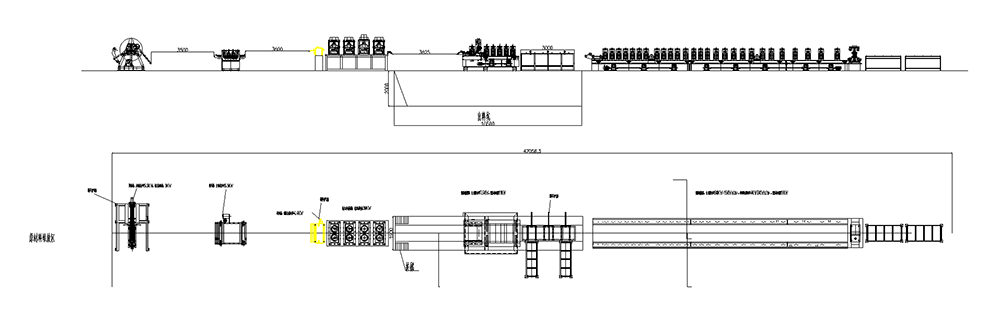
Uncoiling → Leveling/Flattening → Servo Feeding/Punching → Guided Infeed → Roll Forming → Cut-to-Length → Finished Product Discharge
Process Step | Description
Uncoiling | Hydraulic uncoiling to support and feed the steel coil
Leveling/Flattening | Multi-roller leveling to eliminate internal stress and ensure forming precision
Servo Feeding & Punching | Precise positioning; punches bottom stiffening ribs and various hole patterns
Guided Infeed | Automatic material guiding and alignment; accommodates varying widths
Roll Forming | Modular, adjustable forming unit; one set of rollers covers multiple specifications
Cut-to-Length | Automatic length measurement and hydraulic cutting; ensures clean, smooth edges
Finished Product Discharge | Output of finished products; smooth, continuous line operation
Process Description
Uncoiling Hydraulic uncoiling to support and feed the steel coil
Leveling: Multi-roller leveling to eliminate internal stress and ensure forming precision
Servo Feeding & Punching: Precise positioning; punching of bottom stiffening ribs and various hole patterns
Guided Feeding: Automatic material guiding and alignment adjustment for different widths
Roll Forming: Modular, adjustable forming unit; one set of rollers accommodates multiple specifications
Cut-to-Length: Automatic length measurement and hydraulic cutting with clean edges
Finished Product Discharge: Output of finished products; smooth, continuous line operation
V. Service & Support
Solution Design: Personalized equipment selection and production line layout based on customer drawings and capacity requirements.
Custom Manufacturing: Support for non-standard customization; full control over the process from roll design to complete line manufacturing.
Installation & Commissioning: On-site installation, commissioning, and operator training provided by engineers to ensure rapid production startup.
After-Sales Support: Long-term technical consultation and spare parts supply; engineers hold valid visas and are available for on-site service worldwide at any time.
VI. Why Choose Us
Nearly 20 years of manufacturing experience: Mature technology, refined processes, and reliable quality
Direct manufacturer: No middlemen, offering excellent value for money
Strong custom engineering capabilities: Ability to design various complex cold-roll forming lines to meet specific requirements
Global service network: Engineers hold all necessary visas, ensuring rapid response
Market-proven: Products exported to numerous countries and regions
 English