Home / Product / Shelving Production Line
Shelving Production Line

Shelving Production Line

Shelving Production Line — Professional Manufacturer, Complete Line Integration, One-Stop Solution

I. Overview

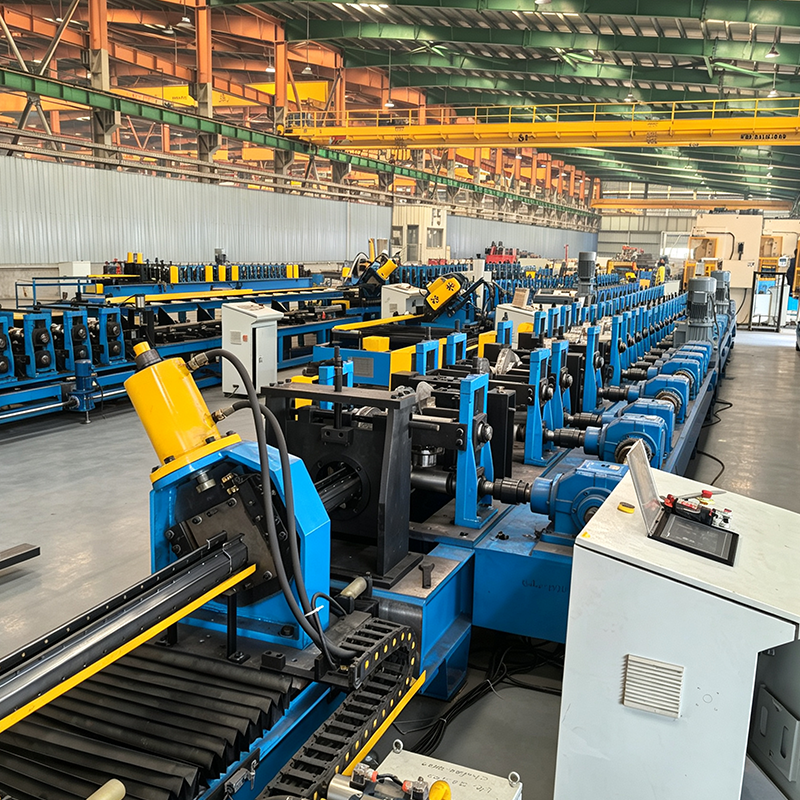
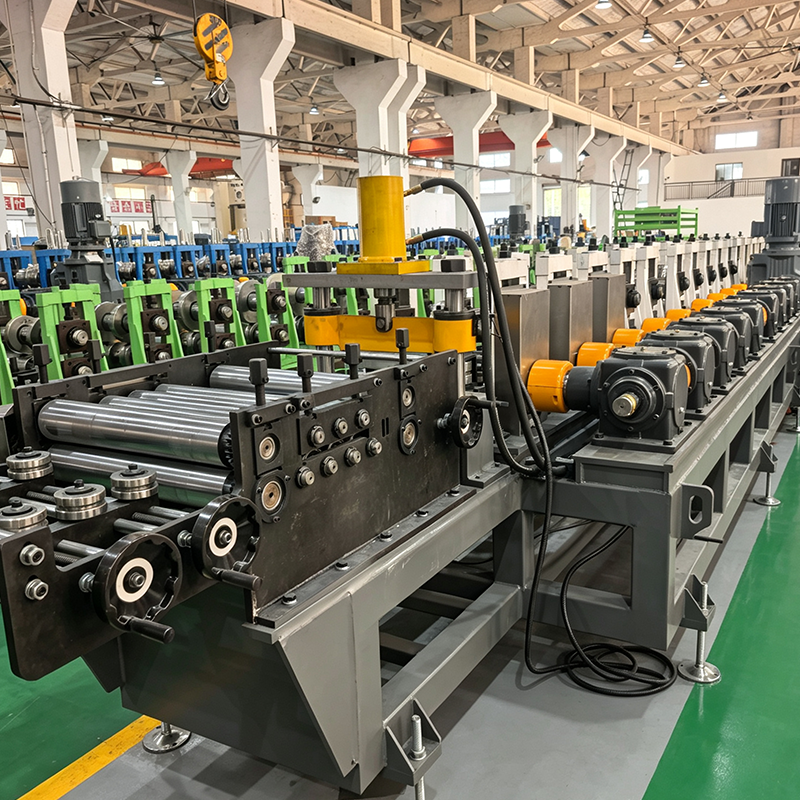
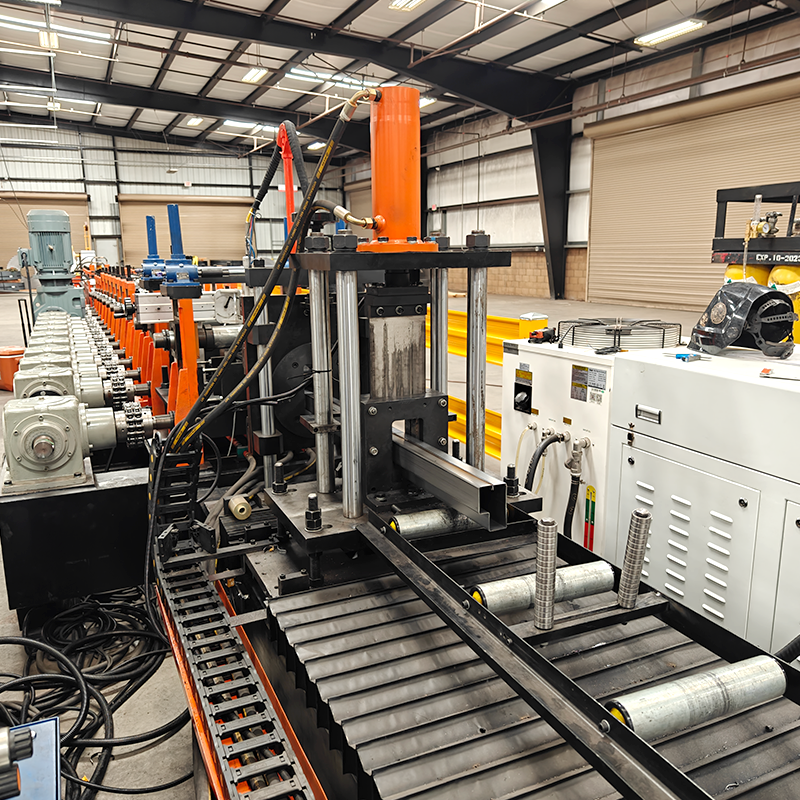
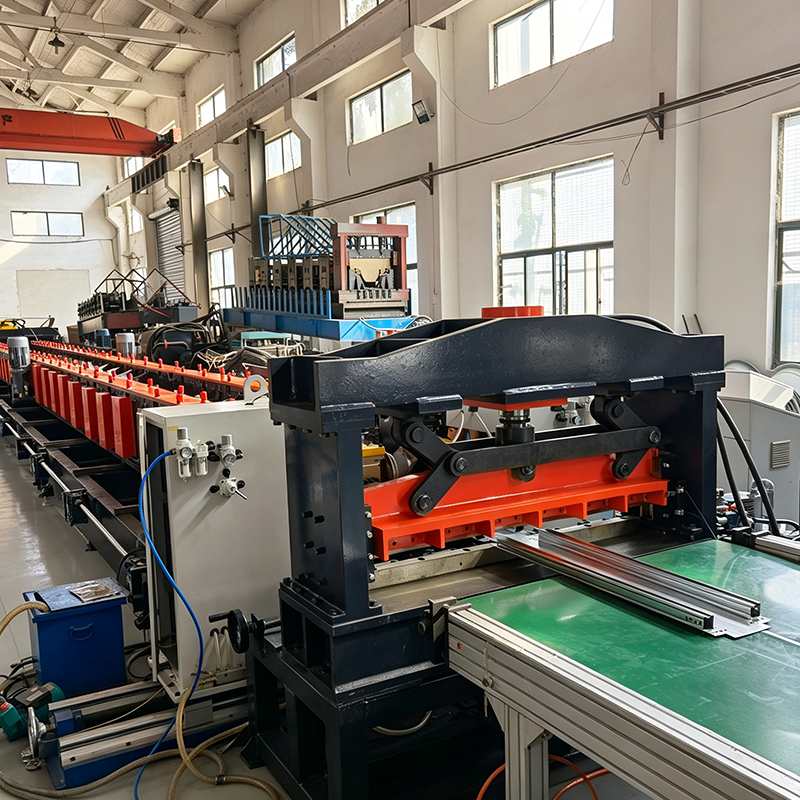
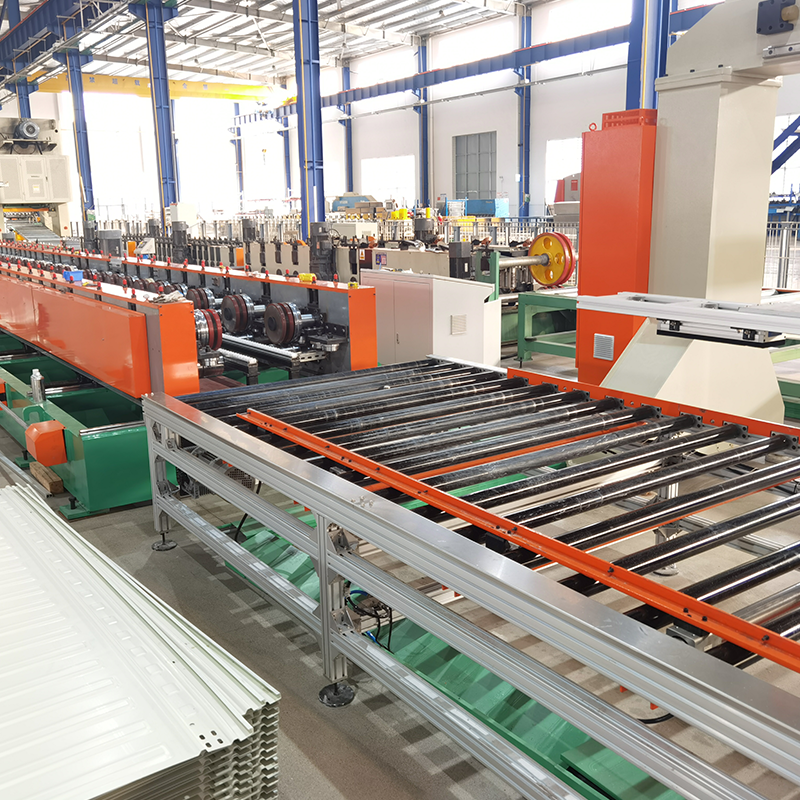
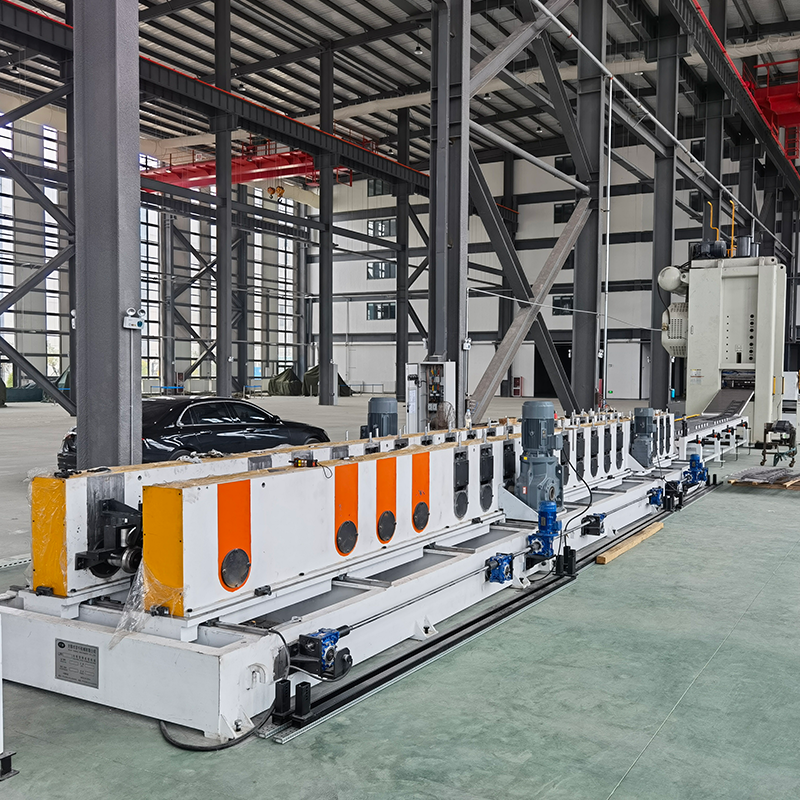
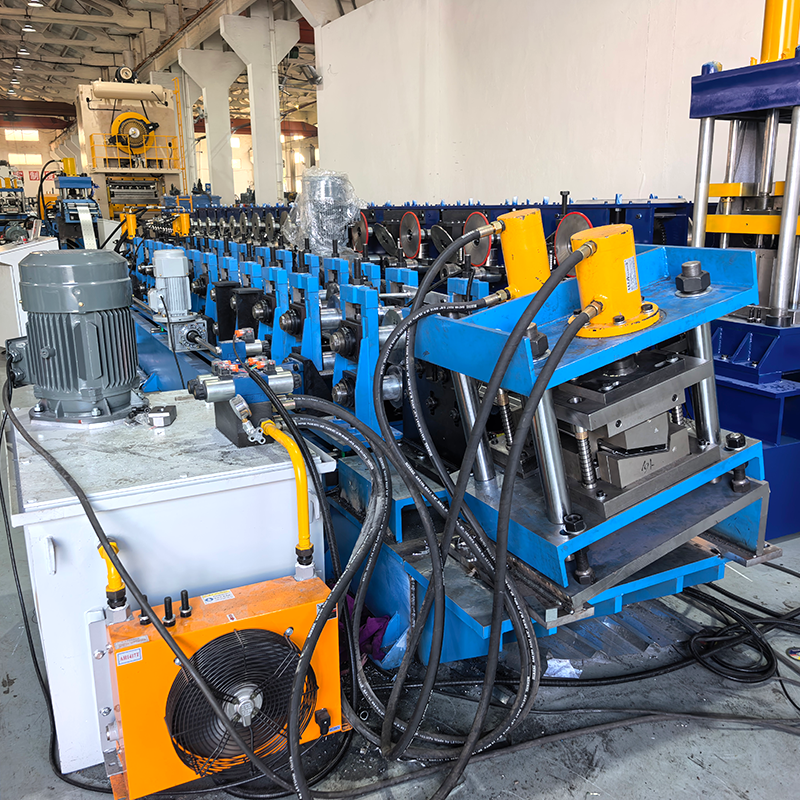
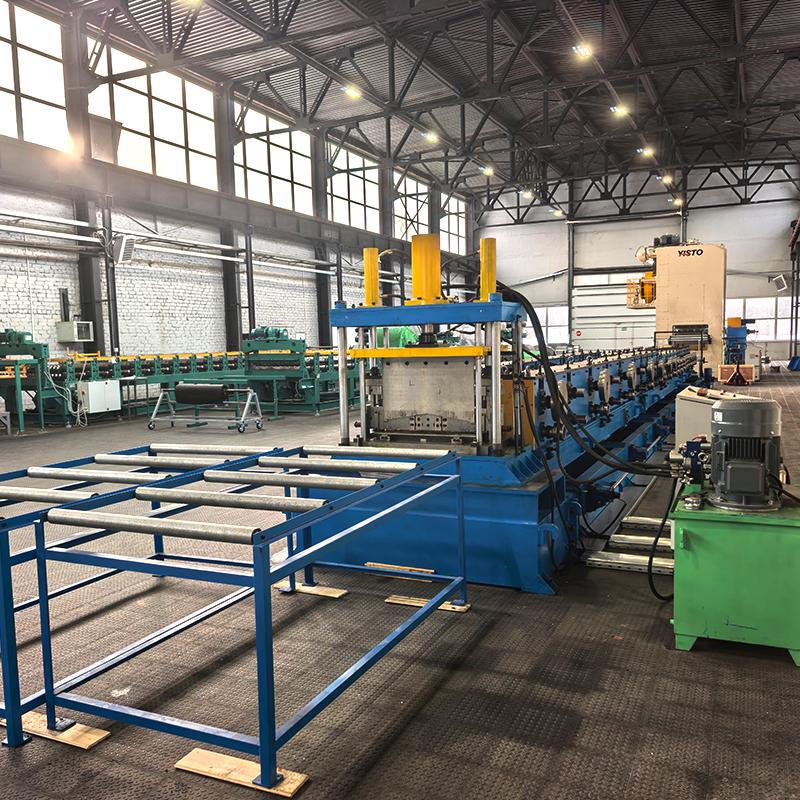
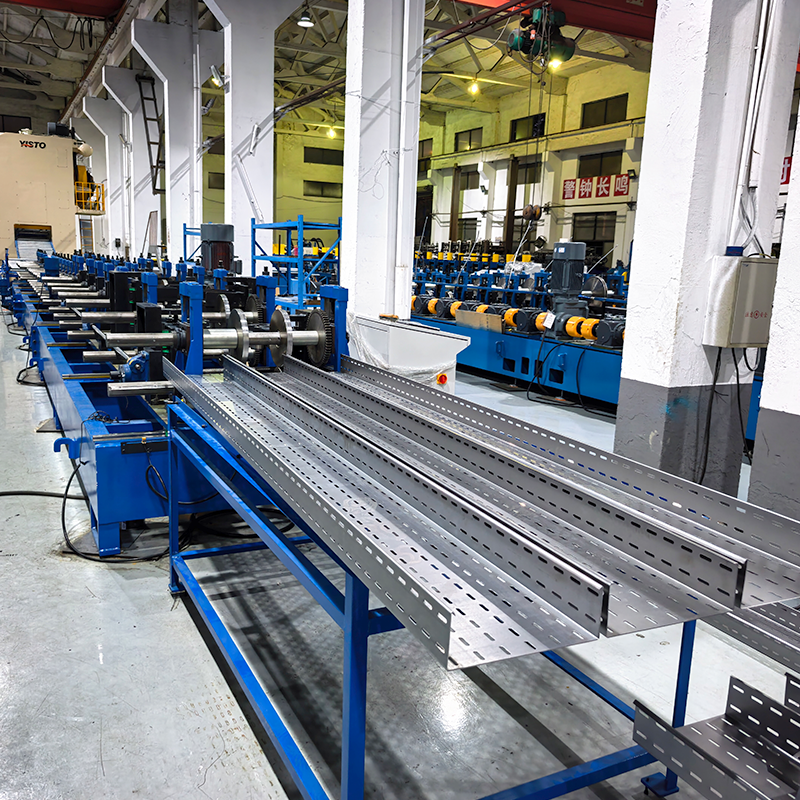
The Shelving Production Line is an integrated system composed of multiple specialized machines, covering the cold-roll forming, welding, and stamping processes for all core components—such as uprights, beams (box beams/P-beams), shelves, and bracing. Guided by the core principles of specialized division of labor, coordinated integration, and intelligent efficiency, the line provides customers with comprehensive equipment solutions spanning the entire process from profile forming to welding and assembly.

The equipment suite is compatible with a wide range of raw materials—including galvanized strip steel, cold-rolled sheet, hot-rolled sheet, and high-strength steel—in thicknesses ranging from 0.4 mm to 4.0 mm. It meets production requirements for the full spectrum of light-, medium-, and heavy-duty storage shelving, making it particularly well-suited for high-standard projects such as intelligent automated warehouses, e-commerce logistics centers, and large-scale storage facilities.

II. Equipment Series Overview

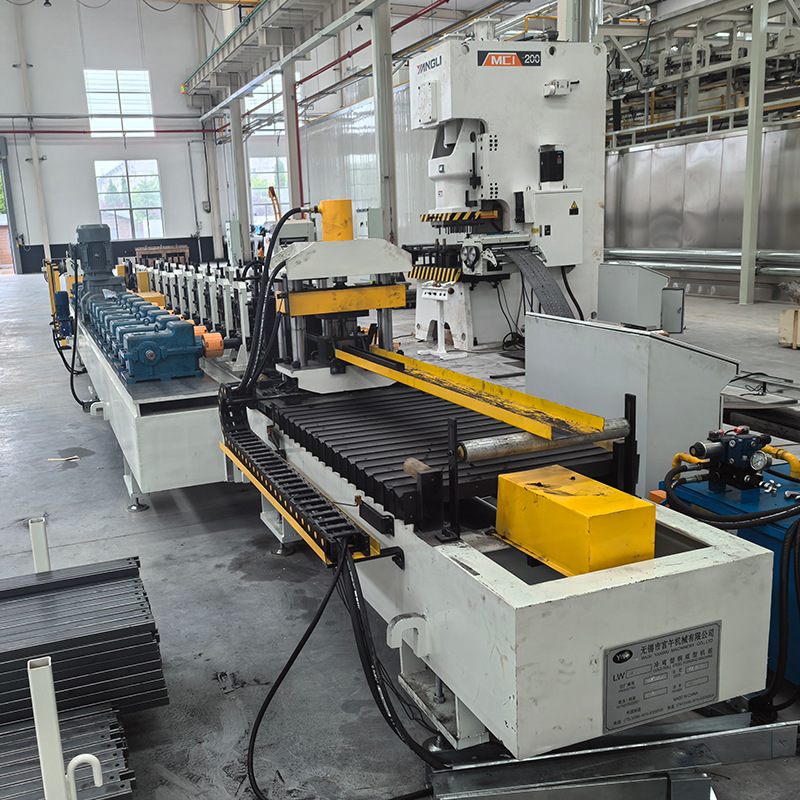
1. Cold Roll Forming Machine for Rack Uprights
Specialized equipment designed for manufacturing rack uprights (vertical load-bearing components). Uprights serve as the core load-bearing elements of the racking system; they typically feature C-shaped, U-shaped, or octagonal cross-sections and are perforated with dense patterns of "butterfly" or diamond-shaped holes to facilitate precise connection with beams and other components.
Perforation: Continuous, single-pass punching of dense hole patterns (butterfly or diamond shapes) with a positional accuracy of ±0.1mm.
Forming Process: Progressive cold roll forming; cumulative length error for a 16-meter upright is controlled within ±1mm.
Cutting Method: Inline flying hydraulic cutting or sawing, ensuring clean, burr-free edges.
Specifications: Height 50–200mm, Width 40–120mm, Thickness 1.2–4.0mm.

2. Cold Roll Forming Machine for Rack Beams (Box Beams / P-Beams)
Specialized equipment designed for manufacturing rack beams (horizontal load-bearing components). Beams are the components that directly support the cargo. Common cross-section types include box beams (interlocking beams) and P-beams, both characterized by high strength and superior load-bearing capacity. Box beams are formed by roll-forming two symmetrical profiles and locking them tightly together via an automated interlocking mechanism; this results in a tight seam and high structural integrity, offering better load-bearing performance than standard single-piece beams. P-beams feature a single-piece closed cross-section and are suitable for medium-duty racking systems. Interlocking Beam: Formed from separate upper and lower sections that are automatically interlocked and clamped together by a joining mechanism, ensuring a tight, gap-free seam.
P-Beam: Formed as a single closed-section profile; features a simple structure and is suitable for medium-duty shelving.
Hook/Tab Punching: Optional beam hook/tab punching equipment available (see Item 7 for details).
Specifications: Height 40–120mm, Width 30–50mm, Thickness 0.8–2.0mm.

3. Cold Roll Forming Machine for Shelving Decking
Specialized forming equipment for producing shelving decking (horizontal shelves). Decking supports small or loose items and typically features a flat, reinforced-rib, or flanged profile, providing a smooth surface and uniform load distribution.
Reinforced Rib Forming: Base plate and ribs are roll-formed as an integrated unit, enhancing load-bearing capacity.
Flanging: Edge flanging increases structural strength and provides a neat, aesthetic appearance.
Specifications: Width 200–1200mm, Thickness 0.4–1.5mm.
Optional Configurations: Can be equipped with automatic flanging and stacking units to enhance automation levels.

4. Cold Roll Forming Machine for Shelving Diagonal Braces
Specialized forming equipment for producing shelving diagonal braces (diagonal reinforcement components). These braces reinforce the rear of the shelving unit, enhancing overall stability and lateral load resistance; profiles are typically C-shaped, U-shaped, or tubular.
End Flattening/Punching: In-line flattening and mounting hole punching at both ends; eliminates the need for secondary processing.
Fixed-Length Cutting: Automatic cutting to specified lengths with a precision of ±0.5mm.
Specifications: Width 20–50mm, Thickness 0.8–2.5mm.

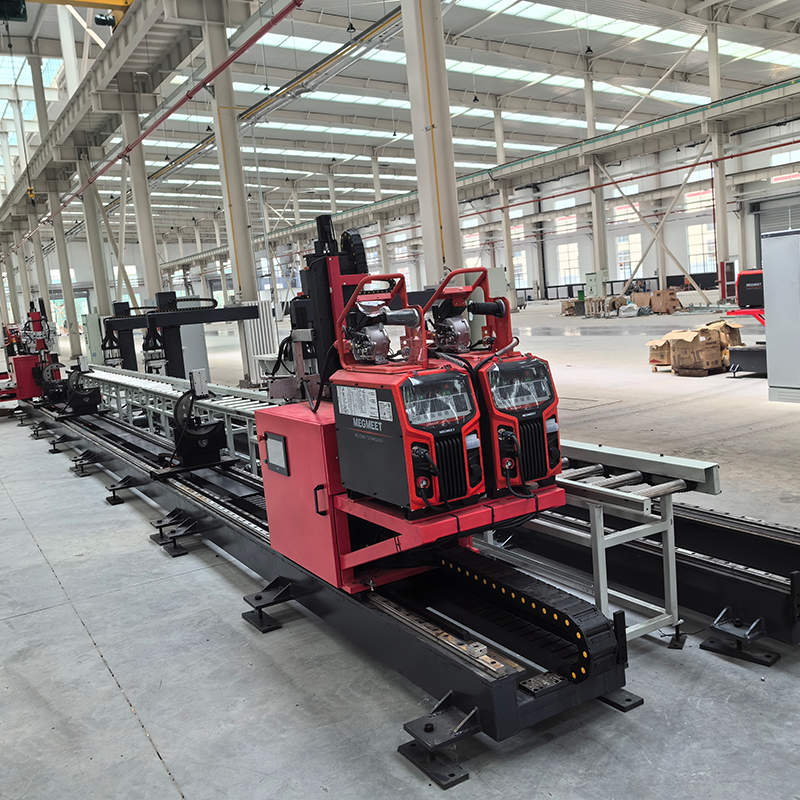
5. Automatic Welding Machine for Shelving Beams
Automated welding equipment designed for attaching connector plates to both ends of the beam. Beam welding is a critical step in shelving production, directly impacting assembly precision and overall load-bearing safety. Weld quality determines the strength of the connection between the beam and the upright. Dual-Gun Automatic Welding: Simultaneous welding at both ends significantly boosts efficiency; ideal for high-volume, continuous production.
High Positioning Accuracy: Pneumatic positioning fixtures ensure precise placement of connectors and consistent weld quality.
Ease of Operation: PLC control with touchscreen parameter settings and one-touch startup; no specialized welder required.
Applications: Welding of various beam end connectors (hooks/teeth); designed for use with beam hook stamping/forming equipment.

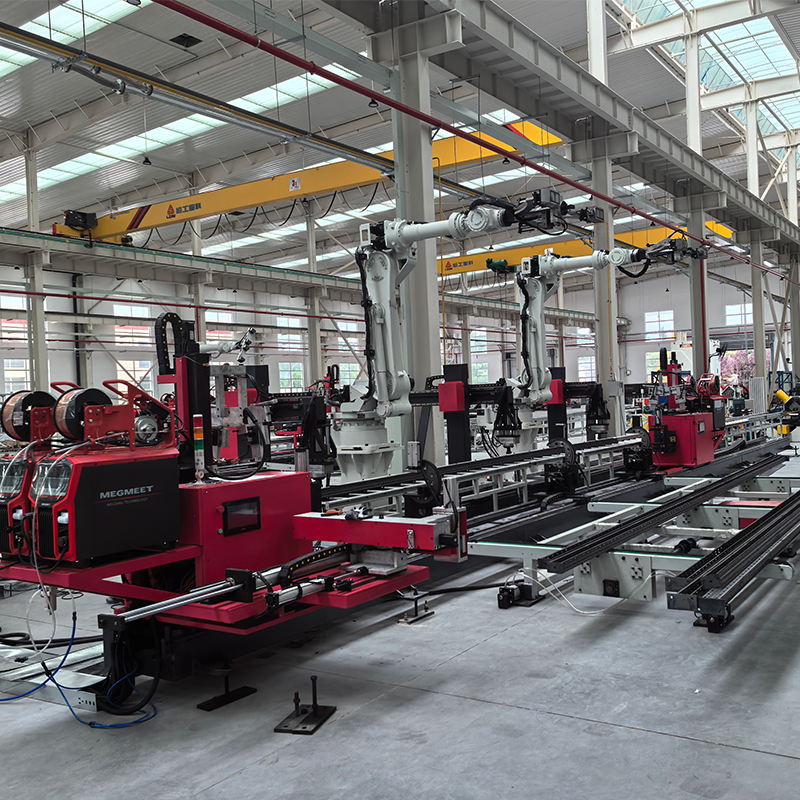
6. Automatic Welding Machine for Rack Uprights
Automated welding equipment designed specifically for connecting components at the base or top of uprights. It welds base plates, top plates, or stiffeners, ensuring secure connections between the upright and the floor or other structures, thereby guaranteeing the overall safety of the racking system.
High Level of Automation: Features automatic positioning, clamping, and welding—a fully automated process.
Multi-Position Welding: Capable of welding base plates, top plates, stiffeners, and other points.
Applications: Welding of upright base plates, top plates, and stiffeners.

7. Stamping and Forming Equipment for Rack Beam Hooks
Stamping and forming equipment dedicated to producing the hooks (connectors) found at both ends of the beam. These hooks—metal tabs that connect the beam to the upright—require high dimensional accuracy and strength, as these factors directly determine the stability of the connection.
Integrated Multi-Station System: Combines punching, forming, bending, and cutting into one unit; stamping speed of 60–90 strokes per minute.
High Precision: Hook dimensional accuracy of ±0.1mm ensures precise alignment with upright slots.
System Integration: Formed hooks are welded to both ends of the beam using the automatic beam welding machine (Item 5).
Can be paired with a beam cold-roll forming machine to create a complete beam production line: Beam forming → In-line conveying → Automatic hook feeding → Automatic welding → Finished product output.

III. Production Line Configuration Overview

No. Equipment Name Primary Purpose Applicable Specifications
1 Upright Roll Forming Machine Upright forming (C/U/Octagonal profiles) Thickness: 1.2–4.0 mm
2 Beam Roll Forming Machine Box beam/P-beam forming Thickness: 0.8–2.0 mm
3 Shelf Panel Roll Forming Machine Shelf panel forming (flat/reinforced rib types) Thickness: 0.4–1.5 mm
4 Brace/Tie-rod Roll Forming Machine Brace and tie-rod forming. Thickness: 0.8–2.5 mm
5 Automatic Beam Welding Machine: Automatic welding of beam end connectors for use with beams
6 Automatic Upright Welding Machine: Welding of upright base plates/top plates. For use with uprights
7 Beam Connector Stamping Machine Stamping/forming of beam connectors (hooks) Stamping speed: 60–90 strokes/min

IV. Core Advantages

1. Integrated Line, One-Stop Solution
The complete equipment suite covers the forming, welding, and punching processes for the four core components of storage racks (uprights, beams, shelves, and braces). This eliminates the need for multi-vendor sourcing; the equipment is highly compatible and efficient, shortening the time to production.

2. Specialized Roles, Multiplied Efficiency
Each machine operates independently yet collaboratively, enabling an integrated, intelligent management system for the entire line. A single line requires only 3–5 operators, reducing labor costs by 60% compared to traditional segmented processing methods.

3. High Precision, Ensuring Rack Safety
For 16-meter uprights, the cumulative error is < ±1 mm and hole position accuracy is ±0.1mm; the connection precision between beams and uprights is strictly controlled. High precision ensures smooth installation, structural stability, and safe load-bearing capacity.

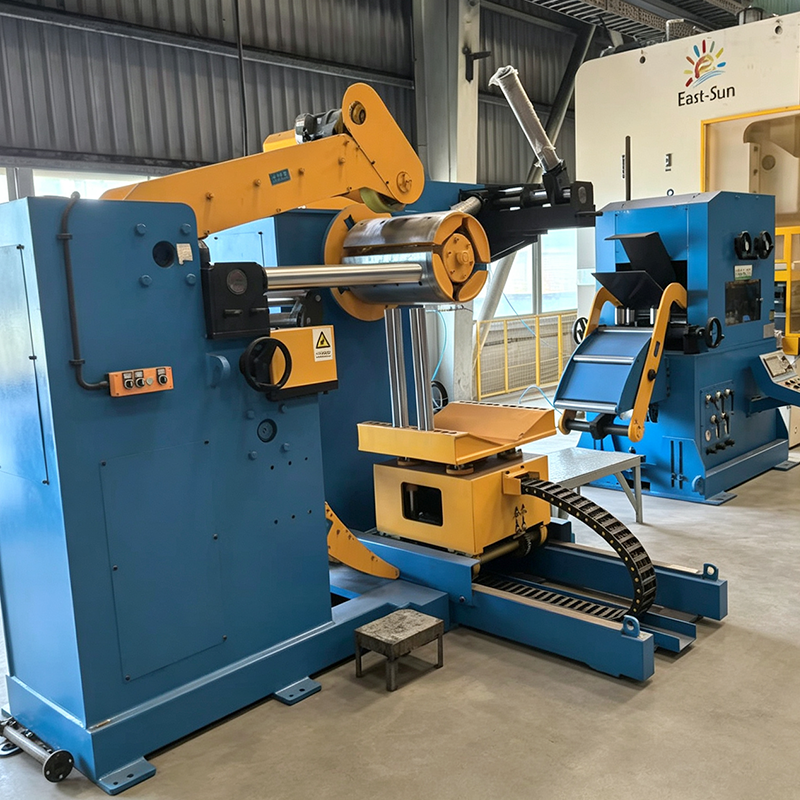
4. Automatic Tooling Change, Flexible Production
All machines feature automatic tooling change capabilities—PLC-controlled motors automatically adjust the opening width and roll positions. Switching specifications simply requires entering new values, a process completed in just 3 minutes. This is ideal for rapidly switching between orders involving diverse product types and specifications.

5. Robust, Durable, and Reliable
Machine frames undergo tempering to eliminate internal stress, ensuring high rigidity and resistance to deformation.
Rollers are made from Cr12MoV special steel, treated with vacuum quenching and cryogenic processing to achieve a hardness of HRC58–62.
Key electrical components are sourced from Japanese or German brands to ensure long-term, stable operation.

6. Intelligent Control, Easy Operation
Features fully automatic PLC control and a touchscreen HMI; parameter settings are intuitive and convenient, and the system includes automatic fault diagnosis and alarms, reducing the skill requirements for operators.

V. Application Areas

The series of intelligent warehouse racking equipment is widely used in:

Intelligent automated warehouses: High-precision racking components ensure the efficient operation of automated storage systems.

E-commerce logistics centers: Meeting the need for efficient storage and retrieval of massive product inventories.

Manufacturing warehouses: Customized mass production of heavy-duty racking components.

Cold chain warehousing: Weather-resistant materials suitable for low-temperature, high-humidity environments.

Retail and supermarkets: Display shelving and medium-duty racking systems.

VI. Service & Support

Solution Design: Personalized equipment selection and production line layout based on customer product drawings and capacity planning.

Custom Manufacturing: Support for non-standard customization, with full oversight from roll design to complete machine fabrication.

Installation & Commissioning: On-site installation, commissioning, and operator training provided by engineers to ensure rapid production startup.

After-Sales Support: Long-term technical consultation and spare parts supply; engineers hold valid visas and are available for on-site service worldwide at any time.

VII. Why Choose Us

Nearly 20 years of manufacturing experience: Mature technology, refined processes, and reliable quality.

Comprehensive production line capabilities: Equipment covering the forming and welding of all core racking components.

Direct manufacturer: No middlemen, offering excellent value for money.

Strong custom engineering capabilities: Ability to design various complex cold-roll forming lines tailored to specific customer needs.

Global service network: Engineers with ready-to-use visas and rapid response capabilities.

Contact us for detailed proposals and quotations!
About
Wuxi Yanwu Xinhui Technology Co., Ltd.

Established in 2012, Wuxi Yanwu Machinery Co., Ltd., is a professional manufacturer specializing in the R&D, design, manufacturing, and servicing of cold roll forming equipment. The company is dedicated to providing global customers with integrated solutions for automated cold roll forming production lines.

Our main products include cable tray forming machines, racking forming machines, C/Z purlin machines, solar mounting bracket forming machines, floor deck machines, door frame machines, automotive profile equipment, and cut-to-length/slitting lines.

These products are widely used in the construction, electrical power, logistics and warehousing, automotive manufacturing, new energy, and infrastructure sectors.

Certificate Of Honor
News
  • The new generation of slot-type cable tray cold bending forming machine has been officially launched. It is targeted at cable tray manufacturing enterprises and focuses on the profile production requirements of power infrastructure, data centers, and new energy supporting projects. With an integrated continuous cold bending process, it addresses the industry pain points of traditional split bending processes, such as poor accuracy, low efficiency, and high labor costs. It provides cable tray manufacturers with automated and highly stable profile production equipment solutions. With the continuous construction of new power systems, data centers, factory and municipal distribution projects, slot-type cable trays, as protective support components for cables, have higher requirements for profile size consistency, forming strength, and delivery cycle. The traditional processing mode often involves individual bending of plates and secondary punching, with multiple process flows, which are prone to bending deviations, hole misalignment, and incomplete jointing, resulting in high material loss and high dependence on skilled workers. This slot-type cable tray cold bending machine integrates opening, leveling, online punching, continuous roller pressing cold bending, servo fixed-length cutting, and material stacking. After the galvanized steel strip is sent to the production line, it is formed into a complete slot-type cable tray in one step, without the need for secondary processing. The equipment uses multiple precision rolling rollers for progressive cold bending forming, with a forming size error controlled within ±0.5mm, good slot body straightness, regular bending edges, strong finished product rigidity, and effectively guarantees the later cable tray jointing and installation accuracy. It is equipped with a PLC touch control intelligent system, allowing parameters to be set quickly, and it can quickly switch between various cable tray specifications, suitable for different width and height slot-type cable tray production. It is multi-purpose in one machine. The production line operates stably, forms quickly, significantly reduces the number of workers, reduces material loss, and improves production capacity. The equipment is compatible with various raw materials such as galvanized plates and color steel plates, and the produced slot-type cable trays are widely used in data centers, factory distribution, rail transit, photovoltaic and wind power, building construction, etc., meeting the requirements for the protection of strong and weak wire cables. The equipment adopts a modular structure design, is convenient for maintenance, supports customized functional upgrades, and can be connected to the existing automation production lines. Based on mature equipment research and manufacturing capabilities, it can provide customers with equipment debugging, technical training, and integrated after-sales operation and maintenance services, helping cable tray manufacturing enterprises achieve automation upgrades, reduce costs, increase efficiency, and empower the high-quality development of domestic and foreign power infrastructure supporting industries.
    READ MORE
  • Product Positioning and Core FunctionThe L-edge angle steel profile machine is a cold bending forming equipment specifically designed for manufacturing L-shaped cross-section steel profiles. The L-shaped profiles, as an important component of the steel profile system, are mainly used for connecting the ceiling and walls and reinforcing the corners of partition walls. In practical applications, this product can effectively solve problems such as warping of the edges and corners of the sheet material and unsightly gaps, thereby enhancing the overall decorative effect. Steel profiles are classified by cross-sectional form into various specifications such as V-type, C-type, T-type, L-type, and U-type. Among them, the L-type profiles, due to their unique right-angle structure, play an irreplaceable role in detailed construction processes such as edge finishing and corner sealing. Technical Features and Performance AdvantagesThe modern L-edge angle steel profile machine adopts the cold bending forming process. The galvanized steel strip is continuously bent and deformed through a group of gradually changing profile surfaces during the process at room temperature, ultimately forming an accurate L-shaped cross-section. This process route has significant advantages such as high material utilization rate, fast production efficiency, and good product consistency. In terms of automation control, the advanced L-type profile production line has achieved full-process automation operations. A typical production line configuration includes: an automatic two-in-one unwinding and leveling machine, a fully automatic servo tracking rolling system, high-precision and high-speed forming equipment, a fully automatic servo tracking shearing system, and core modules such as the support frame. Through the computer control system for tracking rolling and shearing, the equipment can simultaneously complete punching and cutting operations during the forming process, effectively replacing the traditional post-forming punching process, which saves labor and ensures product consistency. In terms of forming accuracy, the rollers made of high-strength mold steel such as Cr12MoV, after vacuum heat treatment, can reach a hardness of HRC58-62, ensuring long-term stable operation. Combined with the servo-driven feeding system, the feeding accuracy can be controlled within ±0.5mm, meeting the strict requirements of architectural decoration for the size accuracy of the profiles. Trend of Intelligent UpgradeCurrently, the L-edge angle steel profile machine is accelerating its evolution towards intelligence and flexibility. The PLC control system is equipped with a user-friendly touch screen interface, supporting multi-language operation and formula storage functions. Operators can quickly call up the production parameters of different specifications of products to achieve rapid model change. It is worth noting that the integration of laser cutting technology with the profile machine is becoming a new industry trend. Compared with traditional mechanical shearing, laser cutting has advantages such as smooth and hairless cutting edges, no contact with molds, and low noise. The cutting edge width can be controlled within 0.1- 0.3 mm. This technological breakthrough not only improves product accuracy but also enables economic small-batch and multi-variety customized production, providing a new solution for the processing of irregular components in prefabricated buildings. Market Prospects and Industry OpportunitiesFrom the investment dynamics of the steel profile equipment industry, the market for steel profile equipment remains active. For example, Guangdong Quan Tan Jing Gong Technology Co., Ltd. has a new project with a total investment of 150 million yuan, mainly engaged in the production of fully automatic universal steel profile machine production lines and conventional steel profile machines. After the project is completed, it is expected to produce 300 conventional steel profile machines annually. This investment scale reflects the continuous demand for steel profile equipment in the market. Industry analysis indicates that with the deepening of the concepts of prefabricated buildings and green construction, steel profiles, as a lightweight, high-strength, fire-resistant, and easy-to-install new type of building material, their application fields will continue to expand. From hotels, airports, shopping malls to office buildings and old building renovations, the steel profile system is playing an increasingly important role in various building scenarios. For the L-edge angle steel profile machine, the continuous expansion of the downstream application market will directly drive the growth of equipment demand. Advanced equipment with high precision, high efficiency, and intelligence will occupy a competitive advantage in this round of industrial upgrading.
    READ MORE
  • Technical upgrades lead industry development.The modern cold bending forming machine for automotive profiles has undergone a comprehensive upgrade from traditional hydraulic drive to servo drive technology. The servo motor-driven forming equipment not only improves positioning accuracy but also significantly reduces energy consumption and noise levels, with maintenance costs dropping sharply. In terms of forming accuracy, the axial repeat positioning accuracy of advanced equipment can reach -0.01 mm, and the upper wheel positioning accuracy reaches 0.02mm, which can meet the strict dimensional tolerance requirements of automotive structural components. The half-diameter bending capability is a significant technological breakthrough in current automotive profile cold bending forming machines. Through the four-axis positioning system and ball screw closed-loop variable frequency motor control system, the equipment can achieve one-time forming of irregular shapes such as egg-shaped and elliptical, minimizing deformation during the forming process to the greatest extent. This technological breakthrough makes it possible to achieve efficient production of complex structural components such as car window frames and body reinforcement beams. Intelligentization and automation are deeply integrated.Against the background of Industry 4.0, automotive profile cold bending forming machines are accelerating their evolution towards intelligence. The PLC control system is equipped with a user-friendly touch screen interface, supports multi-language operation, can store multiple product formulas, and enables rapid switching of different specifications of profiles. The intelligent parameter storage system significantly reduces the changeover time, and some advanced equipment can complete the mold change in 30 minutes, with an efficiency increase of 70% compared to traditional equipment. Full-process automation operations have become the industry standard. From feeding, guiding, and forming to welding, cutting, and packaging, the entire production line can operate without human intervention, with only 1-2 people on duty per production line. The integration of the automatic stacking system further reduces manual intervention, ensuring the neat stacking and efficient turnover of finished profile products. Continuous breakthroughs in lightweight material processing capabilitiesFacing the increasing demand for high-strength steel and aluminum alloy materials in the automotive industry, the technical adaptability of cold bending forming equipment is constantly improving. Modern equipment can handle materials such as strengthened steel and galvanized steel with thickness ranges of 0.3-5.0mm. The rollers use Cr12MoV mold steel after vacuum heat treatment, with a hardness of HRC58-62, ensuring no cracking during high-strength steel forming. To address the industry pain point of high-strength steel forming prone to rebound and cracking, equipment manufacturers have optimized the roller curve design and adopted multi-pass progressive roller pressing technology to effectively solve this technical problem. The section size tolerance can be stably controlled within ±0.2mm, the hole position accuracy is fine to ±0.1mm, and the product qualification rate can reach over 99.5%. The market prospect is broad.According to industry research, the cold bending forming machine market is experiencing a rapid growth period. In the automotive manufacturing field, with the explosive growth of the new energy vehicle industry, the production demand for core structural components such as battery trays and body reinforcement beams has significantly increased. The widespread application of lightweight materials and the increase in complex pipe component structures continue to drive the demand for advanced cold bending forming equipment. Industry insiders point out that in the future, cold bending forming technology will evolve towards multi-axis linkage and flexible manufacturing. The implementation of artificial intelligence and machine vision technologies will give equipment the ability to perform online quality inspection, and digital twin technology will be applied to forming process simulation, further reducing trial-and-error costs and accelerating new product development speed. Equipment manufacturers with the ability to provide customized solutions will gain a competitive advantage in this round of industrial upgrading.
    READ MORE
Shelving Production Line Industry knowledge