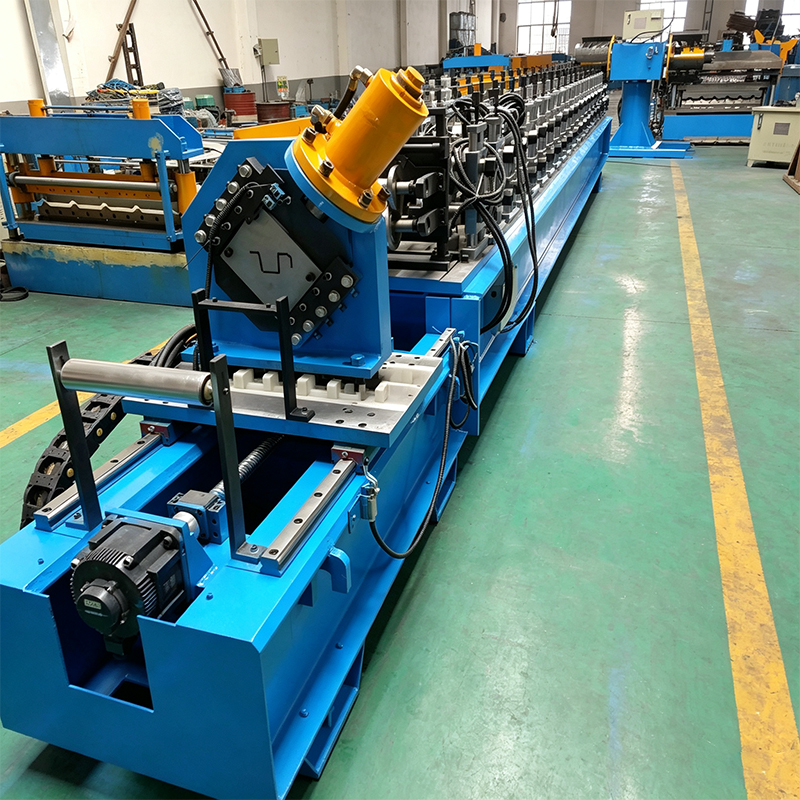
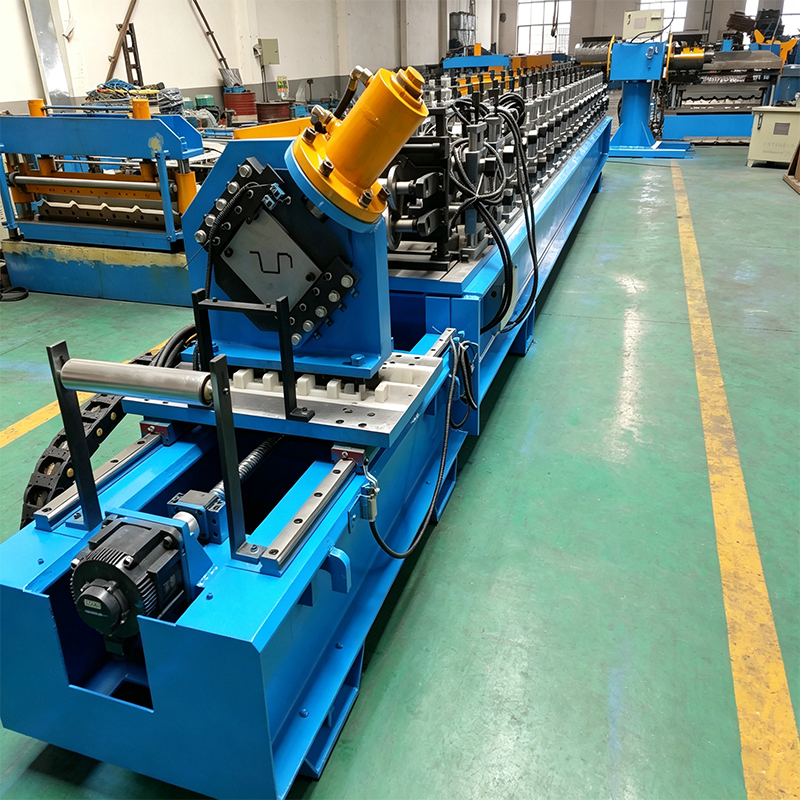
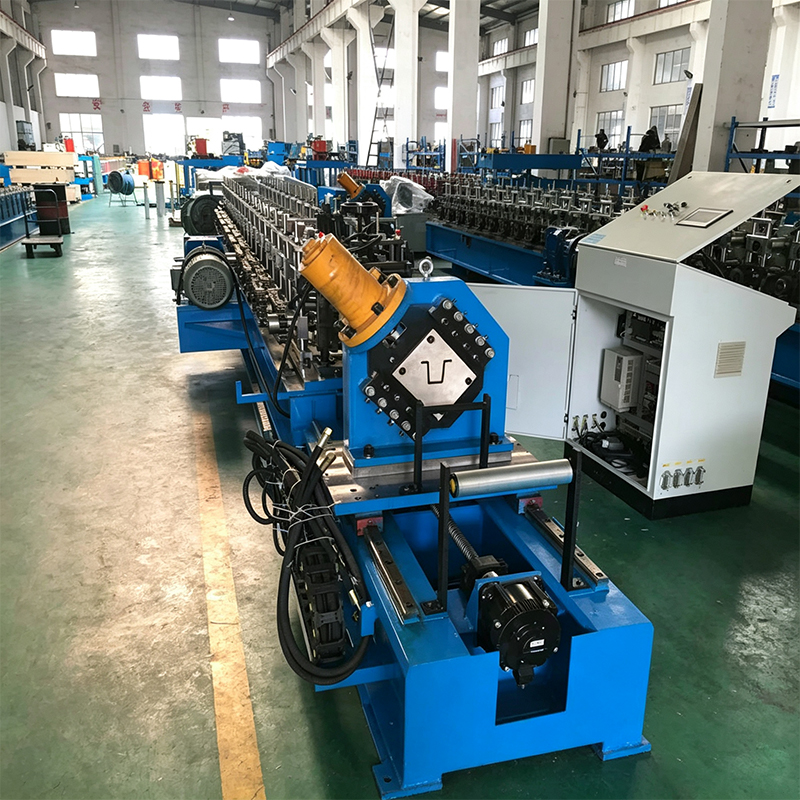
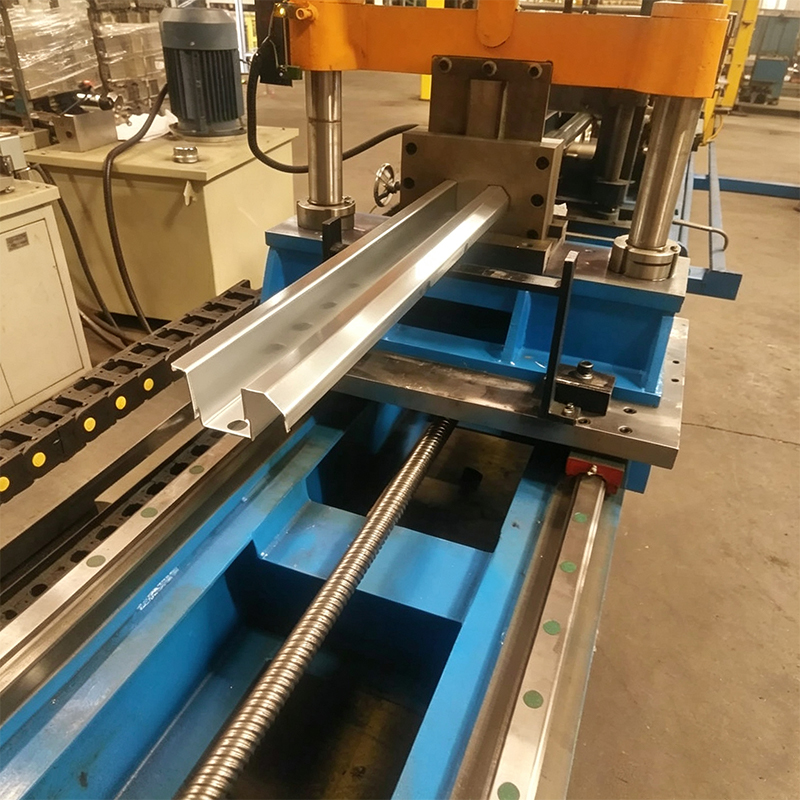
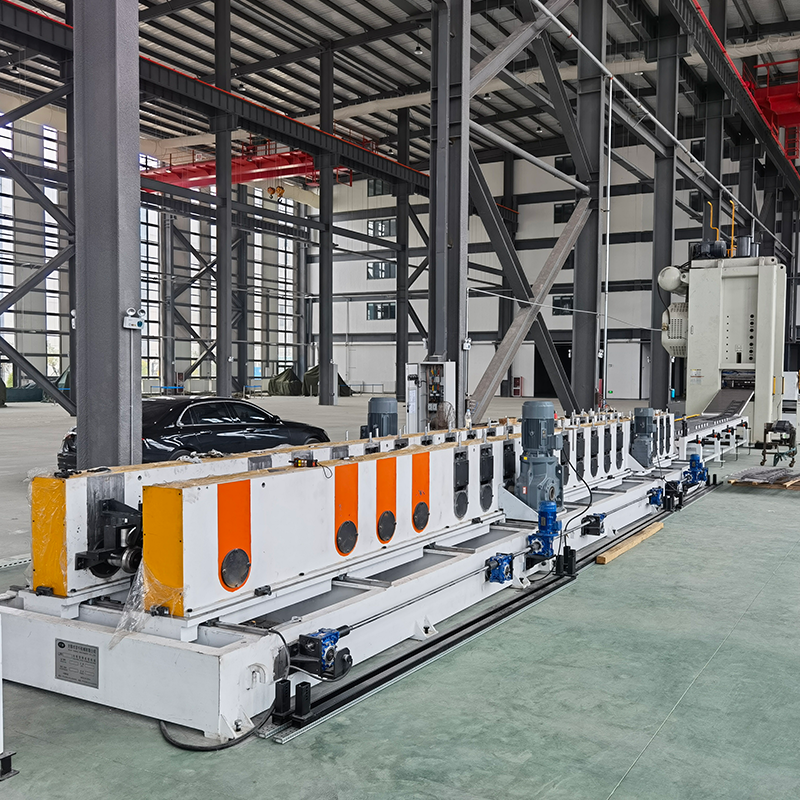
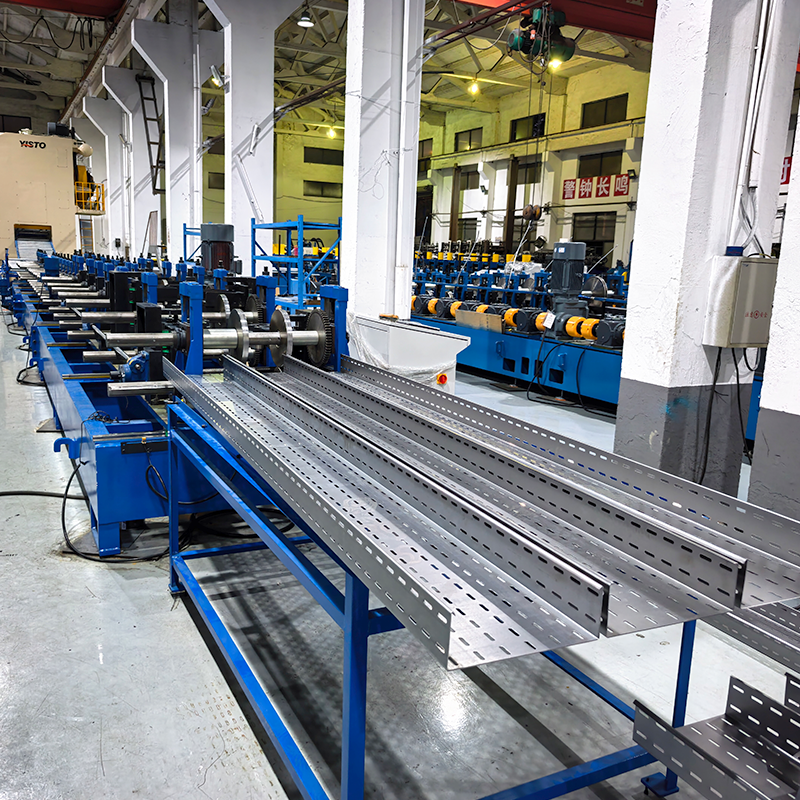
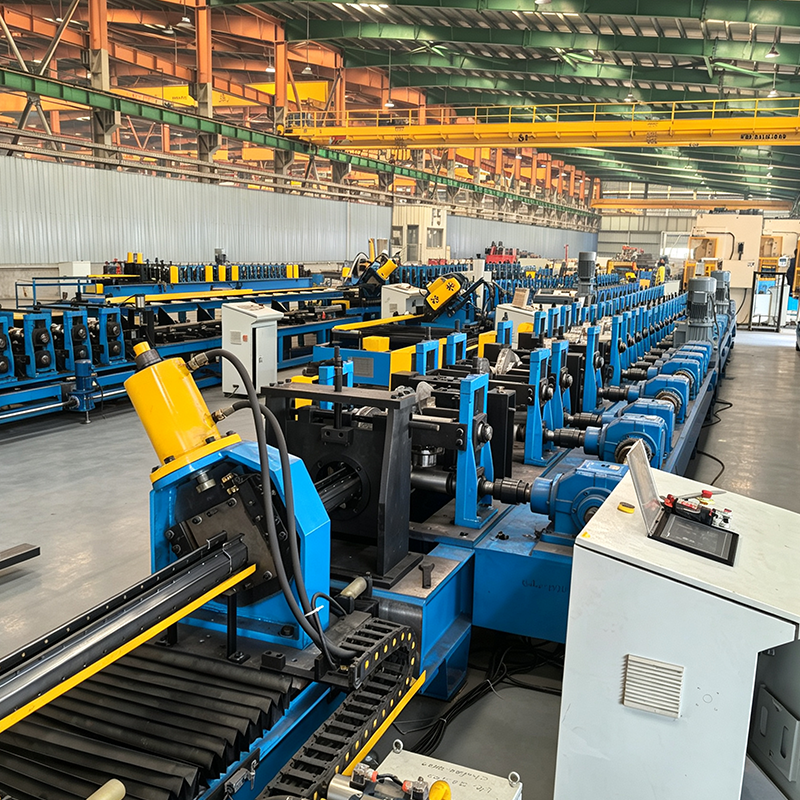
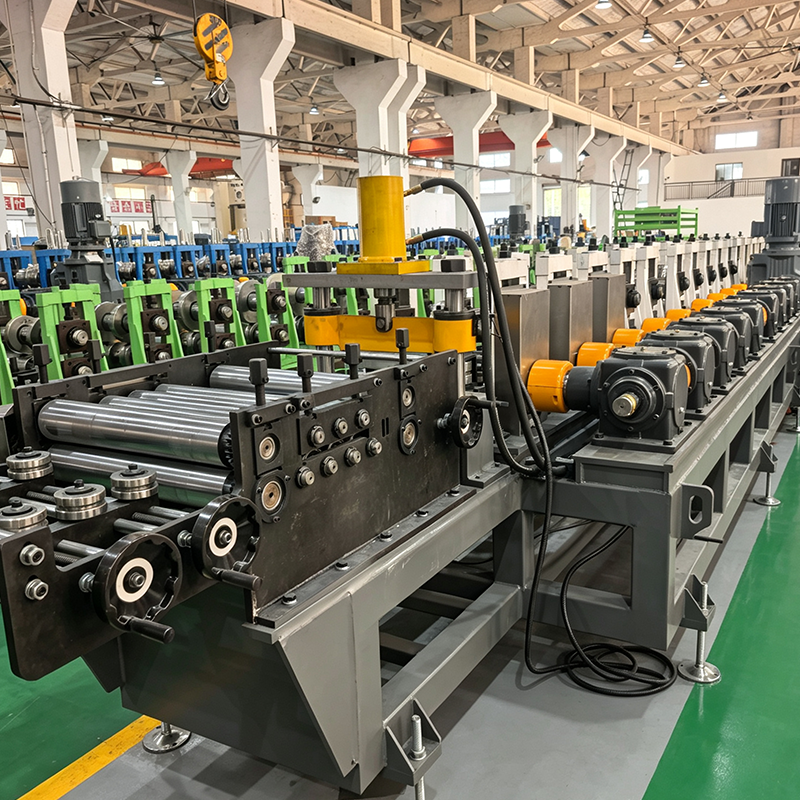
Equipment Overview
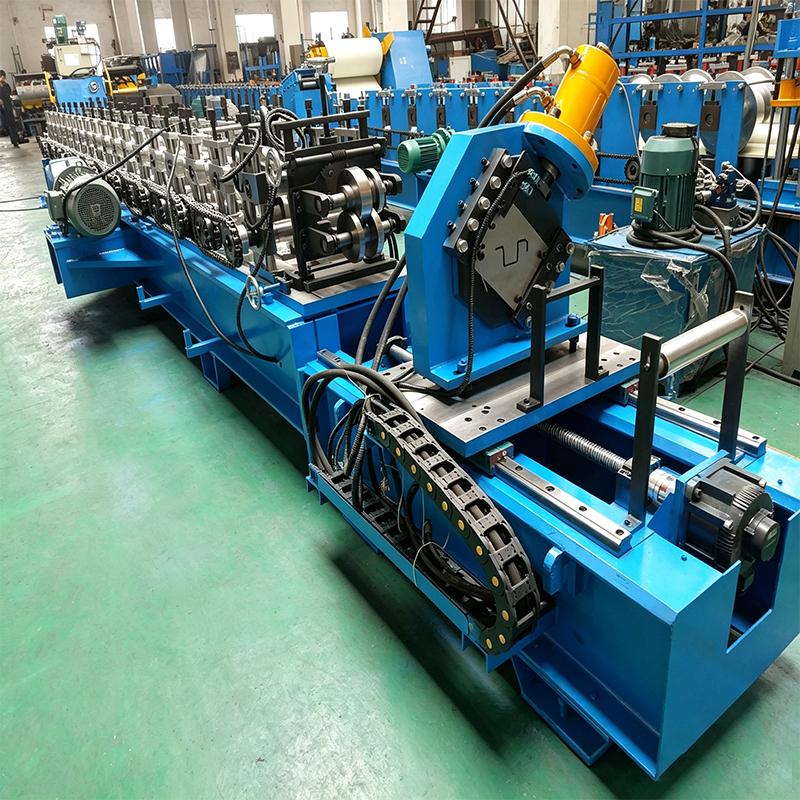
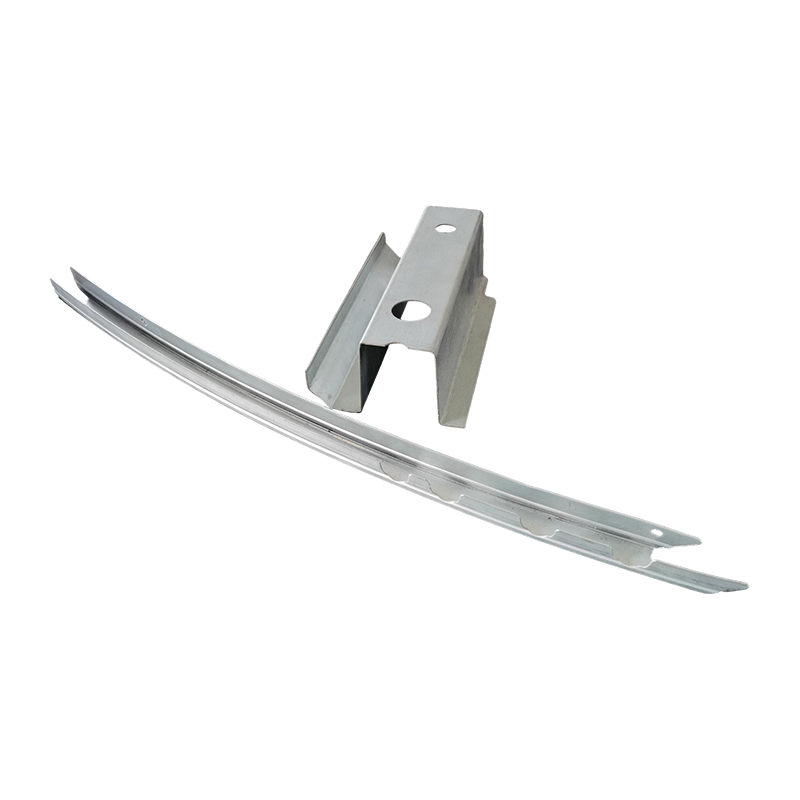
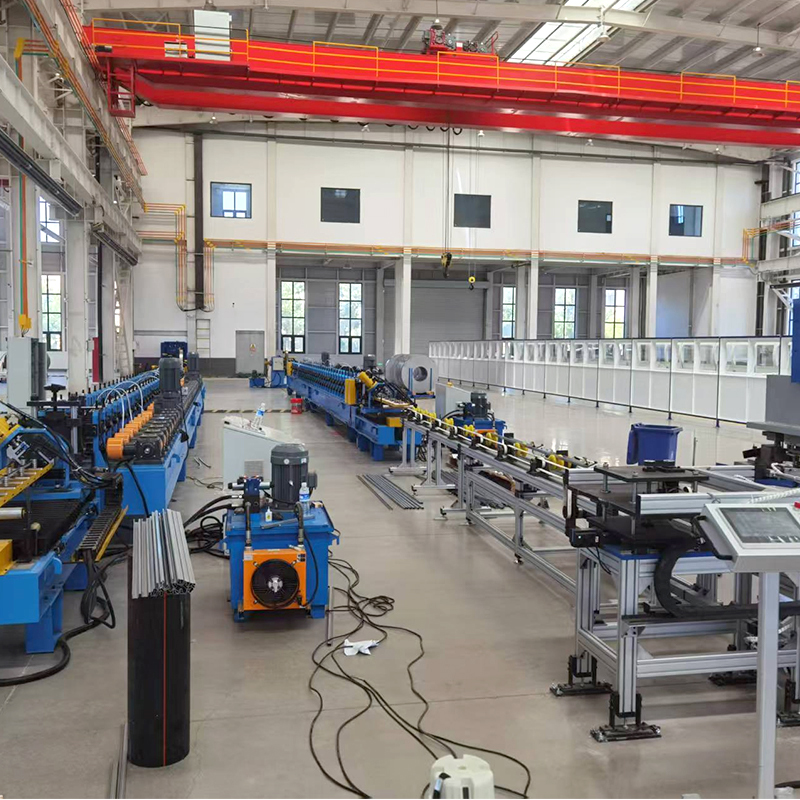
The Automotive profile Roll Forming Machine is a specialized modular cold bending forming production line dedicated to producing various cold-formed profiles for automotive bodies and structures. Cold-formed steel is widely used in the automotive manufacturing industry; in many vehicle models, traditional stamped parts have been replaced by cold-formed steel components. In the load-bearing structures of trucks, cars, and buses, cold-formed steel is used as frames, beams, longitudinal and transverse beams, body frames, chassis, and side walls; in the interior trim structures, it is used as guide rails for side window frames and seat components.
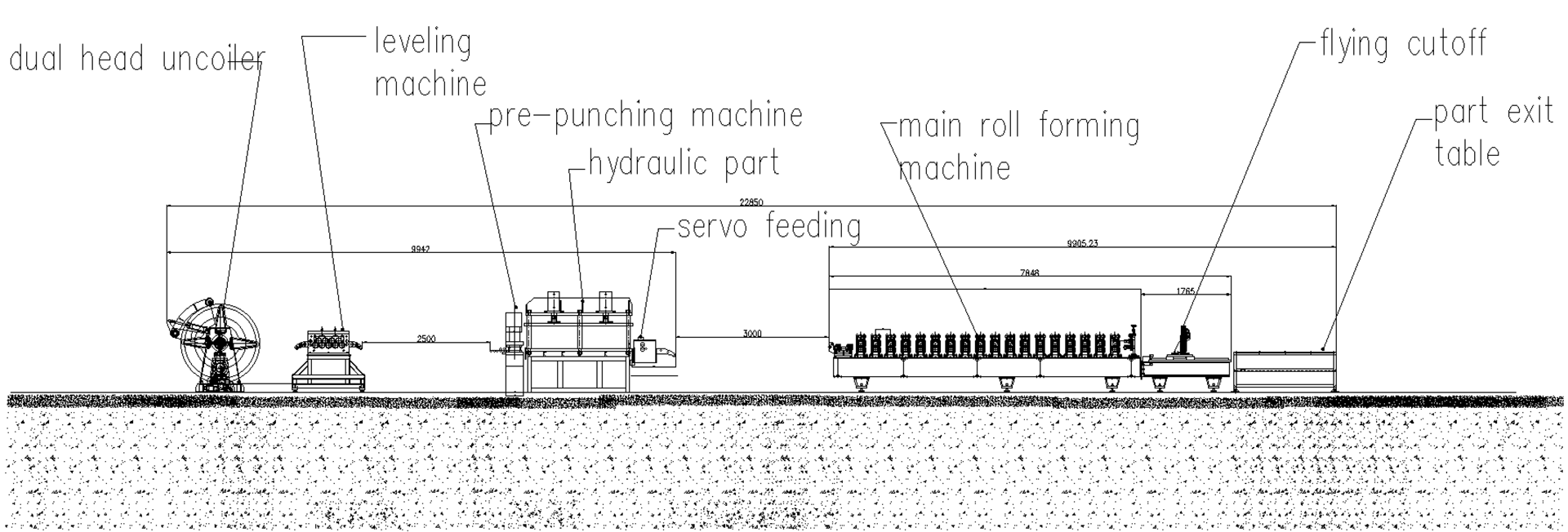
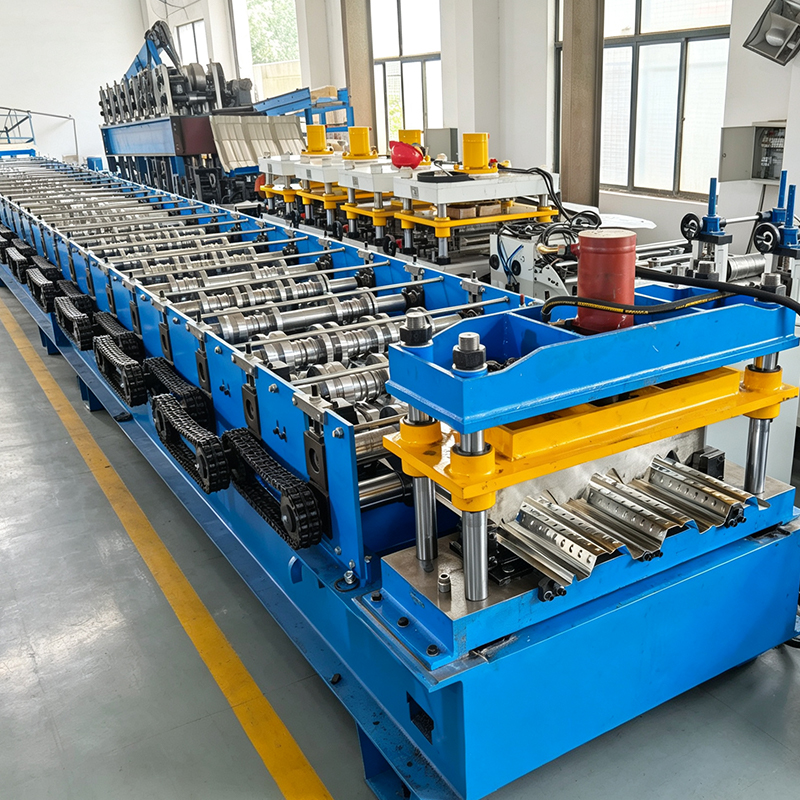
This equipment uses a continuous cold bending roll forming process on metal coils, combined with online servo punching and servo tracking cutting technology, to complete the entire process—uncoiling and leveling, servo feeding & hydraulic punching, guiding feeding, roll forming, servo tracking cutting, and unloading—in one continuous operation, directly producing finished automotive profiles.
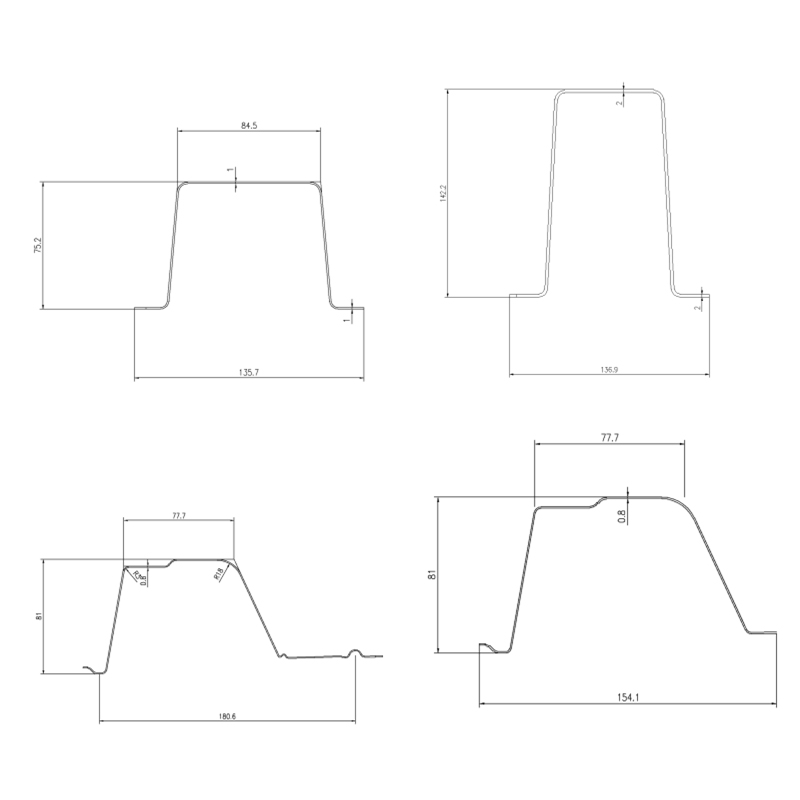
The entire line adopts PLC fully automatic control and touch screen human-machine interface operation, enabling fully automated continuous operation from uncoiling to finished product output. The equipment adopts a 110 cast iron archway-style transmission structure with a Z180 gearbox, ensuring high rigidity, precision, and long service life. It integrates four sets of hoisting and forming modules, capable of producing automotive profiles in four cross-sections and twelve specifications, covering various materials such as hot-rolled, cold-rolled, and galvanized steel sheets, with a yield strength ≤590MPa (designed for high strength). The equipment can process various thicknesses, including 0.8mm, 1mm, and 2mm. The entire line requires only 1-2 operators, making it a core piece of equipment for automotive parts manufacturers to achieve multi-variety, flexible, and intelligent production.
This equipment has been successfully applied in the Mexican automotive profile market, providing local automotive parts manufacturers with high-quality profile forming solutions. Mexico is the world's sixth-largest automobile producer, with approximately 90% of its automobiles exported overseas, of which about 80% are sold to the United States. Cold bending forming equipment has a broad market demand in the Mexican automotive manufacturing industry. The Mexican market for automotive structural steel sheets is experiencing steady growth due to the country's strong automotive manufacturing sector.
Core Advantages and Selling Points
(1) Four Sets of Lifting Forming Modules, One Machine Covers Four Cross-Sections and 12 Specifications
This is the core advantage that distinguishes this equipment from conventional single-specification production lines.
Traditional automotive profile equipment is mostly customized for single cross-sections. Changing profiles requires disassembling rollers and repeated adjustments, which is time-consuming and costly. This equipment adopts a four-set lifting forming module structure, with each module corresponding to a different cross-section profile. It can simultaneously produce four different cross-sections and 12 different specifications of automotive profile products. The number of forming passes for each forming module is as follows:
Forming Mechanism 1: 18 forming passes (module designed for 20 passes), producing 1mm thick profiles
Forming Mechanism 2: 20 forming passes, producing 2mm thick profiles
Forming Mechanism 3: 20 forming passes, producing 0.8mm thick profiles
Forming Mechanism 4: 20 forming passes, producing 0.8mm thick profiles
When producing different specifications, changing the forming module quickly via lifting can complete the changeover. Equipment utilization is greatly improved, and the response time for small-batch customized orders is significantly shortened.
(2) 110 Cast Iron Arch-Type Frame + Z180 Gearbox Drive: High Rigidity, High Precision, and Long Service Life
The forming machine adopts a 110 cast iron arch-type frame + Z180 gearbox drive structure, which is the core advantage that distinguishes this equipment from conventional chain drive or wall-panel drive equipment.
The gearbox drive has significant advantages over chain drive, including smoother transmission, lower noise, higher precision, and longer service life. The 110 cast iron arch-type frame is tempered, resulting in high rigidity and good resistance to deformation. It can be machined with high-strength steel up to 2mm thick, ensuring stable operation under high pressure for extended periods.
(3) Lifting Module + Single-Line Coupling + Pneumatic Fork: One-Button Separation for Quick Changeover
The equipment uses a single-line coupling to connect the gearbox and forming module, and is equipped with a pneumatic fork device.
One-click separation: Press the button, and the pneumatic fork drives the single-piece coupling to automatically separate, detaching the forming module from the gearbox.
Quick lifting: The separated forming module can be quickly replaced using lifting equipment.
No gearbox disassembly required: Gearbox disassembly is not involved in changeover, significantly reducing changeover time.
Precise positioning: The single-piece coupling ensures precise alignment after reconnection, eliminating the need for repeated adjustments.
Compared to traditional changeover methods (requiring the removal of dozens of bolts and recalibration of each pass), this equipment reduces changeover time from several hours to less than 30 minutes. Only the forming mechanism needs to be changed when producing different specifications, adapting to the rapid switching needs of 4 cross-sections and 12 specifications.
(4) High-Precision Roller System, Superior Quality
The equipment employs extremely high manufacturing precision in its roller system:
Shaft Material: 40Cr tempered (HB220-260), excellent comprehensive mechanical properties
Shaft Diameter: Φ80mm large-diameter formed shaft, strong load-bearing capacity, excellent torsional resistance
Roller Machining Method: CNC machining followed by ultra-precision grinding of the outer diameter to ensure dimensional accuracy and surface finish
Bearing Brand: Harbin Bearing (HRB), smooth operation, long service life
Roll Material: Chinese D2 (Cr12Mo1V1), quenched (HRC58-62)
Roll Machining Method: CNC machining to ensure circularity and radial runout
Spacer: To reduce runout of each roller, the spacer is machined from a thick-walled tube with a wall thickness of 7.5mm, ensuring dimensional tolerances, increasing its contact surface with the roll, and ensuring a proper fit between the inner hole and the roller.
(5) Turkish Straightening Head (Standard per Module), No Adjustment Required
Each forming module is equipped with a Turkish straightening head, eliminating the need for readjustment when producing different specifications. The Turkish straightening head straightens the formed automotive profile online, effectively eliminating longitudinal bending and torsional deformation generated during the forming process. Each module has an independently configured straightening head, allowing direct use after changing modules without repeated adjustments to straightening parameters, further shortening changeover time and ensuring profile straightness.
(6) High-Strength Steel Forming Capability, Yield Strength ≤590MPa
The equipment is designed for high strength, with a sheet yield strength < 590 MPa, enabling the processing of high-strength steel automotive profiles. With the advancement of automotive lightweighting trends, the application of advanced high-strength steel in automotive structural components is becoming increasingly widespread. High-strength steel cold-bending profile forming machines must possess sufficient rigidity and higher precision to reduce springback and ensure product accuracy. This equipment is designed specifically to meet this need, enabling stable processing of high-strength steel automotive profiles and meeting the production requirements of automotive lightweighting.
(7) Servo Feeding & Hydraulic Punching, Precise and Efficient
The equipment is equipped with a servo feeding system and a hydraulic punching system. The servo system precisely positions and feeds the material, ensuring accurate punching. The punching system precisely punches various hole types, including mounting holes, connecting holes, and positioning holes, before roll forming.
High punching accuracy: Servo positioning ensures minimal hole position deviation.
Synchronized punching and forming: No additional production cycle time.
High material utilization: Precise punching reduces waste.
(8) Servo tracking cut-off: Precise cut-off without stopping the machine.
Equipped with a servo tracking cut-off system, the system automatically tracks the moving speed and synchronously completes the cut-off to the specified length while the profile is running continuously. No deceleration or machine stop is required, completely eliminating downtime and significantly improving equipment utilization. The forming line speed is infinitely adjustable from 0-20m/min, meeting diverse production needs for different thicknesses and materials.
(9) Fully Automatic PLC Control, Intelligent Production
Fully automatic PLC control with a touchscreen human-machine interface enables full-process digital management.
Operators can set parameters such as production speed, cutting length, and production quantity with a single click through the interface.
Multiple sets of part data tasks can be set at once for automated production.
Equipped with a real-time monitoring and early warning system, it automatically alarms and displays the cause of the fault in abnormal situations.
New operators can work independently after 1-2 days of training.
(10) Robust and Durable, Stable and Reliable
The machine bed is made of welded steel plates and undergoes tempering treatment to eliminate internal stress and prevent machine deformation.
The forming frame is a 110mm cast iron archway structure, offering high strength and long service life.
D2 (Cr12Mo1V1) quenched rolls (HRC58-62) offer high hardness, good wear resistance, and long service life.
40Cr tempered shafts (HB220-260) provide excellent comprehensive mechanical properties.
Harbin Bearings (HRB) provide stable operation and long service life.
The molding machine motor has a power of 18.5KW, providing ample power.
A protective cover is installed on the transmission side to ensure operational safety.
Key electrical components are from internationally renowned brands, ensuring a low failure rate and long service life.
Technical Parameters
Item | Parameter
Applicable materials | Hot-rolled sheet, cold-rolled sheet, galvanized sheet
Sheet yield strength | ≤590 MPa (designed for high-strength material)
Forming machine structure | 110 cast-iron arch-frame type + Z180 gearbox drive
Hoistable forming modules | 4 sets (producing 4 cross-section types and 12 specifications)
Forming unit 1 | 18 forming passes (module designed for 20 passes), thickness 1 mm
Forming unit 2 | 20 forming passes, thickness 2 mm
Forming unit 3 | 20 forming passes, thickness 0.8 mm
Forming unit 4 | 20 forming passes, thickness 0.8 mm
Gearbox-to-module connection | In-line coupling (pneumatic shift fork, one-touch disconnection)
Shaft material | 40Cr, quenched and tempered (HB220-260)
Shaft diameter | Φ80 mm (CNC turning + precision cylindrical grinding)
Bearing brand | Harbin (HRB)
Forming machine motor power | 18.5 kW
Forming line speed | 0–20 m/min
Roller material | Chinese D2 (Cr12Mo1V1), quenched (HRC58-62)
Roller processing method | CNC turning; ensures control of circular and radial runout
Spacer sleeves | Machined from thick-walled tubing (7.5 mm wall thickness); ensures geometric tolerances
Straightening mechanism | Turkish-style straightener head (standard with each forming module set; no adjustment required)
Safety guards | Protective covers installed on the drive side
Control system | Fully automatic PLC control
Operators | 1–2 persons
Production Process
Uncoiling & Leveling → Servo Feeding & Hydraulic Punching → Guided Infeed → Roll Forming (Modular) → Servo-Tracking Cut-off → Discharge
Process Step | Description
Uncoiling & Leveling | The uncoiler holds the metal coil; the leveler performs precision leveling to eliminate internal stress.
Servo Feeding & Hydraulic Punching | The servo system ensures precise positioning; hydraulic punching accurately creates mounting holes, connection holes, etc.
Guided Infeed | Lateral roller guides ensure the strip enters the main forming unit in the correct position.
Roll Forming (Modular) | 4 sets of modular forming units (18–20 passes) with D2 hardened rollers progressively form standard automotive profile cross-sections; features one-touch separation via straight-jaw couplings and pneumatic shift forks for rapid tooling changes.
Servo-Tracking Cut-off | Servo-controlled tracking system cuts the profile to length on-the-fly without stopping the line.
Discharge | Finished products are output and stacked neatly.
Application Areas
Automotive profiles produced using cold-roll forming equipment are widely used in the following areas:
Body structural components: Door sill reinforcements (absorbing 65% of frontal impact forces and serving as a critical safety component); body frames; A/B/C-pillar reinforcements; roof longitudinal beams
Chassis and suspension systems: Chassis reinforcements; chassis longitudinal and cross-members; suspension system structural components
Seating systems: Seat frames (cold-roll forming is the mainstream manufacturing process); seat tracks
Door systems: Door impact beams (a classic application of roll-forming ultra-high-strength steel); door frame profiles; window guide rails
Bumper systems: Bumper beams (cold-roll forming of advanced high-strength steel bumpers)
New Energy Vehicles (NEVs): NEV body frames; battery pack brackets; chassis components; roll-formed structural components for NEVs
Commercial vehicles and buses: Bus body frameworks; truck cargo box side frames and roof panels
Mexico Market Case Study
This equipment has been successfully deployed in the Mexican automotive profile market, providing local auto parts manufacturers with high-quality cold roll forming solutions for automotive profiles.
Mexico: A Global Automotive Manufacturing Hub
Mexico is the world's sixth-largest automobile producer, and the automotive manufacturing sector is a pillar of the Mexican economy. Approximately 90% of vehicles produced in Mexico are exported, with about 80% destined for the U.S. market. Driven by record-breaking vehicle production and the expansion of electric vehicle (EV) platforms in northern Mexico, the market for automotive structural steel sheet metal in Mexico is projected to reach a volume of 2.8–3.2 million tonnes and a value of US$4.5–5.5 billion by 2026.
Widespread Application of Cold Roll Forming in Mexico's Automotive Industry
Mexico boasts one of the strongest cold roll forming markets in the Americas, driven by industrial warehouse construction, automotive manufacturing, and export-oriented processing plants. The cold roll forming process is widely utilized in Mexico's automotive industry to manufacture various structural components. Several internationally renowned auto parts companies operate cold roll forming production facilities in Mexico, including:
Kirchhoff Automotive: Provides cold forming services at its plant in Querétaro, Mexico.
CGR México: Specializes in the development and manufacturing of cold-formed components since 2003, with products primarily sold to automotive markets within the NAFTA region.
NARMCO Group: Operates roll forming plants in Mexico, supplying automotive components produced via stamping and roll forming.
Gestamp: Invested €74 million to build a new chassis component plant in San Luis Potosí, Mexico.
Value of the Equipment in the Mexican Market
Demand for cold roll forming equipment within Mexico's automotive manufacturing sector continues to rise. This equipment has been successfully implemented in the Mexican market, serving multiple production lines at local auto parts manufacturers and meeting production requirements for a wide range of vehicle models and profile specifications. As Mexico's automotive industry continues to expand and the new energy vehicle sector grows rapidly, the demand for cold roll forming equipment in the country is expected to keep increasing.
Service and Support
Solution Design: We provide personalized equipment selection and production line layout based on customer product drawings, capacity requirements, and target markets.
Custom Manufacturing: We support non-standard customization; orders can be placed using cross-sectional drawings or samples, with full oversight from roll design to complete machine manufacturing.
Installation and Commissioning: Engineers provide on-site installation, commissioning, and operator training to ensure rapid production startup.
After-Sales Support: We offer long-term technical consultation and spare parts supply; our engineers hold all necessary visas and are available for on-site service worldwide at any time.
Continuous Optimization: We provide equipment modification and capacity upgrade services to adapt to changing production needs.
Why Choose Us
Nearly 20 years of manufacturing experience: Mature technology, refined processes, and reliable quality.
Modular design, multi-purpose capability: 4 sets of forming modules produce 4 cross-section shapes and 12 specifications, eliminating the need for repeated investment.
Rapid changeover: One-touch separation via linear coupling and pneumatic shift fork reduces changeover time from hours to under 30 minutes.
High-strength steel forming expert: Handles yield strengths up to 590 MPa, meeting automotive lightweighting requirements.
Cast-iron arch-frame structure & Z180 gearbox drive: High rigidity, precision, and durability; capable of processing high-strength steel up to 2mm thick.
Turkish-style straightening head (standard inclusion): No adjustment required after changeover, further minimizing downtime.
High-precision manufacturing: Large Ø80 mm shaft diameter, D2 hardened rollers (HRC 58-62), and Harbin bearings.
Efficient production: Line speeds of 0–20 m/min; the entire line can be operated by just 1–2 people.
Smart control: Fully automatic PLC system with touchscreen interface; features one-touch setup and automatic counting.
Proven in the Mexican market: Successfully serving the Mexican automotive profile market; product quality rigorously validated by the industry.
Direct manufacturer: No middlemen, offering excellent cost-performance value.
Global service network: Engineers hold all necessary visas, ensuring rapid response.
 English