Equipment Overview
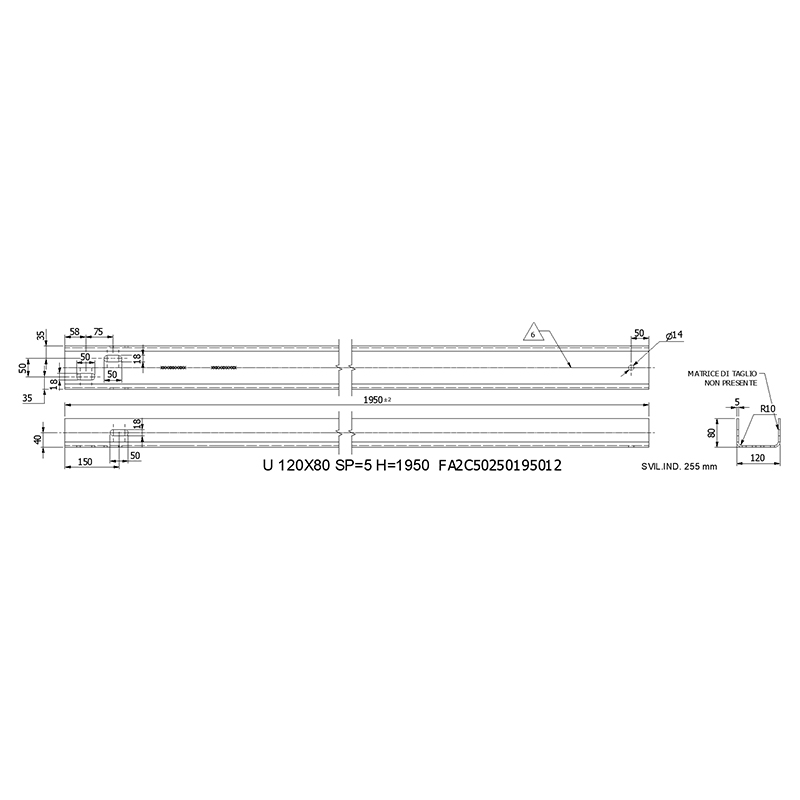
The high-speed U-profile guardrail post cold-roll forming machine is specialized equipment designed for the production of U-profile steel posts used in highway W-beam guardrail systems. As the core structural support for the guardrail system, the U-profile post directly withstands impact loads during vehicle collisions and absorbs impact energy through interaction with the soil foundation; its forming precision and structural strength directly determine the protection level and safety performance of the entire guardrail system.
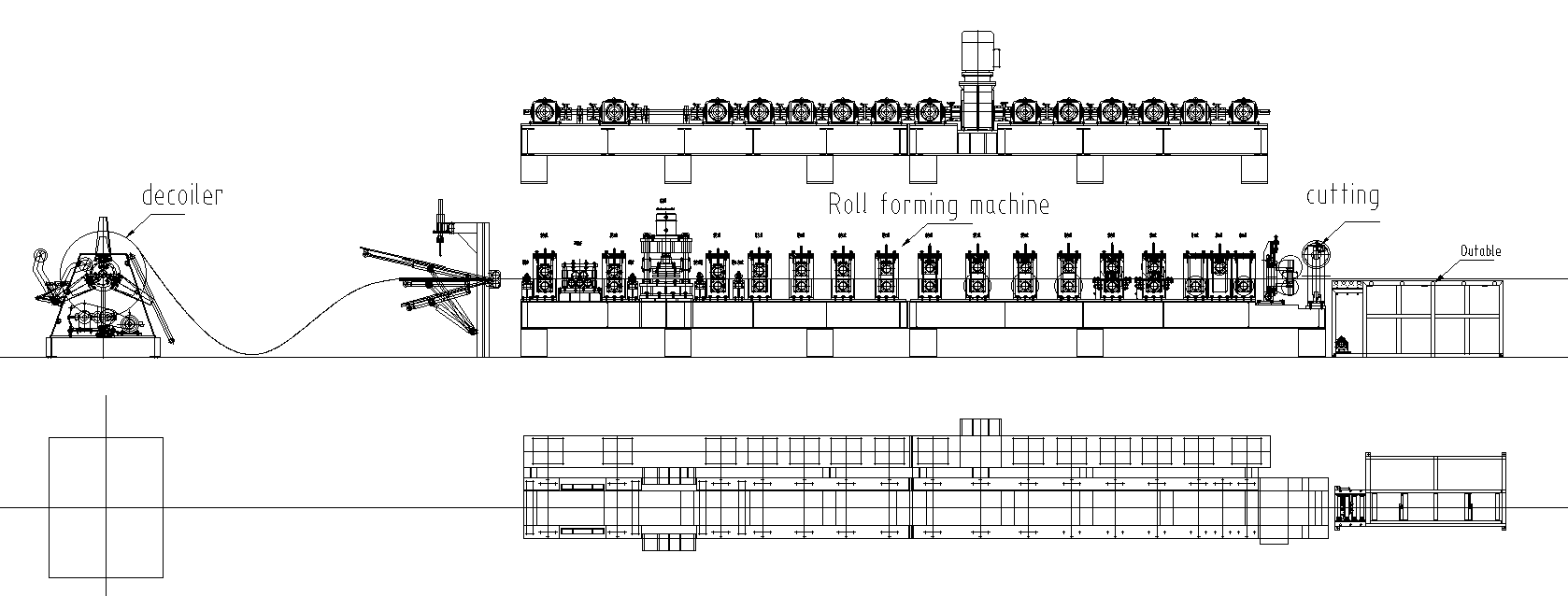
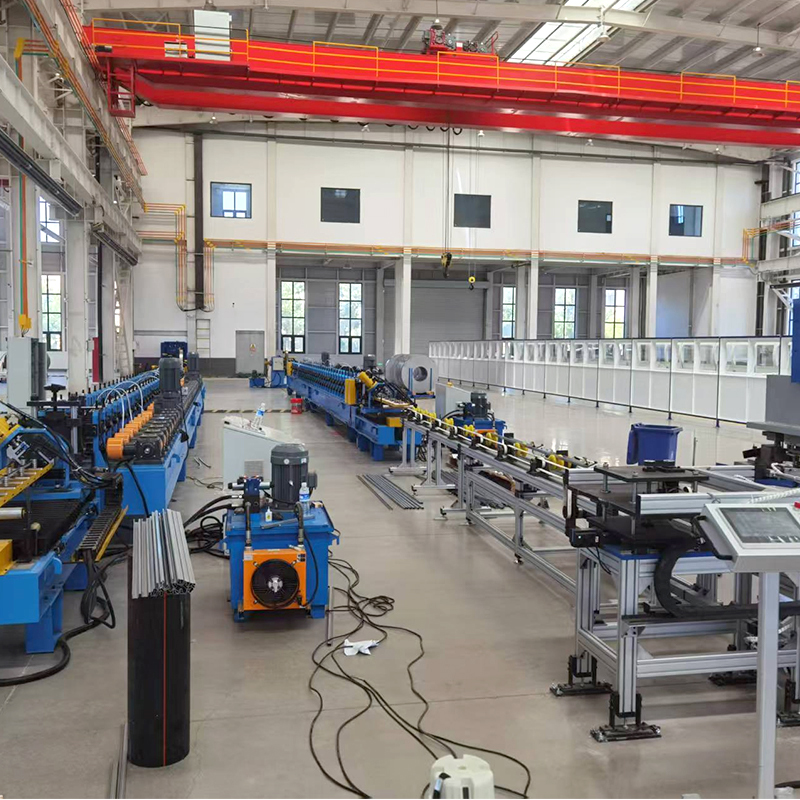
Utilizing a continuous cold-roll forming process, the equipment transforms steel strip coils into finished U-profile guardrail posts in a single, integrated workflow. This process encompasses hydraulic uncoiling, strip feeding (via shovel/guide plate), pinch-feeding and leveling, hydraulic punching, roll forming, cut-to-length shearing, and palletized discharge.
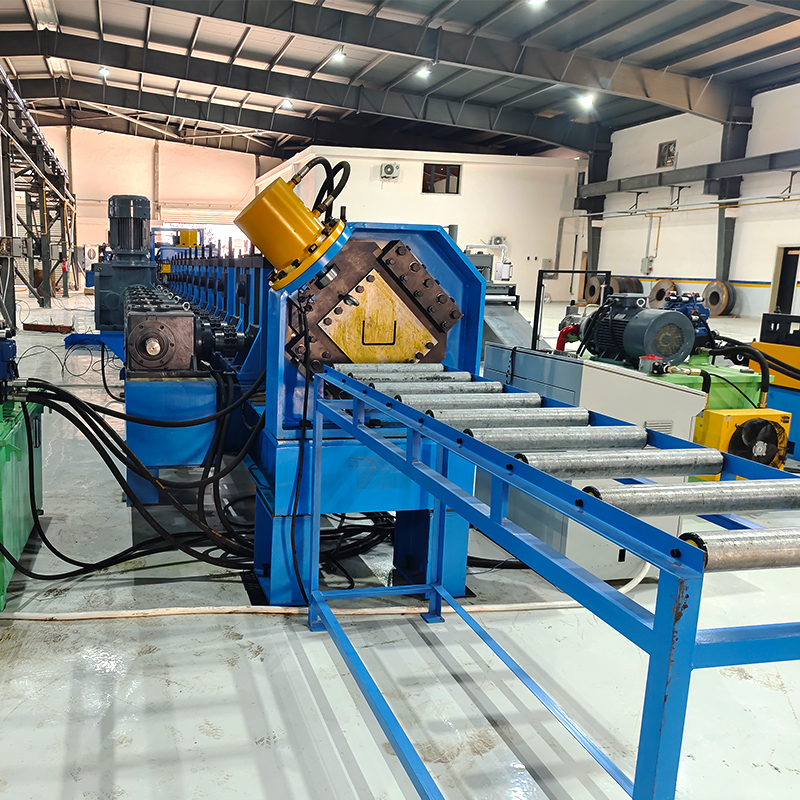
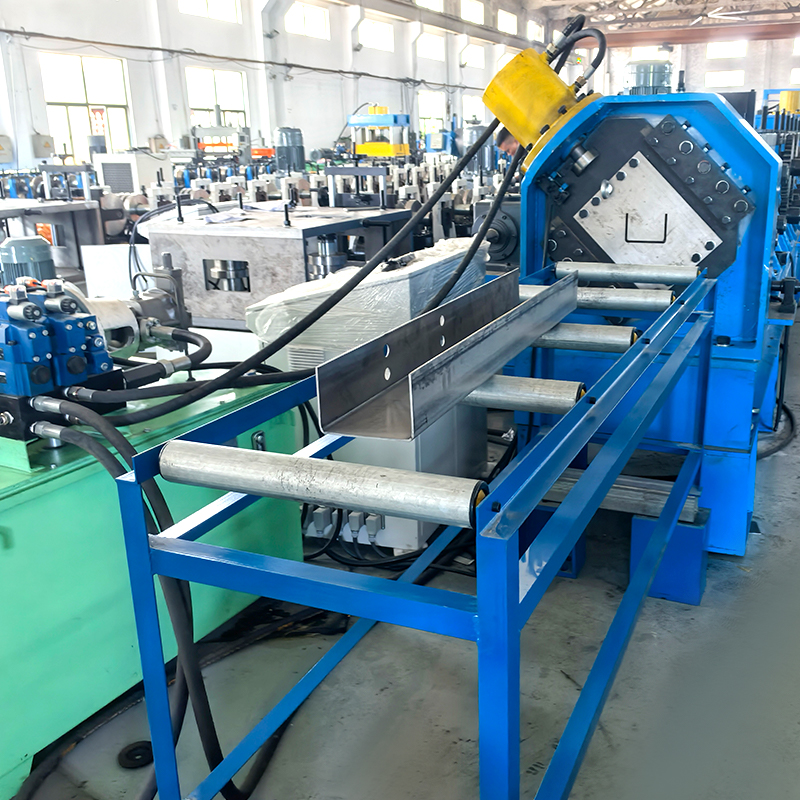
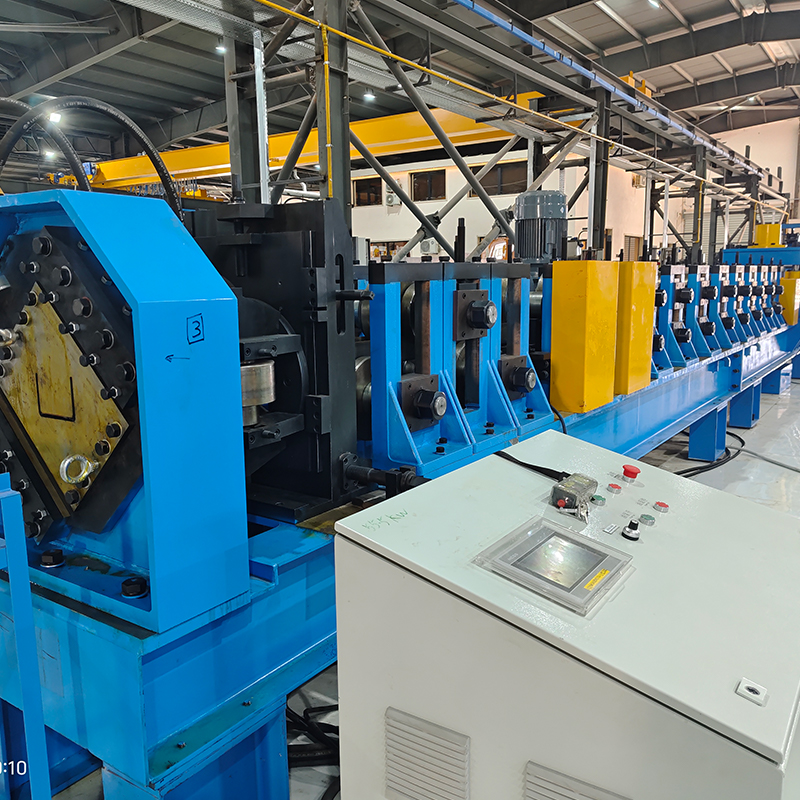
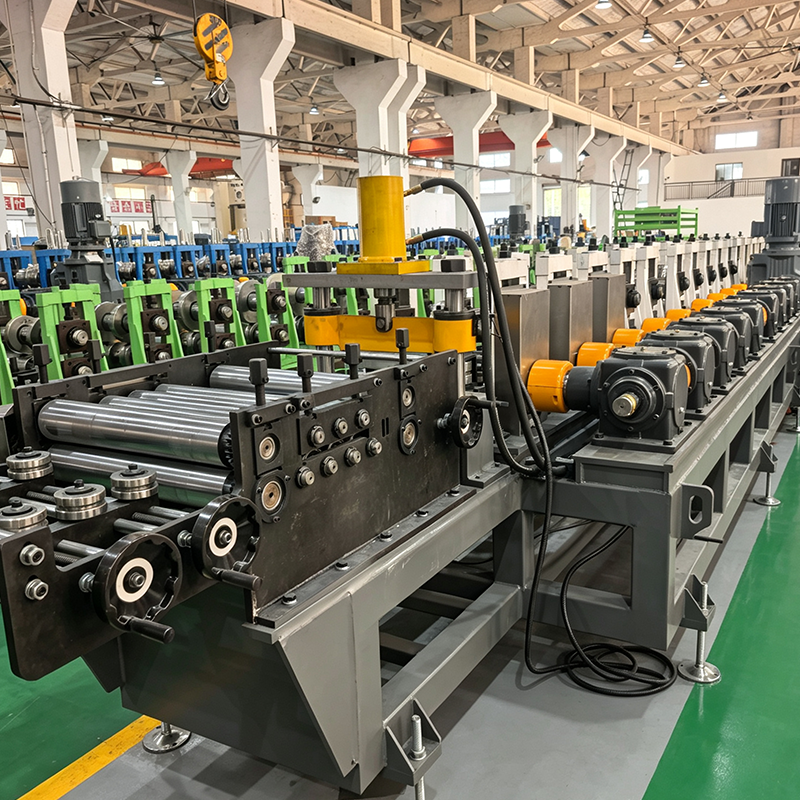
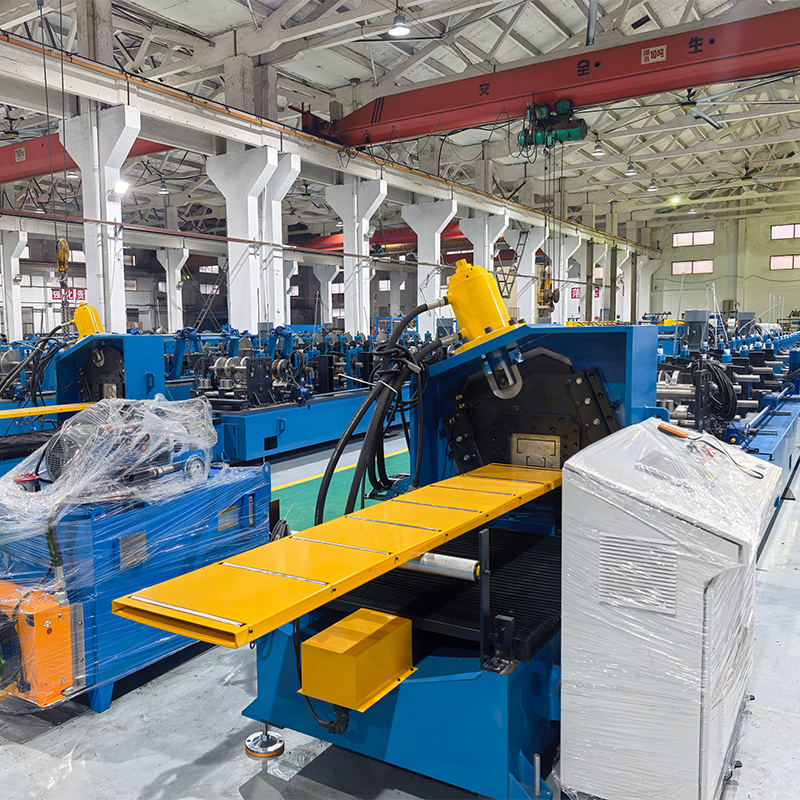
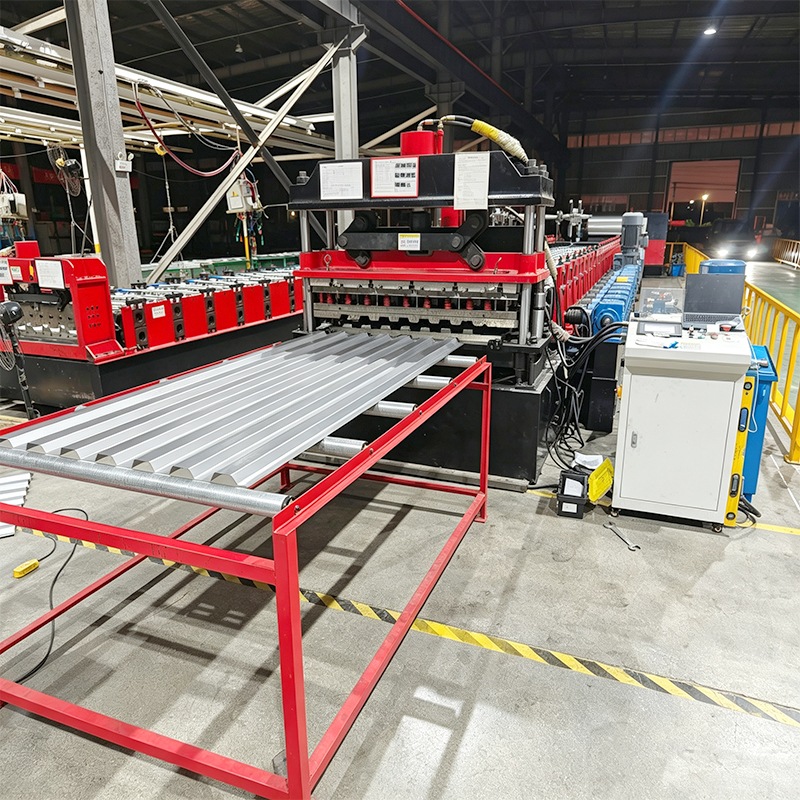
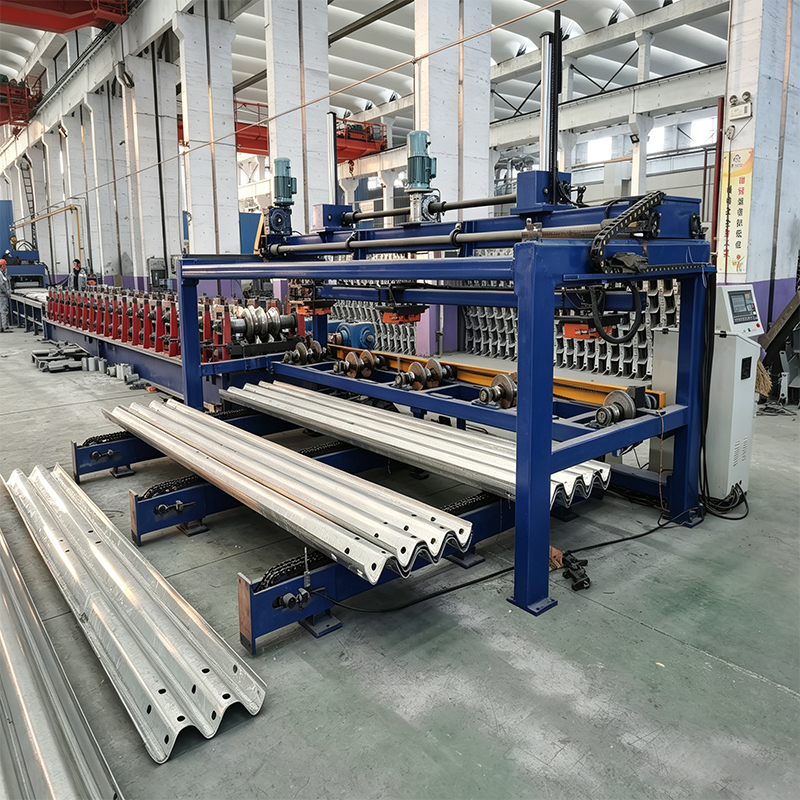
The entire line features fully automatic PLC control and a touchscreen HMI, ensuring continuous, automated operation from uncoiling to finished product discharge. Key integrated units include the strip feeding mechanism, five-roll leveling, a four-column hydraulic punching station (single or dual-station options), a 14-stand main forming unit, a Turkish-style straightening head, and transmission-side safety guards. It employs a cast-iron arch-style gearbox transmission structure, offering high rigidity, precision, and durability. The equipment accommodates various materials—such as Q235 and Q345 low-alloy high-strength steel—with thicknesses ranging from 3.0 mm to 6.0 mm. It can produce guardrail posts with C-shaped or U-shaped cross-sections, covering common specifications such as C100×50×20×3.0 mm, C120×55×20×3.0 mm, and C140×60×20×4.0 mm. Requiring only 1–2 operators, this line is essential equipment for highway guardrail post manufacturers aiming to achieve large-scale, standardized, and intelligent production.
The U-profile post (also known as the C-profile post) is a widely used post type in W-beam steel guardrail systems. It offers advantages such as an optimized cross-sectional design, high strength, and ease of installation; it connects to guardrail panels and spacer blocks via bolts to form a continuous protective structure. The U-shaped posts produced by this equipment strictly comply with the national standards GB/T 31439.1-2025 *Corrugated Steel Beam Guardrails – Part 1: Two-Wave Corrugated Steel Beam Guardrails* and GB/T 31439.2-2025 *Corrugated Steel Beam Guardrails – Part 2: Three-Wave Corrugated Steel Beam Guardrails*. These two standards were jointly issued by the State Administration for Market Regulation and the Standardization Administration of China on August 29, 2025, and officially came into effect on March 1, 2026.
Core Advantages and Selling Points
(1) Cast-iron arch-style gearbox drive: High rigidity, high precision, and long service life
The forming machine utilizes a cast-iron arch-style gearbox drive structure, with each forming stand independently equipped with a gearbox; this is a key advantage distinguishing this equipment from conventional chain-driven systems.
Compared to chain drives, gearbox drives offer significant advantages such as smooth operation, low noise, high precision, and extended service life. The independent gearbox configuration for each stand ensures stable, high-intensity, and long-term operation during the 14-pass forming process for 3.0–6.0mm thick plates. The cast-iron arch-style stands undergo tempering treatment to ensure high rigidity and excellent resistance to deformation. The large-diameter (Φ120mm) forming shafts provide high load-bearing capacity and superior torsional resistance, specifically designed for the high-speed forming of 3.0–6.0mm thick plates.
(2) Feeding shovel/guide plate + 5-roll leveling: Precise and reliable pre-treatment for thick plates
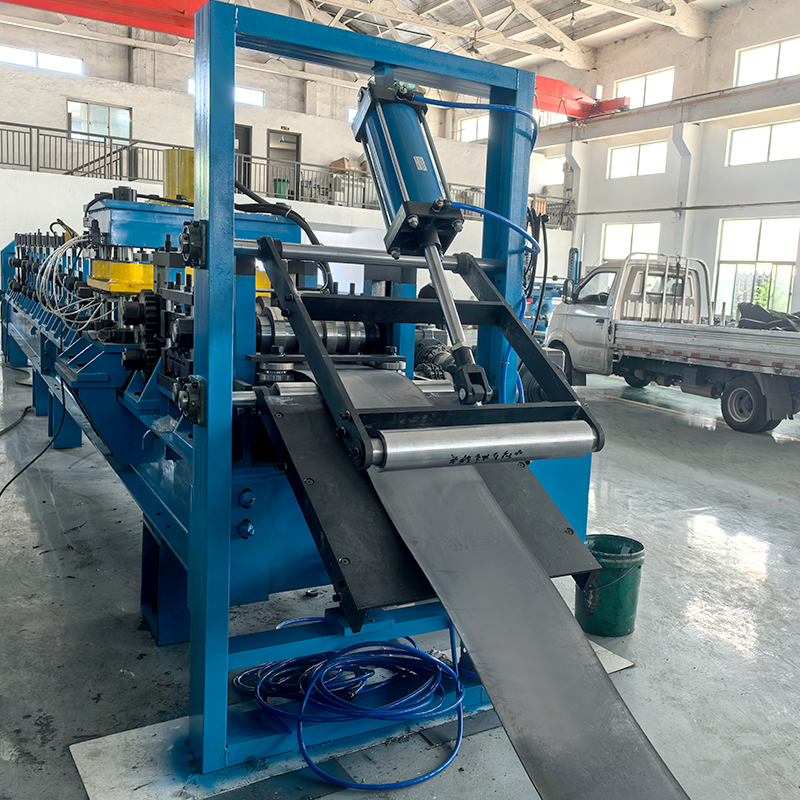
The equipment is equipped with a feeding shovel and guide plate assembly. The feeding shovel automatically lifts the strip end and directs it into the leveling unit, while the guide plate ensures smooth entry at the correct angle and position. This dual-feeding design effectively resolves the difficulty of threading heavy-gauge (3.0–6.0mm) strips caused by their own weight, enabling automated threading and significantly reducing the need for manual assistance.
The leveling mechanism features a front-and-rear pinch-roll setup combined with a 5-roll leveling structure, utilizing leveling shafts with a diameter of Φ90 mm. The pinch rolls provide stable feeding power, while the 5-roll precision leveling effectively eliminates internal stresses in the 3.0–6.0mm thick plates. This ensures the strip enters the subsequent punching and forming stages in a flat, precise condition, laying a solid foundation for high-precision forming.
(3) 1-station/2-station four-column hydraulic punching (optional): High force and high precision
The punching mechanism employs a four-column hydraulic structure (with the punching frame constructed from welded steel plates that undergo tempering treatment), available in either 1-station or 2-station configurations. The four-column structure offers high rigidity and precise guiding accuracy, while the hydraulic system delivers immense power and sufficient punching force, specifically designed for 3.0–6.0 mm thick plates. The tempered punching frame effectively eliminates welding stress and resists deformation during long-term use, ensuring enduring punching precision. The punching process accurately creates critical holes, such as mounting holes and connection bolt holes, for the U-shaped posts. A dual-station configuration allows for simultaneous multi-hole punching, significantly boosting efficiency.
(4) 14-stand multi-pass roll forming for stable cross-sectional dimensions
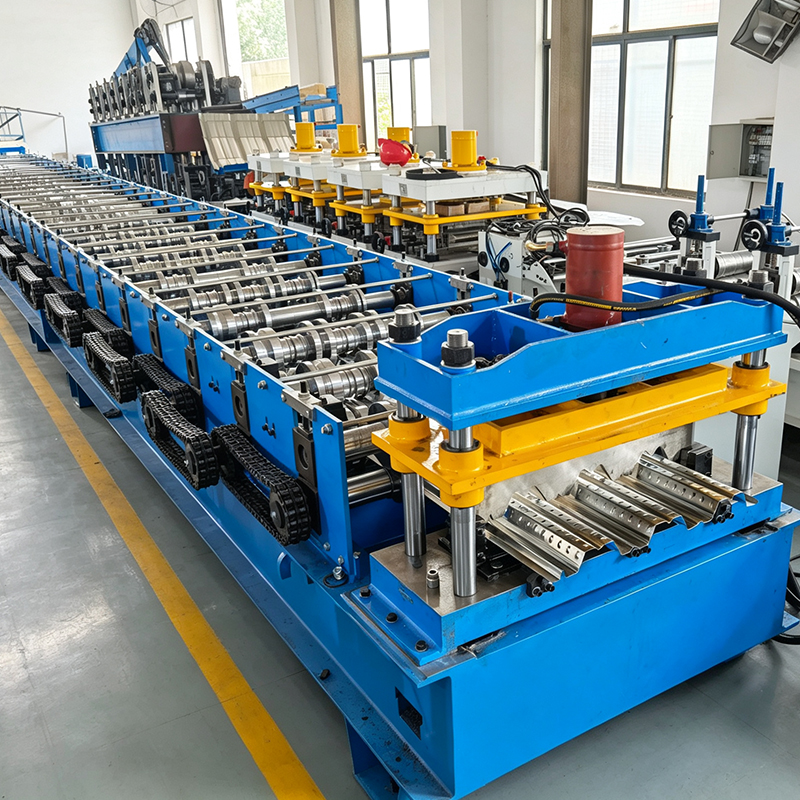
The system utilizes a 14-stand, multi-pass progressive cold roll forming process. Precision algorithms optimize die design and forming parameters, ensuring product accuracy right from the source. The 14-stand layout is scientifically designed to progressively bend 3.0–6.0 mm thick plates into standard U-shaped (or C-shaped) profiles. This multi-pass progressive forming effectively minimizes stress concentration in thick plate materials, guaranteeing stable cross-sectional dimensions and precise angles. The forming line speed ranges from 2 to 15 m/min (excluding punching and cutting), meeting high-volume production demands.
(5) Turkish-style straightening head for precise alignment
The equipment is equipped with a Turkish-style straightening head—a specialized in-line straightening device. Using multiple sets of cross-arranged straightening rollers, it applies counter-bending forces to the formed U-shaped profiles, effectively eliminating longitudinal bending and torsional deformation caused during the forming process to ensure straightness. The formed U-shaped posts undergo in-line straightening, ensuring the post's straightness by eliminating longitudinal bending and twisting. The post curvature is limited to no more than 1.5 mm/m, with total curvature not exceeding 0.15% of the fixed post length; the end-face cuts are perpendicular, with a perpendicularity tolerance of no more than 1 minute of arc. This high degree of straightness ensures smooth on-site installation of the U-shaped posts and effectively prevents guardrail installation misalignment caused by post curvature.
(6) Safe and Reliable Drive-Side Protective Housing
The equipment features a protective housing on the drive side that fully encloses moving parts such as the gearbox and drive chains. This effectively prevents accidental contact by operators, ensuring workplace safety. Additionally, the housing is dust- and oil-resistant, protecting drive components from external contaminants and extending the equipment's service life.
(7) High-Power Drive System
The forming machine is equipped with a 45 kW motor, providing ample power to ensure stable and efficient operation while forming 3.0–6.0 mm thick plates across 14 forming stations. Key electrical components are sourced from internationally renowned brands, ensuring a low failure rate and long service life.
(8) Precision-Machined Cr12MoV Roll Tooling
The roll tooling set is made of Cr12MoV steel and undergoes quenching treatment (HRC 58–62). Cr12MoV is a premium cold-work die steel known for high hardness, superior wear resistance, and excellent hardenability; after quenching, it achieves a hardness of HRC 58–62, resulting in long tool life and consistent precision.
The rolls are machined using CNC lathes to ensure strict control over circular and radial runout. High-precision CNC machining guarantees the concentricity and cylindricity of each roll, ensuring seamless transitions between forming stations. This prevents profile dimensional fluctuations caused by roll eccentricity and ensures consistent quality during long-term, high-volume production.
(9) Intelligent Control and User-Friendly Operation
The system features fully automatic PLC control and a touchscreen HMI, enabling digital management of the entire process. Operators can set parameters such as production speed and cut length with a single touch. The equipment offers both manual and automatic operating modes to suit various production scenarios. Multiple safety protections are implemented during normal operation to safeguard personnel. A real-time monitoring and fault warning system automatically triggers alarms and displays the cause of any anomalies. Operators can become proficient enough to work independently after just 1–2 days of training, significantly reducing skill requirements.
Technical Parameters
Item | Parameter
Applicable materials | Q235, Q345 low-alloy high-strength steel, etc.
Material thickness | 3.0–6.0 mm
Production specifications | C100×50×20×3.0 / C120×55×20×3.0 / C140×60×20×4.0 (customizable)
Forming machine structure | Cast-iron arch-style frame with gearbox drive (independent gearbox for each stand)
Feeding device | Feeding shovel/guide plate for automatic material threading
Leveling mechanism | Front and rear dual-roller pinch feed + five-roller leveling
Leveling shaft diameter | Φ90 mm
Punching mechanism | Four-column hydraulic punching (punching frame made of welded steel plate with tempering treatment)
Punching stations | 1 station / 2 stations (optional)
Shaft diameter | Φ120 mm
Main motor power | 45 kW
Forming line speed | 2–15 m/min (excluding punching and cutting time)
Number of forming passes | 14 main roller passes
Cut-to-length accuracy | ±1.0 mm
Roller tooling | 1 set
Roller material | Cr12MoV, quenched (HRC 58–62)
Roller processing method | CNC lathe machining (ensuring radial runout and concentricity)
Straightening device | Turkish-style straightening head
Safety guards | Protective housing installed on the drive side
Control system | Fully automatic PLC control
Operators | 1–2 persons
Production Process
Hydraulic Uncoiling → Feeding Shovel/Guide Plate → Pinching & Leveling → Hydraulic Punching → Roll Forming → Cut-to-Length → Discharge via Support Tray
Process Step | Description
Hydraulic Uncoiling | Hydraulic uncoiler supports the steel coil and ensures stable feeding; maximum load capacity is customizable.
Feeding Shovel/Guide Plate | The shovel automatically lifts the strip end, while the guide plate directs the strip into the leveling unit at the precise angle, enabling automated threading.
Pinching & Leveling | Features front and rear pinch rollers plus a five-roller leveling system; Φ90mm leveling shafts ensure precision leveling and eliminate internal stress in 3.0–6.0mm thick plates.
Hydraulic Punching | 1-station or 2-station four-column hydraulic punching system for precise punching of mounting holes, connection bolt holes, etc.
Roll Forming | Multi-stage progressive cold-roll forming using 14 main forming stations to gradually shape the thick plate into a U-shaped (or C-shaped) upright profile.
Cut-to-Length | Cut-to-length precision of ±1.0mm; hydraulic cutting ensures a clean, smooth cut surface.
Discharge via Support Tray | Output of finished products; ensures neat and orderly discharge.
Application Areas
The U-shaped posts produced by the high-speed guardrail U-post cold-roll forming machine are widely used in the following areas:
Expressways: Safety protection along the sides and central medians of expressways—U-shaped posts serve as the core structural supports for W-beam steel guardrails and are widely used on highways of all classes.
National and Provincial Trunk Roads: Safety protection for Class I and Class II highways—U-shaped posts feature standardized specifications suitable for conventional protection levels.
Rural and Mountain Roads: County roads, township roads, and hazardous sections in mountainous areas—U-shaped posts are cost-effective and practical, meeting various protection level requirements.
Municipal Roads and Urban Expressways: Urban elevated roads and expressways—U-shaped posts offer easy installation and convenient maintenance.
Industrial Parks and Factory Roads: Safety protection for internal roads within large industrial parks and logistics hubs.
Tourist Attraction Roads: Winding mountain roads and cliffside sections within scenic areas—U-shaped posts provide reliable safety protection.
Airports and Ports: Roads surrounding airports and internal roads within port terminals.
Market Outlook
Driven by the continuous advancement of global infrastructure development, the highway guardrail market is experiencing steady growth. The global market for highway guardrail components was valued at approximately US$1.259 billion in 2025 and is projected to reach US$1.783 billion by 2032, representing a compound annual growth rate (CAGR) of 5.1%. China's roadside safety barrier construction market was valued at US$1.92 billion in 2025 and is expected to grow to US$2.63 billion by 2031, with a CAGR of 5.43%. W-beam guardrails account for 78% of the highway guardrail market share.
On August 29, 2025, the Standardization Administration of China (SAC) released GB/T 31439.1-2025 *Corrugated Steel Beam Guardrails – Part 1: Two-Wave Corrugated Steel Beam Guardrails* and GB/T 31439.2-2025 *Corrugated Steel Beam Guardrails – Part 2: Three-Wave Corrugated Steel Beam Guardrails*, both effective from March 1, 2026. The new standards revise the nominal dimensions and permissible deviation requirements for tubular steel posts and introduce requirements for pre-reserved sets of height-adjustment holes. Post dimensions have been adjusted—for instance, the "h1" dimension for tubular steel posts has increased from 256 mm to ≥344 mm—and stricter manufacturing processes for posts and block-outs have been mandated, prioritizing high-frequency welding. The implementation of these new national standards imposes higher requirements on guardrail post production equipment and opens up a broader market for high-quality U-shaped post forming machinery.
Regarding anti-corrosion requirements, all guardrail components must undergo anti-corrosion treatment in compliance with GB/T 18226-2025 *Technical Specifications for Anti-corrosion of Steel Components in Highway Traffic Engineering*. The required galvanizing mass is 600 g/m² for corrugated beam plates, posts, end terminals, block-outs, and brackets, and 350 g/m² for bolts, nuts, washers, and anchors. The 2025 version of the standard introduces, for the first time, a new anti-corrosion process utilizing zinc-aluminum-magnesium alloy coatings. As the core structural support for guardrail systems, the market demand for U-shaped posts is directly linked to the mileage of expressway construction. With over 6,000 kilometers of new expressways built annually in my country, the demand for guardrail posts continues to rise. Thanks to advantages such as an optimized cross-sectional design, high strength, and ease of installation, U-shaped posts hold a significant share of the corrugated steel guardrail market. As road safety standards are raised and new national standards are implemented, requirements regarding the design and performance of U-shaped posts are becoming increasingly stringent, driving a sustained rise in demand for high-quality U-shaped post forming equipment.
Service & Support
Solution Design: Personalized equipment selection and production line layout based on customer product drawings, capacity requirements, and target markets.
Custom Manufacturing: Support for non-standard customization, with full control over the process from roll design to complete line manufacturing.
Installation & Commissioning: On-site installation, commissioning, and operator training provided by engineers to ensure rapid production startup.
After-Sales Support: Long-term technical consultation and spare parts supply; engineers hold valid visas and are available for on-site service worldwide at any time.
Continuous Optimization: Equipment modification and capacity upgrade services available to adapt to changing production needs.
Why Choose Us
Nearly 20 Years of Manufacturing Experience: Mature technology, refined processes, and reliable quality.
Specialized Expertise in U-Shaped Posts: Deep understanding of the technical nuances involved in forming U-shaped (and C-shaped) posts.
Thick-Plate Forming Experts: Capable of handling thicknesses from 3.0mm to 6.0mm; specifically designed for highway guardrail posts.
Robust and Durable: Cast-iron arch-style gearbox transmission, large Ø120mm shaft diameter, Cr12MoV quenched rollers (HRC 58–62), and precision CNC machining.
Turkish-Style Straightening Head: Precise straightening ensures post-curvature is ≤1.5mm/m, guaranteeing smooth on-site installation.
Feeding Shovel/Guide Plate: Automated material threading; the "shovel" design easily resolves the challenge of feeding thick plates (3.0–6.0mm).
Transmission-Side Protective Housing: Safe, reliable, and resistant to dust and oil, extending the equipment's service life.
High-Precision Manufacturing: Cut-to-length accuracy of ±1.0mm with a consistently high product pass rate.
High-Efficiency Production: Line speed of 15m/min meets high-volume supply demands.
Intelligent Control: Fully automatic PLC system with touchscreen operation; the entire line can be operated by just 1–2 people.
Compliance with New National Standards: Products strictly adhere to GB/T 31439.1-2025 and GB/T 31439.2-2025 standards.
Direct Manufacturer: No middlemen, offering excellent cost-performance value.
Global Service Network: Engineers hold all necessary visas, ensuring rapid response times.
 English