I. Equipment Overview
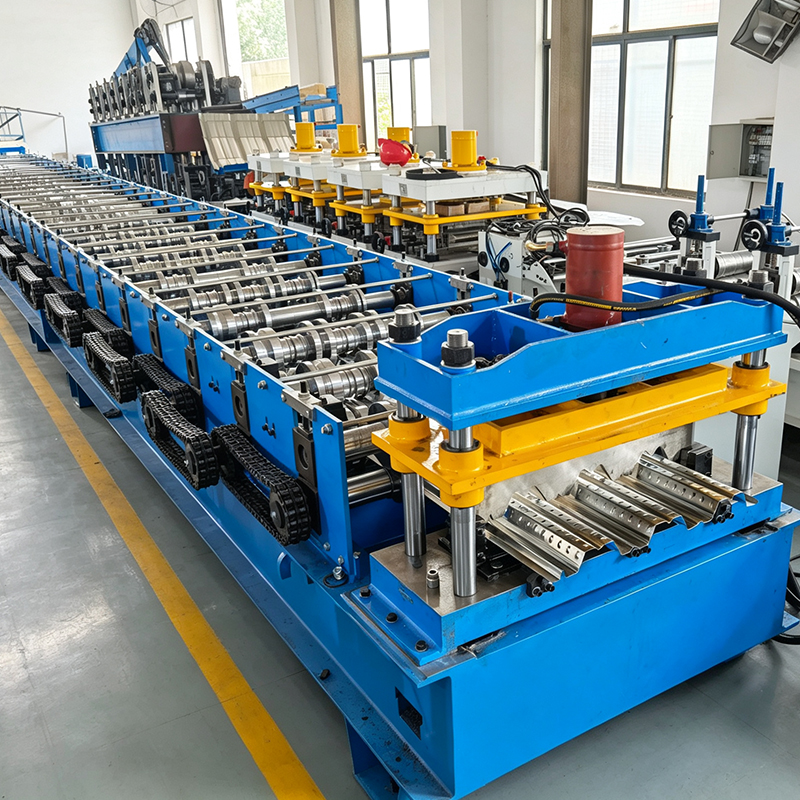
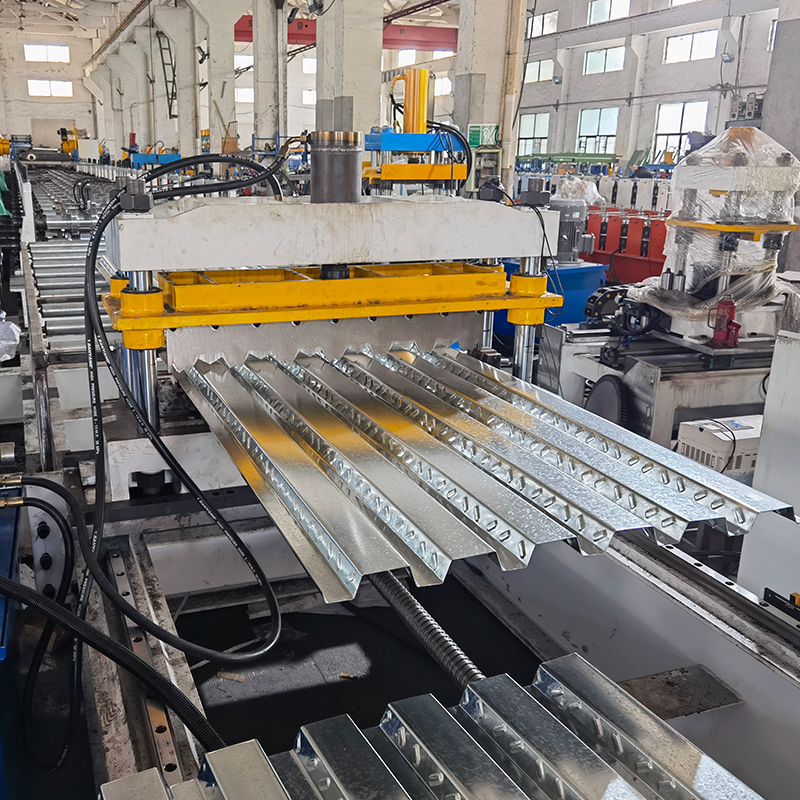
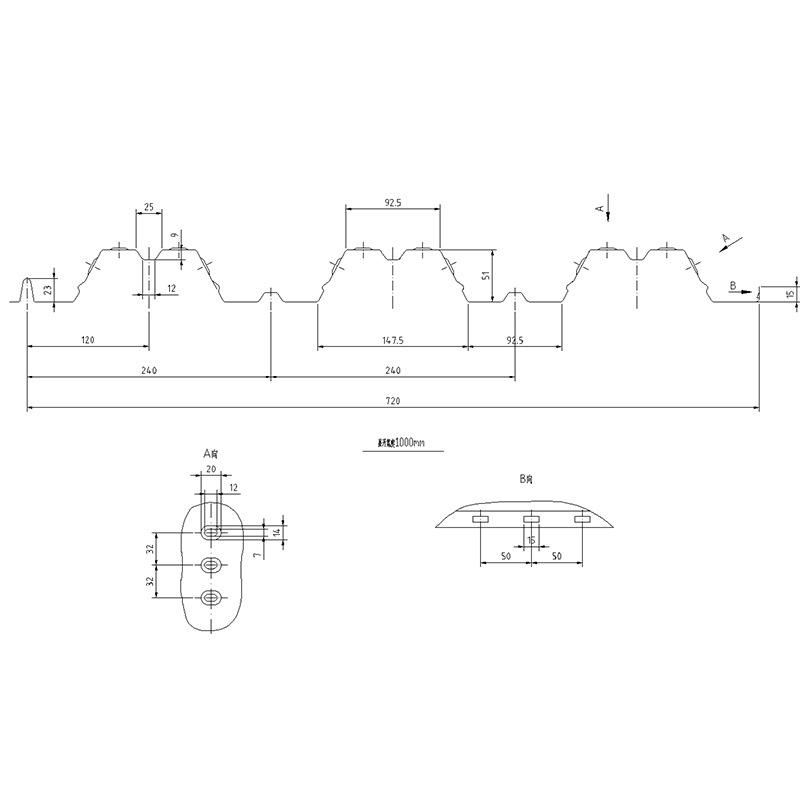
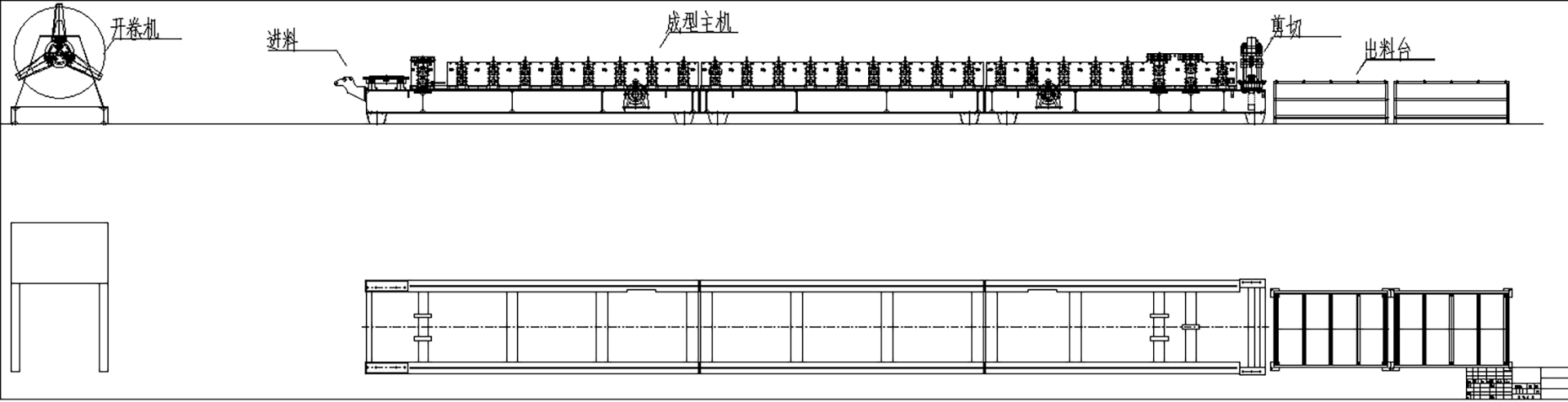
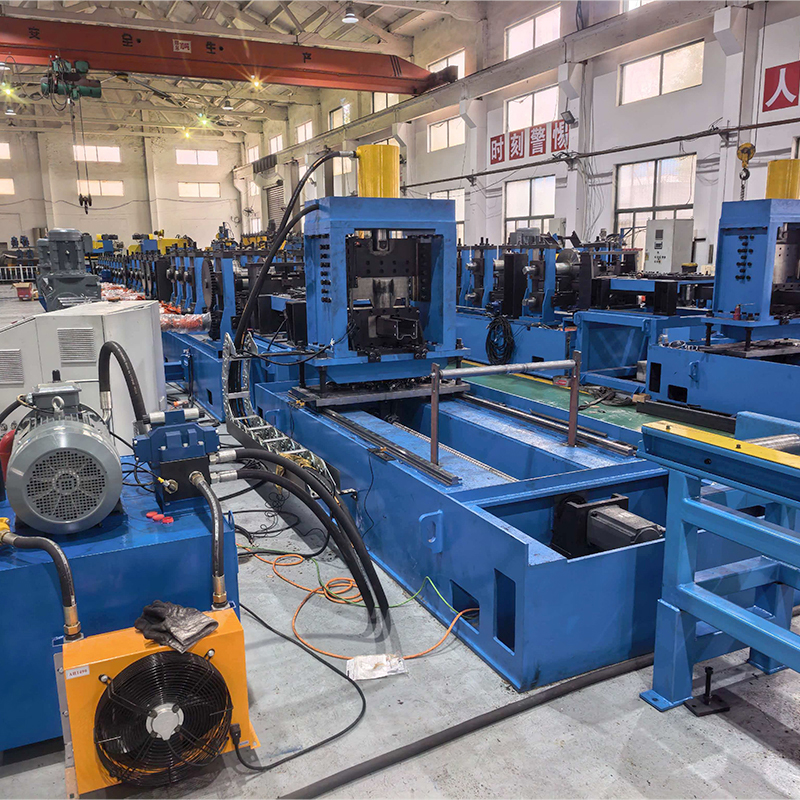
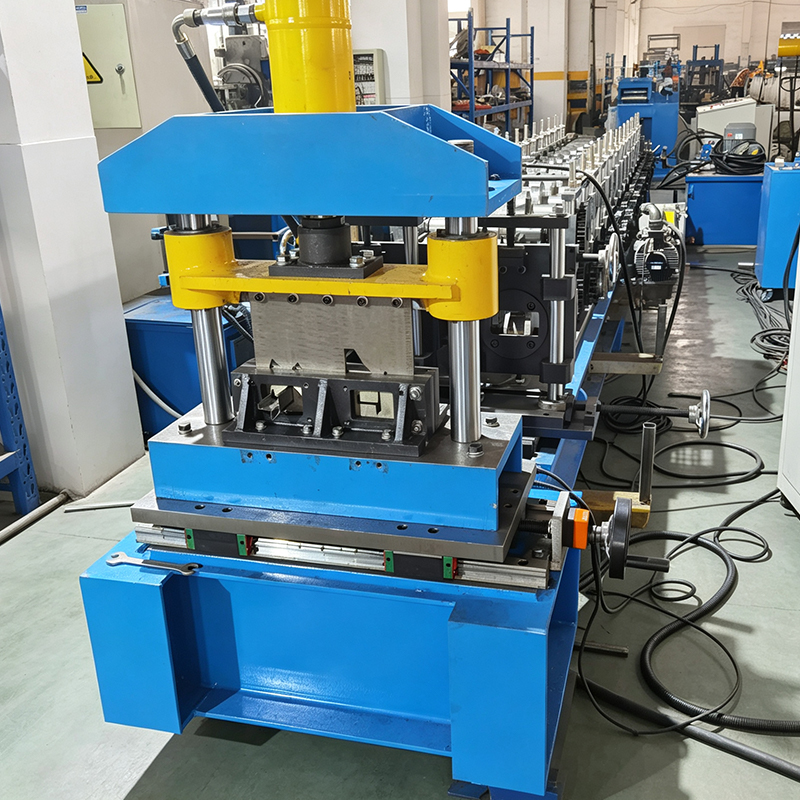
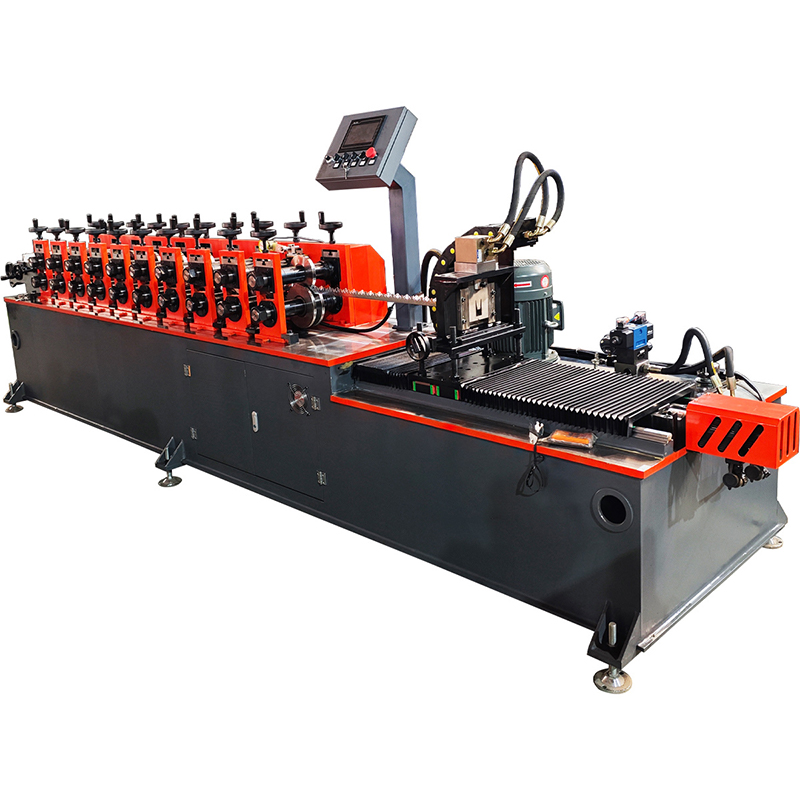
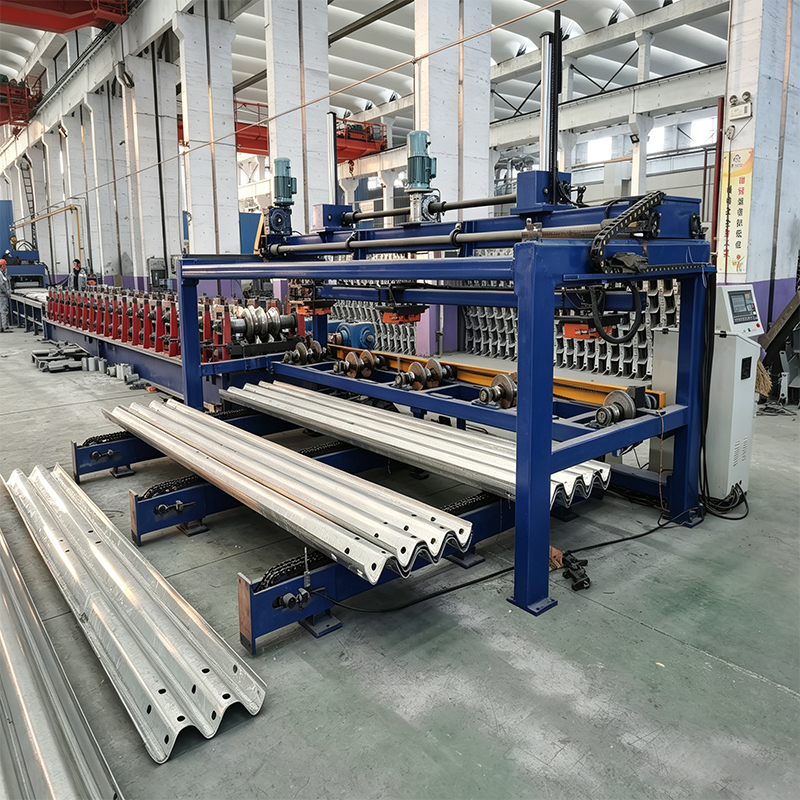
The Floor Deck Roll Forming Machine is specialized equipment designed for the cold-roll forming of steel floor decking (also known as profiled steel decking or composite floor decking). Floor decking is a composite structural material made from galvanized steel sheets formed via cold-rolling; the resulting cross-sections feature V-shapes, U-shapes, trapezoids, or wave-like profiles. Utilizing a continuous cold-roll forming process, the machine integrates the entire production workflow—including uncoiling, guided feeding, roll forming, hydraulic cutting, and discharging—to directly produce finished floor decking.
The entire line features fully automated PLC control and a touchscreen HMI (Human-Machine Interface), ensuring a continuous, automated operation from uncoiling to the discharge of finished products. The equipment utilizes a wall-plate style chain drive structure, offering high rigidity, precision, and durability. It is compatible with various metal sheets, such as galvanized steel and Al-Zn coated steel, with thicknesses ranging from 0.8 mm to 1.5 mm. The forming line speed is adjustable between 0 and 15 m/min (excluding cutting time), enabling the production of floor decking with diverse rib heights and pitches. Requiring only one operator, this machine is core equipment for manufacturers of steel structure flooring materials aiming to achieve large-scale, standardized, and intelligent production.
Floor decking products are characterized by their light weight, high strength, high load-bearing capacity, and excellent seismic performance; they are widely used as permanent formwork for composite or concrete floor slabs. During construction, the decking serves as permanent formwork capable of bearing loads; during the service phase, it acts compositely with the concrete, functioning as bottom tensile reinforcement. In high-rise construction, it eliminates the need for traditional steel formwork and reduces the dead load of the floors. By achieving equivalent structural performance while reducing the total amount of steel required, it effectively lowers project costs.
II. Core Advantages and Selling Points
(1) 26-Stage Precision Roll Forming for Accurate, Stable Cross-Sections
Utilizes a 26-stage progressive cold-roll forming process to gradually shape metal sheets into standard V-shaped, U-shaped, or trapezoidal profiles for floor decking. The scientifically designed 26-stage layout minimizes material stress concentration, ensuring consistent cross-sectional dimensions and uniform corrugation.
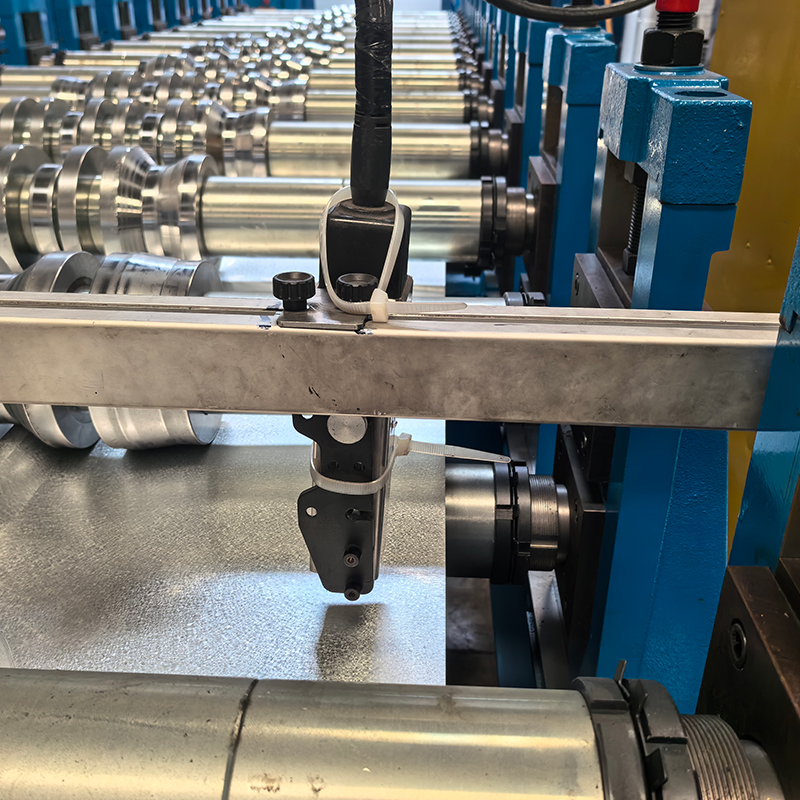
Roll Material: Quenched GCr15 steel; offers high hardness, excellent wear resistance, and long tool life.
Main Shaft Diameter: Large-diameter (Φ90mm) forming shafts provide high load-bearing capacity and superior torsional rigidity.
Shaft Material: Quenched and tempered 40Cr steel (HB220-260); offers excellent comprehensive mechanical properties.
(2) Wall-Plate Style Chain Drive for Smooth, Reliable Operation
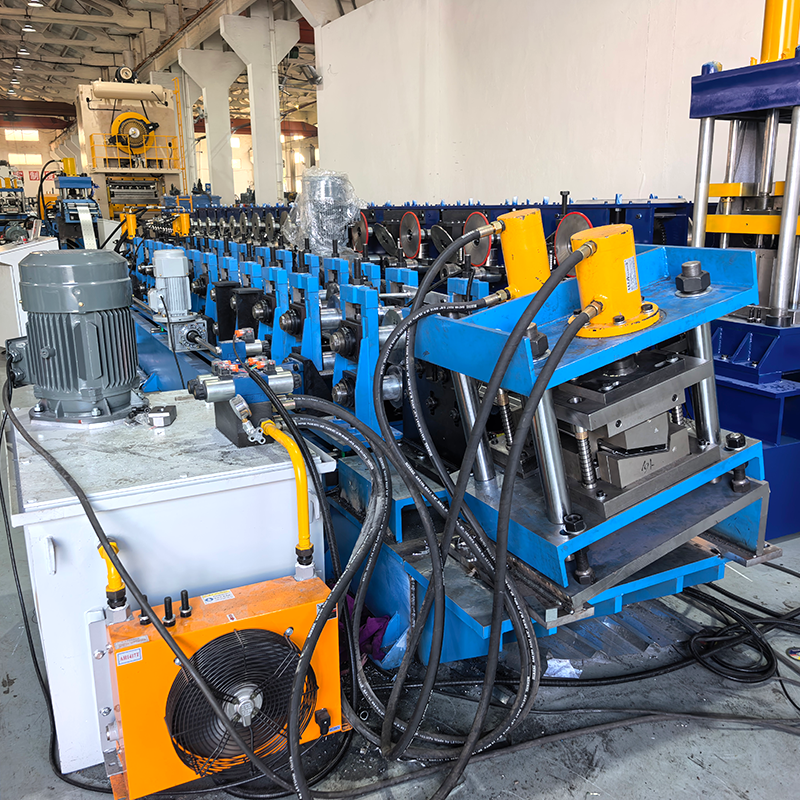
The forming machine employs a wall-plate style chain drive structure, ensuring smooth transmission, low noise, and high precision. The rigid wall-plate frame resists deformation, guaranteeing stable, high-intensity operation over long periods. Powered by dual 18.5kW main motors, the system delivers robust power, ensuring stable and efficient processing of 0.8–1.5mm thick sheets across all 26 forming stages.
(3) High-Speed Production and Leading Output Capacity
The entire line features fully automated processes, integrating uncoiling, forming, and cutting. The forming line speed ranges from 0 to 15 m/min (excluding cutting time), with adjustable speeds to accommodate varying material thicknesses and types. Fully automated production requires only one operator, resulting in efficiency several times higher than traditional production methods. Certain high-speed models can achieve production speeds of 25–40 m/min.
(4) High-Precision Forming and Superior Quality
Utilizes a multi-stage precision roll forming process to ensure high forming accuracy and product consistency. Quenched GCr15 rollers are CNC-machined to guarantee precise radial and axial runout tolerances. The resulting products feature continuous, uniform corrugation and stable cross-sectional dimensions, effectively ensuring precision during on-site installation and interlocking of the floor decking.
(5) Hydraulic Shearing for Precise Length Cutting
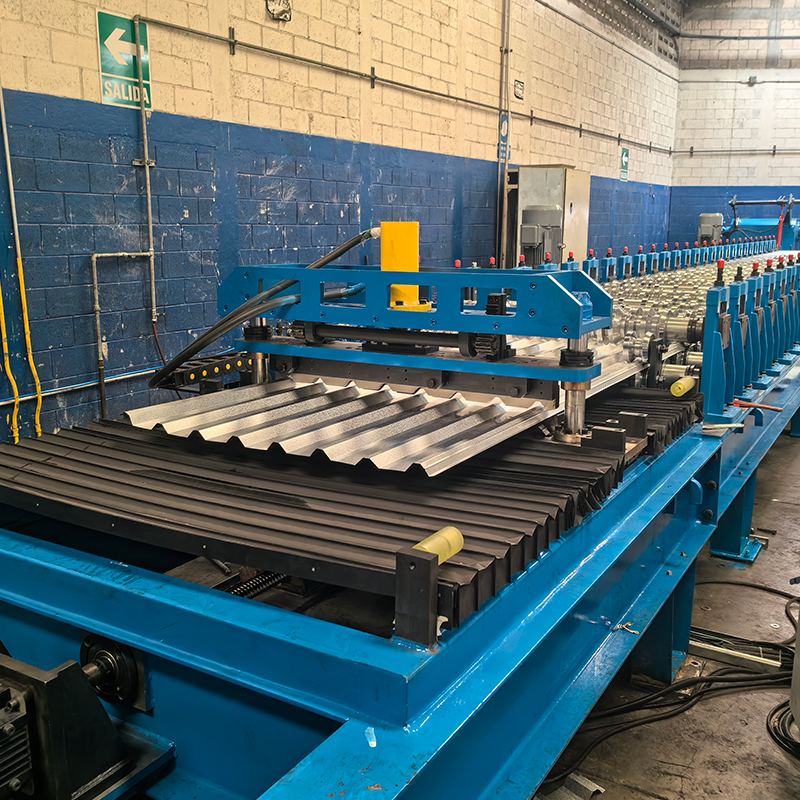
Utilizes a hydraulic shearing system to ensure high cutting precision and smooth, clean edges. Uniform finished dimensions and stable quality effectively guarantee accuracy during on-site installation and interlocking of the floor decking.
(6) Fully Automated PLC Control for Intelligent Production
Features fully automated PLC control and a touchscreen HMI (Human-Machine Interface) for comprehensive digital process management. Operators can set parameters—such as production speed, cut length, and quantity—with a single touch. Supports batch programming of multiple production tasks for automated operation. Equipped with real-time monitoring and fault warning systems; the machine automatically alerts operators and displays the cause of any malfunction. Operators can work independently after just 1–2 days of training.
(7) Robust, Durable, and Reliable
The machine frame features a welded structure made of high-strength steel, offering superior rigidity and vibration resistance.
Wall-plate style chain drive ensures smooth and reliable operation.
Rollers are made of GCr15 steel (quenched), providing high hardness, excellent wear resistance, and a long service life.
Large-diameter (Φ90mm) shafts offer high load-bearing capacity.
Key electrical components are sourced from internationally renowned brands such as Schneider and Omron.
Low failure rate and long service life.
(8) Versatile Application and Compatibility with Various Profiles
Compatible with various metal sheets, including galvanized steel and Al-Zn coated steel, in thicknesses ranging from 0.8mm to 1.5mm. Capable of producing various decking profiles, including open-rib, re-entrant (dovetail), and closed-rib types. By simply changing the roller dies, a single machine can produce decking with different rib heights and pitches.
III. Technical Parameters
Item Parameter
Applicable materials Galvanized sheet, Al-Zn coated sheet, etc.
Material thickness 0.8–1.5 mm
Machine structure Wall-plate type with chain drive
Number of forming stations 26
Shaft material 40Cr (quenched and tempered, HB220–260)
Main shaft diameter Φ90 mm
Forming machine motor power 18.5 kW × 2 units
Line speed 0–15 m/min (excluding cutting time)
Roller material GCr15 (quenched)
Cutting method Hydraulic shearing
Cut-to-length accuracy ±1 mm
Control system Fully automatic PLC control
Frequency converter Yaskawa or other renowned brands
Operators 1 person
IV. Production Process
Uncoiling → Guided Feeding → Roll Forming (26 Stations) → Hydraulic Shearing → Discharge
Process Description
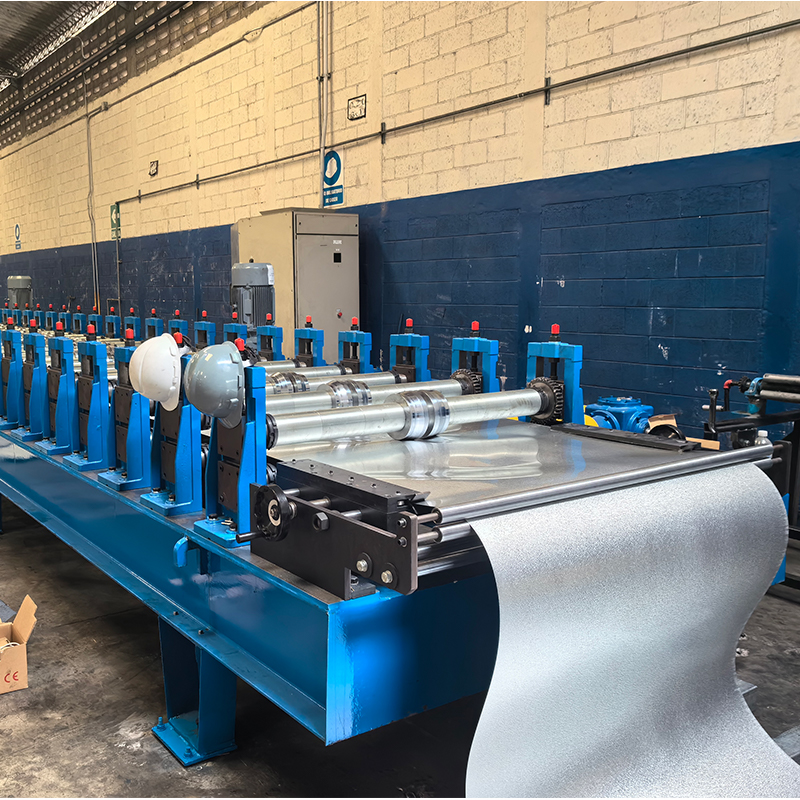
Uncoiling Manual or hydraulic uncoiler supports the metal coil and ensures stable feeding; maximum load capacity is customizable.
Guided Feeding Lateral roller guides ensure the sheet enters the main forming unit in the correct position.
Roll Forming 26-station progressive cold-roll forming using GCr15 quenched rollers to gradually shape the standard floor decking profile.
Hydraulic Shearing Hydraulic fixed-length cutting with ±1mm precision and clean, smooth cut edges.
Discharge Output of finished products; orderly discharge.
V. Application Areas
Floor decking products manufactured by roll-forming equipment are widely used in the following sectors:
High-rise and super-high-rise buildings: Multi-story and high-rise steel-structure office buildings, residential complexes, and apartments—serving as permanent formwork, the decking eliminates the need for traditional steel formwork and reduces the dead load on the floors.
Large-scale public buildings: Stadiums, concert halls, grand theaters, exhibition centers, airport terminals, and railway stations—utilized in long-span floor structures.
Industrial buildings: Various industrial plants, steel-structure workshops, cement warehouses, logistics centers, and large supermarkets.
Power and energy: Power plants and power equipment companies—leveraging the decking's high load-bearing capacity and rapid installation capabilities.
Transportation hubs: Airports, railway stations, and automotive showrooms—meeting the need for fast-track construction.
Commercial buildings: Large shopping malls, convention and exhibition centers, and automotive dealerships.
Large-scale facilities (including Olympic venues): Major public facilities such as national stadiums.
VI. Market Outlook
Driven by the continuous growth of the global steel structure construction industry, the market for floor decking roll-forming equipment is experiencing steady expansion.
Rapid Growth of Steel Structure Construction: As the state continues to promote prefabricated and steel structure buildings, market demand for floor decking—a core flooring material in such structures—is steadily rising. Floor decking is widely used in multi-story and high-rise steel structure buildings. With the ongoing development of the construction industry and rising standards for living and working environments, the demand for floor decking will continue to grow, creating vast market opportunities for floor decking forming machines.
Significant Advantages of Floor Decking: Floor decking offers the benefits of light weight, high strength, high load-bearing capacity, and excellent seismic resistance. In high-rise construction, it eliminates the need for steel formwork and reduces the structural load on floors; by achieving equivalent performance with less steel, it lowers project costs. During construction, the decking serves as formwork for concrete pouring, eliminating the need for traditional timber formwork materials. It also enables streamlined construction processes, such as laying profiled steel sheets across multiple floors and pouring concrete slabs in stages.
Eco-friendliness and Efficiency as Key Trends: Driven by factors such as market demand, technological advancements, environmental policies, and industrial upgrading, the market for floor decking forming machines is poised for significant growth. The adoption rate of fully automated and intelligent floor decking equipment continues to rise.
VII. Service & Support
Solution Design: Personalized equipment selection and production line layout based on customer product drawings, capacity requirements, and target markets.
Custom Manufacturing: Support for non-standard customization—including profile shapes and optional accessories like material collection racks—with full oversight from roll design to complete machine fabrication.
Installation & Commissioning: On-site installation, commissioning, and operator training provided by engineers to ensure rapid production startup.
After-Sales Support: Long-term technical consultation and spare parts supply; engineers hold valid visas and are available for on-site service worldwide.
Continuous Optimization: Equipment modification and capacity upgrade services available to adapt to changing production needs.
VIII. Why Choose Us
Nearly 20 years of manufacturing experience: Mature technology, refined processes, and reliable quality
Wall-plate style chain drive: Smooth and reliable operation, high rigidity, and long service life
26-stage precision forming: GCr15 quenched rollers, large 90mm shaft diameter, and precise, stable cross-sectional dimensions
High speed and efficiency: Line speed of 0–15 m/min; the entire line can be operated by a single person
High-precision manufacturing: Length accuracy of ±1mm and a high product pass rate
Intelligent control: Fully automatic PLC system, Yaskawa variable frequency drive, and touchscreen interface; features one-touch setup and automatic counting
Wide range of applications: Compatible with various floor decking profiles, including open, constricted, and closed types
Direct manufacturer: No middlemen, offering excellent value for money
Global service network: Engineers hold all necessary visas, ensuring rapid response times
 English