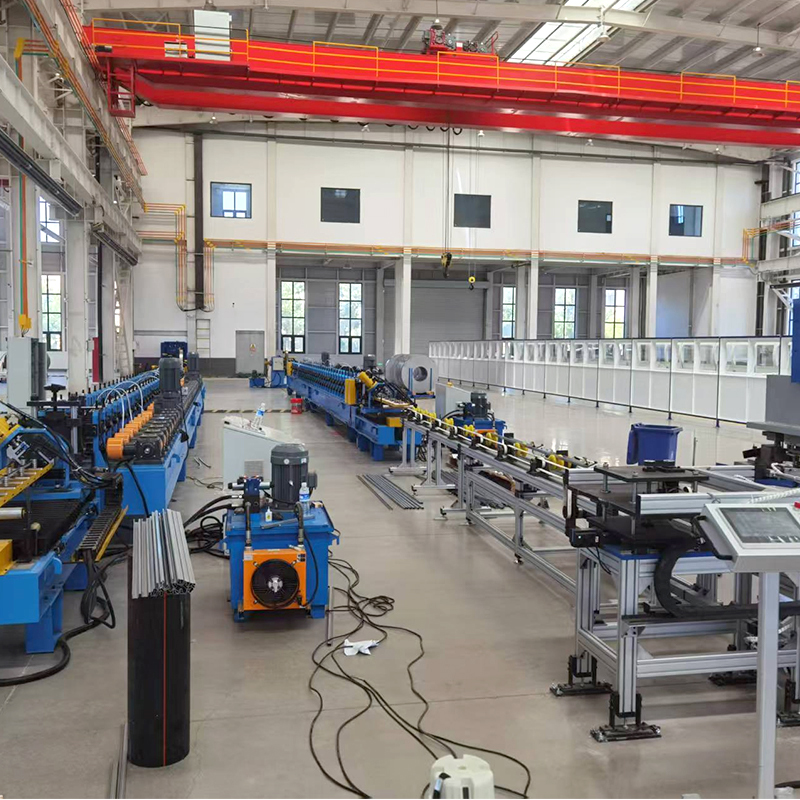
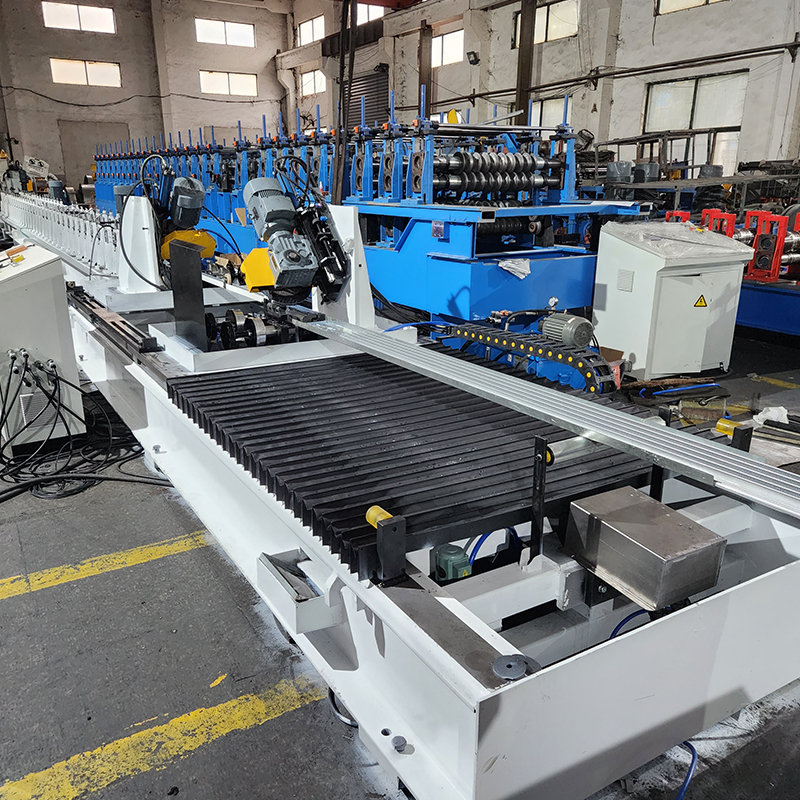
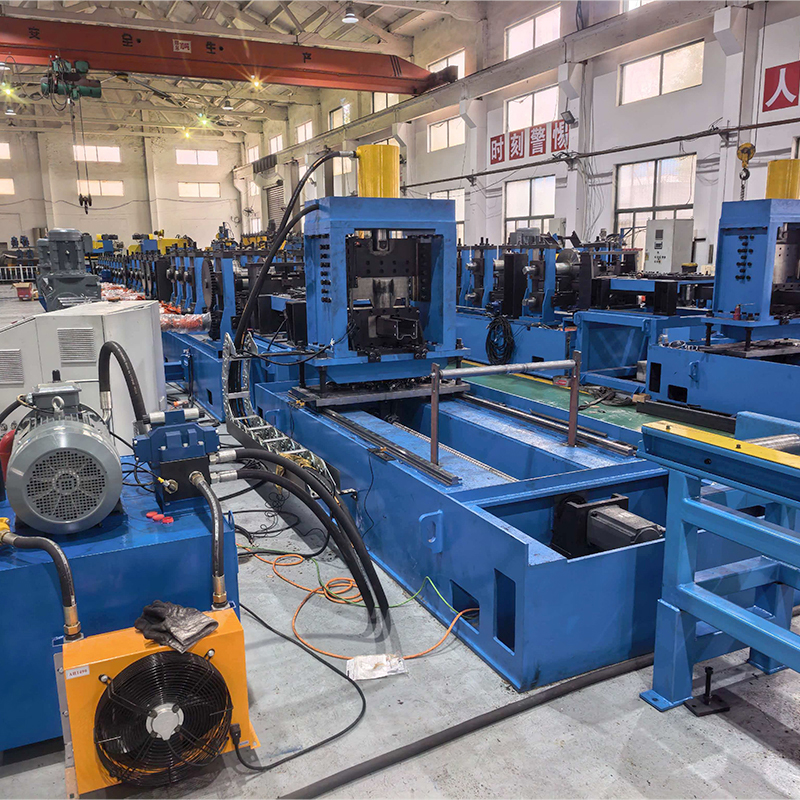
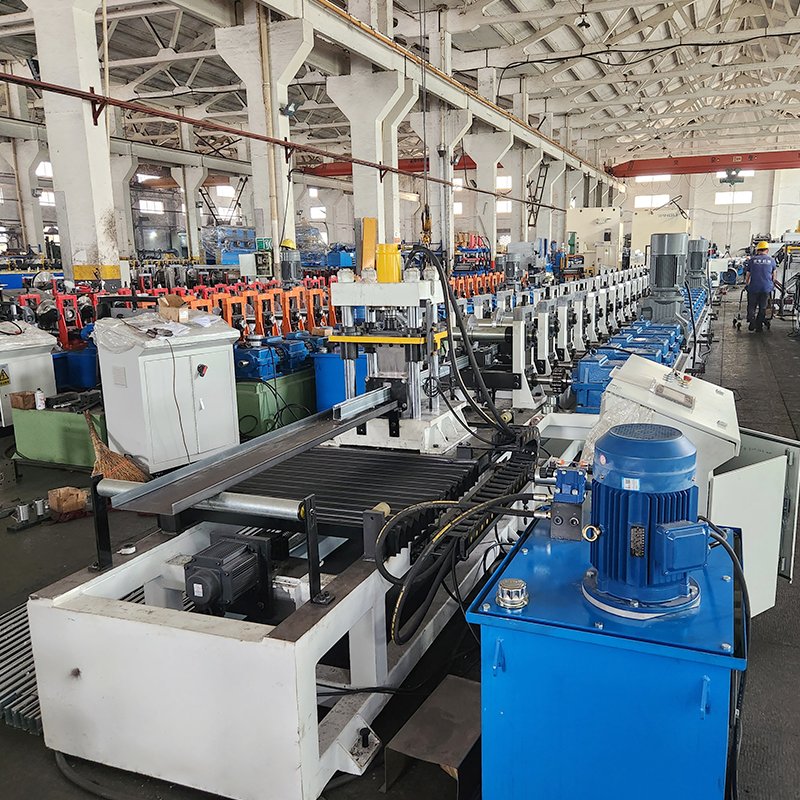
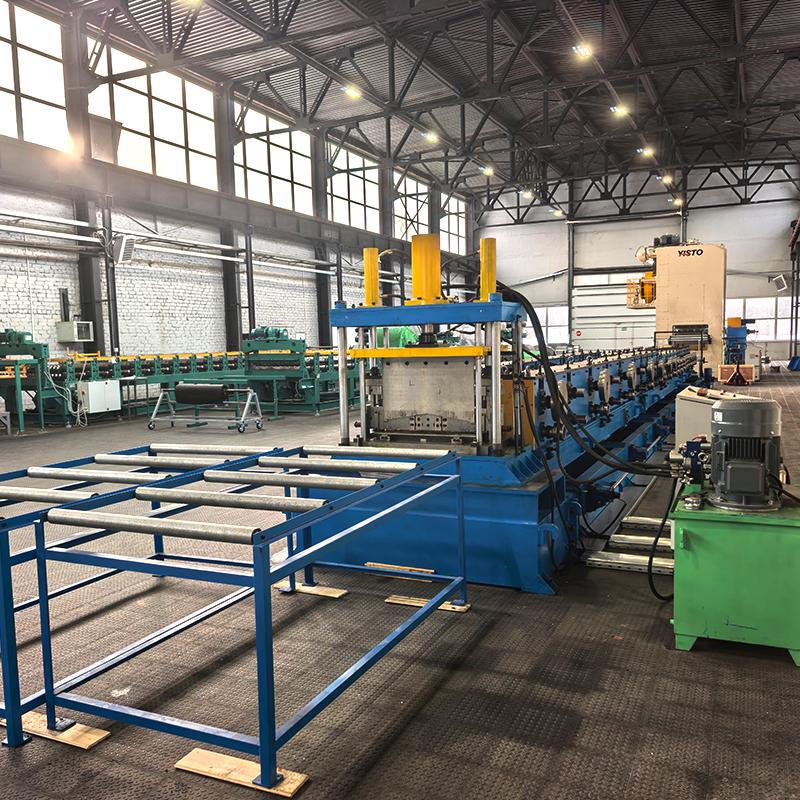
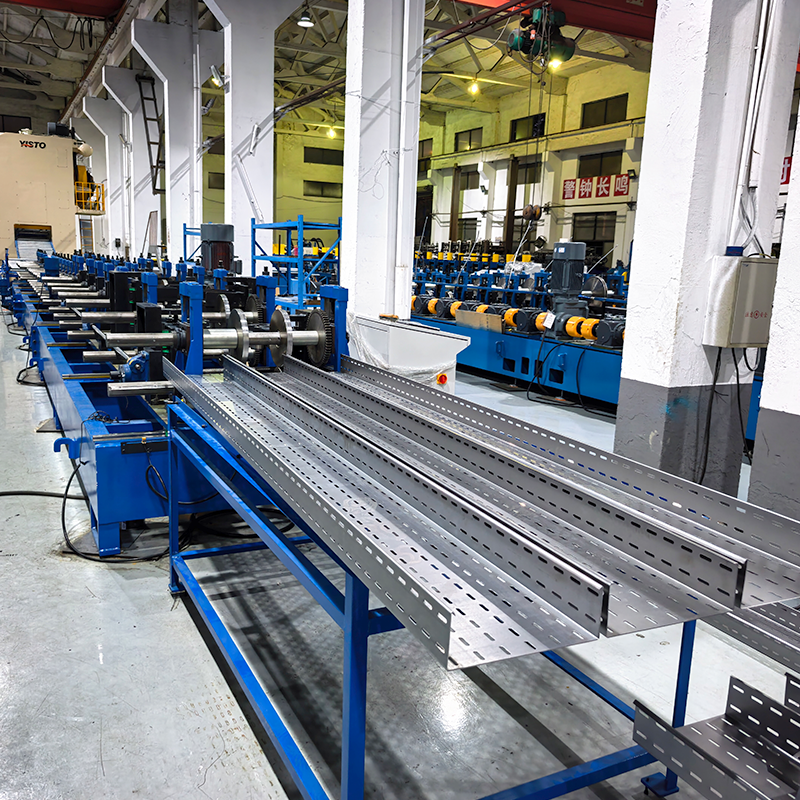
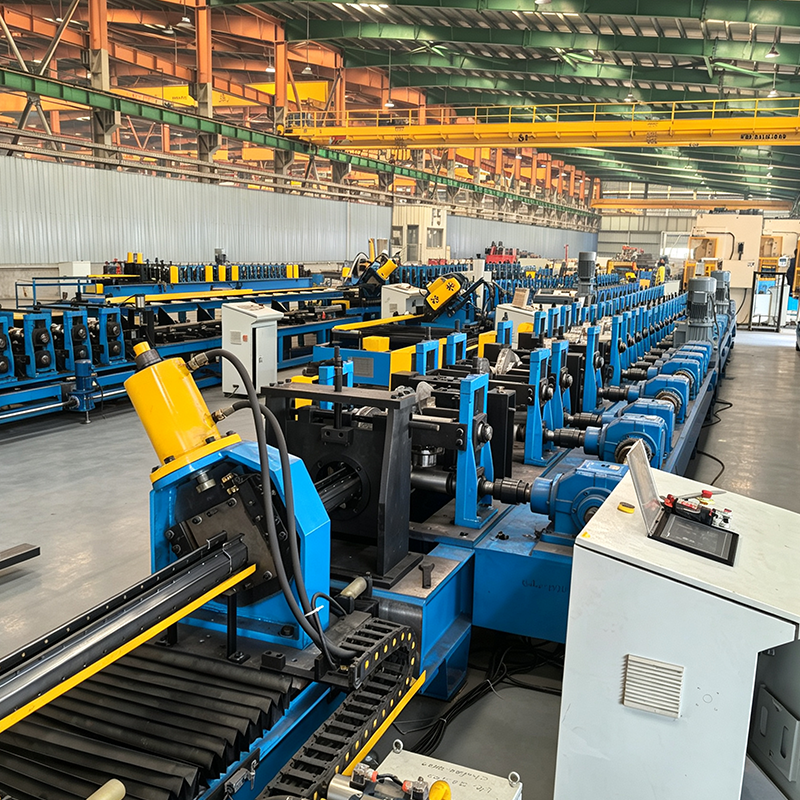
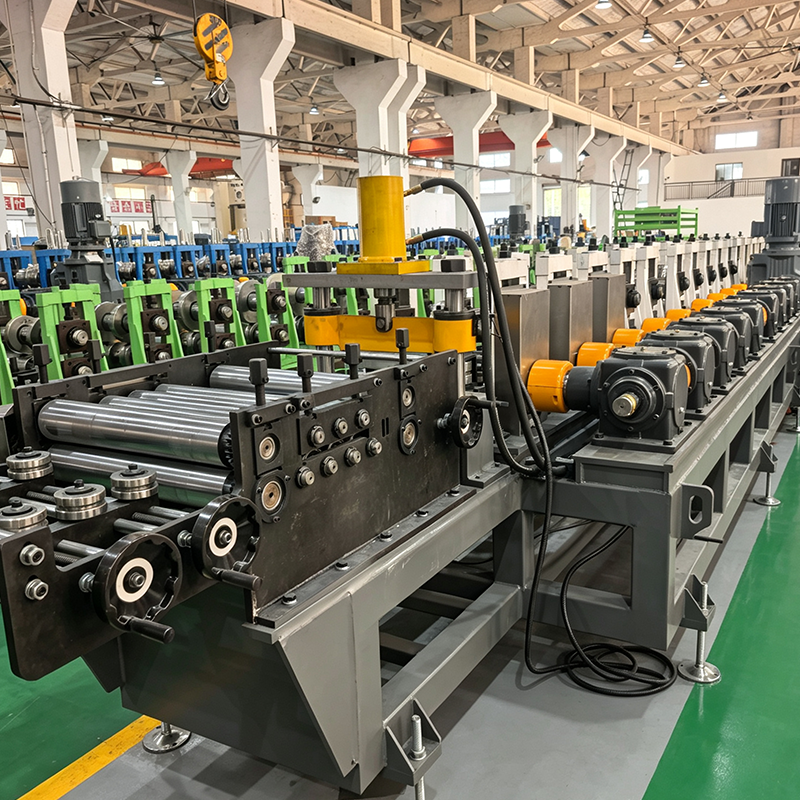
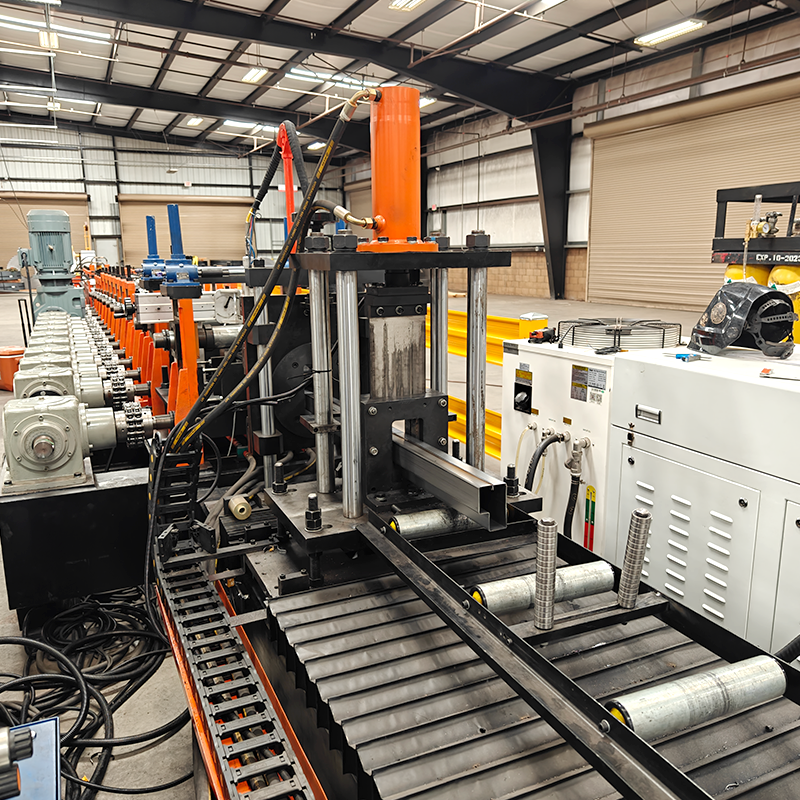
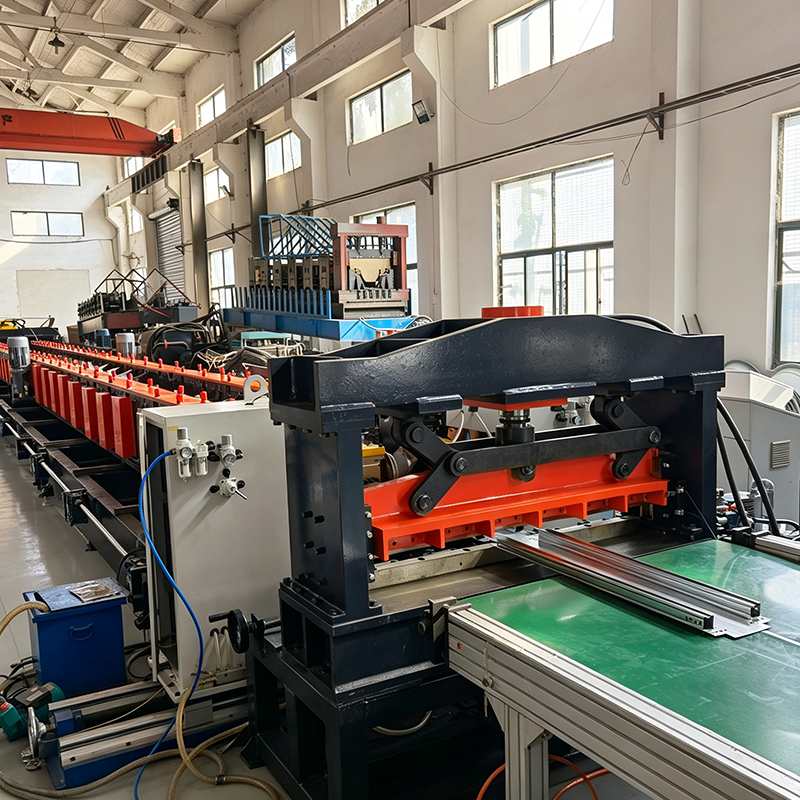
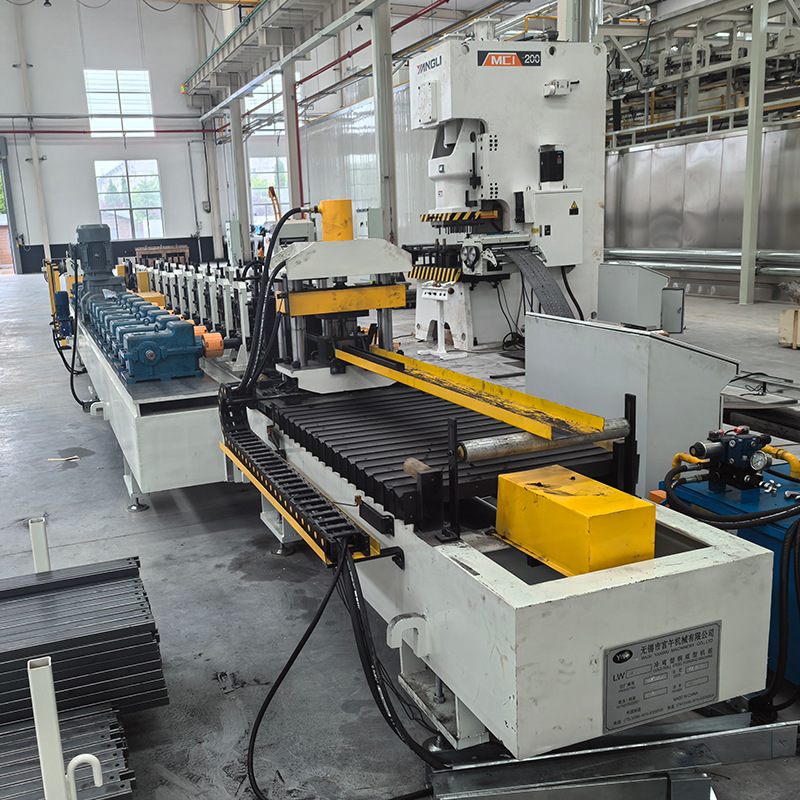
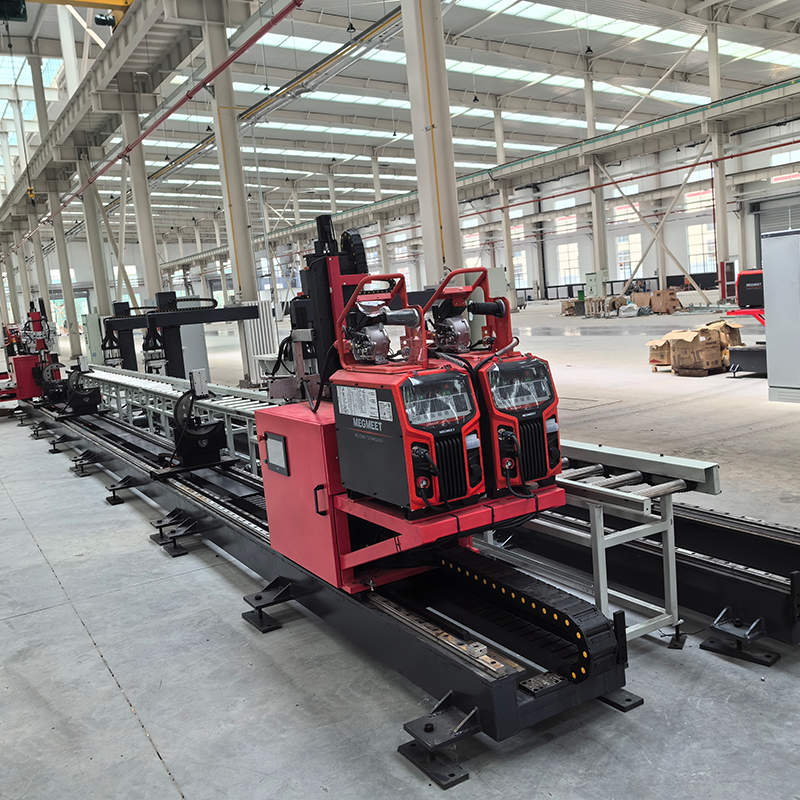
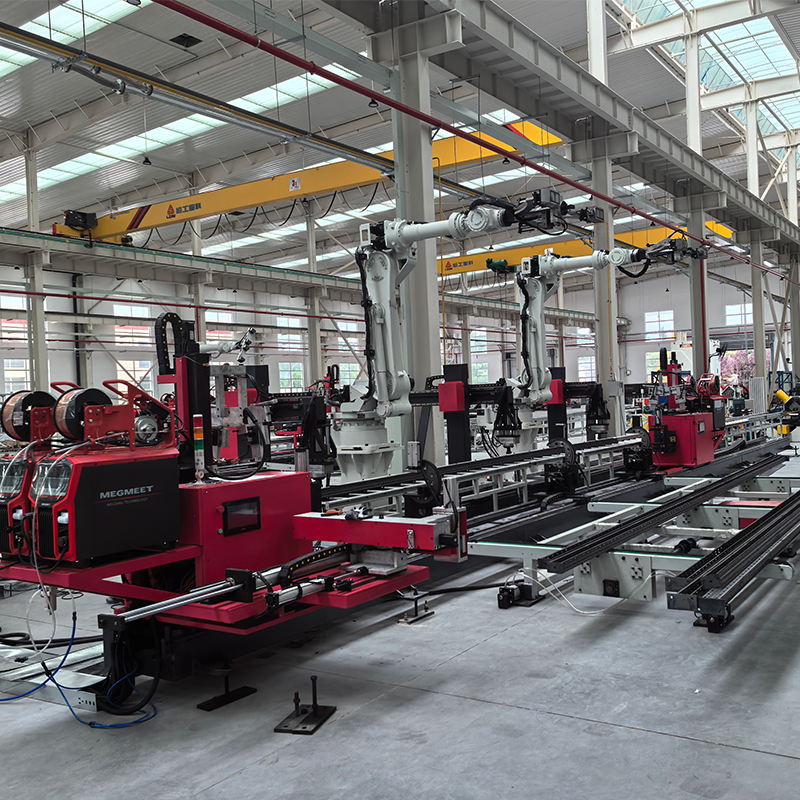
Solar Mounting Structure Equipment Series – A professional manufacturer offering comprehensive solutions covering the entire spectrum of mounting and tracking brackets, from steel strips to finished products – one-stop delivery.
I. Series Overview
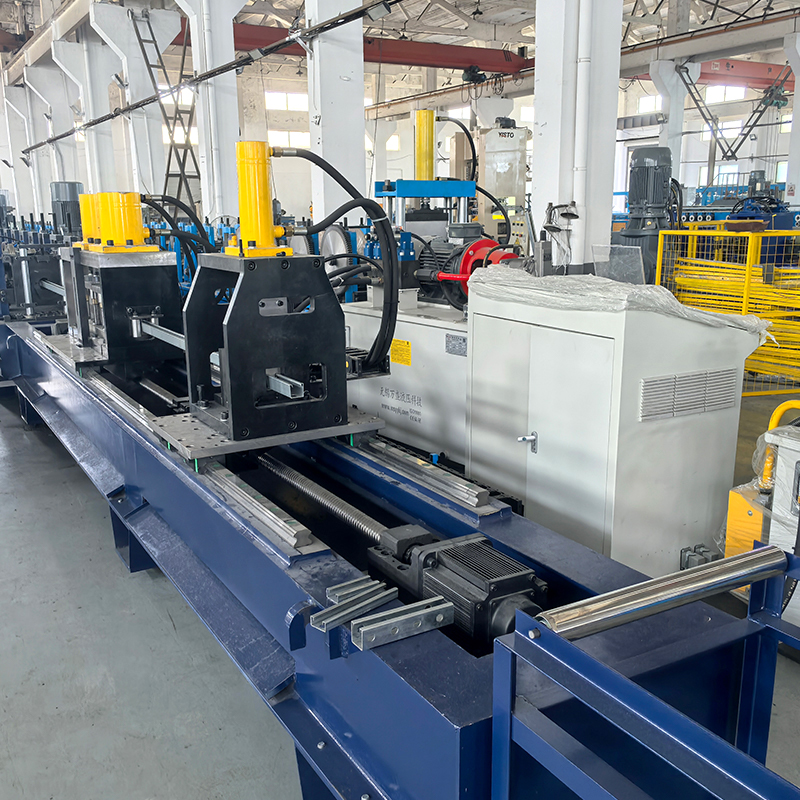
The Solar Mounting Structure Equipment Series is a complete cold-bending forming production line specifically designed for manufacturing various core components of solar photovoltaic (PV) mounting systems. Solar PV mounting systems are metal frames made from continuous steel strips through a cold-bending process, used to place, install, and fix solar panels in solar power generation systems. PV mounting systems are crucial structural components of solar support systems, characterized by their versatility, robustness, aesthetics, and ease of installation and adjustment.
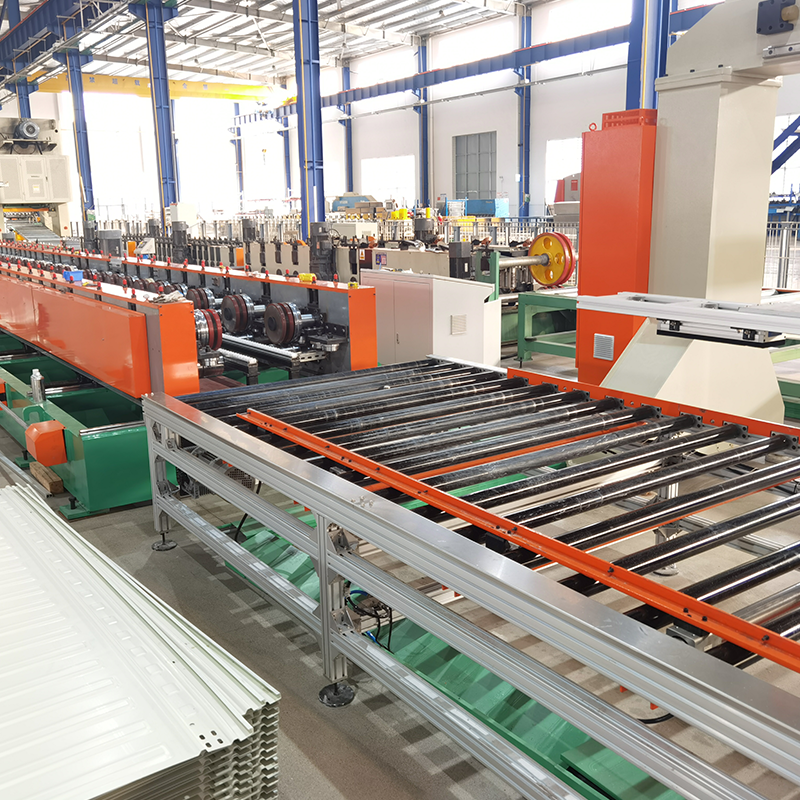
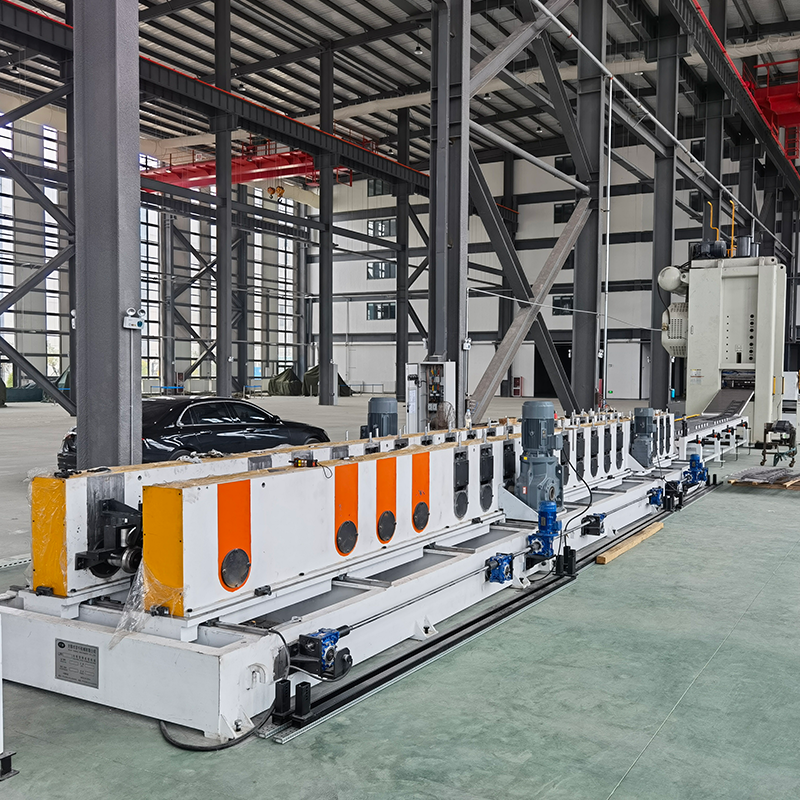
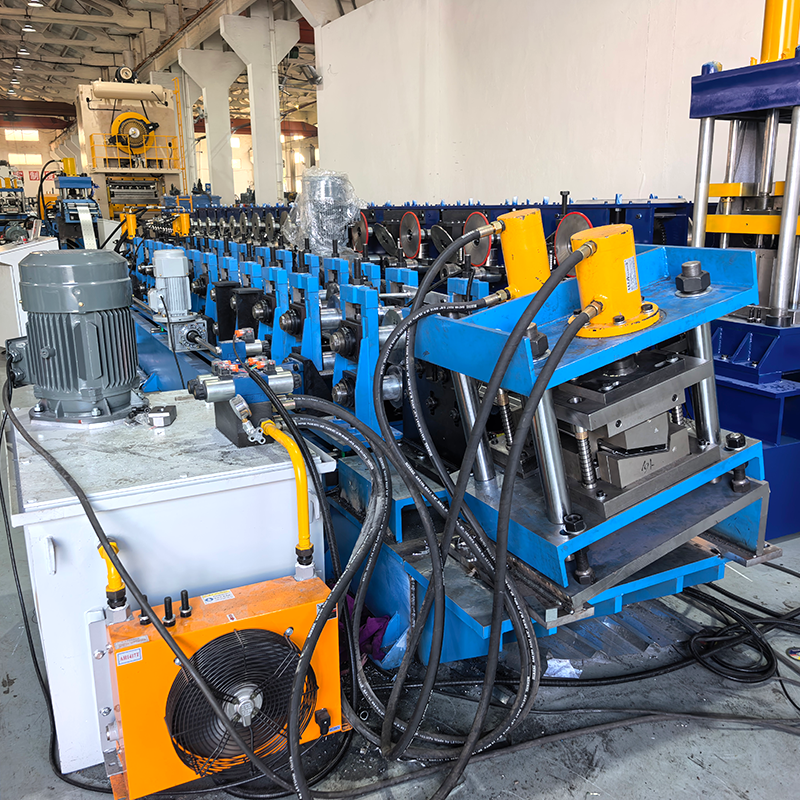
This series of equipment uses a continuous cold-bending and rolling process to complete the entire process of uncoiling, leveling, punching, roll forming, length cutting, and outputting metal coils in one go, directly producing various finished PV mounting profiles. The equipment adopts PLC fully automatic control and a touchscreen human-machine interface, enabling fully automated continuous operation from uncoiling to finished product output.
In 2025, China's newly installed PV capacity exceeded 250GW, driving a significant increase in demand for PV mounting cold-bending equipment. In 2025, the market size of cold-bending forming equipment in my country exceeded 28 billion yuan, with an average annual compound growth rate of around 12%. Among these, photovoltaic brackets, light steel keels, and metal sheet roll forming equipment were the fastest-growing sub-sectors.
This series of equipment covers four main categories in photovoltaic bracket manufacturing: open-type steel frames for solar panels, closed-type steel frames for solar panels, photovoltaic column cold bending machines (C-type/U-type/Omega type), and 21-82×41 photovoltaic bracket cold bending machines. It is suitable for various materials such as carbon steel, galvanized sheet, aluminized zinc-magnesium sheet, and aluminum alloy, and can process thicknesses ranging from 0.8 to 4.0 mm. The equipment adopts PLC fully automatic control and touch screen human-machine interface operation, enabling fully automated continuous operation from uncoiling to finished product output.
II. Introduction to Various Equipment Types
1. Solar Panel Opening Steel Frame Cold Bending Forming Equipment
Equipment Overview
The solar panel opening steel frame cold bending forming equipment is a specialized cold bending forming production line for producing opening steel frames for photovoltaic modules. The steel frame is a core component of photovoltaic module encapsulation; its cross-sectional accuracy and structural strength directly determine the installation quality and service life of the module. The equipment uses a continuous cold bending and rolling process to complete the entire process in one go: uncoiling, leveling, shearing and welding, servo feeding, roll forming, straightening, tracking flying shear, and unloading of metal coils.
Core Advantages
Significant Cost Advantage: Replacing traditional aluminum frames with galvanized aluminum-magnesium steel reduces costs by approximately 40%.
Outstanding Strength Advantage: Steel frames boast ultra-high mechanical strength, twice that of traditional aluminum frames.
High Efficiency and Environmental Protection: Galvanized aluminum-magnesium materials are highly efficient and environmentally friendly, with carbon emissions far lower than aluminum frames.
High-Speed Production: Production speeds can reach 40m/min, resulting in high product straightness and consistency.
High-Precision Forming: Length dimensions are completed in one step according to drawing tolerances, eliminating the need for secondary processing.
Applications: Frame encapsulation for various single-glass and double-glass photovoltaic modules—steel frames offer high strength and low cost, making them an ideal replacement for traditional aluminum frames.
2. Solar Panel Closed-End Steel Frame Cold Bending Forming Equipment
Equipment Overview
The solar panel closed-end steel frame cold bending forming equipment is a specialized cold bending forming production line for producing closed-end steel frames for photovoltaic modules. Closed-end steel frames offer better torsional strength compared to open-end steel frames. The closed cross-section design creates a closed load-bearing structure, resulting in more uniform stress distribution under external forces such as wind loads, snow loads, and thermal expansion and contraction. The China Photovoltaic Industry Association and the China Iron and Steel Industry Association have jointly spearheaded the development of a group standard for "Zinc-coated Aluminum-Magnesium Closed-Type Cold-Formed Steel for Photovoltaic Module Frames."
Core Advantages
High Strength with Closed Sections: The closed section forms a closed tubular structure, resulting in torsional strength far exceeding that of open frames, leading to a more stable structure.
Industry Standard Leadership: Leading companies in the industry have spearheaded the development of relevant group standards for closed-type cold-formed steel.
Cost Reduction of Approximately 40%: Replacing traditional aluminum frames with galvanized aluminum-magnesium galvanized steel significantly reduces overall costs.
Twice the Strength of Aluminum Frames: Steel frames possess ultra-high strength mechanical properties, with an elastic modulus up to three times that of aluminum frames.
High Efficiency and Environmental Protection: Carbon emissions from production are far lower than those of aluminum frames, and the steel has a high recycling rate.
Applications: Closed-type steel frames are particularly suitable for high-strength applications such as large-scale ground-mounted power plants, coastal high-wind-speed areas, and tracking bracket systems, for various single-glass and double-glass photovoltaic module frame encapsulation.
3. Photovoltaic Column Cold Bending Machine (C-type/U-type/Omega type)
Equipment Overview
The photovoltaic column cold bending machine is a specialized cold bending forming equipment used for producing C-type, U-type, and Omega (V-shaped) photovoltaic support columns, main beams, purlins, and other core structural components. The photovoltaic column is the core load-bearing component of the support system; its cross-sectional accuracy and structural strength directly determine the safety and service life of the entire photovoltaic power station. The production line can process photovoltaic supports made of mainstream materials in the industry, such as carbon steel, aluminized magnesium-zinc coated steel, and aluminum alloy, producing all major components of carbon steel series fixed supports and tracking supports, including columns, main beams, and purlins.
Core Advantages
Multiple Types in One Machine: A single production line can produce photovoltaic support columns with various cross-sections, including C-shaped, U-shaped, and Omega (几) shapes.
High-Precision Forming: Bending angle and dimensional tolerances can be controlled within 0.5 mm.
High-Strength Steel Processing Capability: Can process thicknesses from 6-8.0 mm, covering both common and high-strength materials.
Widely Compatible: Suitable for ground support systems, rooftop support systems, fish-solar hybrid support systems, agricultural-solar hybrid support systems, adjustable support systems, tracking support systems, etc.
Intelligent Punching: Equipped with intelligent feeding and linkage hydraulic punching equipment.
C-shaped/U-shaped Photovoltaic Support Specifications:
Type Common Specifications
U-shaped Photovoltaic Support 41×41 / 41×52 / 41×62 / 41×72
C-shaped Photovoltaic Support C70 / C80 / C100 / C120
Application Scope: C/U-shaped steel is the most important raw material for photovoltaic supports, used in the core structural components such as columns, main beams, and purlins of various photovoltaic power stations, and is in high demand in the market.
4. 21-82×41 Photovoltaic Bracket Cold Bending Machine
Equipment Overview
The 21-82×41 photovoltaic bracket cold bending machine is a specialized cold bending forming machine for producing C-shaped steel series products for solar photovoltaic brackets. This equipment can produce a full range of photovoltaic bracket profiles in sizes including 41×21, 41×41, 41×52, 41×62, 41×72, and 41×82. The equipment uses a continuous cold bending and rolling process to complete the entire process of uncoiling, leveling, clamping and punching, roll forming, length cutting, and material collection in one operation.
Core Advantages
Full Range Coverage: One machine handles all specifications from 41×21 to 41×82, eliminating the need for repeated investment.
Quick Changeover: Convenient and efficient specification switching to meet diverse order requirements.
High-Precision Forming: High forming accuracy and consistency with sheet thicknesses of 1.5- 2.5 mm.
Optimal Speed Matching: Production line speed 4-8m/min, main machine forming speed 10-15m/min.
Applications: C-shaped steel series products for solar photovoltaic brackets—41 series, 62 series, 82 series, etc.—are widely used in the construction of large-scale solar photovoltaic power plants.
III. Equipment Series Technical Parameters
Equipment Type Material Thickness Production Speed Roll Material Main Features
Open Steel Frame 1.0mm 30-40m/min Cr12MoV 40% cost reduction, double strength
Closed Steel Frame Customizable Customizable Cr12MoV High strength, excellent torsional resistance
Column Cold Bending Machine 6.0-8.0mm Customizable Customizable One machine, three types (C/U/Omega)
21-82×41 Support Machine 1.5-2.5mm 4-15m/min Customizable Full series coverage, quick changeover
IV. Production Process
Uncoiling → Leveling → Punching → Roll Forming → Cutting to Length → Unloading
Process Description
Uncoiling: Load the metal coil into a hydraulic or umbrella-type uncoiler for stable feeding.
Leveling: A multi-roller leveler precisely levels the material, eliminating internal stress.
Punching: A servo feeding system precisely positions the material, and hydraulic punching completes the precise punching of mounting holes, connecting holes, etc.
Roll Forming: Multi-pass progressive cold bending forming gradually shapes the standard cross-section of the photovoltaic bracket.
Cutting to Length: Hydraulic cutting to length ensures high precision and a clean cut.
Unloading: Finished products are unloaded neatly.
V. Application Areas
The photovoltaic support system products manufactured in our photovoltaic support equipment series are widely used in the following fields:
Ground-mounted Photovoltaic Power Stations
Large-scale ground-mounted power stations, desert and Gobi photovoltaic projects—the support column is the core load-bearing component of the support system.
Rooftop Distributed Photovoltaics
Commercial and industrial rooftop photovoltaic systems, residential rooftop photovoltaic systems—lightweight design adapts to roof load-bearing requirements.
Agricultural Photovoltaic/Fishery Photovoltaic Complementary Systems
Photovoltaic support systems above agricultural greenhouses and fishponds—U-shaped steel columns adapt to large-span structures.
Tracking Support Systems
Horizontal single-axis, inclined single-axis, and other tracking support systems—high-precision molding ensures long-term stable operation of the tracking system.
Adjustable Support Systems
Angle-adjustable support systems—C/U-shaped steel adapts to flexible adjustment needs.
Building Integrated Photovoltaics (BIPV)
Building-integrated photovoltaic projects—steel frames are tightly integrated with the building structure.
VI. Market Prospects
PV Installations Continue to Rise: In 2025, China's newly installed PV capacity exceeded 250GW, driving a significant increase in demand for PV bracket cold bending equipment. The demand for solar brackets is experiencing explosive growth.
The Cold Bending Equipment Market is Growing Rapidly: In 2025, the market size of my country's cold bending equipment exceeded 28 billion yuan, with an average annual compound growth rate of around 12%. PV brackets, light steel keels, and metal sheet roll forming equipment are the fastest-growing sub-sectors. The pain points of traditional cold bending equipment—slow changeover, poor precision, and low efficiency—are becoming obstacles to enterprise expansion. Equipment suppliers not only need to provide standardized CNC roll forming machines but also need the ability to develop fully automated roll forming production lines for specific application scenarios (such as PV, warehousing, and construction).
The Trend of Steel Frames Replacing Aluminum Frames is Obvious: Using galvanized aluminum-magnesium alloys to replace traditional aluminum frames in steel frame products reduces costs by approximately 40% while doubling the strength of traditional aluminum frames. Leading companies in the industry, in conjunction with the China Photovoltaic Industry Association and the China Iron and Steel Association, have spearheaded the development of group standards for "Galvanized Aluminum-Magnesium Steel Frames for Photovoltaic Modules" and "Galvanized Aluminum-Magnesium Closed-Type Cold-Formed Steel Frames for Photovoltaic Modules." As steel frame technology matures and standards improve, the penetration rate of steel frames in photovoltaic modules will continue to increase.
Intelligent and Flexible Upgrades: Photovoltaic bracket cold-forming production lines equipped with 9-axis servo punching machines, featuring "high-precision punching + fully automatic form changeover," have become the preferred equipment for photovoltaic companies to reduce costs and increase efficiency. By introducing laser online measurement technology, key parameters of the profiles can be monitored in real time, and the forming molds can be automatically adjusted to ensure product accuracy reaches ±0.2mm.
VII. Service Support
Solution Design: We provide customized equipment selection and production line layout based on customer product drawings, capacity requirements, and target markets.
Customized Manufacturing: We support non-standard customization. Customers can provide cross-sectional drawings or samples for customization. The entire process, from roll design to complete machine manufacturing, is under our control.
Installation and Commissioning: Engineers provide on-site installation and commissioning, and train operators to ensure rapid production.
After-sales Guarantee: Long-term technical consultation and spare parts supply. Engineers have complete certifications and can provide global on-site service at any time.
Continuous Optimization: We can provide equipment modification and capacity upgrade services according to changes in customer production needs.
VIII. Why Choose Us
Nearly 20 Years of Manufacturing Experience: Mature Technology, Perfected Processes, Reliable Quality
Full Product Coverage: One-stop supply of all photovoltaic profiles including open-end steel frames, closed-end steel frames, photovoltaic columns (C/U/Omega), and brackets ranging from 21-82×41mm.
High-Precision Manufacturing: Forming accuracy ±0.2mm, far exceeding industry standards.
Leading Steel Frame Technology: 40% cost reduction, twice the strength of aluminum frames.
Multiple Models on One Machine: The same production line can produce C-shaped, U-shaped, Omega-shaped, and other cross-sections.
Intelligent Control: PLC fully automatic + touchscreen operation, equipped with 9-axis servo punching, fully automatic changeover.
Direct Factory: No intermediaries, high cost-performance ratio.

 English