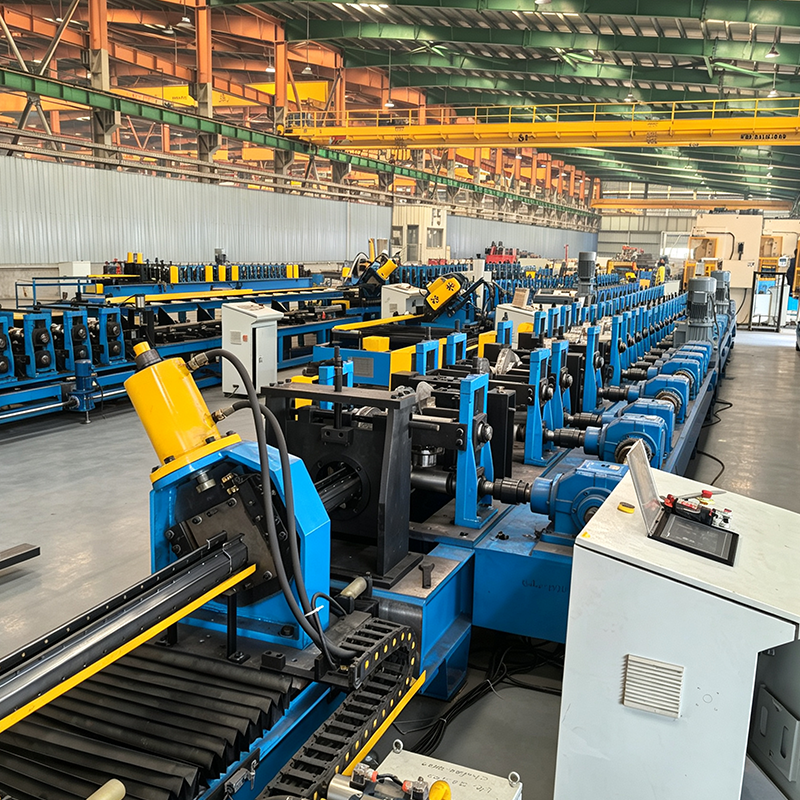
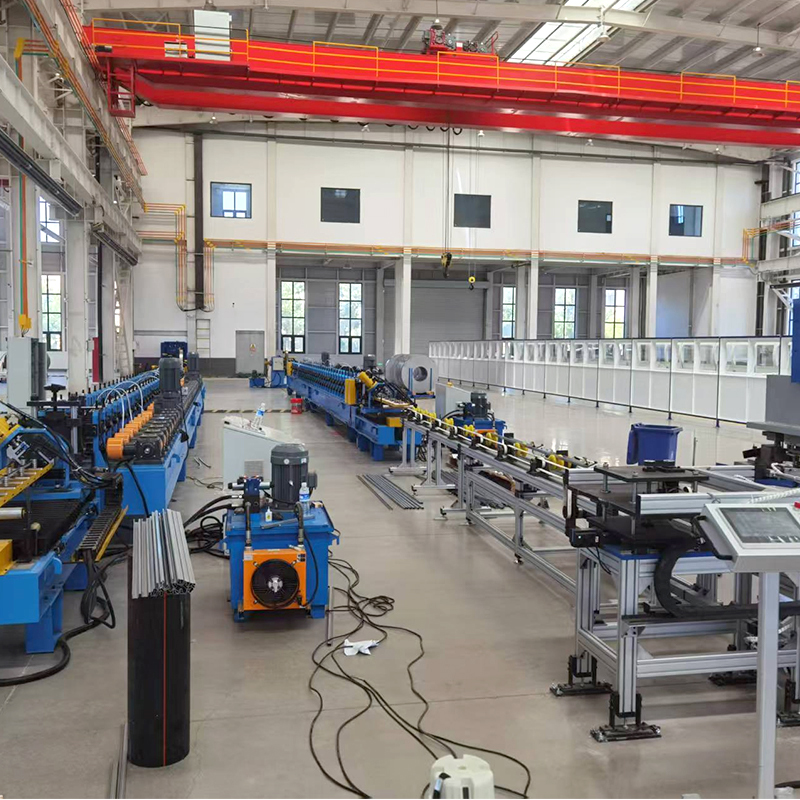
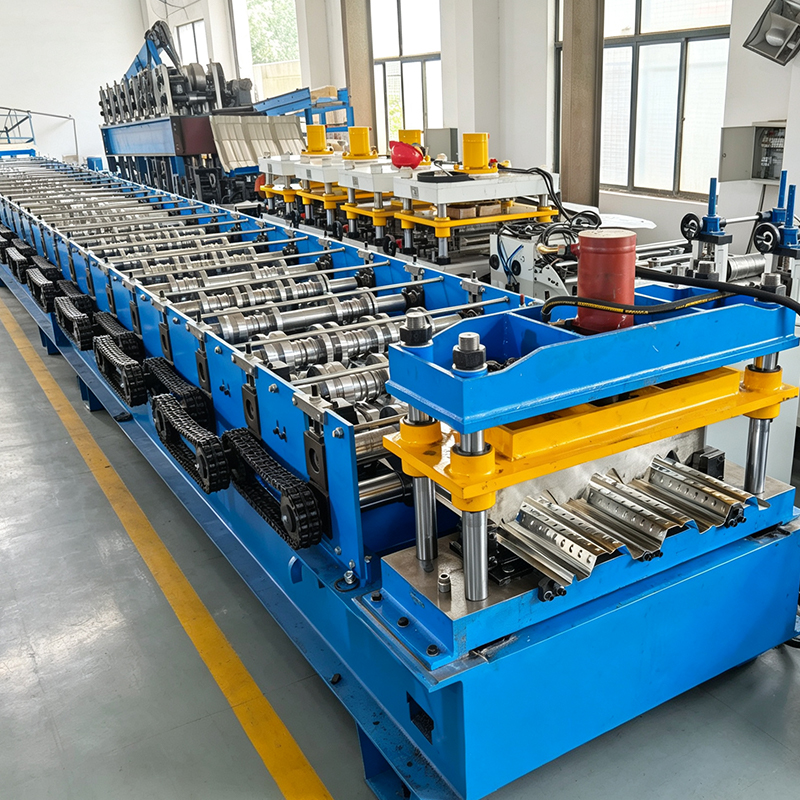
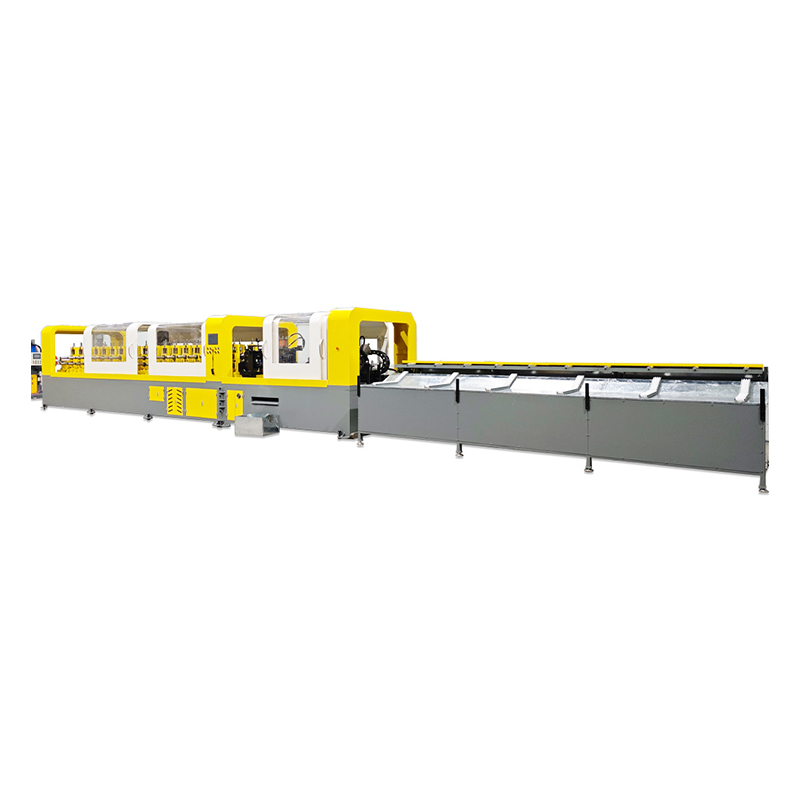
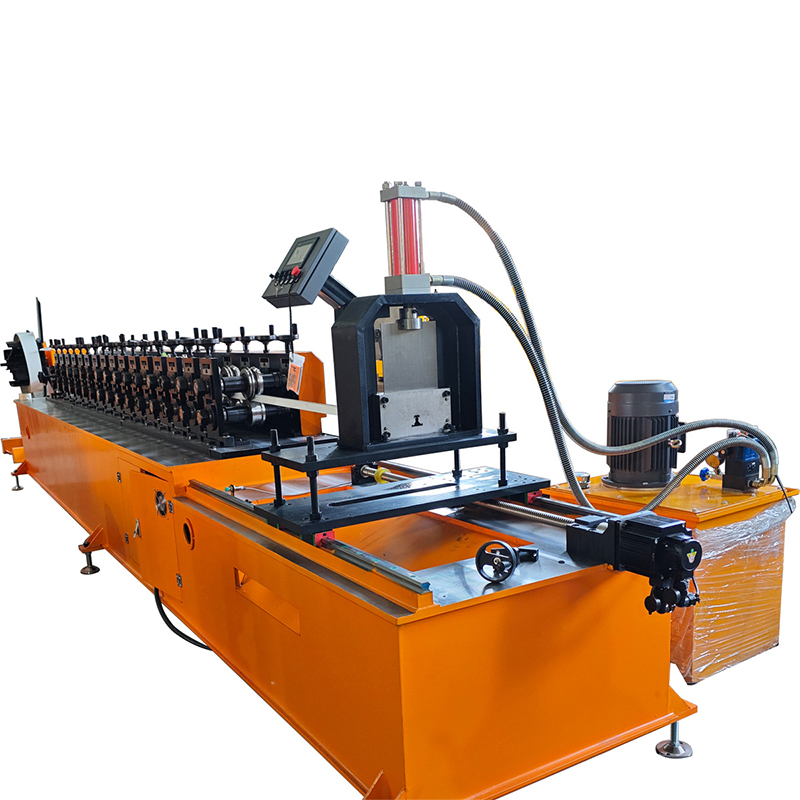
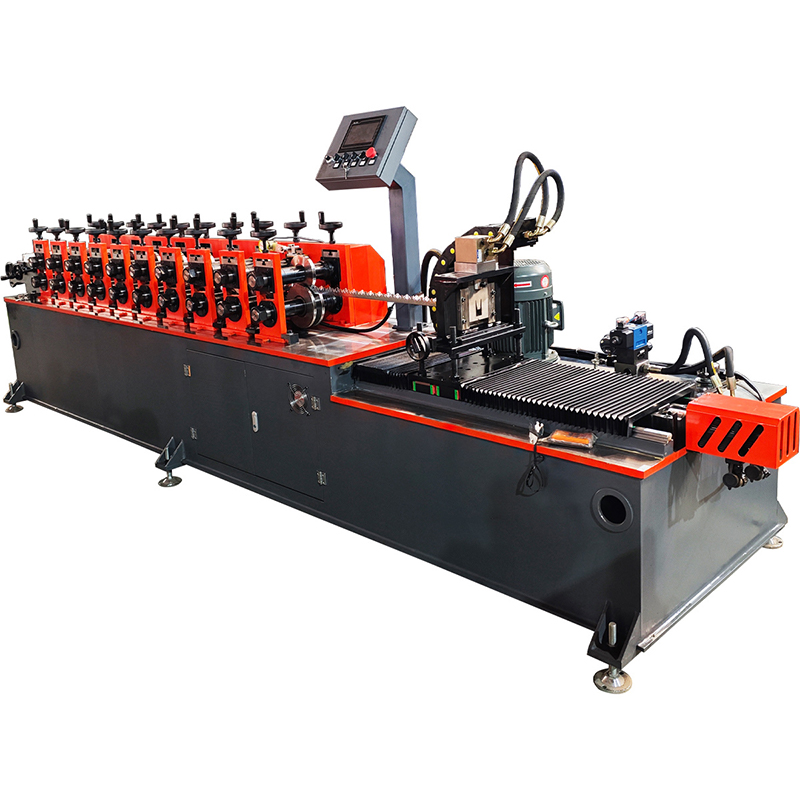
I. Equipment Overview
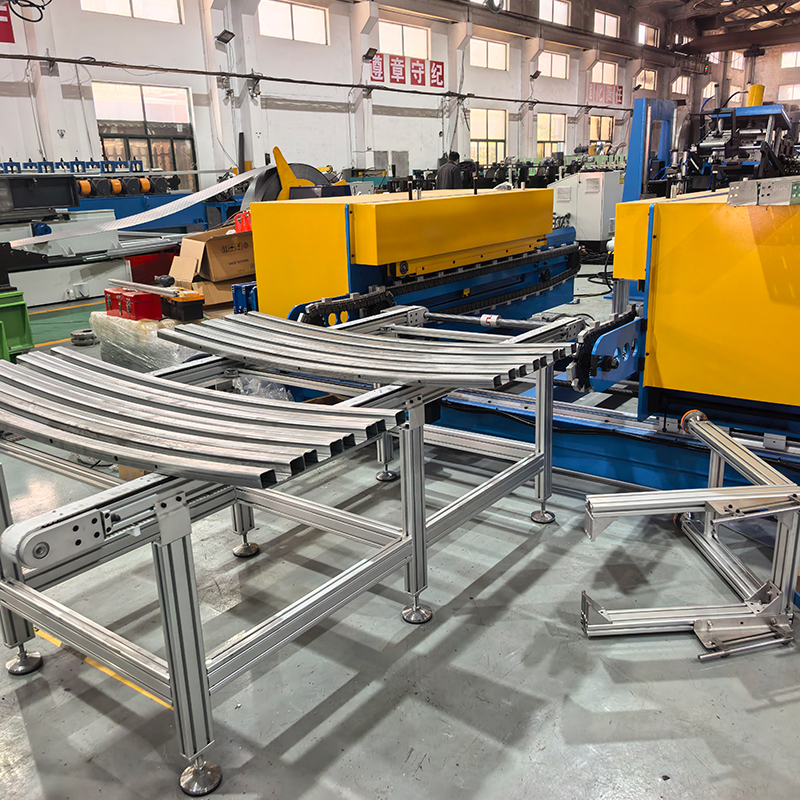
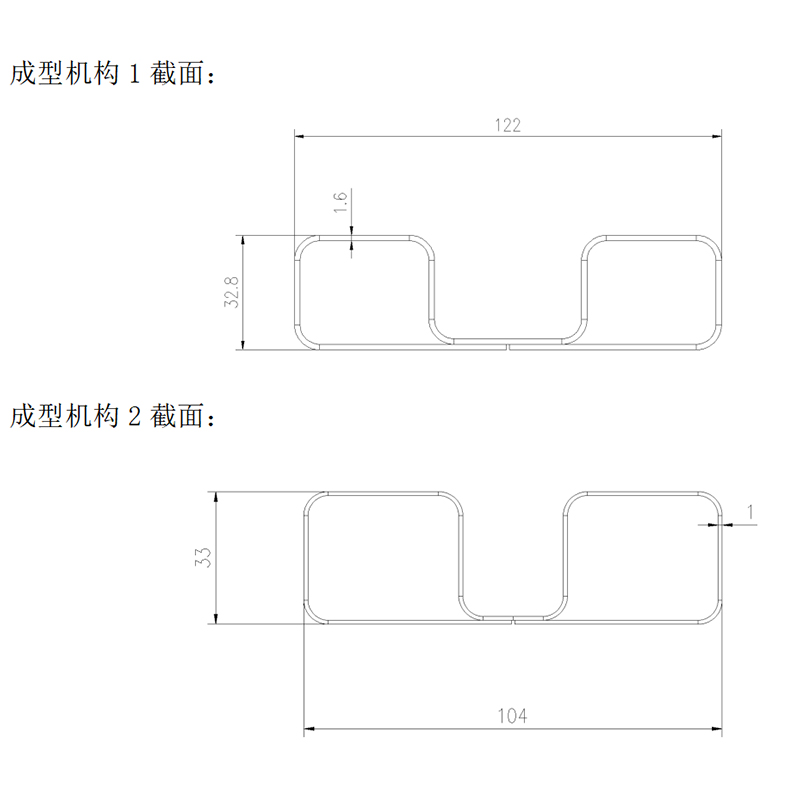
The Anti-Collision Beam Roll Forming Machine is a specialized cold-roll forming production line designed for manufacturing safety structural components—such as front and rear bumper beams and energy-absorbing boxes—for passenger and commercial vehicles. Bumper beams are core components of a vehicle's passive safety system; they absorb impact energy through deformation during low-speed collisions, thereby protecting the vehicle's main structure and the safety of its occupants. Front bumper beams typically require in-line curving to match the vehicle's front-end styling, whereas rear bumper beams are generally straight structures. Featuring a dual-machine independent forming design, this equipment simultaneously meets the distinct production requirements for curved front beams and straight rear beams.
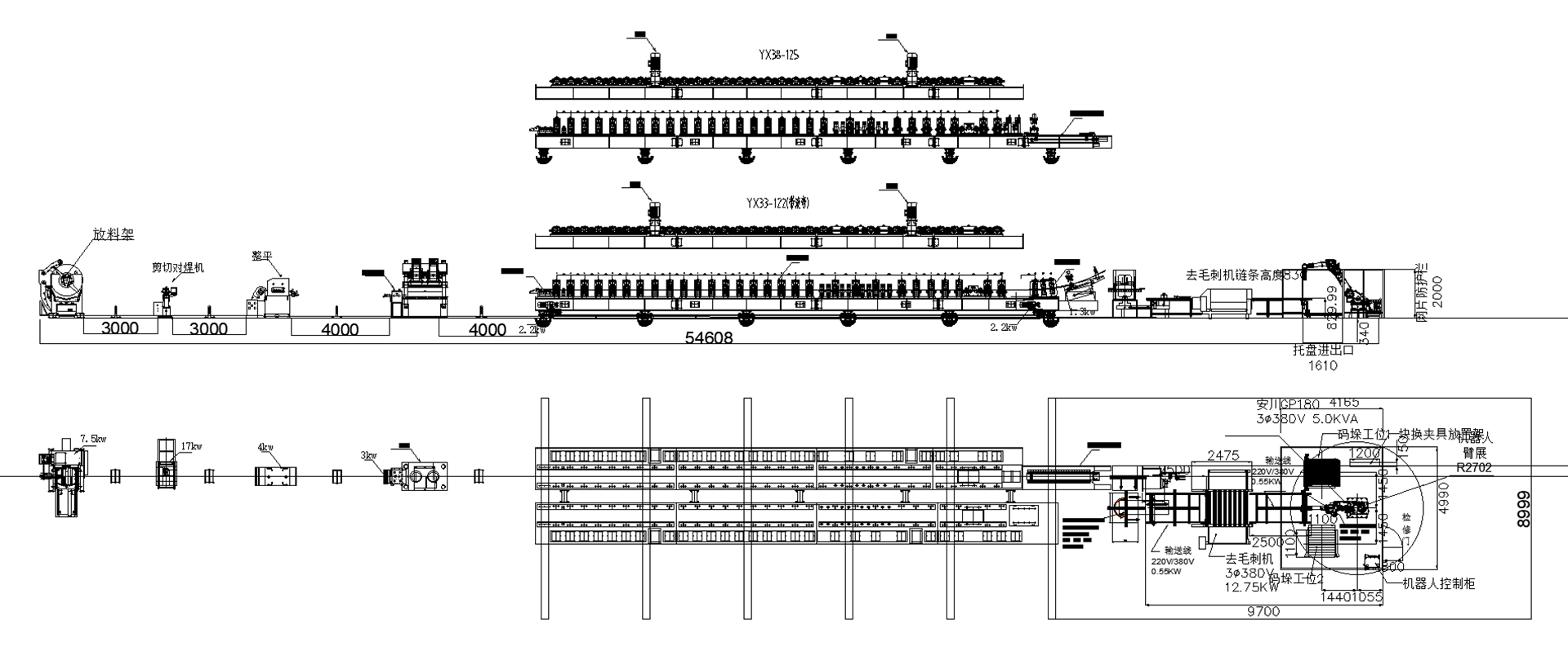
Utilizing a continuous cold-roll forming process combined with in-line laser welding and curving technologies, the equipment transforms ultra-high-strength steel coils into finished automotive bumper beams in a single, continuous workflow. This process encompasses uncoiling, shearing and butt-welding, leveling, hydraulic punching (with servo feeding), roll forming, laser welding, curving, cut-to-length, deburring, and palletizing.
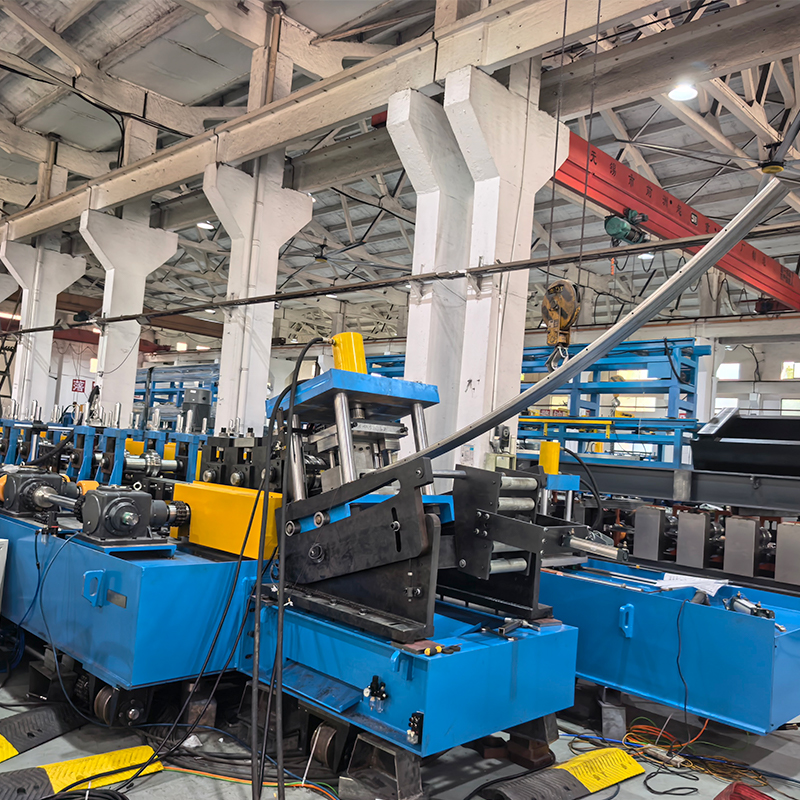
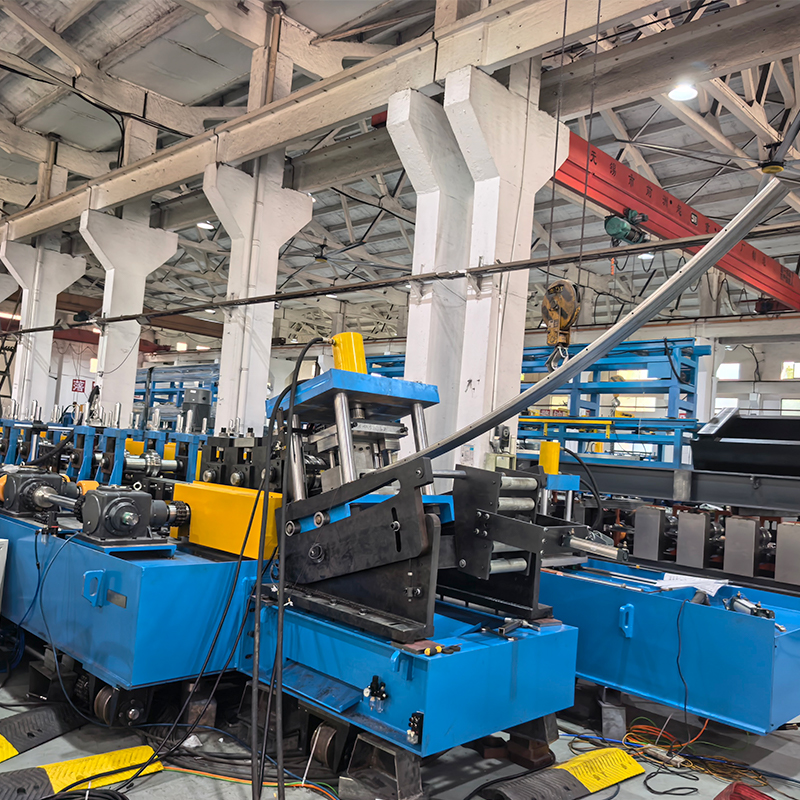
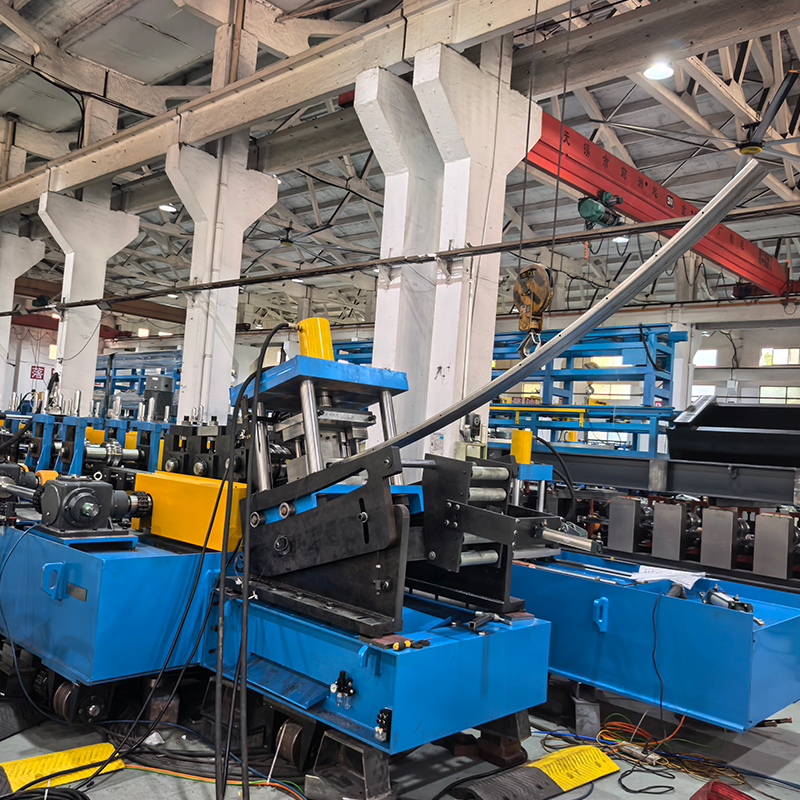
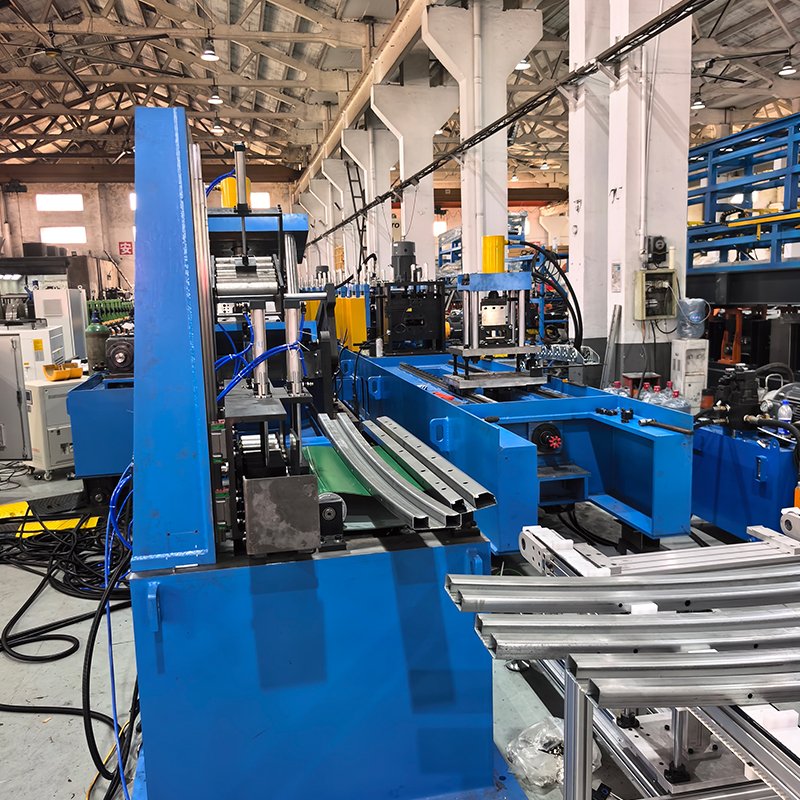
The entire line employs PLC-based automatic control and a touchscreen HMI, ensuring fully automated, continuous operation from uncoiling to finished product palletizing. The system integrates several core units: two independent forming machines (mounted on floor rails for lateral movement during product changeovers), 26 precision forming stations (supplemented by auxiliary rollers), laser welding, in-line curving, a Turkish-head straightener, spray cooling, servo-tracking cut-to-length, deburring, and automatic palletizing. It utilizes a cast-iron arch-style gearbox transmission structure (HT300 material, machined on CNC centers), ensuring high rigidity, precision, and durability.
The equipment is compatible with ultra-high-strength steels (up to 1500 MPa), such as DP980 and MS1300 grades, with raw material yield strengths of ≤1180 MPa and thicknesses ranging from 1.0 mm to 1.6 mm. The forming line speed is 0–20 m/min (actual production speed is determined by the laser welding speed). Two sets of roll forming tooling allow for rapid switching between the production of curved front beams and straight rear beams. The entire line requires only two operators and serves as core equipment enabling automotive component manufacturers to achieve large-scale, intelligent production of high-strength steel crash beams.
Products manufactured on this equipment are widely supplied to major automakers, including Geely, SAIC Volkswagen, SAIC Maxus, Chevrolet (GM), Wuling, and JAC.
II. Core Advantages and Selling Points
(1) Independent Dual-Machine Forming with Lateral Floor-Rail Movement; Flexible Switching Between Curved Front Beams and Straight Rear Beams
This is the core advantage distinguishing this equipment from conventional single-function production lines.
The system utilizes two independent forming machines mounted on floor rails, enabling production changeovers via lateral movement. A single setup meets the production requirements for both curved front crash beams (in-line bending) and straight rear crash beams:
Curved Front Beam Mode: After roll forming is completed on one machine, the product enters an in-line bending unit, where it is bent to a specific curvature matching the vehicle's front-end design.
Straight Rear Beam Mode: After roll forming on the other machine, the product is discharged as a straight beam, meeting the requirements for rear crash beams.
The two machines operate independently; curved and straight beam production do not interfere with each other and can occur simultaneously or be switched as needed. The lateral floor-rail movement design drastically reduces changeover times and significantly boosts equipment utilization rates.
(2) Cast-Iron Arch Gearbox Drive (HT300 Material) with CNC Precision Machining; High Rigidity and Precision
The forming machine employs a cast-iron arch gearbox drive structure; the arch is made of HT300 cast iron and finished on a CNC machining center. HT300 high-strength cast iron offers significant advantages, including high rigidity, excellent resistance to deformation, and superior vibration damping. Machining is completed in a single setup on a CNC center, ensuring the parallelism and perpendicularity of all mounting surfaces and laying a solid foundation for high-precision line operation. Powered by a 37kW main motor (K-series gear reducer), the system delivers ample power to ensure stable, efficient processing of 1.0mm/1.6mm high-strength steel sheets across 26 forming passes.
(3) 26-Pass Precision Forming with Auxiliary Roller System; Expert in High-Strength Steel Forming
Utilizes a multi-pass, progressive cold roll-forming process featuring 26 forming passes and a series of auxiliary rollers. The 26-pass forming layout is scientifically designed; through precision algorithms optimizing mold design and forming parameters, ultra-high-strength steel sheets (yield strength ≤ 1180 MPa) are gradually bent into the standard cross-section of the crash beam. Multi-pass progressive forming effectively minimizes material stress concentration, ensuring stable cross-sectional dimensions and precise angles.
Shaft material: 40Cr (quenched and tempered, HB 220–260), offering excellent comprehensive mechanical properties.
Shaft diameter: Φ80 mm; processed via CNC turning and cylindrical grinding to ensure minimal circular runout.
Roll forming tooling: 2 sets (one each for the front and rear beams).
Roll material: Cr12MoV (quenched, HRC 58–62).
Roll processing method: CNC turning, ensuring minimal circular and radial runout.
Spacers: To minimize runout on each roll shaft, spacers are machined from thick-walled tubing to ensure strict form and position tolerances and maximize contact area with the rolls; the inner bore features a clearance fit with the roll shaft.
(4) Laser welding; weld strength ≥ 95% of base material.
The equipment integrates an online laser welding system to perform continuous laser welding on the crash beam's web and flanges after roll forming. Laser welding offers significant advantages, including high energy density, rapid welding speeds, and a minimal heat-affected zone. The resulting weld seam is smooth and uniform, with strength exceeding 95% of the base material, ensuring the weld does not tear during a collision. Welding speed is synchronized with the forming speed, with the final production rate determined by the laser welding speed.
(5) Online arc bending; precise curvature matching for the front beam.
To meet the curved profile requirements of the front crash beam, the equipment is equipped with an online arc bending unit. After roll forming and laser welding, the front beam profile is bent to the specified curvature by the online bending device. The bending process is fully automated, offering precise, controllable curvature that perfectly matches the vehicle's front-end styling. This eliminates the need for secondary clamping, standalone bending equipment, or intermediate material handling.
(6) Turkish-style straightening head + spray cooling for quality assurance
Turkish-style straightening head: The formed crash beam undergoes inline straightening via a Turkish-style head, effectively eliminating longitudinal bending and torsional deformation caused during the forming process.
Spray cooling system: Spray cooling units are installed at each roll station to effectively control temperature rise during the forming of high-strength steel, ensuring forming precision and extending tool life.
Drive-side safety guard: A safety guard is installed on the drive side to ensure operational safety.
(7) Servo-fed punching + fixed-length cutting (precision ±0.5mm)
Hydraulic punching (servo-fed): A servo system ensures precise positioning for the accurate punching of mounting holes, connection holes, and other features on the crash beam.
Fixed-length cutting: Servo-tracking fixed-length cutting achieves a length tolerance of ±0.5mm.
Burr grinding: Inline deburring after cutting ensures smooth edges on the finished product, eliminating the need for post-processing.
(8) Shear-and-weld system for continuous production without downtime
Equipped with a shear-and-weld system that automatically shears and welds the new coil to the old one when the current coil runs out. Combined with the uncoiling system, this enables true continuous production without stopping the machine, completely eliminating downtime associated with coil changes and significantly increasing equipment utilization.
(9) Fully automatic palletizing for neat output
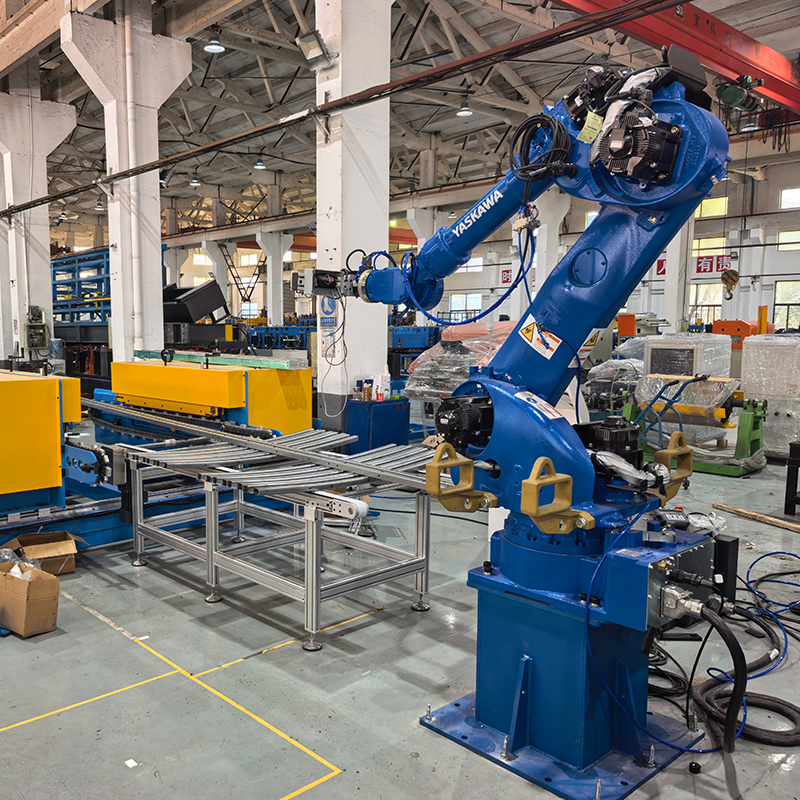
Equipped with a fully automatic palletizing system; finished crash beams are automatically conveyed to the palletizing station. They are stacked neatly and orderly according to a preset program. Manual stacking is unnecessary, significantly reducing labor intensity and enabling a "direct-to-storage" workflow.
(10) Intelligent control for easy operation
Fully automatic PLC control with a touchscreen HMI enables digital management of the entire process. Operators can set parameters such as production speed and cut length with a single touch. The equipment offers both manual and automatic operating modes to meet various production needs. It features real-time monitoring and fault warning systems, automatically triggering alarms and displaying the cause of any malfunction. The entire line requires only two operators.
III. Technical Parameters
Item Parameter
Applicable Materials: Ultra-high-strength steel up to 1500 MPa (e.g., DP980, MS1300)
Raw Material Yield Strength ≤1180 MPa
Material Thickness: 1.0 mm / 1.6 mm
Forming Machine Structure: Cast iron housing with gearbox drive
Housing Material: HT300 (machined on CNC centers)
Forming Units: 2 independent forming machines (mounted on floor rails for lateral movement/tooling change)
Main Motor Power: 37 kW (K-series gear reducer)
Line Speed: 0–20 m/min (final speed determined by laser welding speed)
Number of Forming Passes: 26 passes
Shaft Material 40Cr (quenched and tempered; HB220–260)
Shaft Diameter: Φ80 mm (CNC turned and cylindrical ground)
Roll Tooling Sets: 2 sets
Roll Material Cr12MoV (hardened; HRC58–62)
Roll Machining Method: CNC turning (ensuring control of circular and radial runout)
Spacers: Machined from thick-walled tubing (ensuring geometric tolerances)
Straightening Mechanism: Turkish-style straightening head
Cooling System: Spray cooling device installed at each roll pass
Safety Guards: Protective covers installed on the drive side
Welding Method: Inline laser welding (strength ≥ 95% of base material)
Cutting Precision: Length tolerance ±0.5 mm
Control System: Fully automatic PLC control
Operators 2 persons
VI. Production Process
Uncoiling & Feeding → Shearing & Butt-welding → Leveling → Hydraulic Punching (Servo Feeding) → Roll Forming → Laser Welding → Arc Bending (Front Beam) / Straight Beam Output (Rear Beam) → Cut-to-Length → Deburring → Palletizing
Process Step Description
Uncoiling & Feeding: Load ultra-high-strength steel coils onto the uncoiler for stable material feeding.
Shearing & Butt-welding: Automatically shear and butt-weld the ends of old and new coils to enable continuous production without stopping the line.
Leveling: Precision leveling using a multi-roll leveler to eliminate internal material stress.
Hydraulic Punching (Servo Feeding): Servo-controlled precision positioning for accurate punching of mounting holes, connection holes, etc.
Roll Forming: 26-stage progressive cold roll forming (plus auxiliary rollers) to gradually shape the crash beam cross-section.
Laser Welding: Continuous in-line laser welding; weld seam strength ≥ 95% of the base material.
Arc Bending / Straight Beam: In-line arc bending for front beams (matching the vehicle front's curvature) / straight beam output for rear beams.
Cut-to-Length: Servo-tracked cut-to-length operation with an accuracy of ±0.5mm.
Deburring: In-line deburring to ensure smooth edges on the finished product.
Palletizing: Automatic stacking and organized output of finished products.
V. Application Areas
Crash beams produced by cold roll-forming equipment are widely used in the following areas:
Passenger vehicle front and rear crash beams: Front and rear bumper crash beams for sedans, SUVs, and MPVs (front beams require in-line bending to match the vehicle's front-end styling, while rear beams feature a straight structure).
New Energy Vehicles (NEVs): Front and rear crash beams for electric and hybrid vehicles (lightweight designs tailored to NEV models).
Commercial vehicles: Front underrun protection beams for trucks and buses (ultra-high-strength steel ensures crash safety under heavy-load conditions).
Door impact beams: Side-impact protection structures located inside vehicle doors.
Crash boxes: Energy-absorbing devices positioned at both ends of the crash beam.
B-pillars and other structural safety components: Ultra-high-strength steel roll-forming technology is also suitable for manufacturing key load-bearing structures such as B-pillars and rocker panels.
VI. Market Outlook
Driven by the continuous development of the global automotive industry and increasingly stringent safety regulations, the market for cold-roll forming equipment for automotive crash beams is experiencing steady growth.
Trend toward ultra-high-strength steel applications: Advanced high-strength steels (AHSS) used in cold-formed automotive parts reach strength levels as high as 1180 MPa. These materials are primarily used for safety-critical components—such as crash beams, B-pillars, and rocker panels—significantly enhancing vehicle crash safety. DP1180 is currently the highest-strength grade of cold-rolled dual-phase steel in mass production under national standards and is widely used in the new energy vehicle sector. MS1180, a high-strength cold-forming steel, meets the technical requirements for roll forming and is extensively used to manufacture safety structural components like rocker panels and crash beams.
Dual demands for lightweighting and safety: For every 10% reduction in vehicle weight, fuel consumption drops by 7% and fuel efficiency improves by 5.5%. High-strength steel reduces component weight and fuel consumption, representing the future direction of structural steel development. Die-less roll forming technology for ultra-high-strength steel enables a significant leap in material strength for key load-bearing structures—such as crash beams, rocker panels, and battery housings—achieving lightweighting while substantially enhancing crash safety performance.
Trend of cold-roll forming replacing hot stamping: Compared to hot stamping, cold-roll forming eliminates the need for heating furnaces and die cooling systems, reducing energy consumption by over 60% and avoiding the high maintenance costs associated with hot stamping dies. It prevents issues like oxidation scaling and decarburization, resulting in a smooth surface finish and superior coating adhesion. With no exhaust emissions, it creates a better workshop environment and aligns with the trend toward "green factories."
Industry standards and technological innovation: Roll forming technology is commonly used to manufacture key automotive body components, including crash beams, bumpers, seat rails, and rocker panels. Characterized by high production efficiency, precision, and low costs, cold-roll forming is a material- and energy-efficient sheet metal forming technology. Numerous automotive component manufacturers have filed patents related to roll-forming production lines for automotive crash beams. Enterprises such as Shanghai Sihua have served numerous mainstream automakers, helping to boost crash beam production efficiency by 40% and reduce the scrap rate to below 0.3%.
VII. Service & Support
Solution Design: Personalized equipment selection and production line layout based on customer product drawings, capacity requirements, and target markets.
Custom Manufacturing: Support for non-standard customization, with full control over the process from roll design to complete line manufacturing.
Installation & Commissioning: On-site installation, commissioning, and operator training provided by engineers to ensure rapid production startup.
After-Sales Support: Long-term technical consultation and spare parts supply; engineers hold valid visas and are available for on-site service worldwide at any time.
Continuous Optimization: Equipment modification and capacity upgrade services available to adapt to changing production needs.
VIII. Why Choose Us
Nearly 20 Years of Manufacturing Experience: Mature technology, refined processes, and reliable quality.
Dual-Unit Independent Forming + Floor-Rail Tooling Change: Handles both front-beam arc bending and rear-beam straight forming on a single machine; rapid lateral movement for tooling changes eliminates the need for redundant investment.
Ultra-High-Strength Steel Forming Expert: Compatible with ultra-high-strength steels having yield strengths up to 1180 MPa (e.g., DP980, MS1300).
Cast Iron Housing & Gearbox Drive: HT300 material with CNC precision machining ensures high rigidity, high precision, and long service life.
26-Stage Precision Forming + Auxiliary Rollers: Ensures precise, stable cross-sectional dimensions and high forming accuracy.
Laser Welding: Weld seam strength ≥95% of the base material; minimal heat-affected zone; ready-to-use product immediately after welding.
In-Line Arc Bending: Front-beam curvature precisely matches the vehicle's front-end styling; arc bending is completed synchronously with the forming process.
Turkish-Style Straightening Head + Spray Cooling: High straightening precision combined with temperature control ensures dual quality assurance.
Fully Automated Continuous Production: Non-stop shearing and butt-welding, servo-tracking cut-off (±0.5mm accuracy), and automatic stacking; requires only two operators.
Direct Manufacturer: No middlemen; offers excellent cost-performance value.
Global Service Network: Engineers hold all necessary visas; rapid response capabilities.
 English