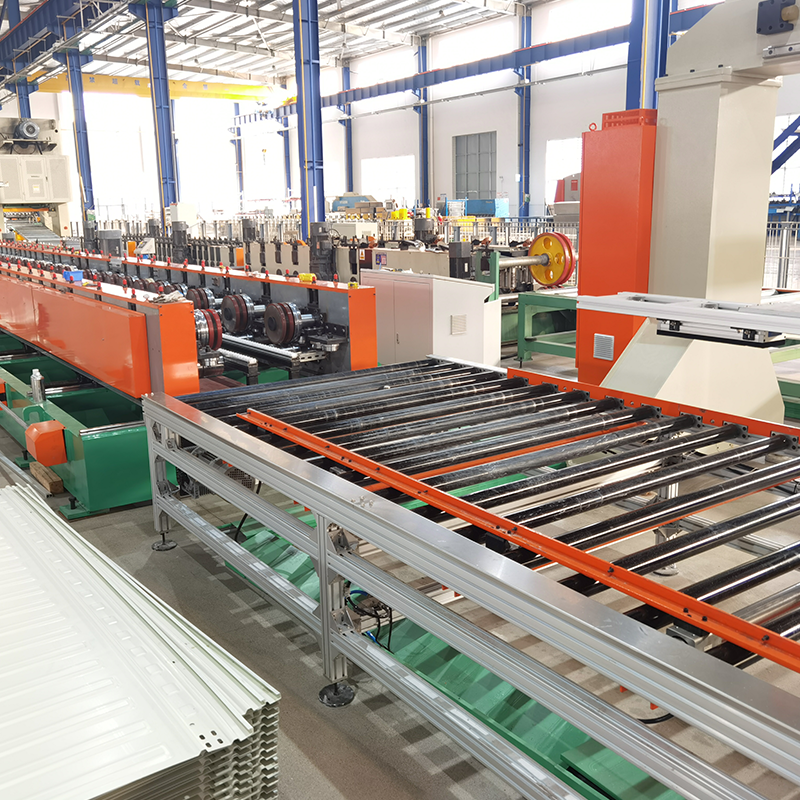
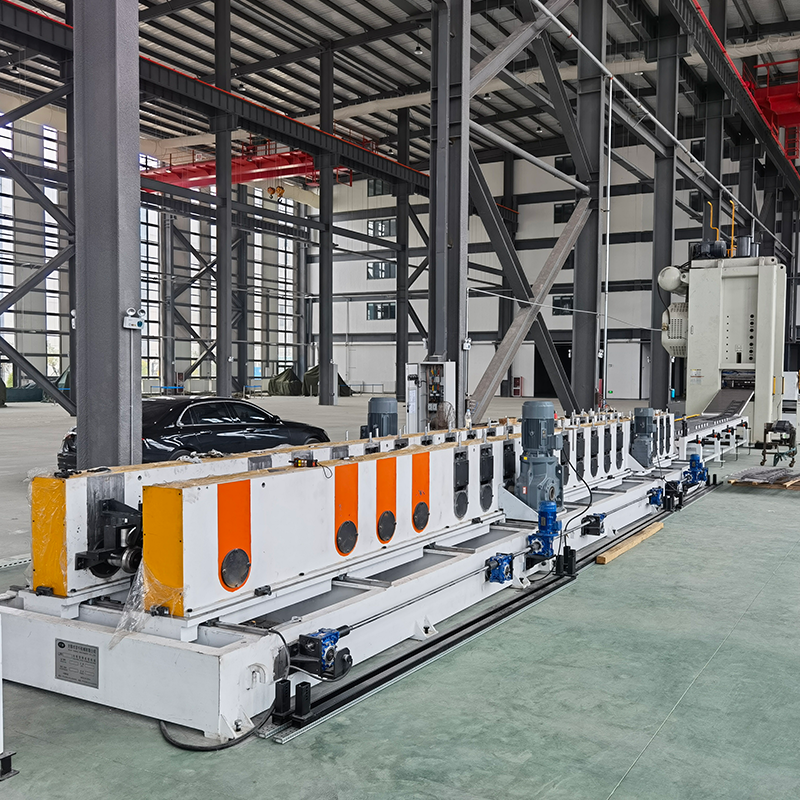
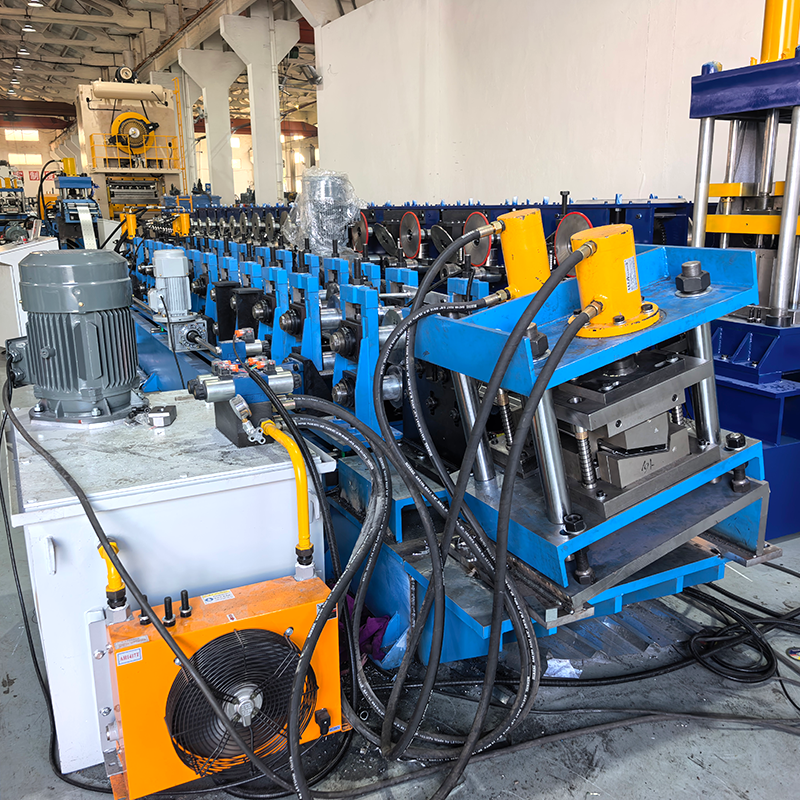
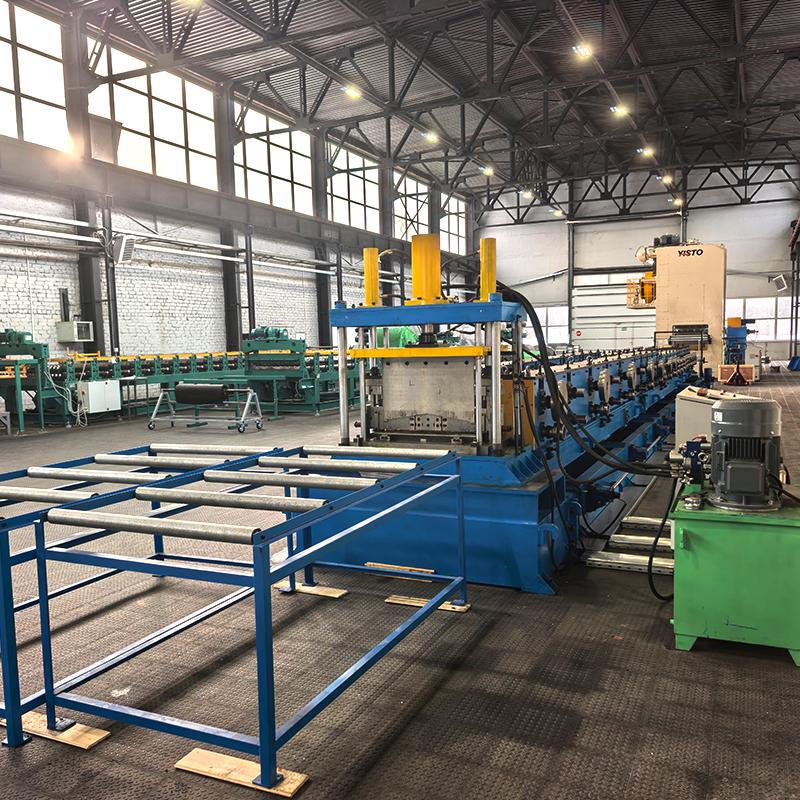
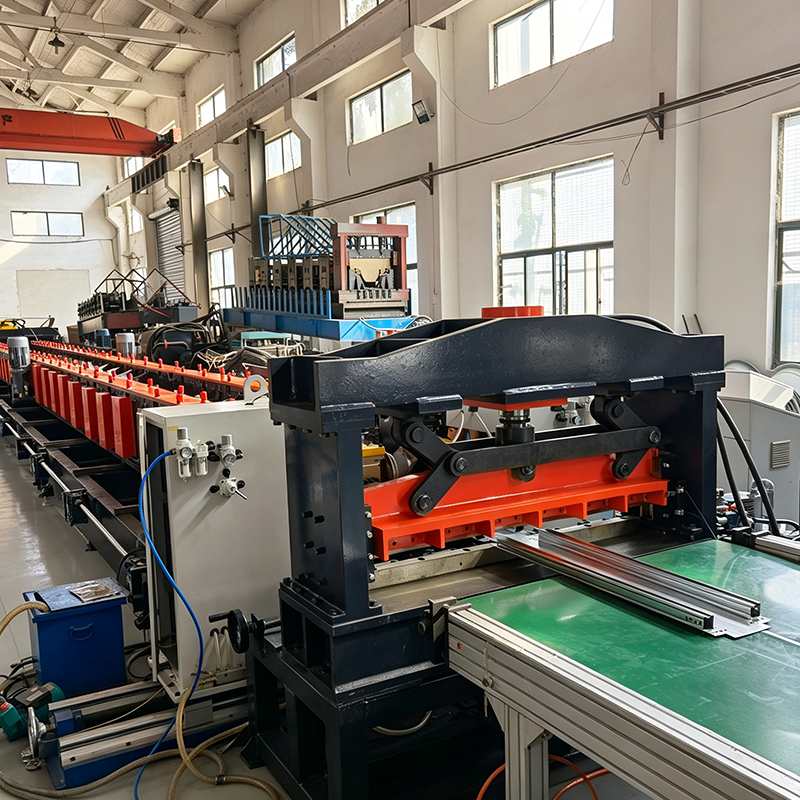
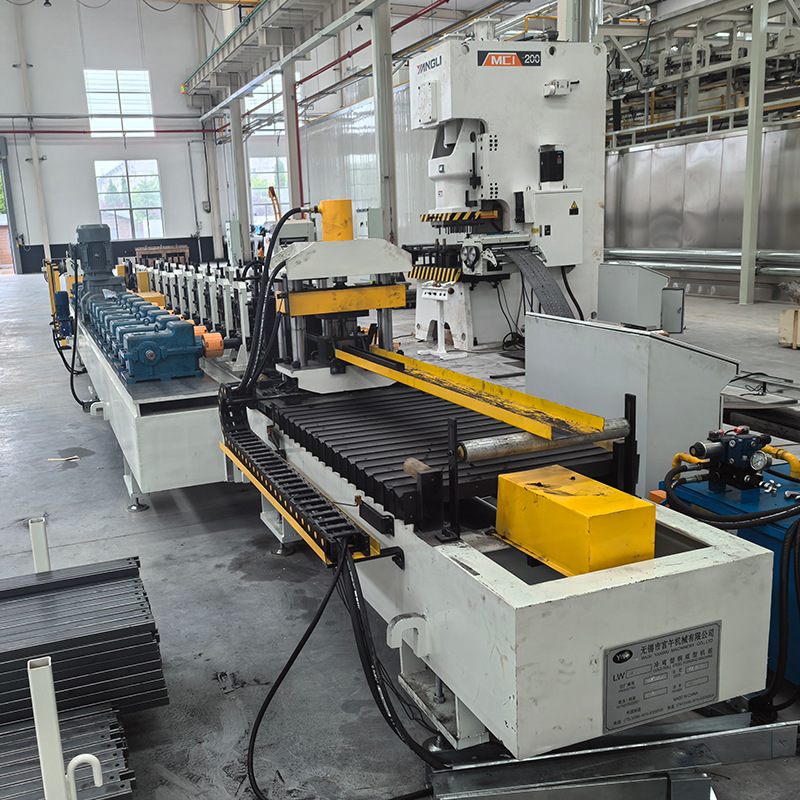
Corrugated Sheet Roll-Forming Line — A professional manufacturer offering comprehensive solutions covering the entire spectrum of roofing and flooring applications, with one-stop delivery from steel coil to finished product.
I.Series Overview
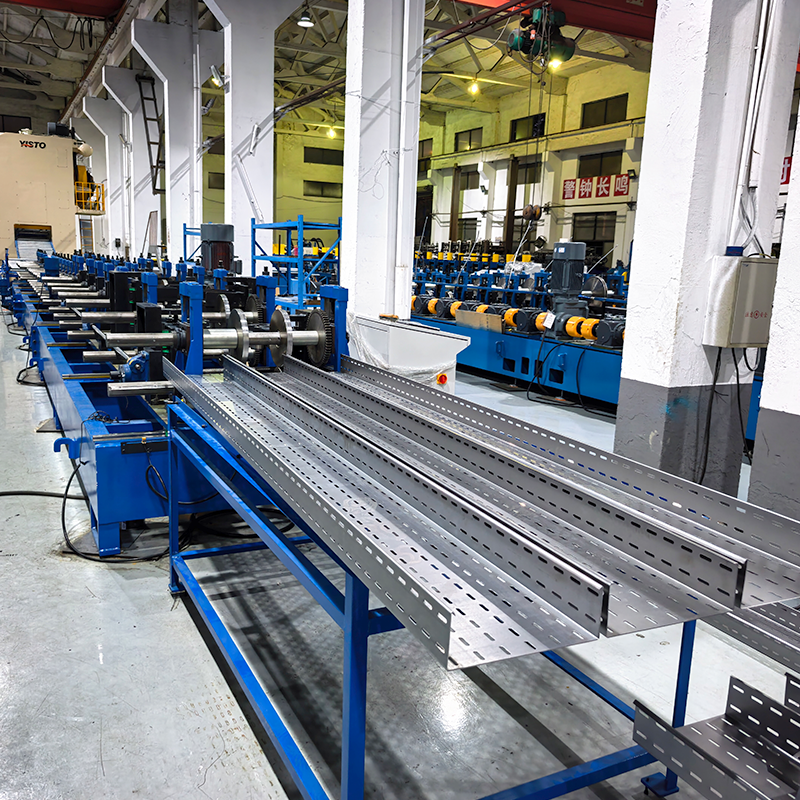
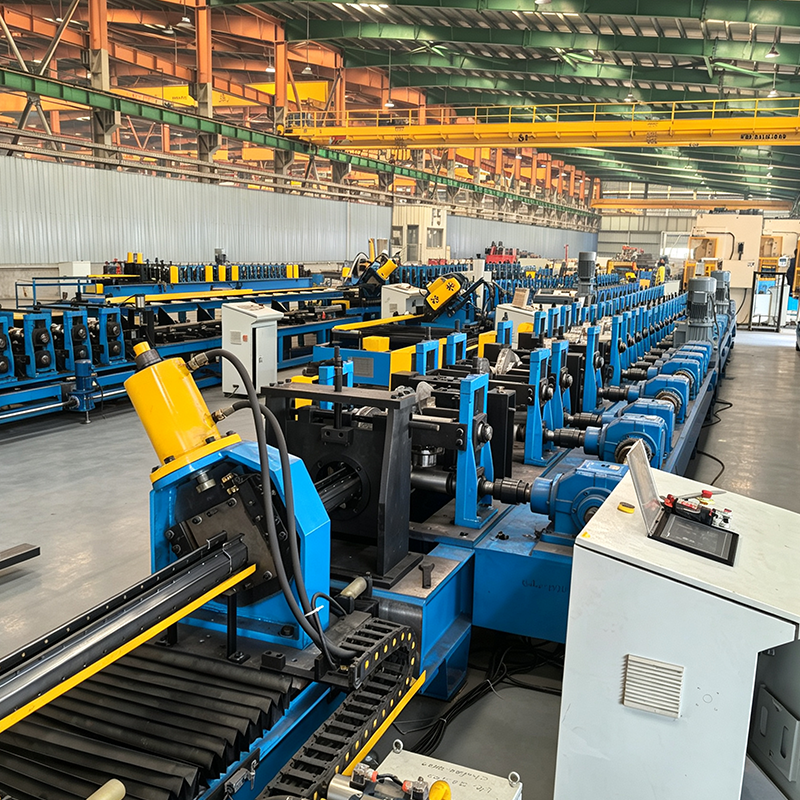
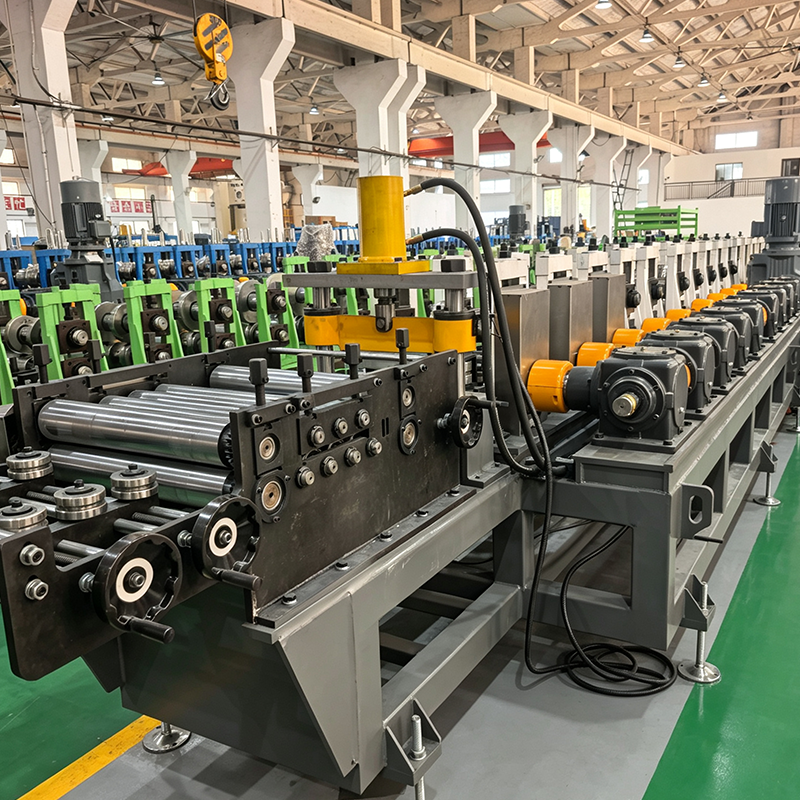
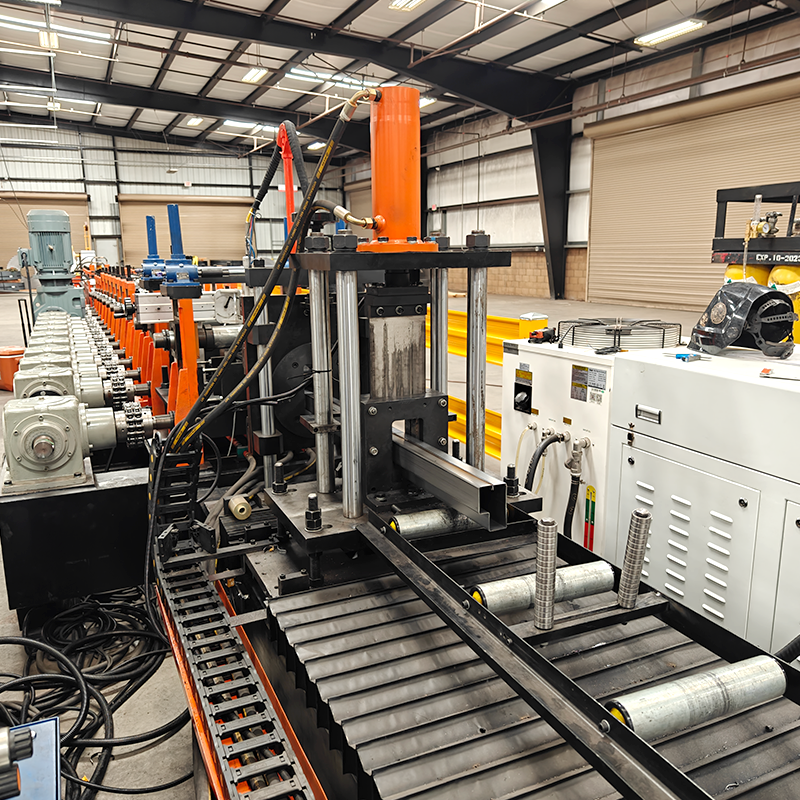
The Corrugated Sheet Roll Forming Line is a complete cold-roll forming production system designed for manufacturing various metal corrugated sheets, roofing panels, and floor decking used in construction. Metal corrugated sheets are created by processing metal materials through cold-roll forming or press forming to produce a surface featuring a regular, repeating corrugated rib structure. Utilizing a continuous cold-roll forming process, this equipment series integrates the entire workflow—uncoiling, guided feeding, roll forming, cut-to-length shearing, and discharge—into a single pass, directly producing finished corrugated sheets.
Cold-roll forming is a high-speed, continuous manufacturing process that shapes metal coils or strips into profiles—such as corrugated sheets, trapezoidal sheets, glazed-style tiles, and floor decking—by progressively bending the material transversely through a series of forming rollers. Compared to traditional stamping or bending methods, cold-roll forming offers significant advantages, including high material utilization, superior forming precision, high production efficiency, and lower costs.
In 2025, global revenue from metal corrugated sheets stood at approximately RMB 75.19 billion; this figure is projected to reach nearly RMB 106.61 billion by 2032, representing a compound annual growth rate (CAGR) of 5.1%. Metal roofing machines are specialized equipment used to process and install metal roofing panels; they are widely employed in roofing construction for industrial plants, commercial buildings, and large-scale public facilities.
This equipment series covers four major product categories for roofing and flooring applications: corrugated roofing sheets, T-profile roofing sheets, glazed-style roofing tiles (3D roofing panels), and floor decking. It is compatible with a wide range of materials—including color-coated steel, galvanized steel, Al-Zn coated steel, stainless steel, and aluminum-magnesium-manganese alloys—and handles material thicknesses ranging from 0.3 mm to 1.5 mm. The equipment features fully automatic PLC control and a touchscreen HMI, ensuring a continuous, automated workflow from uncoiling to the discharge of finished products.
II. Equipment Introduction
1. Roof Corrugated Sheet Roll Forming Equipment
Equipment Overview
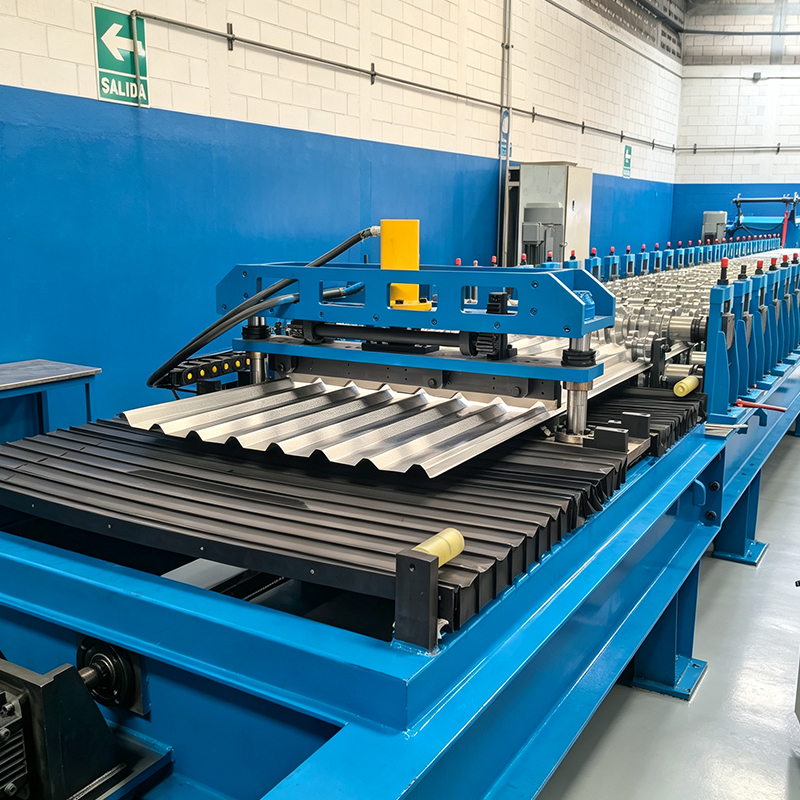
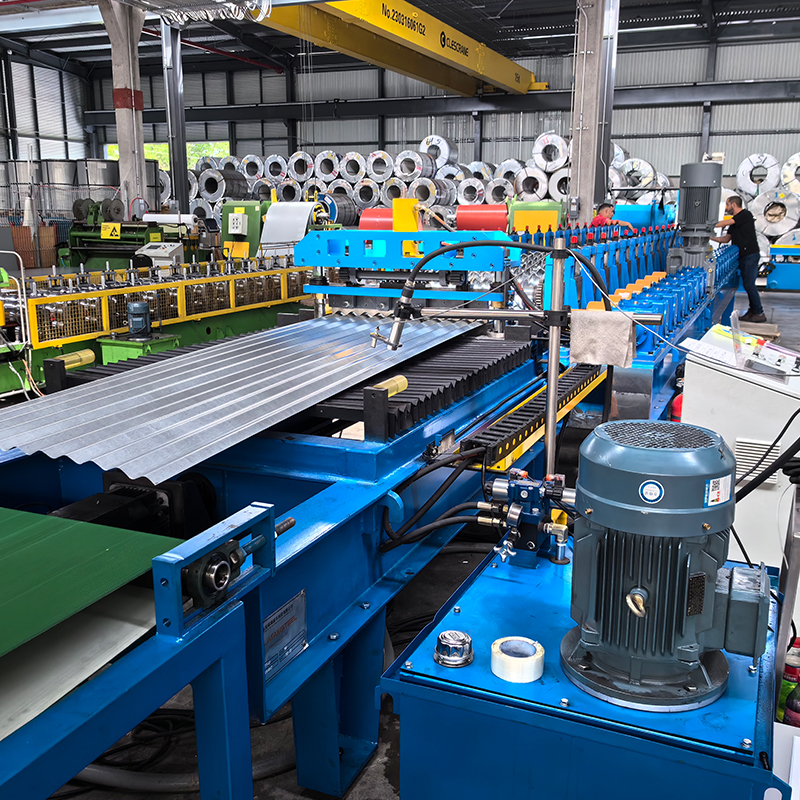
The roof corrugated sheet roll forming equipment is a specialized cold-bending forming production line for producing metal corrugated roof panels and wall panels. Corrugated sheets are produced by processing metal coils into sheet products with a continuous corrugated shape through a roll forming process. The corrugated design significantly increases the strength and rigidity of the sheet. The corrugated sheet forming equipment can be customized to produce water ripples, small waves, etc., suitable for applications such as color steel tiles and metal roofs.
This equipment uses a continuous cold-bending roll forming process to complete the entire process of uncoiling, guiding feeding, roll forming, length cutting, and unloading of metal coils in one go, directly producing finished corrugated sheets.
Core Advantages
High-precision forming, effectively overcoming springback: Through a multi-pass progressive forming process, the metal sheet is gradually bent into a standard corrugated section, effectively overcoming the material springback problem.
High production speed and efficiency: Production speed can reach 10-60m/min (conventional), with a matching tracking cutter to achieve continuous production without stopping the machine.
Multi-type production: The machine can change the roll dies to produce corrugated sheet products with different wave heights and pitches, meeting diverse needs.
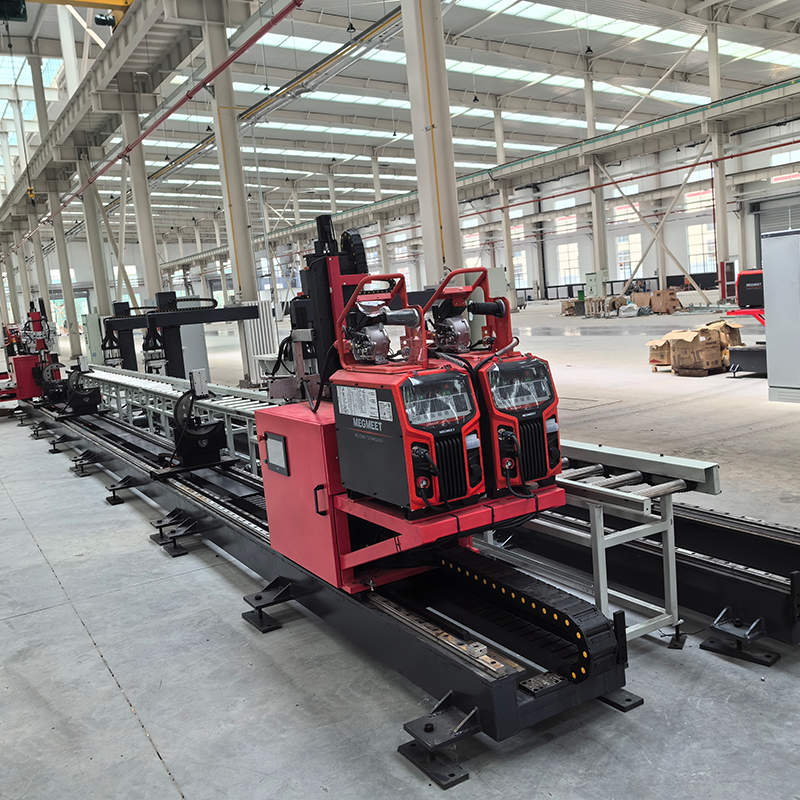
Robust equipment structure: The machine body adopts an H-beam welded structure, which is tempered to eliminate internal stress, ensuring no deformation during long-term operation.
Applications: Metal roofing and wall cladding for industrial plants, commercial buildings, and residential buildings; roofing and wall systems for large-span buildings such as stadiums, exhibition halls, and airport terminals; roofing and enclosure structures for industrial buildings such as locomotive depots and aircraft hangars.
Equipment Composition: Uncoiler, guiding feeding device, multi-pass roll forming main unit, hydraulic cutting system, discharge table, and PLC electrical control system. This production line has no length limit. Multiple sets of different data can be set on the computer controller according to construction requirements. After one-click confirmation, the equipment automatically produces finished products of different lengths according to the set data.
2. Roofing T-shaped Panel Roll Forming Equipment
Equipment Overview
The roofing T-shaped panel roll forming equipment is a specialized cold-bending forming production line for producing T-shaped roof panels and T-shaped keels, among other building profiles. T-shaped roof panels are a new type of roof structure combining beams and slabs, featuring large span, light weight, convenient construction, good seismic performance, novel design, and easy roof waterproofing.
The T-shaped forming machine belongs to cold-bending forming equipment. Relying on a continuous roll forming process, it processes metal coils into T-shaped profile components, applicable to indoor ceiling keels, building support profiles, photovoltaic brackets, decorative frames, and other processing scenarios.
Core Advantages
Large Span and High Load-Bearing Capacity: T-shaped roof panels integrate beams and slabs, meeting the needs of large-span buildings.
Convenient Construction: Prefabricated production allows for rapid on-site installation.
Lightweight and High-Strength: Cold-formed thin-walled steel is made from 0.5- 3.5 mm thick ordinary steel plates or galvanized steel plates through cold pressing or cold bending, resulting in lightweight and high strength.
Multi-Purpose Machine: Can produce T-shaped roof panels, T-shaped joists, and other profiles.
Applications: Suitable for large-span industrial plants, warehouses and logistics facilities, garages and parking lots, exhibition halls and conference centers, hydropower stations and power plants, public and commercial buildings, and residential buildings. Cold-formed steel can be used as load-bearing components such as steel frames, trusses, beams, and columns, as well as roof purlins, wall frames, beams, columns, joists, doors and windows, roof panels, and floor slabs.
3. Roofing Glazed Tile (3D Roofing Panel) Roll Forming Equipment
Equipment Overview
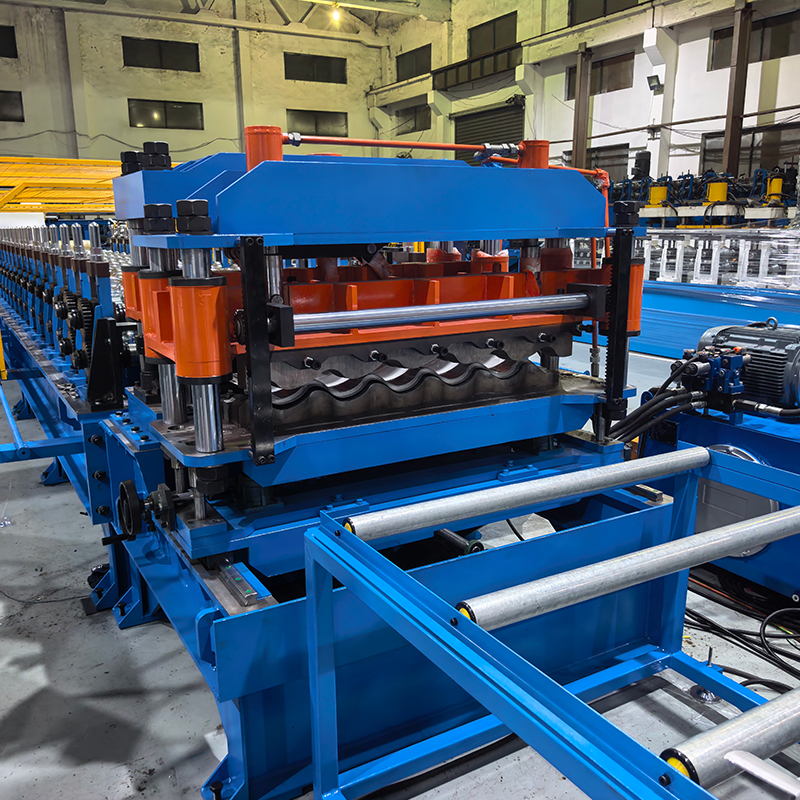
The roofing glazed tile roll forming equipment is a specialized cold-bending forming production line for producing metal antique-style glazed tiles (color steel glazed tiles, 3D roofing panels). Antique-style glazed tiles are formed using color steel sheets as the substrate through special processing and special baking paint. The color steel glazed tile equipment perfectly blends the traditional tile shape with modern color steel technology, resulting in a product that is both dignified and elegant, as well as beautiful and novel.
The equipment uses a continuous roll forming process to complete the entire process of uncoiling, guiding, feeding, roll forming, punching, cutting, and unloading in one go.
Core Advantages
Realistic Antique Effect: Rolls of steel sheets are precisely rolled and transformed into antique-style glazed tiles with delicate, hand-carved textures within seconds.
Multiple Models in One Machine: Capable of producing various tile types and specifications, including 800, 828, 840, 860, and 1050 models.
Flawless and Smooth Surface: 13 rows of forming plates ensure a smooth surface free of wrinkles and scratches.
Highly Efficient Construction: Short construction time for curved glazed tiles reduces costs, lowers labor intensity, and increases construction efficiency. Construction is unaffected by seasonal changes.
Robust Machine Body: The machine body is welded with 250mm H-steel, and the middle plate is welded with a 14mm steel plate.
Applications: Suitable for garden-style factories, tourist attractions, pavilions, hotels, villas, exhibition halls, resorts, homes, and other architectural and outdoor decoration projects.
Equipment Components: Loading rack, loading rack support, feeding guide device, forming main unit (including rolling mechanism and punching device), cutting system, and electrical control system. The forming shaft is made of 45# steel with a tempering process, and the rollers are made of 45# steel with a 0.05mm electroplating thickness.
4. Floor Decking Roll Forming Equipment
Equipment Overview
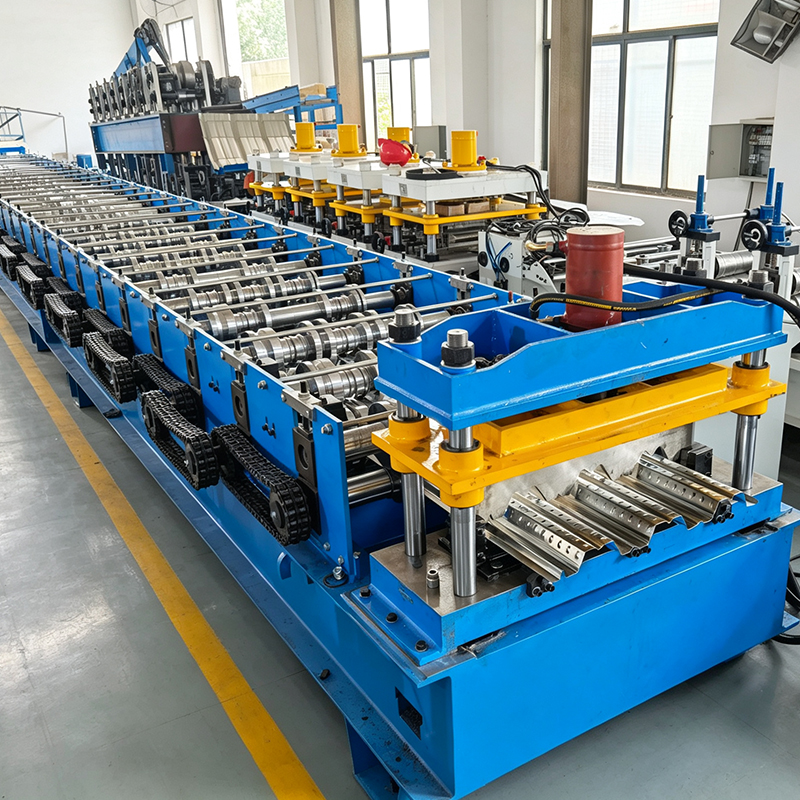
The floor decking roll forming equipment is a specialized cold-bending forming production line for producing steel floor decking (profiled steel sheets, composite floor decking). Floor decking, also known as steel decking, is a composite structural material used in construction, made from galvanized steel sheets through roll forming, with a cross-section in V-shape, U-shape, trapezoidal, or similar corrugated shapes.
This equipment uses a continuous cold-bending roll forming process to complete the entire process of uncoiling, leveling, roll forming, length cutting, and output in one go. The floor decking cold-bending production line can reach a production speed of 25 meters per minute, and adding forming units can produce various sheet types.
Core Advantages
Construction Phase: Serves as permanent formwork and bears the load.
Usage Phase: Works alongside concrete, acting as bottom tensile reinforcement.
Significant Economic Benefits: In high-rise buildings, it eliminates the need for steel formwork and reduces floor load, achieving the same capacity while reducing steel usage and thus saving investment.
Lightweight and High-Strength: The product is lightweight, high-strength, has a high load-bearing capacity, and good seismic resistance.
Applications: Multi-story and high-rise steel structure office buildings, residences, apartments; stadiums, exhibition halls, airport terminals, and other large public buildings; various industrial plants, steel structure plants, logistics centers, large supermarkets, etc.
III. Equipment Series Technical Parameters
Equipment Type Forming Rows Material Thickness Production Speed Applicable Materials Main Features
Roof Corrugated Sheet 9-24 rows 0.3-1.0mm 10-60m/min Color-coated steel sheet, galvanized sheet, stainless steel, aluminum sheet Corrugated for enhanced strength, high-precision forming
Roof T-Shaped Sheet Customizable 0.5-3.5mm Customizable Galvanized sheet, cold-rolled sheet Large span, beam and slab combined
Roof Glazed Tile 11-13 rows 0.2-0.8mm 8-15m/min Color-coated steel sheet Realistic antique effect, multi-type machine
Floor Decking 18-26 rows 0.8-1.5mm 8-25m/min Galvanized sheet, aluminized zinc sheet Permanent formwork, steel and formwork saving
IV. Production Process
Uncoiling → Guided Feeding → Roll Forming → Cutting to Length → Discharge
Process Description
Uncoiling: Load the metal coil into the uncoiler and feed it stably.
Guided Feeding: The lateral roller guide ensures the sheet enters the forming machine in the correct position.
Roll Forming: Multi-pass progressive cold bending to gradually form a standard cross-section.
Cutting to Length: Hydraulic or tracking cutting for high precision and clean cuts.
Discharge: Finished product output, neatly discharged.
V. Application Areas
The various corrugated sheet products manufactured by the corrugated forming production line equipment series are widely used in the following fields:
Industrial Buildings: Roofing and wall cladding systems for various industrial plants, steel structure plants, locomotive depots, and aircraft hangars—corrugated sheets and floor decking are the core materials for steel structure buildings.
Large Public Buildings: Roofing and wall cladding systems for large-span buildings such as stadiums, exhibition halls, concert halls, airport terminals, and railway stations—corrugated sheets are lightweight and high-strength, suitable for large-span designs.
Commercial and Residential Buildings: Roofing and wall cladding for shopping malls, office buildings, hotels, and residences—glazed tiles are suitable for high-end decorative roofs.
Warehousing and Logistics: Roofing and floor cladding systems for large warehouses and logistics centers—floor decking offers fast construction speed and significant economic benefits.
Cultural Tourism and Antique Buildings: Tourist scenic spots, pavilions, hotels, villas, exhibition halls, and resorts—glazed tiles are simple and elegant, harmonizing with the scenic environment.
Power and Energy: Plant buildings for power plants, power equipment companies, and hydropower stations—T-shaped roof panels have large spans and strong load-bearing capacity.
VI. Market Outlook
Continued growth in the global metal corrugated sheet market: Global revenue for metal corrugated sheets stood at approximately RMB 75.19 billion in 2025 and is projected to approach RMB 106.61 billion by 2032, with a compound annual growth rate (CAGR) of 5.1% from 2026 to 2032.
Rapid development of steel structure construction: Cold-formed steel is an economical, lightweight, thin-walled material. To date, my country operates over 1,000 cold-formed steel production lines with an annual capacity of 15 million tons. Driven by the national promotion of prefabricated and steel structure buildings, market demand for corrugated sheets, roofing panels, and floor decking—core materials in steel construction—continues to rise.
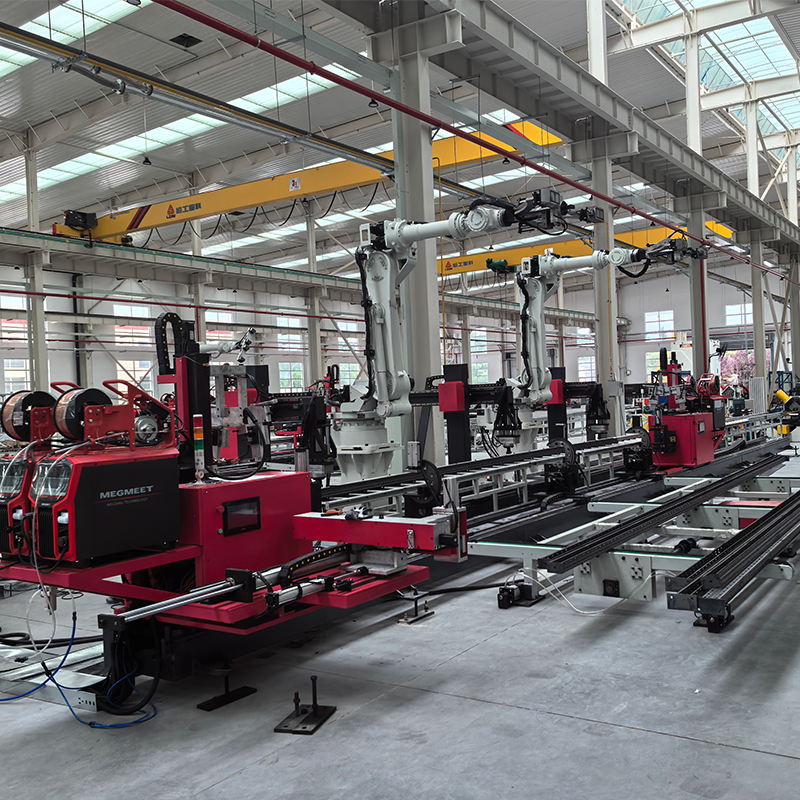
Trends toward technological upgrades and intelligent manufacturing: Equipment is evolving toward greater intelligence and higher speeds. PLC systems centrally control the entire line—including uncoiling, forming, cutting, and discharging—enabling automated production based on pre-set data for multiple product specifications. The market penetration of fully automated, intelligent corrugated forming equipment continues to increase.
VII. Service & Support
Solution Design: Personalized equipment selection and production line layout based on customer product drawings, capacity requirements, and target markets.
Custom Manufacturing: Support for non-standard customization, including various panel and profile shapes; end-to-end control from roll design to complete machine manufacturing.
Installation & Commissioning: On-site installation, commissioning, and operator training provided by engineers to ensure rapid production startup.
After-Sales Support: Long-term technical consultation and spare parts supply; engineers hold valid visas and are available for on-site service worldwide at any time.
Continuous Optimization: Equipment modification and capacity upgrade services available to adapt to changing production needs.
VIII. Why Choose Us
Nearly 20 Years of Manufacturing Experience: Mature technology, refined processes, and reliable quality.
Comprehensive Product Range: One-stop supply of all types of architectural corrugated panels, including corrugated roofing sheets, T-profile roofing sheets, glazed-style roofing tiles, and floor decking.
High-Precision Manufacturing: Multi-stage precision forming ensures consistent dimensions and stable product quality.
High-Efficiency Production: Production speeds reach 15–60 m/min; the entire line can be operated by just 1–2 people.
Smart Control: Fully automatic PLC control with touchscreen interface; features one-touch settings and automatic counting.
Versatile Capability: A single machine produces multiple panel and tile profiles, eliminating the need for repeated investment.
Rugged Durability: Features a welded H-beam frame, tempered components, and chrome-plated rollers to ensure no deformation during long-term operation.
Direct Manufacturer: No middlemen, offering excellent value for money.
 English