I. Product Introduction
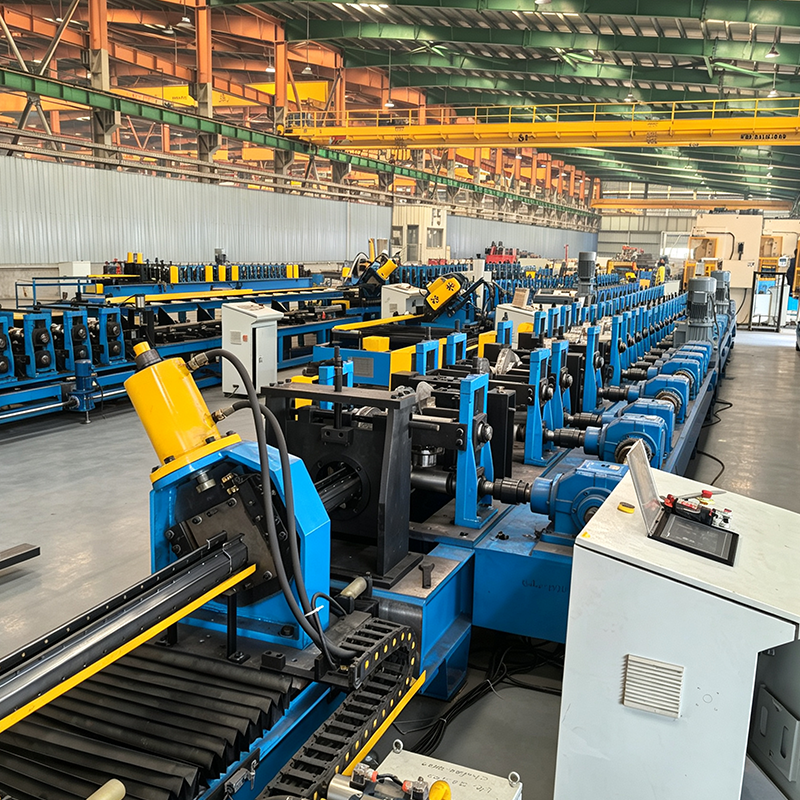
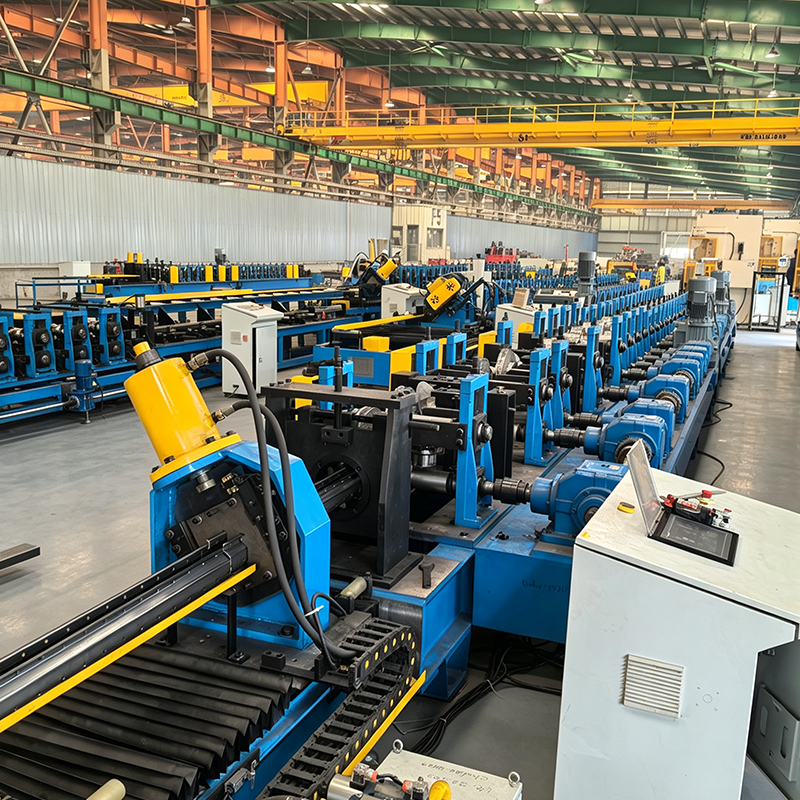
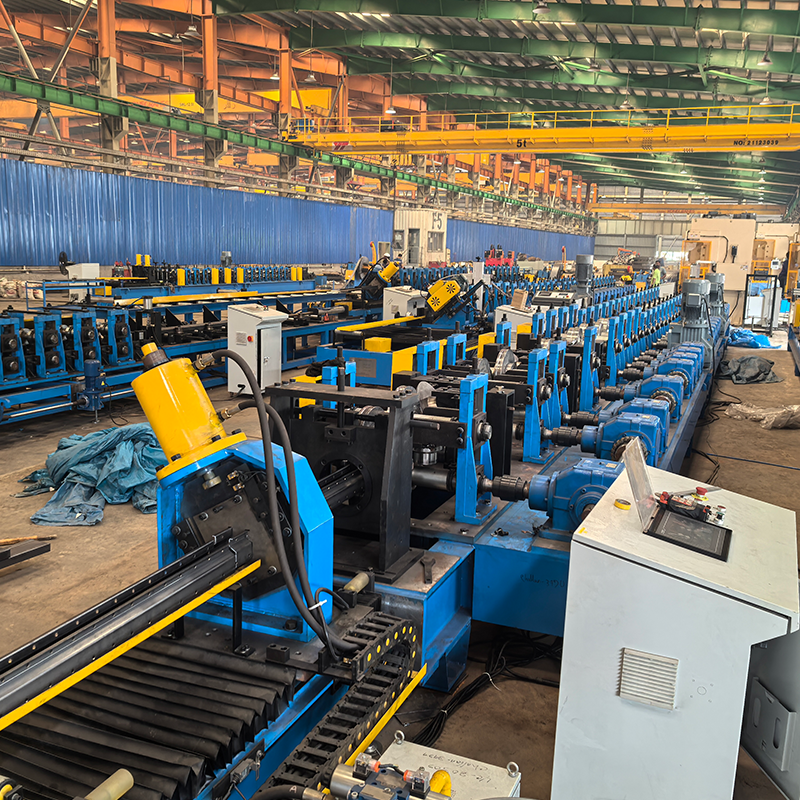
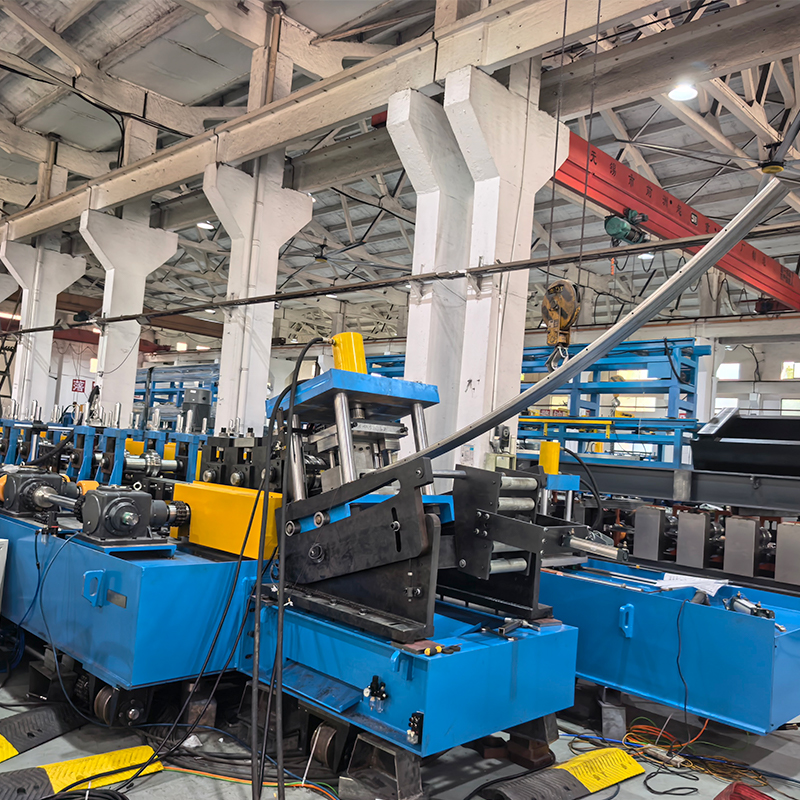
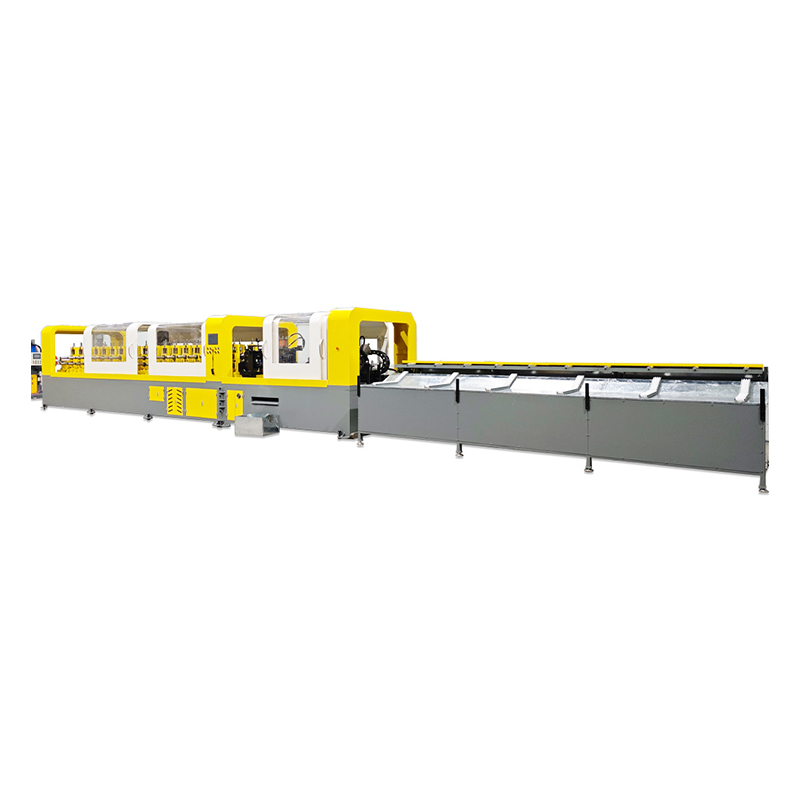
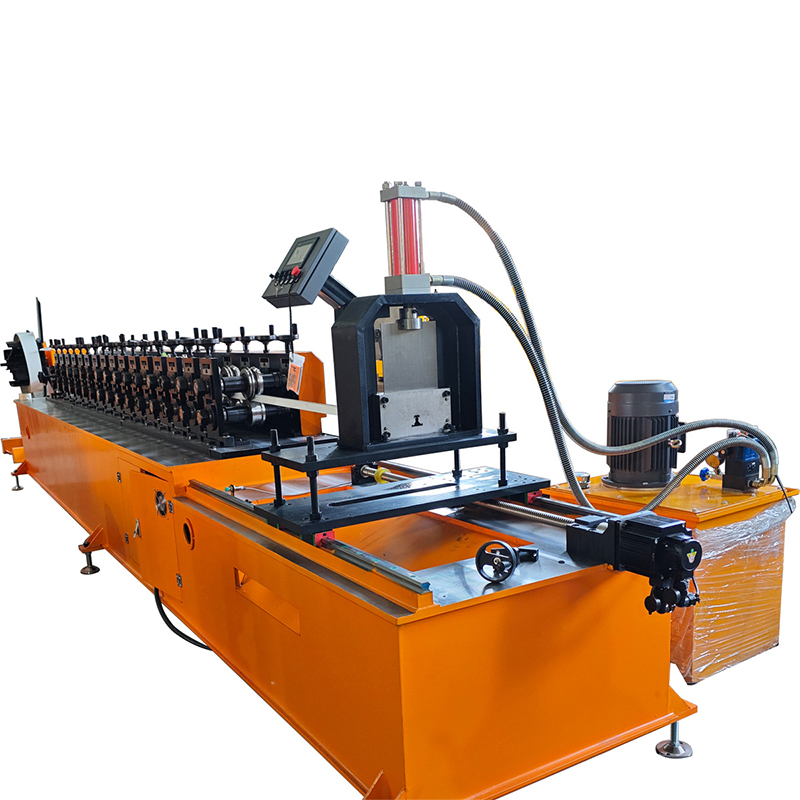
The Rack Upright Roll Forming Machine is specialized cold-roll forming equipment designed for the production of warehouse rack uprights (vertical structural supports). As the core load-bearing components of a racking system, the precision of the uprights' cross-section and the accuracy of their hole positioning directly determine the structural stability and load-bearing safety of the entire system.
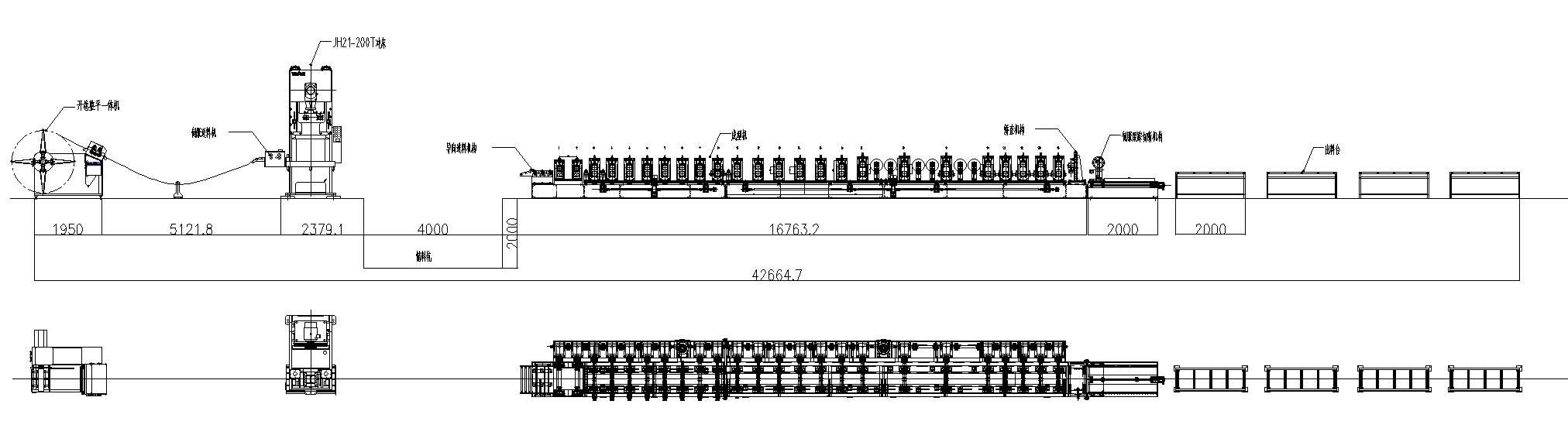
Utilizing a continuous cold-roll forming process, the machine transforms steel coil stock into finished rack uprights through an integrated workflow that includes uncoiling, leveling, servo-driven feeding, punching, roll forming, cut-to-length shearing, and automatic unloading. The entire line features a Siemens PLC control system and a touchscreen HMI, ensuring a high degree of automation, ease of operation, and superior production efficiency.
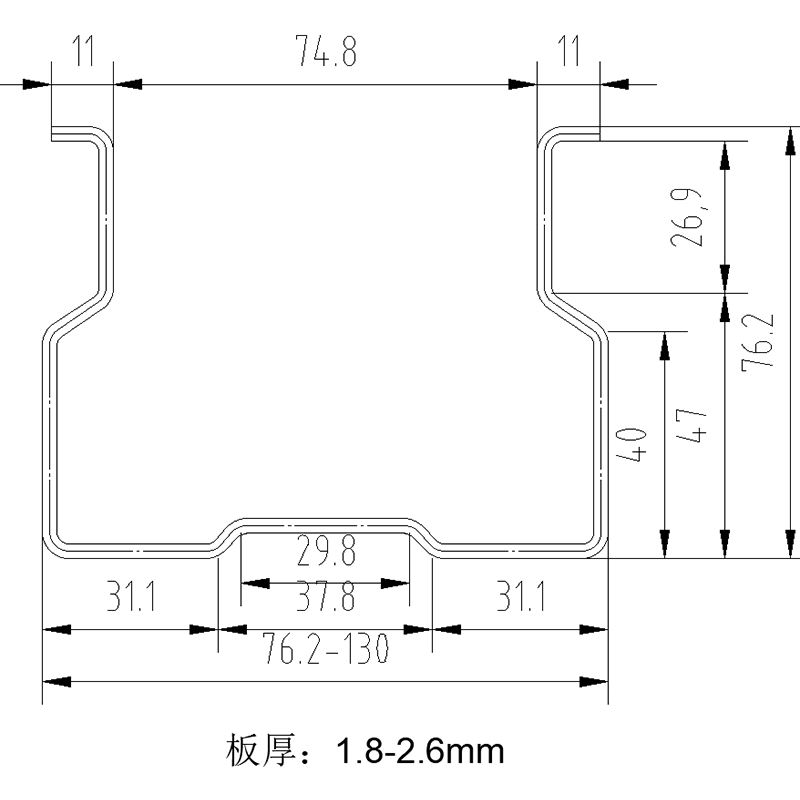
The equipment is compatible with various raw materials—such as cold-rolled coils, galvanized coils, and high-strength steel—and can produce diverse cross-sectional profiles, including C-shapes, U-shapes, octagonal shapes, and closed profiles. It accommodates material thicknesses ranging from 0.8 mm to 4.0 mm, with widths customizable to specific client requirements. The uprights feature precision-punched patterns—such as "butterfly" holes, diamond holes, or inverted "V" (teardrop) slots—designed for secure, accurate connection with beams and other components.
II. Core Advantages and Selling Points
1. High-precision forming ensures rack safety
The cross-sectional precision of the upright directly impacts the load-bearing safety of the rack. The equipment utilizes a multi-stage progressive forming process combined with high-precision rollers and a servo control system, keeping forming precision errors within ±0.5mm. Hole position deviation is controlled within 0.3mm, ensuring uniformity and accurate positioning. For a 16-meter upright, the cumulative length error is controlled within ±2mm, and straightness deviation is <0.5mm/m; this ensures consistent dimensions and excellent straightness, preventing assembly issues or compromised stability caused by dimensional inaccuracies. The cut-length error does not exceed ±0.5mm, and the cut surface is smooth and flat, free from burrs or deformation.
2. High-efficiency production with leading capacity
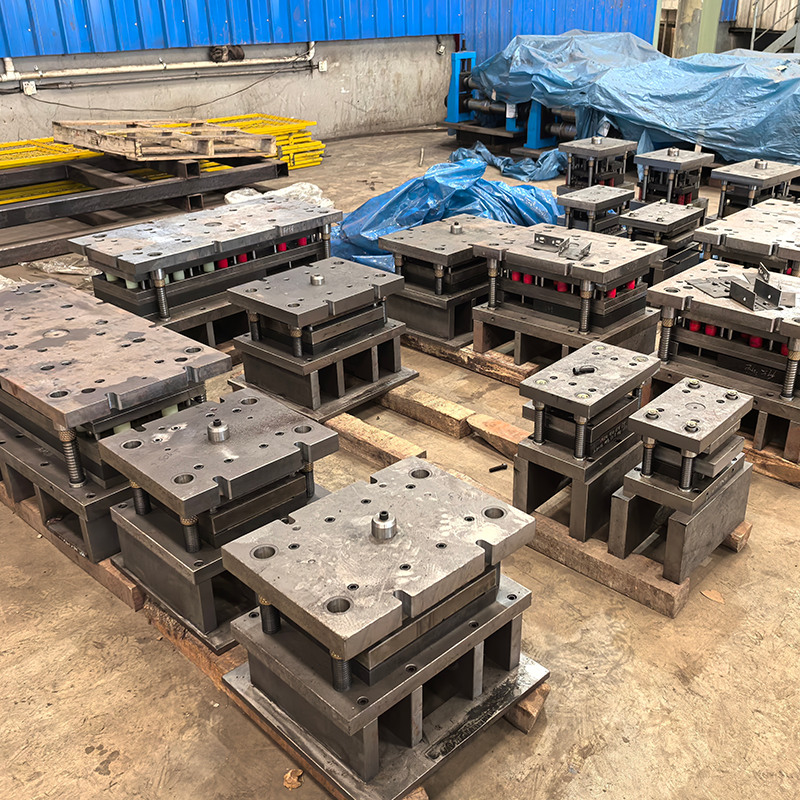
The production speed of the entire line reaches up to 15–20 meters per minute. The punching unit employs high-precision molds and a pneumatic punching system, achieving speeds of 80–120 strokes per minute. Fully automated continuous production allows a single line to be operated by just 1–2 people. The line features a rational layout, occupying only about 50–90 square meters, making it suitable for various factory configurations.
3. Versatile and flexible production
A single production line can manufacture rack upright profiles in multiple specifications. By quickly changing molds and adjusting roller parameters, the system can produce uprights with varying cross-sectional dimensions and hole patterns. A modular quick-change mechanism enables specification switching within 30 minutes, meeting manufacturing needs for light-, medium-, and heavy-duty racks, as well as automated warehouse (AS/RS) and cold-chain storage racks, thereby accommodating diverse order requirements.
4. Diverse hole patterns for various rack types
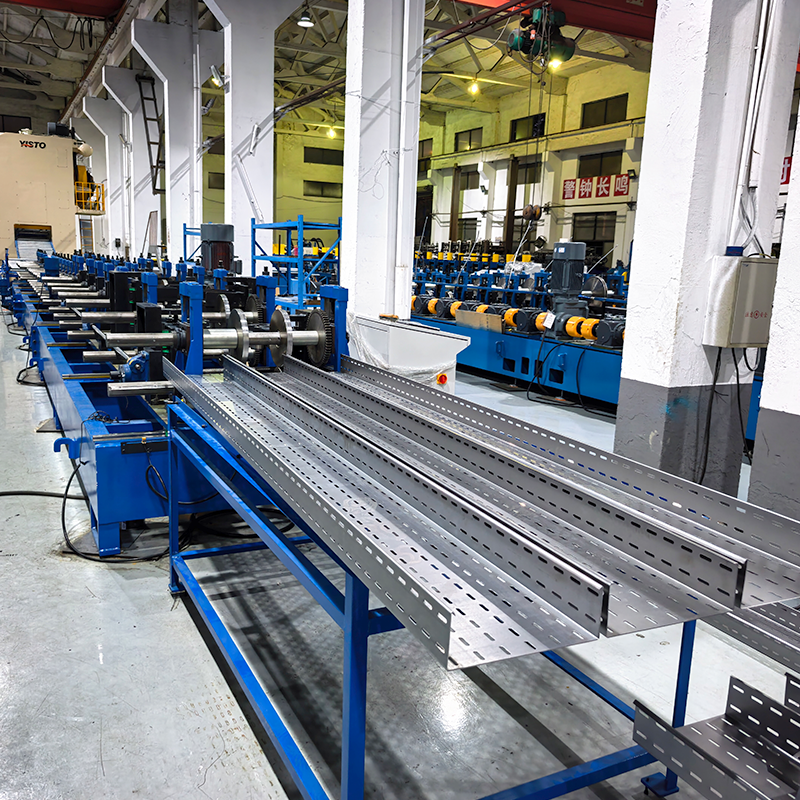
The equipment can process a wide range of hole shapes, including butterfly holes, diamond holes, inverted "8" (teardrop) holes, gourd-shaped holes, and inverted triangular holes. Different hole patterns suit different application scenarios: "Butterfly" holes are typically used for light- and medium-duty shelving; inverted "figure-8" holes are common in heavy-duty shelving designed for higher loads; and diamond-shaped holes are often used for heavy-duty shelving with significant load-bearing requirements. Upright hole spacing is generally 50mm or 75mm, allowing beams to be adjusted vertically in 50mm or 75mm increments to accommodate goods of varying heights. The hole design ensures that hooks automatically lock in place under the weight of the load; the surface-to-surface contact between the hook and the upright hole improves load distribution, resulting in greater stability and safety.
5. Robust, Durable, Stable, and Reliable
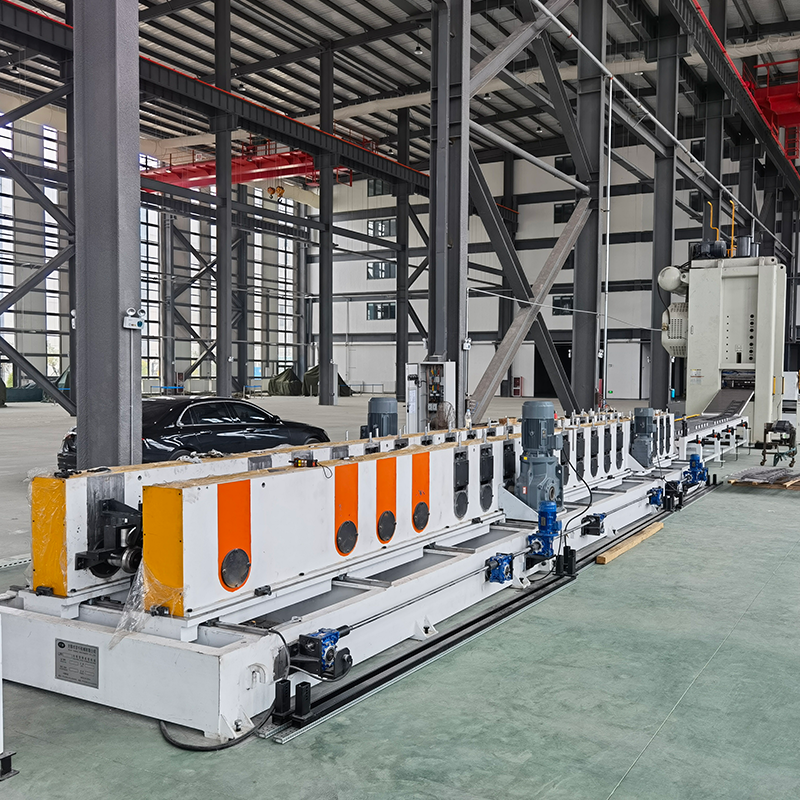
The forming stands are constructed from integrally welded steel and undergo aging treatment to relieve internal stress, thereby enhancing rigidity and resistance to deformation.
The forming stands feature a cast-iron structure that undergoes tempering, ensuring high strength and a long service life.
Rollers are made of Cr12MoV steel and undergo vacuum quenching, cryogenic treatment, and precision grinding, achieving a hardness of HRC 58–62.
Roller service life is three times longer than that of standard equipment; maintenance frequency is reduced from twice a month to once a quarter, cutting maintenance costs by 40%.
The drive system utilizes gearboxes, with each forming stand equipped with an independent gearbox; this ensures stable, high-intensity, long-term operation and extends the equipment's lifespan.
Key electrical components are sourced from internationally renowned brands, such as Siemens (PLCs), Mitsubishi (variable frequency drives), and Omron (encoders).
6. Intelligent Control and Ease of Operation
Fully automated PLC control with a touchscreen HMI makes parameter setting intuitive and convenient. The equipment features an intelligent control system that monitors key parameters—such as forming precision, operating speed, and fault status—in real-time; it triggers automatic alarms for anomalies, enabling operators to quickly troubleshoot and resolve issues. Multiple safety devices, including emergency stop buttons, light curtains, and safety guards, are installed to effectively protect operators. Skill requirements for operators are significantly reduced, as is the likelihood of human error.
7. High Efficiency, Energy Savings, and Cost Reduction
Compared to traditional production equipment, this system increases production efficiency by 30%–50% and reduces energy consumption per unit by 20%, effectively lowering production costs. Fully automated production minimizes manual intervention and cuts labor costs by 60%; following implementation, a large enterprise saw a substantial increase in average monthly production capacity and a significant reduction in delivery lead times.
III. Technical Parameters
Item Parameter
Applicable materials: Cold-rolled coils, galvanized coils, high-strength steel
Material thickness: 0.8–4.0 mm (customizable)
Material width: Customized according to client requirements
Forming profiles: C-shape, U-shape, octagonal, closed-section, etc.
Production speed: 0–30 m/min (customizable)
Forming precision ≤±0.5 mm
Hole position deviation ≤0.3 mm
Cut-length tolerance ≤±0.5 mm
Total length cumulative error ≤±2 mm (16 m)
Straightness deviation <0.5 mm/m
Punching speed: 80–120 strokes/min
Roll material Cr12MoV, HRC 58–62°
Cutting die material: Cr12MoV/H13
Drive system: gearbox drive (independent for each stand)
Main motor power: 22–55 kW
Footprint 2 × 45 m
Operators: 1–2 persons
IV. Production Process
Uncoiling & Feeding → Leveling → High-Precision Servo Feeding → In-line Punching → Guided Feeding → Cold Roll Forming → Cut-to-Length → Automatic Collection
Process Step Description
Uncoiling & Feeding: A hydraulic or umbrella-type uncoiler holds the steel coil and provides a continuous supply of strip steel to the production line.
Leveling: Multi-roller leveler performs precision leveling to eliminate internal material stress and ensure accuracy in subsequent forming stages.
High-Precision Servo Feeding: The servo system provides precise positioning and feeding to ensure accurate punching locations.
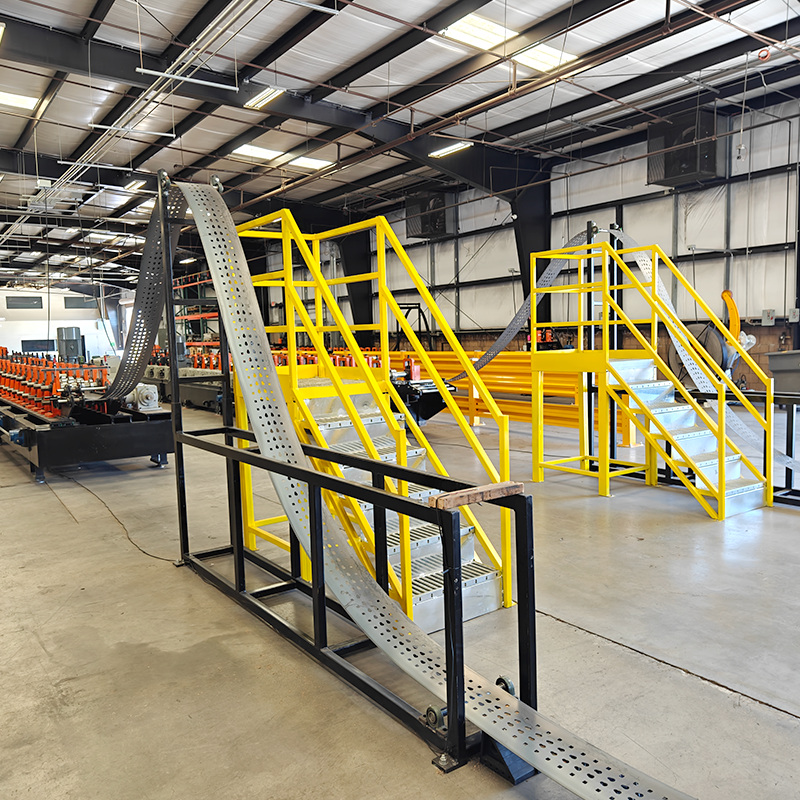
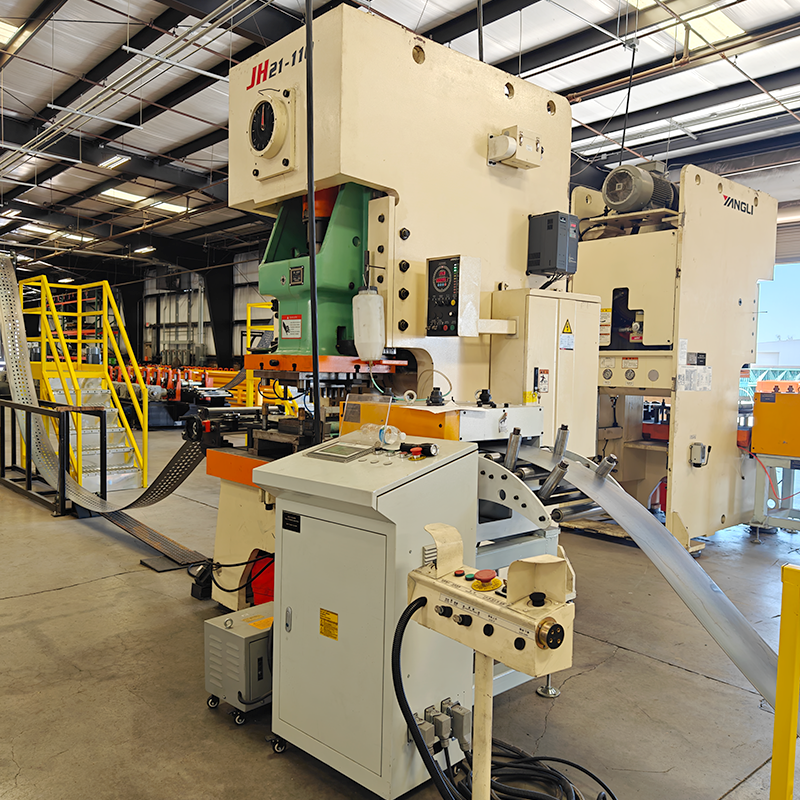
In-line Punching: The punch press with modular tooling performs punching of continuous, dense patterns, such as butterfly- or diamond-shaped holes.
Guided Feeding: Automatic guiding and alignment adjustment ensure smooth feeding for strips of varying widths.
Cold Roll Forming: Multi-stage progressive cold roll forming gradually shapes the strip into the required column cross-section.
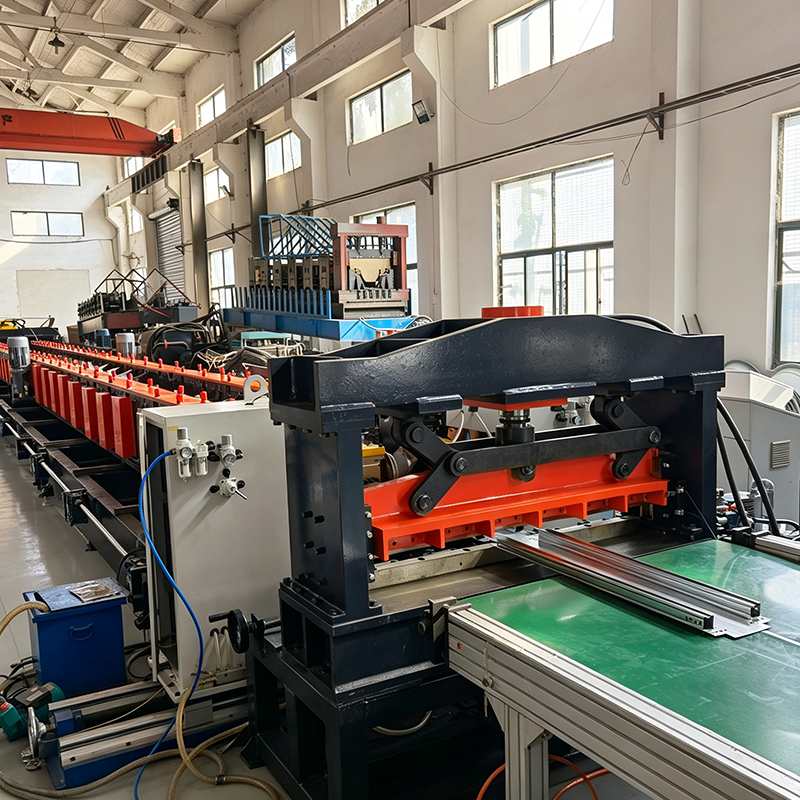
Cut-to-Length: Automatic cutting to preset lengths using hydraulic or sawing methods; ensures high precision and clean, smooth cut edges.
Automatic Collection: Automatic counting and collection; finished products are discharged neatly.
V. Application Areas
Uprights produced by cold-roll forming machines are widely used in the following scenarios:
Intelligent Automated Warehouses: Automated storage and retrieval systems demand high precision; high-precision uprights ensure accurate interfacing and smooth operation for stacker cranes and AGVs.
E-commerce Logistics Centers: Meeting the massive storage needs of e-commerce enterprises by constructing efficient vertical racking systems that maximize space utilization and improve the efficiency of goods storage and retrieval.
Heavy-duty Storage Racking: Manufacturing warehouses and raw material/finished goods storage—high-load-bearing racking systems for heavy cargo; uprights featuring inverted-teardrop or diamond-shaped perforations are designed to meet heavy-duty requirements.
Light-duty Racking/Supermarket Shelving: Retail and display shelving—mass production of uprights in various specifications; uprights with butterfly-style perforations are suitable for light- to medium-duty racking systems.
Cold Chain Storage: Cold storage facilities and low-temperature environments—weather-resistant materials meet the demands of specialized environments.
Data Centers: Cable management and equipment support within server rooms.
VI. Service & Support
Solution Design: Personalized equipment selection and production line layout based on customer product drawings, capacity requirements, and target markets.
Custom Manufacturing: Support for non-standard customization (based on drawings or samples); full control over the process from roll design to complete line manufacturing.
Installation & Commissioning: On-site installation, commissioning, and operator training provided by engineers to ensure rapid production startup.
After-Sales Support: Long-term technical consultation and spare parts supply; engineers hold valid visas and are available for on-site service worldwide at any time.
Continuous Optimization: Equipment modification and capacity upgrade services available to adapt to changing production needs.
VII. Why Choose Us
Nearly 20 years of manufacturing experience: Mature technology, refined processes, and reliable quality.
High-precision manufacturing capabilities: Forming precision ≤±0.1mm and cumulative error ≤±1mm over 16 meters—far exceeding industry standards.
Direct manufacturer: No middlemen, offering excellent value for money.
Specialized expertise in intelligent warehousing: Deep understanding of the industry's rigorous requirements regarding rack precision, load-bearing capacity, and operational efficiency.
Strong custom engineering capabilities: Ability to design a wide range of complex cold-roll forming lines tailored to specific customer needs.
Global service network: Engineers hold all necessary visas, ensuring rapid response times.
Contact us for detailed proposals and quotations!
 English