I. Equipment Overview
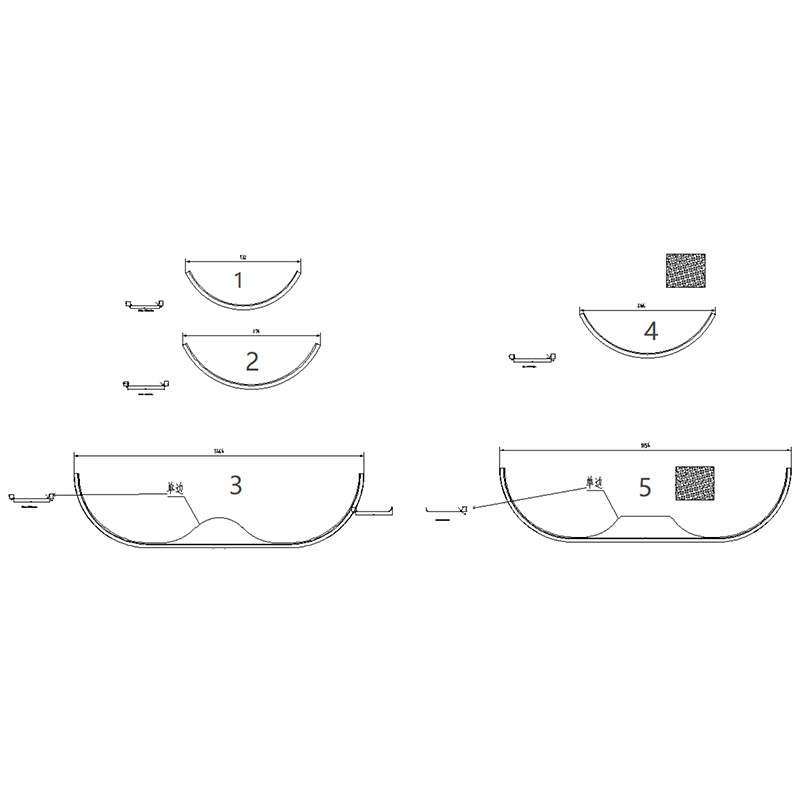
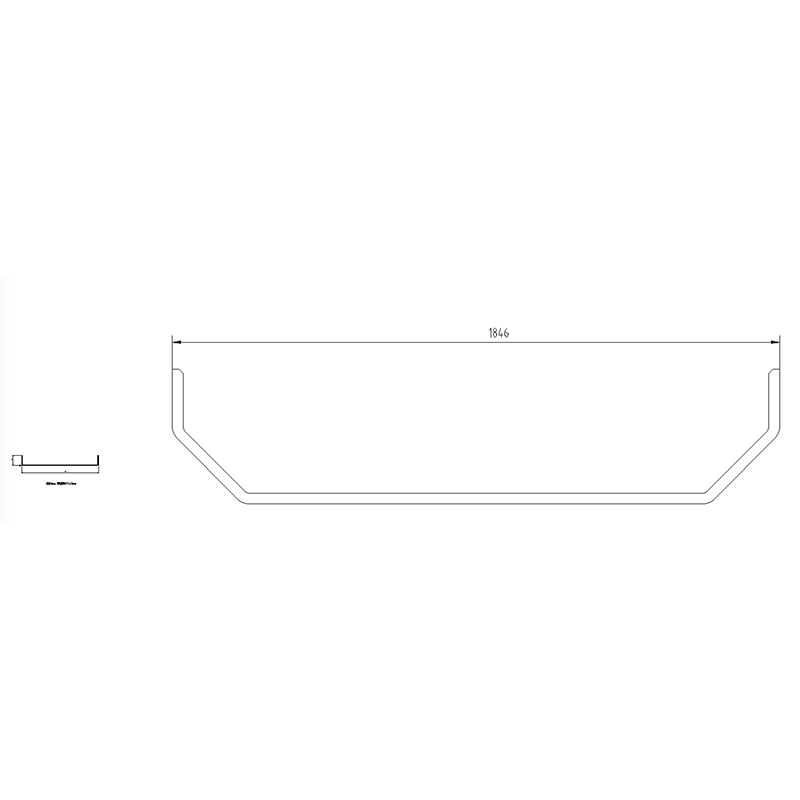
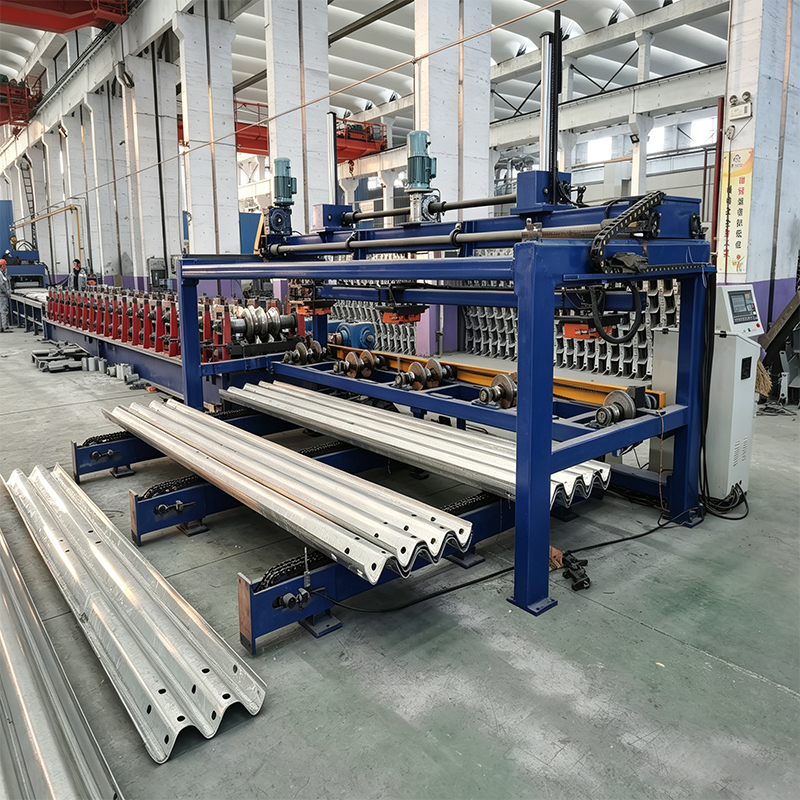
The Fender Roll Forming Machine is a specialized cold-roll forming production line designed for manufacturing metal fenders for commercial vehicles, heavy-duty trucks, and trailers. Fenders are critical protective components installed ahead of the wheel hubs; they block debris—such as mud, water, stones, and brick fragments—kicked up during operation, thereby protecting the vehicle body from damage while also enhancing its aesthetic appeal. Unlike the plastic fenders widely used in the market, metal fenders offer more than ten times the hardness and strength of plastic; they are shatter-resistant, weatherproof, and stylish in appearance, with a service life of at least 5 to 8 years.
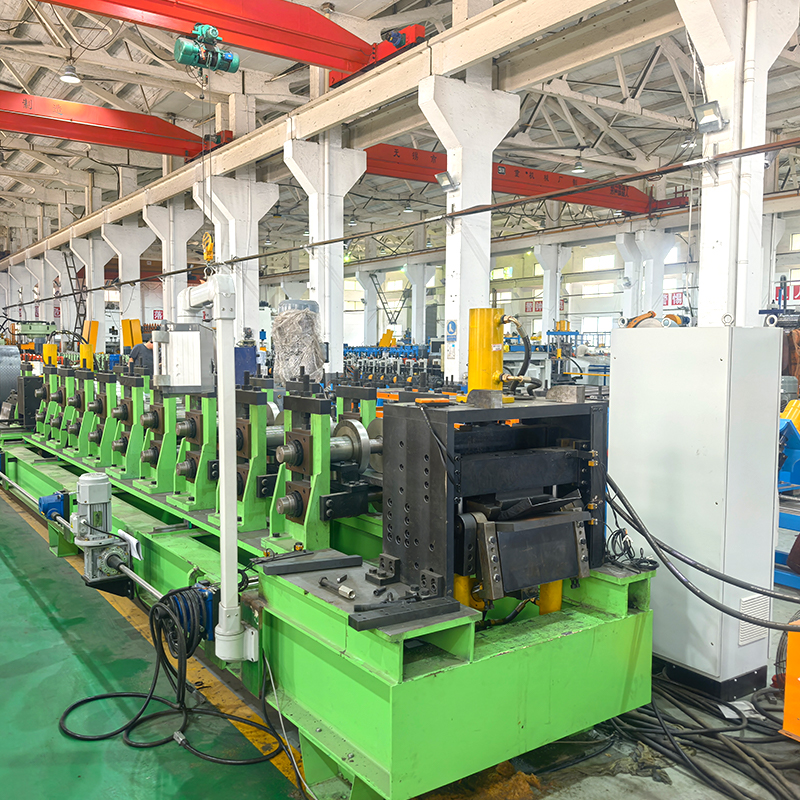
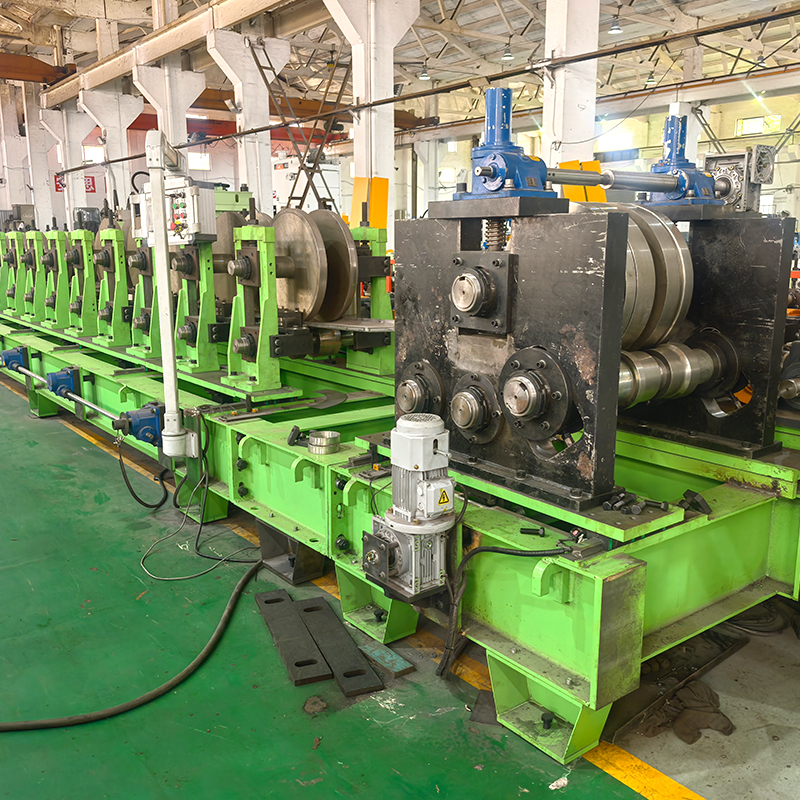
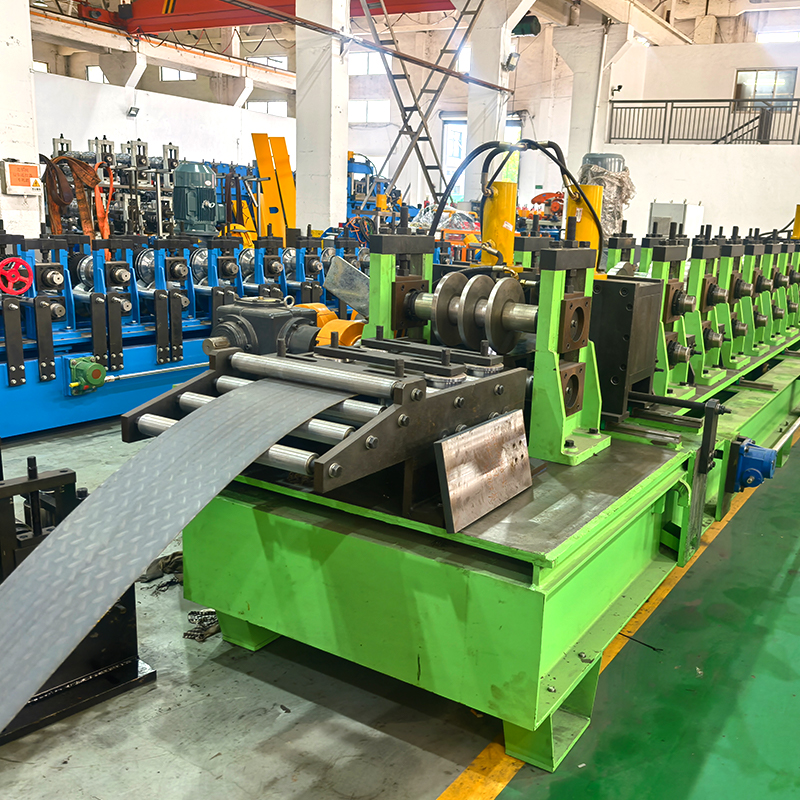
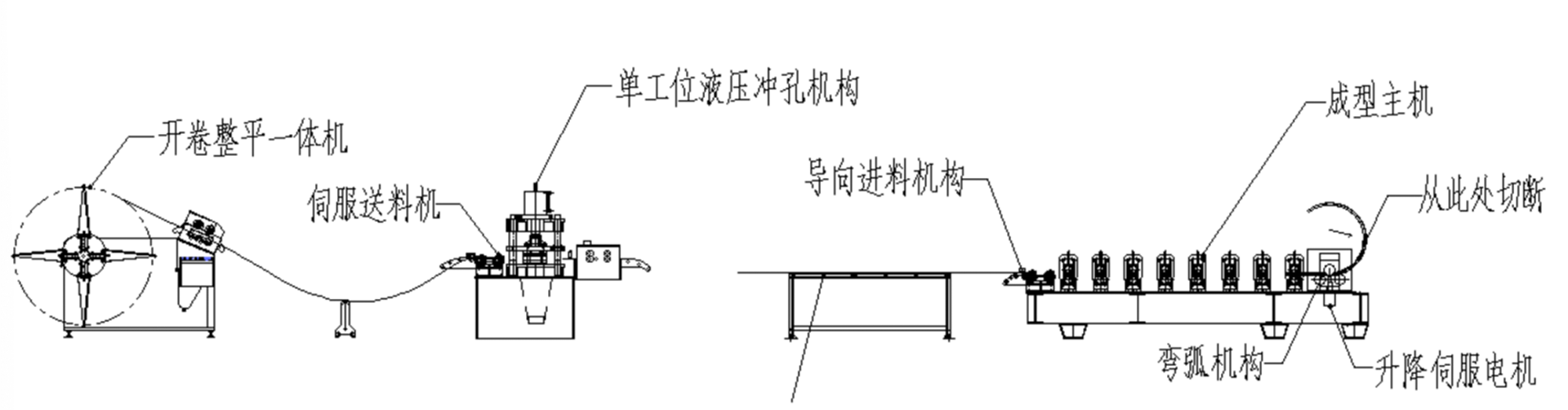
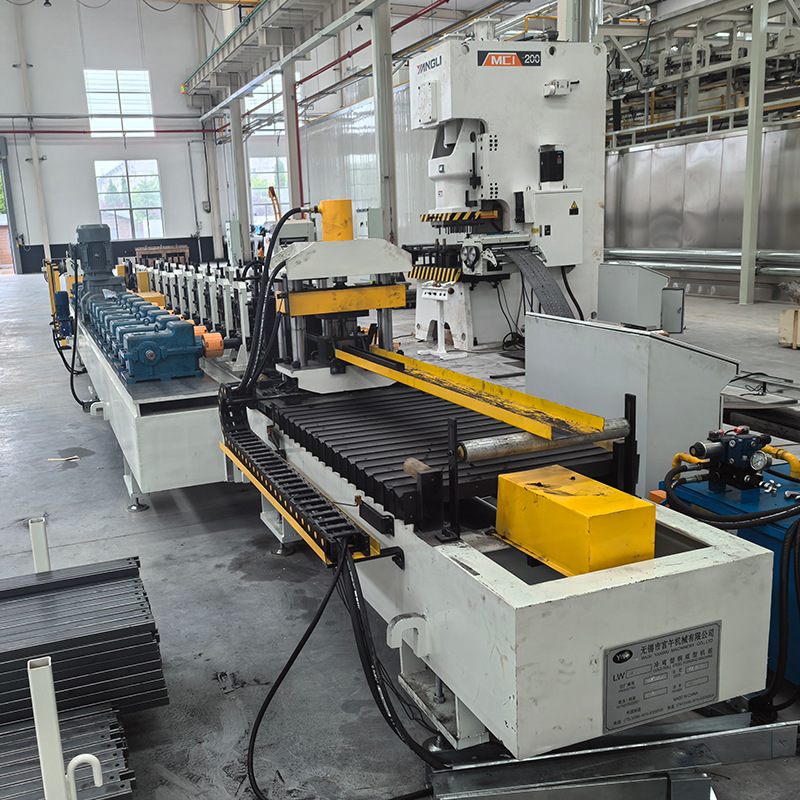
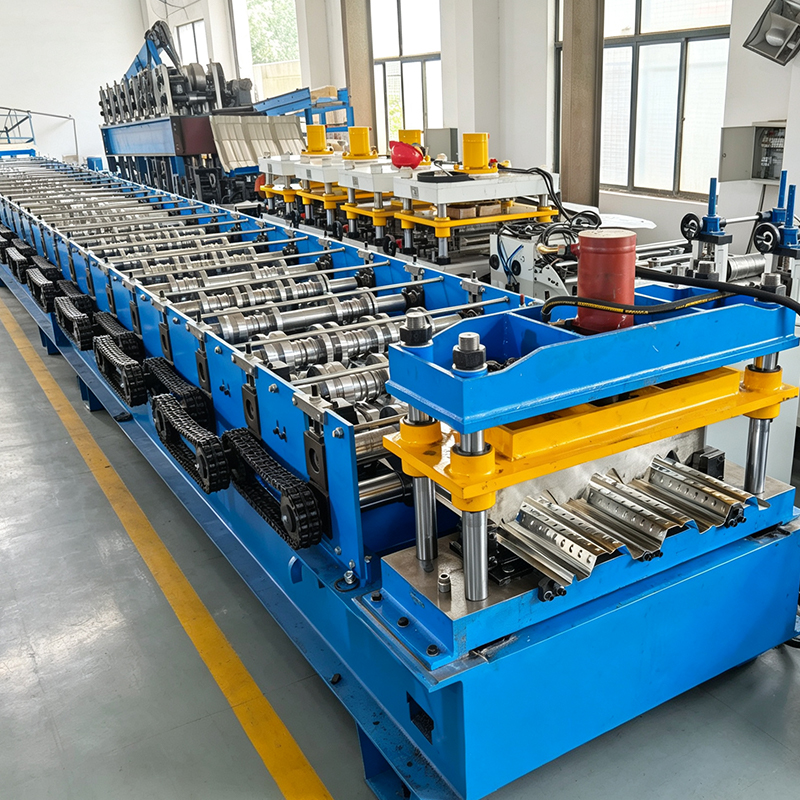
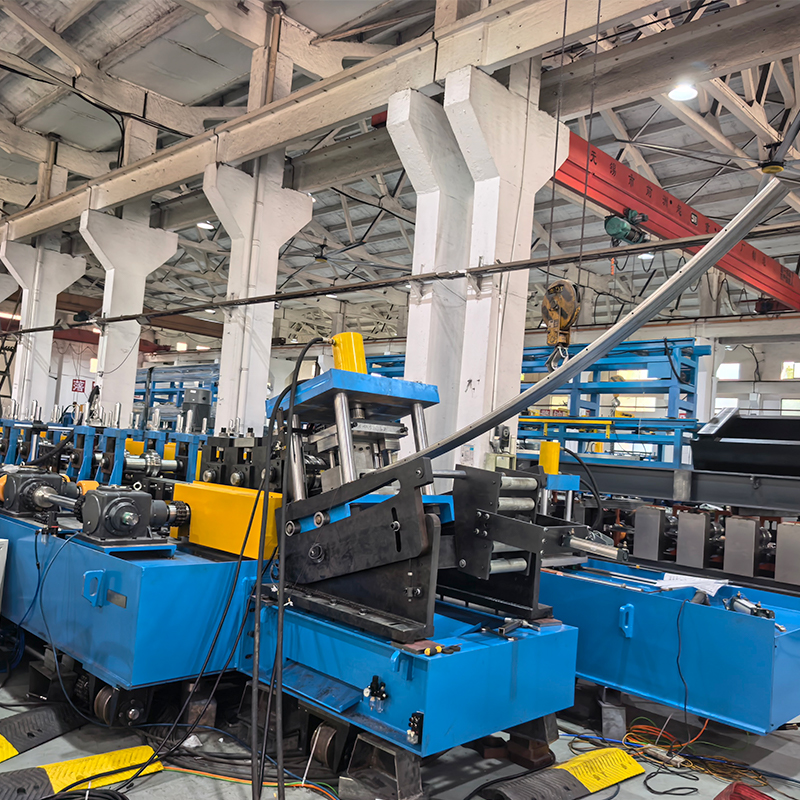
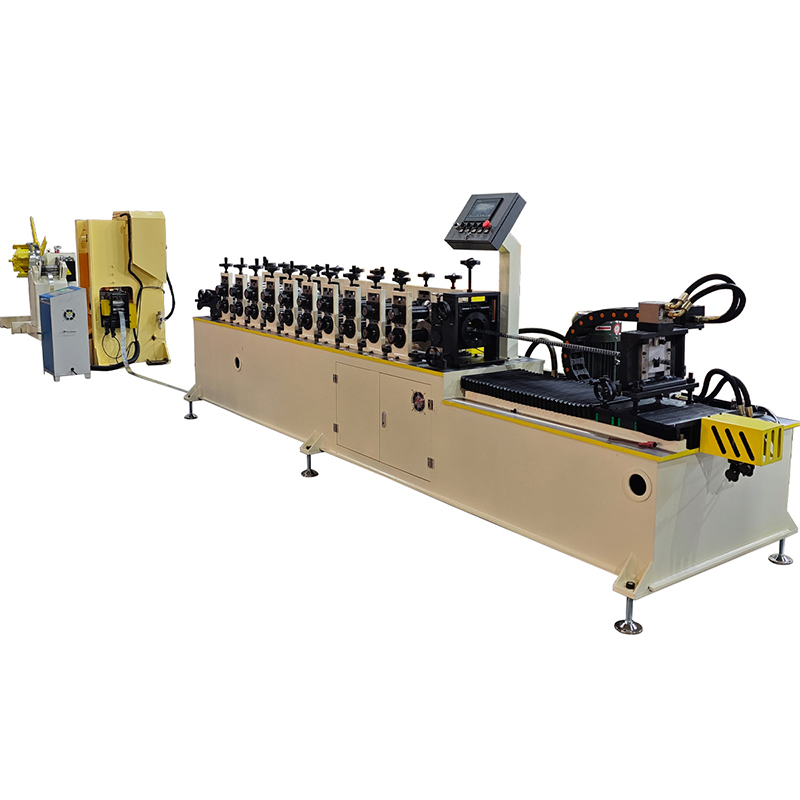
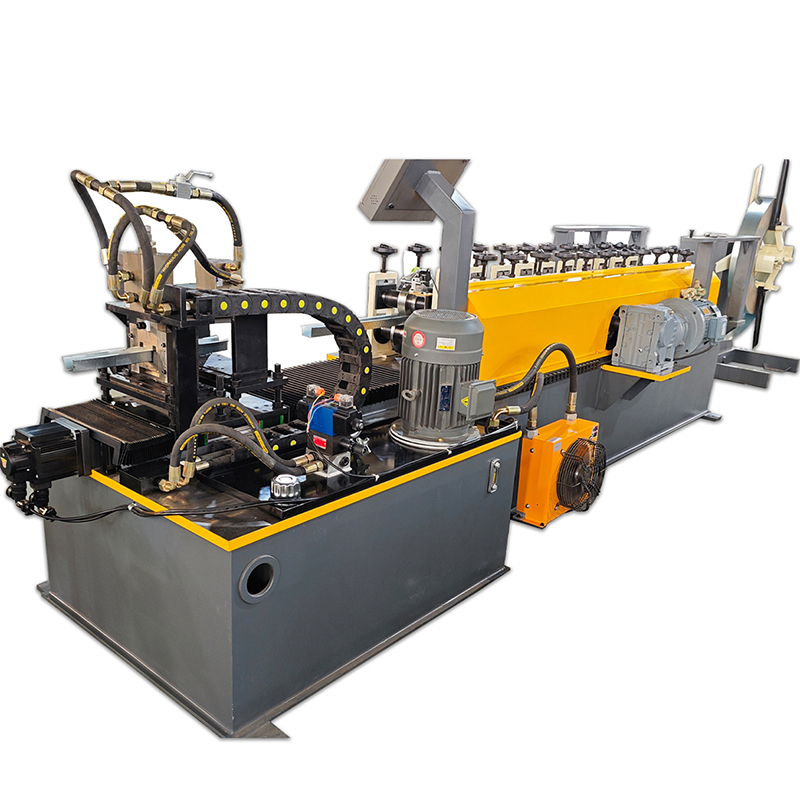
This equipment utilizes a continuous cold-roll forming process combined with in-line arc bending technology to execute the entire production sequence—uncoiling, hydraulic notch punching, roll forming, arc bending, and cutting—in a single pass, directly yielding finished metal fenders. The entire line features fully automated PLC control and a touchscreen HMI, ensuring a continuous, automated workflow from uncoiling to the discharge of finished products. It employs a cast-iron arch-style gearbox transmission structure, offering high rigidity, precision, and durability. Compatible with various metal sheets—including cold-rolled and hot-rolled steel—the machine handles thicknesses of 1.5–2 mm, operates at a forming speed of 0–15 m/min, and utilizes approximately 20 forming stations. Requiring only 2–3 operators, this equipment is essential for manufacturers of commercial vehicles, heavy-duty trucks, and trailer fenders seeking to achieve large-scale, standardized, and intelligent production.
The automotive sector has historically been an overlooked market for the roll-forming machinery industry. Designed specifically for this niche, this fender forming machine enables single-pass arc bending and accommodates the requirements of various vehicle configurations—such as single-axle, dual-axle, and tri-axle models—with a minimum bending radius of 600 mm. The fenders produced by this equipment are suitable for a wide range of applications, including heavy-duty trucks, trailers, semi-trailers, and construction machinery.
II. Core Advantages and Selling Points
(1) Cast-iron arch-style gearbox drive: high rigidity, high precision, and long service life
The forming machine utilizes a cast-iron arch-style gearbox drive structure; this is a key advantage distinguishing it from conventional equipment using chain drives or side-plate drives.
Compared to chain drives, the gearbox drive offers significant benefits such as smooth operation, low noise, high precision, and extended service life. The cast-iron arch-style frame undergoes tempering treatment, providing high rigidity and excellent resistance to deformation, which ensures stable, high-intensity operation over long periods. The machine is powered by a 15kW main motor (paired with a K-series hardened-gear reducer) that delivers ample power and high torque, ensuring stable and efficient processing of 1.5–2mm thick sheet metal across the 20-stage forming sequence.
(2) 20-stage precision roll forming: accurate and stable cross-sectional dimensions
The process employs a multi-stage (approximately 20-stage) progressive cold-roll forming method to gradually shape the metal sheet into the standard cross-section of the mudguard. The 20-stage layout is scientifically designed to effectively minimize material stress concentration, ensuring stable cross-sectional dimensions and precise curvature. The equipment utilizes continuous coil feeding, with the formed parts cut to precise lengths after the cold-forming process. This results in single-pass forming with uniform shapes, accurate lengths, and excellent consistency, yielding finished parts that are aesthetically pleasing and possess high structural strength. Rolling thickness: 1.5–2 mm, covering the mainstream thickness requirements for commercial vehicle fenders.
Rolling materials: Cold-rolled and hot-rolled sheets; highly adaptable to various materials.
Shaft material: 40Cr steel with quenched and tempered treatment (HB 220–260), offering excellent comprehensive mechanical properties.
Shaft diameter: Φ80 mm; utilizes Harbin Bearings (HRB) for high load-bearing capacity and smooth operation.
Roller shaft processing: CNC turning and cylindrical grinding to ensure dimensional accuracy and surface finish.
Roller material: Cr12 steel with quenching treatment (HRC 58–62), providing high hardness, excellent wear resistance, and long service life.
Roller processing: CNC turning to ensure precise circular runout and radial runout control.
Spacer sleeves: To minimize runout at each roller shaft station, thick-walled tubing is used for spacers; this ensures geometric tolerances and maximizes the contact area with the rollers, while the inner bore features a clearance fit with the shaft.
(3) Integrated hydraulic notch punching, roll forming, and arc bending—multiple processes completed on a single machine.
The equipment integrates multiple processes—including hydraulic notch punching, roll forming, arc bending, and cutting—into one system; this is the core advantage distinguishing it from conventional segmented production lines.
Traditional fender production involves multiple independent steps such as sheet shearing, slitting, punching, and bending; these methods are not only labor-intensive and complex but also pose safety risks. This equipment integrates multiple processes into a single automated production line:
Uncoiling: Metal coils are loaded onto the uncoiler for stable material feeding.
Hydraulic Notching: Precise punching of mounting notches, positioning notches, and other features is completed prior to forming.
Roll Forming: A 20-stage progressive cold-bending process gradually shapes the fender into its standard cross-section.
Arc Bending: Inline arc bending forms the fender's curvature in a single step, accommodating the requirements of various vehicle types (single-axle, dual-axle, tri-axle, etc.).
Cutting: Fixed-length cutting ensures high precision and clean, smooth edges.
By consolidating multiple processes into one machine, the system eliminates safety hazards and workplace injuries associated with traditional methods like shearing, slitting, punching, and bending. It saves on labor and management overhead, reduces intermediate handling steps, and boosts production efficiency by 5 to 10 times compared to traditional processes.
(4) Inline Arc Bending: Single-Step Forming Without Mold Changes
The equipment features an inline arc bending system that shapes the fender's curvature immediately after roll forming. The bending process is fully automated, offering precise and controllable curvature. The fender is formed in a single bending step without the need for mold changes, allowing for the production of parts for single-, dual-, and tri-axle vehicles. It supports bending radii as small as 600mm, meeting the curvature requirements for fenders across various vehicle models.
No Mold Changes Required: Switching between axle configurations does not require changing bending molds, significantly reducing changeover time.
Precise Curvature: The bending angle is controllable, ensuring a perfect match with the wheel profile.
Higher Efficiency: Arc bending and forming occur simultaneously, adding no extra time to the production cycle.
(5) High-Efficiency Production and Leading Output Capacity
The entire line integrates a fully automated workflow covering uncoiling, notching, forming, arc bending, and cutting. The forming line speed is continuously adjustable from 0 to 15 m/min, with a standard operating speed of 8–14 m/min. Fully automated production requires only 2–3 operators, delivering a 5- to 10-fold increase in efficiency compared to traditional segmented processing methods.
(6) Intelligent Control, Easy Operation
Fully automatic PLC control with a touchscreen HMI enables digital management of the entire process.
Operators can set parameters such as production speed and cut-off length with a single touch.
Simple operation eliminates the need for manual calculations regarding hole spacing, profile length, and other dimensions.
The production line is fully automated, requiring no manual intervention.
Equipped with real-time monitoring and fault warning systems, the machine automatically alarms and displays the cause of any malfunction.
(7) High-Precision Forming, Superior Quality
High-profile precision: Offers superior dimensional accuracy and a more uniform, aesthetically pleasing appearance compared to profiles made via manual punching and bending.
Single-pass forming ensures regular shapes, precise lengths, and excellent consistency.
Formed components feature an excellent finish and high structural strength.
Uniform product dimensions and stable quality ensure precise on-site installation of the mudguards.
(8) Robust, Durable, Stable, and Reliable
The machine bed is a welded steel structure that has undergone tempering treatment to eliminate internal stress and prevent deformation.
The forming frame features a cast-iron structure, offering high strength and a long service life.
Cr12 quenched rollers (HRC 58–62) provide high hardness, excellent wear resistance, and long service life.
40Cr quenched and tempered shafts (HB 220–260) offer excellent comprehensive mechanical properties.
Harbin Bearings (HRB) ensure smooth operation and long service life.
K-series hardened-gear reducers offer high transmission efficiency, low noise, and long service life.
1.5 kW transverse servo motor: Uses a servo motor to drive a precision ball-screw traversing mechanism; a dual-side synchronous linkage ensures parallel movement of the rollers. Workpiece width is entered via the touchscreen, and the system automatically calculates roller spacing; a memory function stores parameters for common specifications, enabling quick and precise product changeovers.
III. Technical Parameters
Item Parameter
Applicable materials: Cold-rolled sheet, hot-rolled sheet
Material thickness: 1.5–2 mm
Forming machine structure: Cast-iron arch-style frame with gearbox drive
Number of forming stations: Approx. 20 stations
Shaft material: 40Cr steel, quenched and tempered (HB 220–260)
Shaft diameter: Φ80 mm (Harbin Bearings)
Shaft machining method: CNC turning and cylindrical grinding
Forming machine motor power: 15 kW (K-series hardened-gear reducer)
Lateral movement motor power: 1.5 kW (Servo motor driving a precision ball screw)
Forming line speed: 0–15 m/min
Roller material: Cr12 steel, quenched (HRC 58–62)
Roller machining method: CNC turning (ensuring control of circular and radial runout)
Spacer sleeves: Machined from thick-walled tubing (ensuring geometric tolerances)
Arc bending radius: Minimum 600 mm
Compatible vehicle types: Single-axle, dual-axle, and tri-axle (no mold change required)
Control system: Fully automatic PLC control
Operators: 2–3 persons
IV. Production Process
Uncoiling → Hydraulic Notching → Roll Forming → Arc Bending → Cutting
Process Description
Uncoiling: Load metal coil onto the uncoiler for stable material feeding.
Hydraulic Notching: Perform precise hydraulic punching for installation notches, positioning notches, etc.
Roll Forming: 20-stage progressive cold roll forming using quenched Cr12 rollers to gradually shape the standard fender profile.
Arc Bending: Inline arc forming; the curvature is achieved in a single pass with a minimum radius of 600mm.
Cutting: Fixed-length cutting; ensures high precision and clean, smooth edges.
V. Application Areas
Metal fenders produced by automotive fender cold-roll forming equipment are widely used in the following sectors:
Heavy-duty trucks and tractor units: Wheel fenders for heavy trucks, tractor units, and semi-trailer tractors—featuring high hardness and strength, these metal fenders effectively withstand impacts from road debris such as flying stones and brick fragments.
Trailers and semi-trailers: Fender systems for various types of trailers, semi-trailers, and full trailers—compatible with single-axle, dual-axle, and tri-axle configurations without the need for mold changes.
Construction machinery: Wheel fenders for dump trucks, concrete mixer trucks, cranes, and other construction vehicles—metal fenders offer excellent weather resistance, remaining unaffected by harsh conditions such as extreme cold or heat.
Coaches and buses: Wheel fenders for large coaches and city buses—metal fenders feature a stylish appearance and a long service life.
Special-purpose vehicles: Wheel fenders for fire trucks, sanitation vehicles, military vehicles, and other specialized units—custom specifications available upon request.
Export vehicles: Suitable for international markets—products strictly comply with the national standard GB/T 6726-2008, "Dimensions, shape, weight and permissible deviations for cold-formed steel sections for automobiles."
VI. Market Outlook
Driven by the continuous development of the global automotive and logistics industries, the market for automotive fender cold-roll forming equipment is experiencing steady growth.
A clear trend toward replacing plastic fenders with metal ones: Currently, plastic fenders dominate the domestic market; while plastic products offer simple manufacturing—often requiring only a single injection molding step—they lack durability. They cannot withstand impacts from road debris (such as stones or brick fragments) at high speeds, nor can they endure harsh weather conditions like extreme cold or heat. In contrast, metal fenders offer more than ten times the hardness and strength of plastic counterparts. They are resistant to breakage and weather-related degradation, boast a more stylish appearance, and offer a service life of at least five to eight years.
Continued growth in the commercial vehicle and trailer markets: As the global logistics industry expands and infrastructure development progresses, the production and sales volumes of heavy-duty trucks, trailers, and semi-trailers continue to rise, driving a sustained increase in demand for metal fenders.
Significant advantages of the cold-roll forming process: Cold-roll forming is characterized by high material utilization, excellent forming precision, high production efficiency, and low costs. Utilizing continuous coil feeding, the process involves forming followed by precision cutting to length; this ensures single-step forming, uniform shapes, accurate lengths, and high product consistency. Compared to traditional stamping methods, cold-roll forming significantly boosts production efficiency and reduces labor costs.
Industry standards and specifications: Automotive fender products strictly comply with the national standard GB/T 6726-2008, "Dimensions, shape, weight and permissible deviations for cold-formed steel sections for automobiles," which outlines requirements regarding classification, designations, cross-sectional dimensions, length specifications, and permissible tolerances. They also meet the national standard GB 7063-2011, "Automotive wheel guards."
Growth in the cold-roll forming equipment market: Cold-roll forming equipment is primarily used to process metal sheets and profiles and is widely applied in sectors such as the automotive industry. With the transformation, upgrading, and increasing automation of the manufacturing sector, the technology behind cold-roll forming equipment has advanced continuously, resulting in significant improvements in precision, efficiency, and intelligent capabilities.
VII. Service and Support
Solution Design: We provide personalized equipment selection and production line layout based on customer product drawings, capacity requirements, and target markets.
Custom Manufacturing: We support non-standard customization; orders can be placed using cross-sectional drawings or samples, with full oversight from roll design to complete machine manufacturing.
Installation and Commissioning: Engineers provide on-site installation, commissioning, and operator training to ensure rapid production startup.
After-Sales Support: We offer long-term technical consultation and spare parts supply; our engineers hold all necessary visas and are available for on-site service worldwide at any time.
Continuous Optimization: We provide equipment modification and capacity upgrade services to adapt to changing production needs.
VIII. Why Choose Us
Nearly 20 Years of Manufacturing Experience: Mature technology, refined processes, and reliable quality
Cast-Iron Arch-Style Gearbox Drive: High rigidity, high precision, long service life, and smooth, reliable transmission
20-Stage Precision Forming: Cr12 quenched rollers (HRC 58-62), 40Cr heat-treated shafts (Φ80mm), and Harbin bearings
Integrated In-Line Curving: Curving and forming performed synchronously; minimum radius of 600mm; no mold changes required for single, double, or triple-bridge configurations
Hydraulic Notching + Forming + Curving + Cutting: Multiple processes completed on a single machine; efficiency increased 5–10 fold
Servo-Driven Lateral Adjustment & Memory Function: Servo-motor-driven precision ball screws with synchronized dual-side movement; automatic roller spacing calculation based on input width; storage of parameters for common specifications
High-Precision Manufacturing: Single-pass forming, uniform shape, accurate length, and excellent consistency
Intelligent Control: Fully automatic PLC system with touchscreen operation; the entire line can be operated by just 2–3 people
Direct Manufacturer: No middlemen, offering excellent value for money
Global Service Network: Engineers with ready-to-use visas and rapid response capabilities
 English