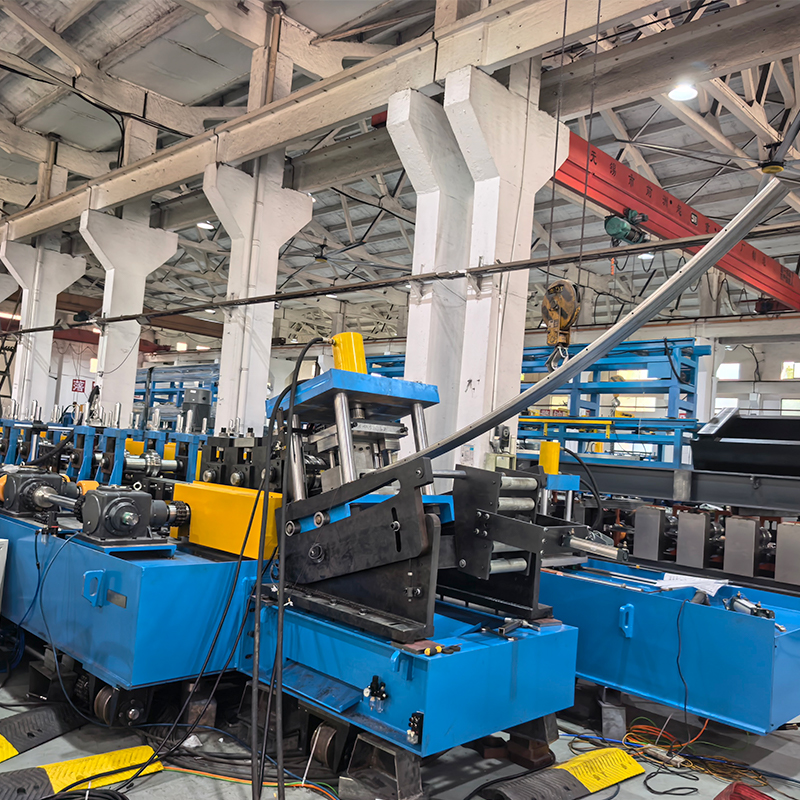
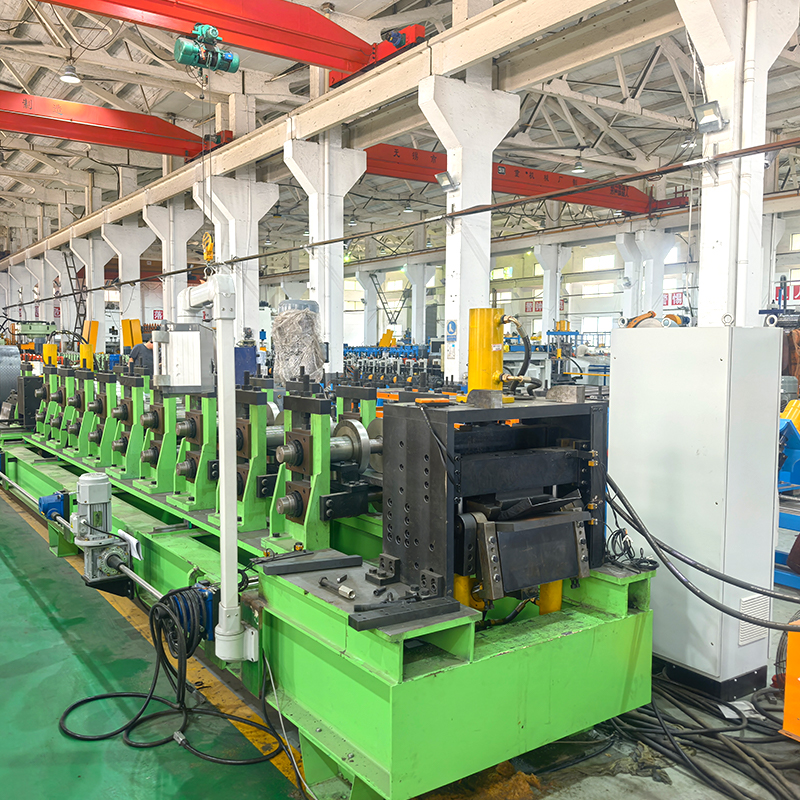
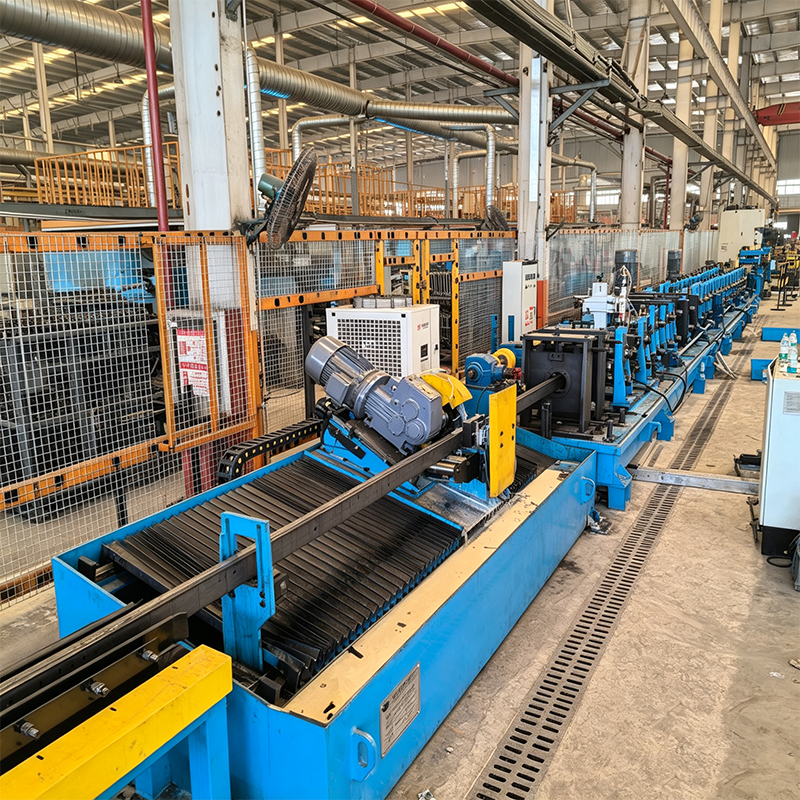
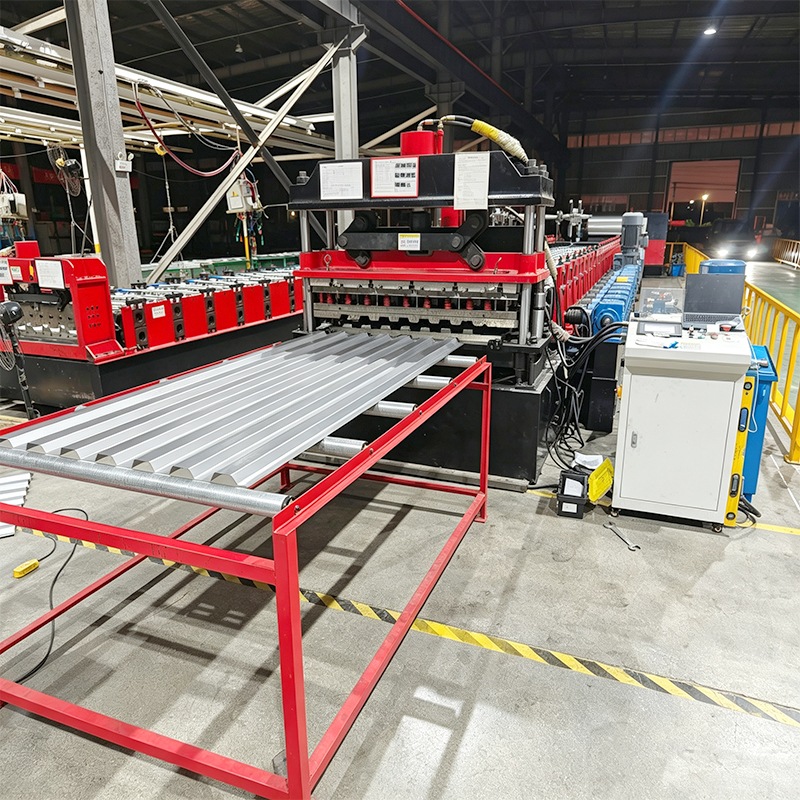
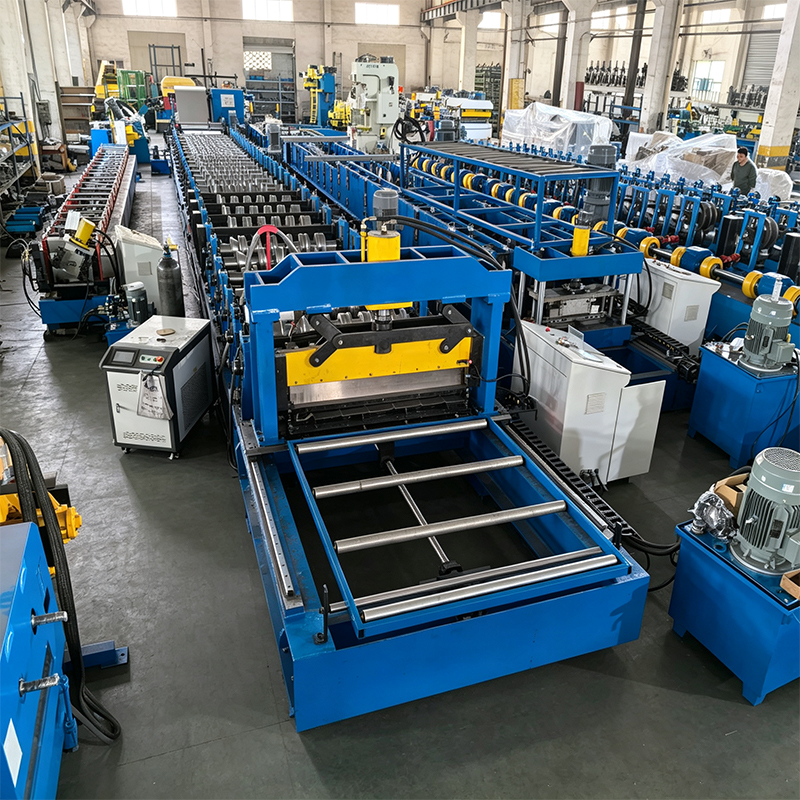
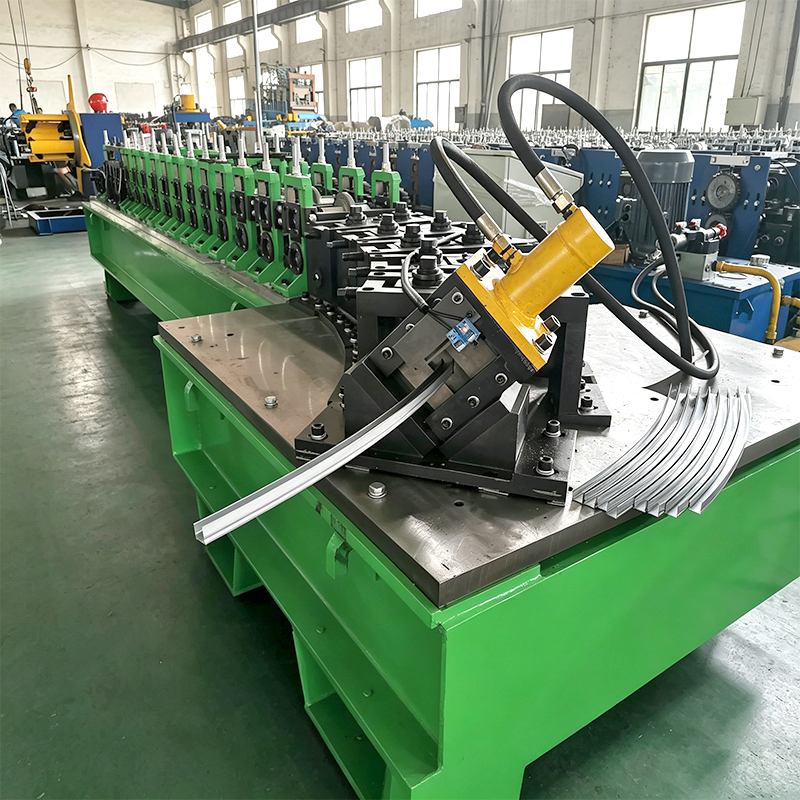
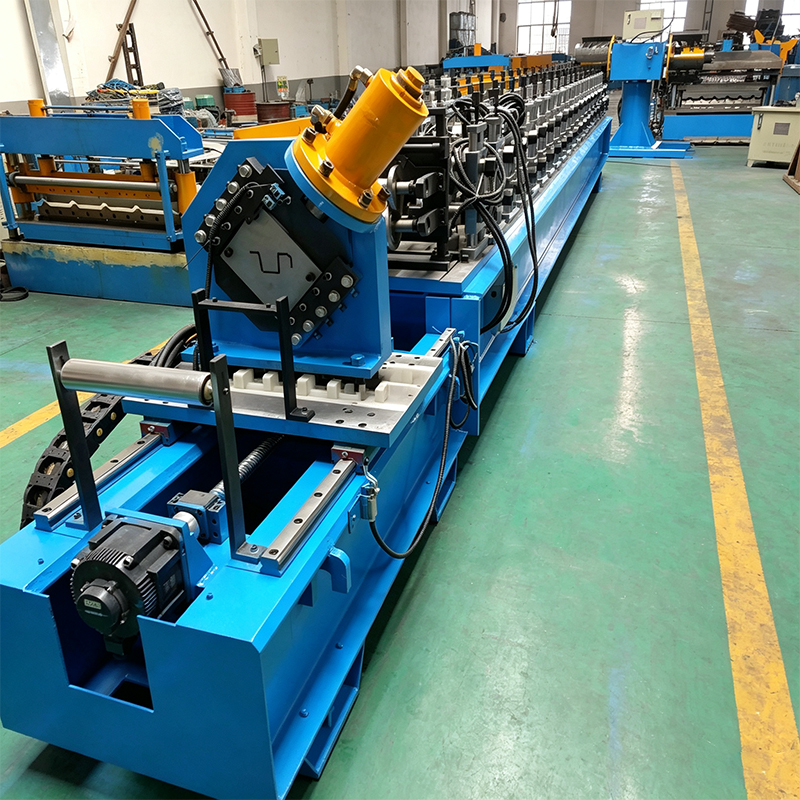
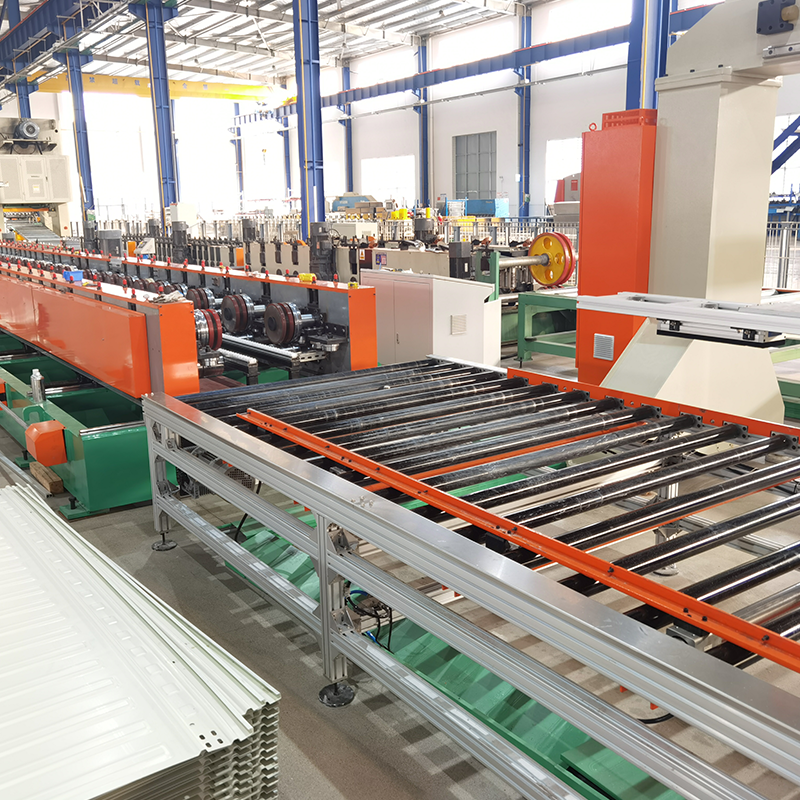
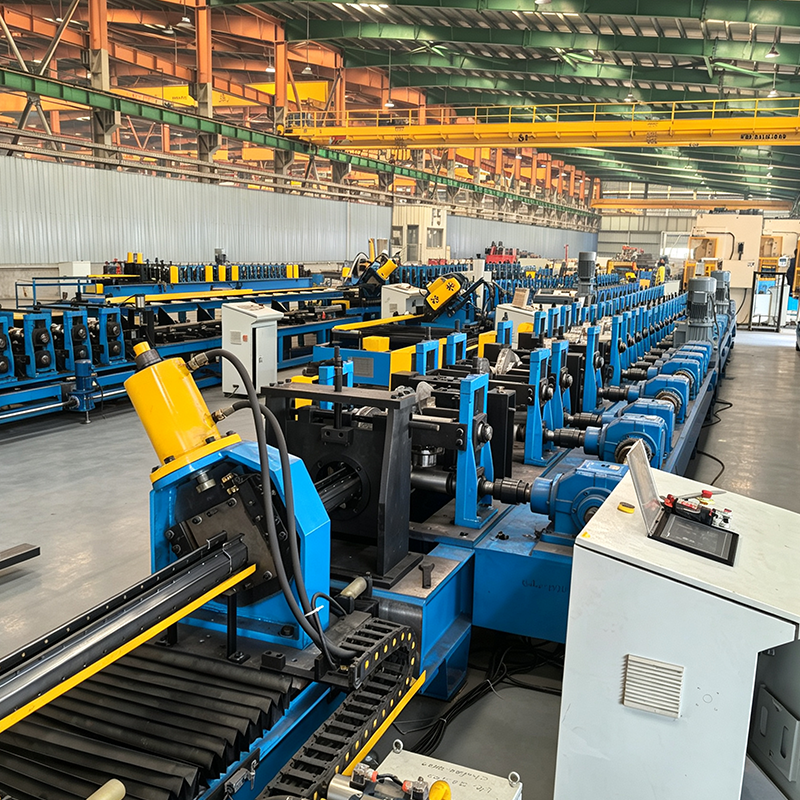
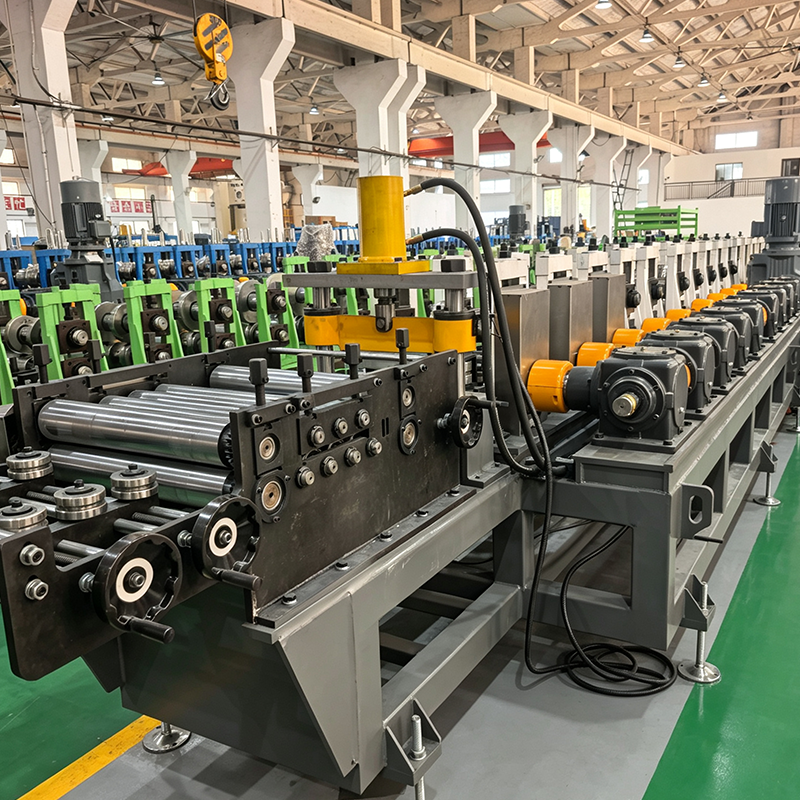
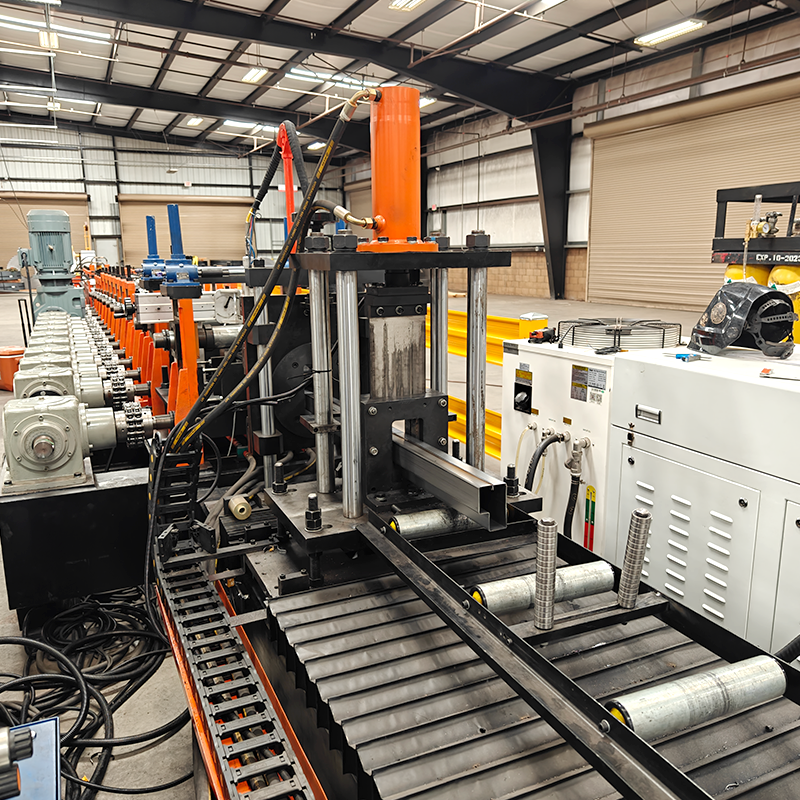
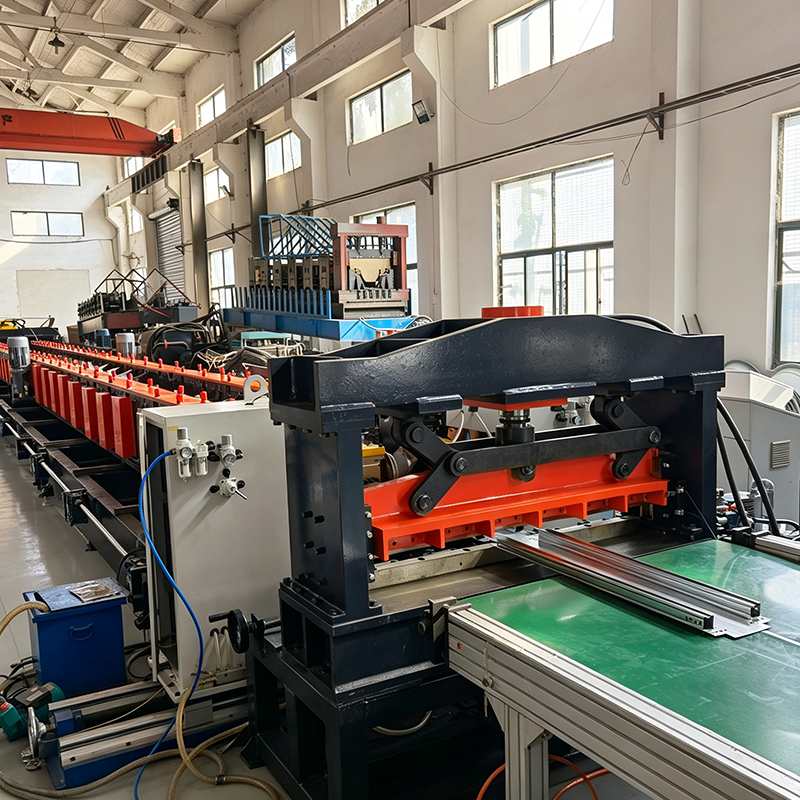
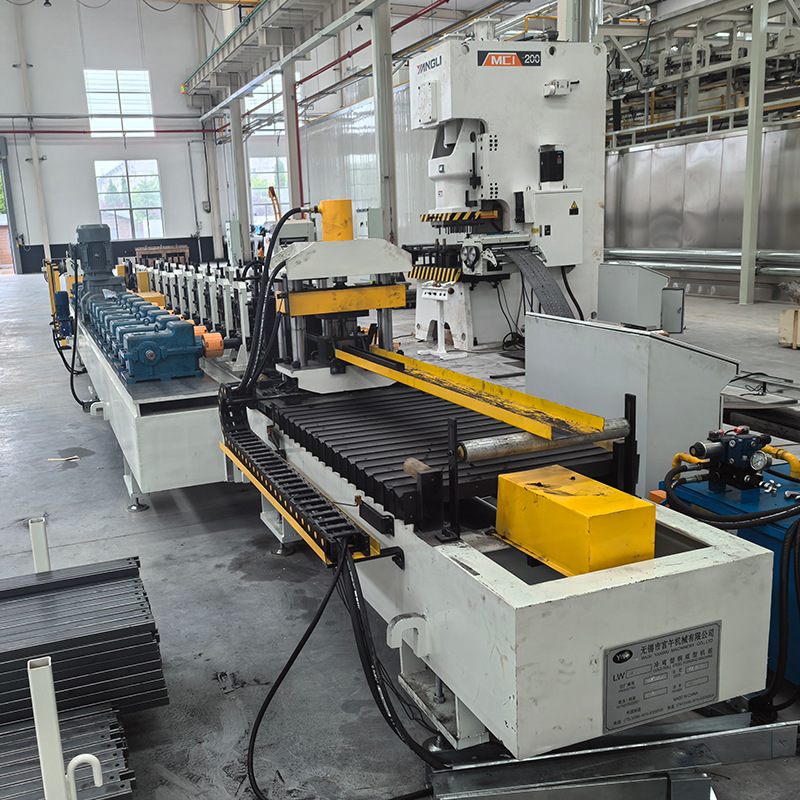
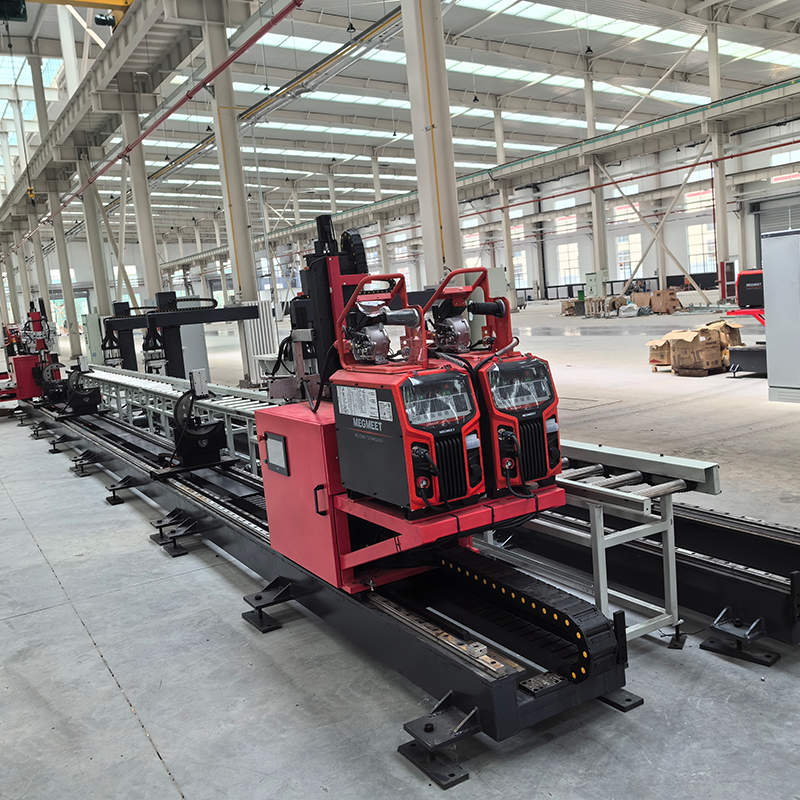
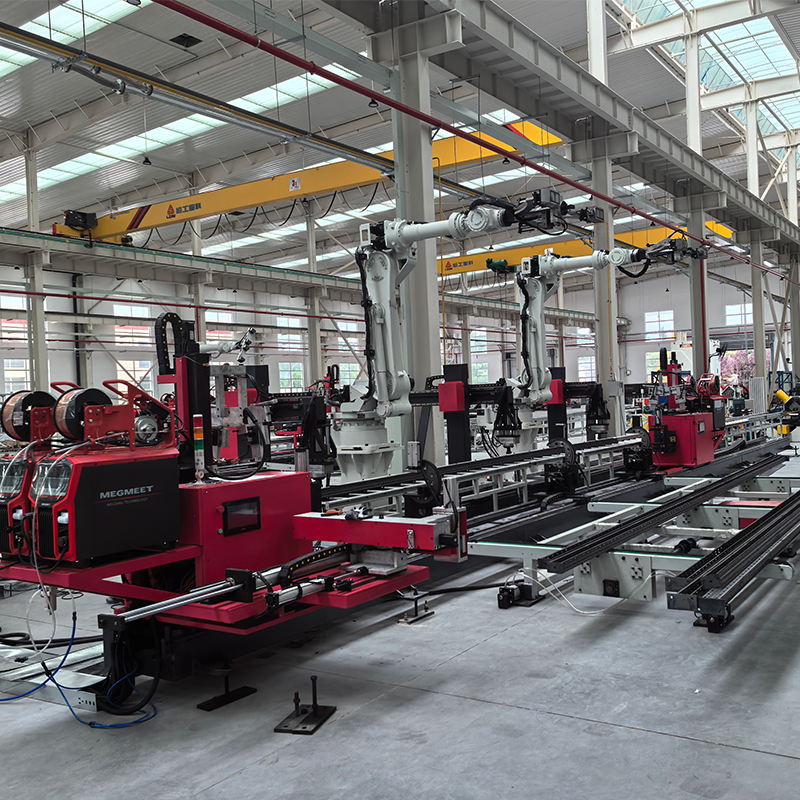
Automotive Profile Roll-Forming Equipment Series—A specialized manufacturer offering comprehensive solutions covering the entire spectrum of vehicle body and structural components, with one-stop delivery from steel strip to finished product.
I.Series Overview
The Automotive Profile Roll Forming Equipment Series comprises complete production lines designed specifically for manufacturing various cold-formed profiles used in automotive bodies and structural components. Cold-formed steel refers to finished steel products with diverse cross-sectional shapes, created by bending steel plates or strips at ambient temperature; it is an economical, lightweight, thin-walled steel product. Cold-formed steel is widely utilized in the automotive industry, where it has replaced traditional stamped parts in many vehicle models.
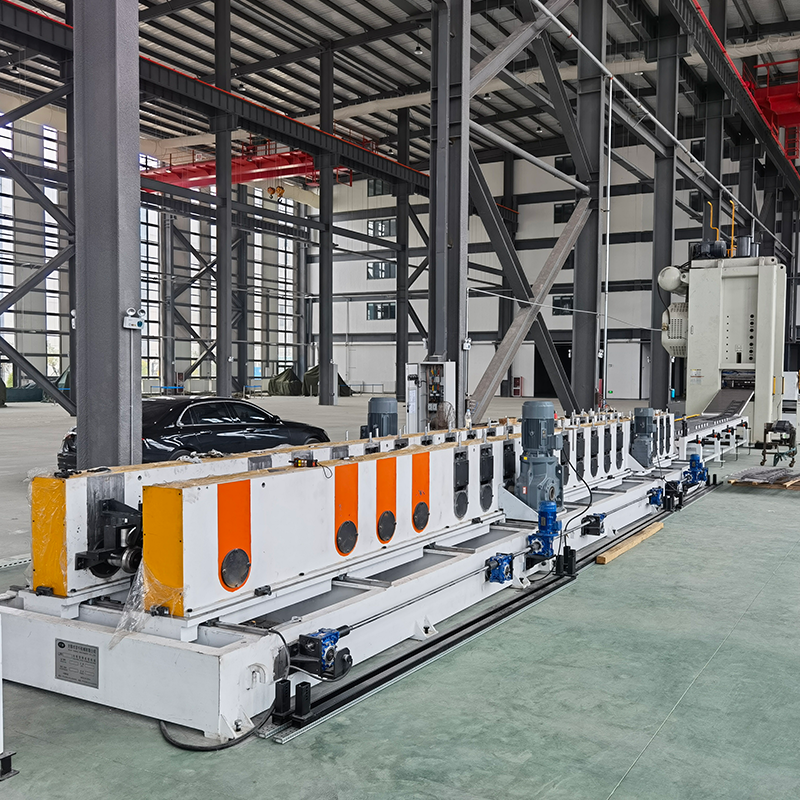
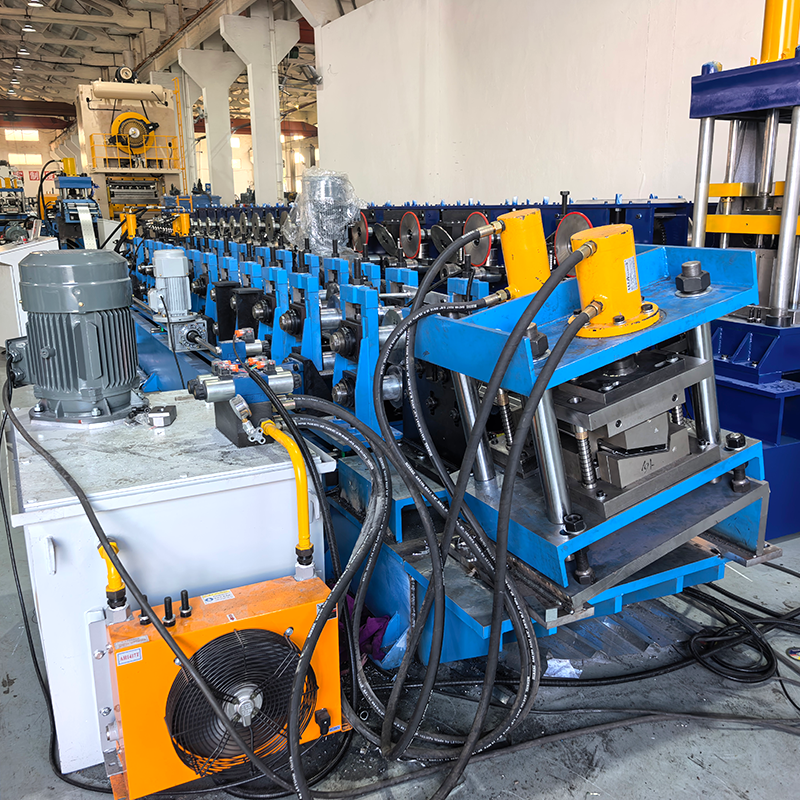
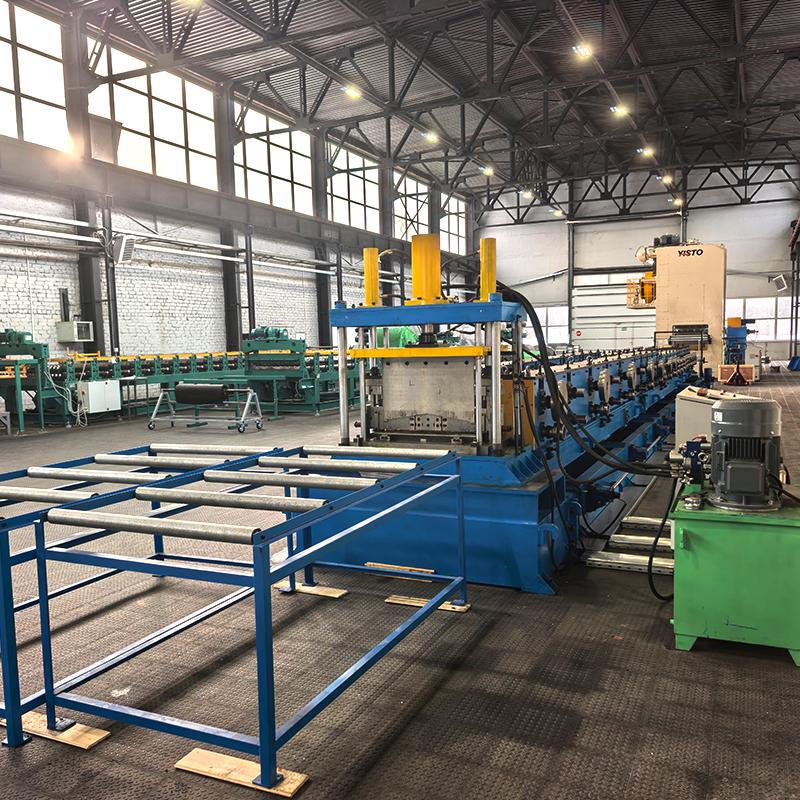
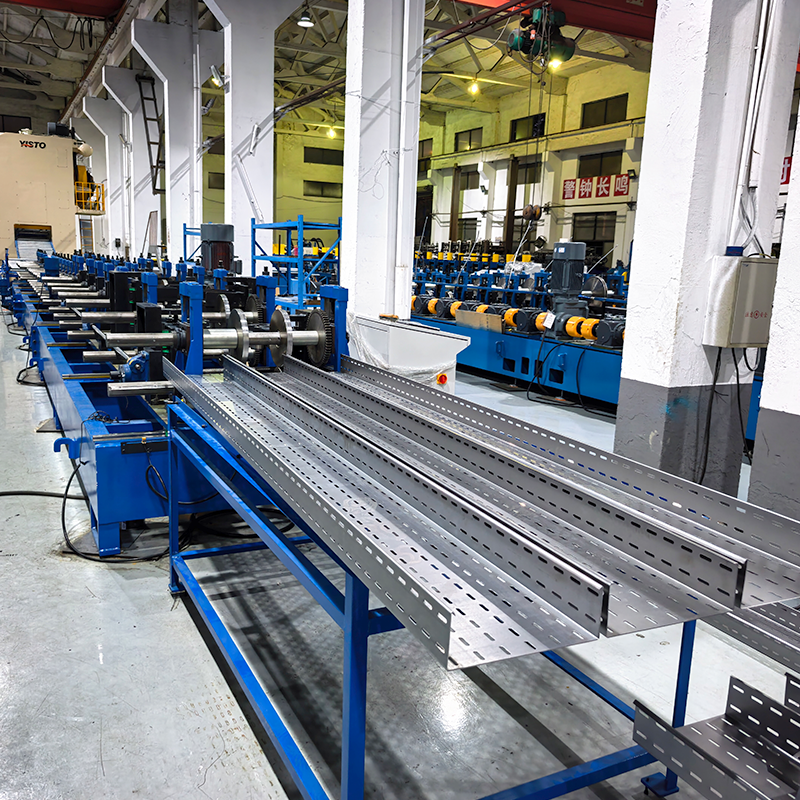
The roll forming process employs a series of sequentially arranged forming rollers to continuously bend metal coils or strips transversely, enabling the rapid, continuous production of profiles with open, closed, or wide-section geometries. Compared to traditional stamping, roll forming offers significant advantages, including lower initial equipment investment, high production efficiency, superior material utilization, minimal springback, precise dimensional control, and consistent product quality.
This equipment series provides comprehensive roll forming solutions for a wide range of automotive profiles—including crash beams, fenders, chassis side rails, cargo body panels (box-type and fence-type), and window frames. It is compatible with various materials such as cold-rolled sheets, hot-rolled sheets, galvanized sheets, and high-strength steel, accommodating thicknesses from 0.8 mm to 6.0 mm and yield strengths up to 1180 MPa.
The products strictly comply with national standards such as GB/T 6726-2008 ("Dimensions, shape, weight and permissible deviations for cold-formed steel sections for automobiles") and YB/T 4623-2017 ("Cold-formed steel sections for automobile longitudinal beams").
II. Introduction to Equipment for Various Profiles
1. Automotive Anti-collision Beam Cold Bending Forming Equipment
Equipment Overview
The automotive anti-collision beam cold bending forming equipment is a specialized cold bending forming production line for producing front and rear bumper beams and energy-absorbing boxes for passenger cars and commercial vehicles. Anti-collision beams are core components of the automotive passive safety system, absorbing collision energy through deformation during low-speed collisions to protect the vehicle's main structure and occupant safety. The market demand for automotive anti-collision beams in China was approximately 625 million yuan in 2023 and is projected to reach 750 million yuan by 2026.
Core Advantages
Front Beam Online Curving, Rear Beam Straight Beam: Dual-machine independent forming design, front bumper beam online curved to match the vehicle's front-end shape, rear bumper beam straight output.
Ultra-High Strength Steel Forming Capability: Adaptable to DP980, MS1300, and other ultra-high strength steels with yield strength < 1180 MPa.
26-Pass Ultra-Precision Forming: Cr12MoV quenched rolls (HRC58-62), Φ80mm large shaft diameter, Harbin bearings.
Integrated Laser Welding: Online continuous laser welding, weld strength ≥95% of the base material.
Turkish Straightening Head + Spray Cooling: Each roll pass is equipped with a spray cooling device to ensure forming accuracy.
Applications: Front and rear bumper beams, door bumper beams, energy-absorbing boxes, B-pillars, and other body safety structural components for passenger vehicles.
2. Automotive Mudguard Cold Bending Forming Equipment
Equipment Overview
The automotive mudguard cold bending forming equipment is a specialized cold bending forming production line for producing metal mudguards for various commercial vehicles, heavy trucks, and trailers. Mudguards are essential protective devices installed in front of vehicle wheel hubs to block mud, water, stones, bricks, and other debris splashed during driving. Metal mudguards are more than 10 times harder and stronger than plastic ones, making them less prone to breakage, unaffected by weather, and with a service life of at least 5 to 8 years.
Core Advantages
Cast iron arch-type gearbox transmission: High rigidity, high precision, and long service life.
20 precision forming steps + online bending: One-time bending forming, no need to change molds, minimum radius up to 600mm.
Single/Double/Triple axle full coverage: Adaptable to various vehicle models, no need to change bending molds.
Multi-process integrated: Material feeding → hydraulic punching → roll forming → bending → cutting, all completed in one machine.
Efficiency increased by 5-10 times: Significantly higher production efficiency than traditional processes.
Applications: Metal mudguards for heavy-duty trucks, trailers, semi-trailers, construction machinery vehicles, buses, and special vehicles.
3. Automotive Frame Cold Bending Forming Equipment
Equipment Overview
The automotive frame cold bending forming equipment is a specialized cold bending forming production line for producing core structural components such as longitudinal beams, cross beams, and reinforcing beams of commercial vehicles and passenger cars. The automotive frame is the core load-bearing component in the frame system that bears the load and impact of the entire vehicle; its cross-sectional accuracy and structural strength directly determine the vehicle's load-bearing capacity, safety performance, and service life.
Core Advantages
Gearbox with universal joint transmission: High rigidity, high precision, and long service life
10000W high-power laser welding: High weld strength and small heat-affected zone
22 precision forming steps (including straightening): Precise and stable cross-sectional dimensions
Servo-tracking cold saw cutting: Online cutting without stopping the machine, accuracy ±0.5mm
Continuous production without stopping shearing and welding: Completely eliminates downtime waiting time when changing coils
The global high-strength cold-formed steel market was approximately RMB 30.91 billion in 2024 and is projected to reach nearly RMB 41.52 billion by 2031. Cold-formed steel for automotive chassis beams is produced from hot-rolled steel plates or strips with a thickness of not less than 4mm using a continuous roll forming unit. It is projected that by 2030, China's demand for automotive chassis beams will rise from 180 million tons in 2025 to approximately 240 million tons.
Applications: Longitudinal and transverse beams of heavy-duty truck, medium-duty truck, and light-duty truck frames; reinforcing beams for passenger car chassis; structural components for new energy vehicle frames; and structural components for construction machinery chassis.
4. Automobile Body Panel Roll Forming Equipment
Equipment Overview
The automobile body panel roll forming equipment is a specialized cold-forming production line for producing side panels and floor panels for truck bodies, trailers, semi-trailers, agricultural tricycles, and electric tricycles. The body panel is a core structural component of the truck body; its flatness, strength, and dimensional accuracy directly determine the load-bearing capacity and service life of the truck body.
4.1 Box-Type Cargo Box Production Equipment
Suitable for the production of fully enclosed cargo boxes and container-type carriages:
26-step precision roll forming: GCr15 hardened rolls (HRC58-62), Φ120mm large shaft diameter
Online laser welding: High weld strength and minimal deformation
Servo-tracking hydraulic shearing: Online cutting without stopping the machine, dimensional accuracy ±1.0mm
22KW×2 dual-motor drive: Ample power, forming speed 2-15m/min
4.2 Fence-type Truck Body Panel Equipment
Suitable for the production of fence-type truck bodies, agricultural tricycle bodies, and electric tricycle bodies:
22-step precision roll forming: Gearbox drive, Φ140mm/Φ110mm differentiated shaft diameter design
Post-forming hydraulic shearing: Cr12MoV hardened blades (HRC58-62)
Length accuracy ±1.0mm: Far exceeding industry standards
Efficiency increased by 5-10 times: Replaces multiple independent processes such as traditional shearing, slitting, punching, and bending
Applications: Side and floor panels of truck bodies, trailer and semi-trailer bodies, agricultural tricycle bodies, electric tricycle bodies, container side and top panels, dump truck and engineering vehicle bodies.
5. Automotive Window Frame Cold Bending Forming Equipment
Equipment Overview
The automotive window frame cold bending forming equipment is a specialized cold bending forming production line for producing passenger car door glass window frame profiles. Automotive window frames are a crucial component of the car door system. Their cross-sectional precision and geometric dimensions directly determine the smoothness of window glass operation, the matching quality of sealing strips, and the overall appearance quality of the door.
Core Advantages
Gearbox Transmission: High rigidity, high precision, and long service life
10-12 Precision Forming Steps: D2 hardened rolls (HRC58-62), Φ55mm precision spindle
Inline Roll Bending Integration: Roll forming and bending are completed simultaneously, eliminating the need for secondary clamping
Length Accuracy ±1.5mm: Uniform finished product dimensions and stable quality
Successfully Served High-End Brands such as BMW: Product quality has undergone rigorous market testing
Applications: Passenger car door glass window frames, commercial vehicle window frames, side window glass rails, sunroof frames.
6. Modular Cold Bending Forming Equipment for Automotive Profiles
Equipment Overview
The modular cold bending forming equipment for automotive profiles is a universal platform designed for the flexible production of various types and specifications of automotive profiles. This equipment, using four sets of hoisting forming modules, can produce automotive profiles in four cross-sections and twelve specifications, covering various materials such as hot-rolled steel, cold-rolled steel, and galvanized steel, with a yield strength of < 590 MPa.
Core Advantages
110 cast iron archway type + Z180 gearbox transmission: Can process high-strength steel up to 2mm thick.
4 sets of hoisting forming modules: One machine covers four cross-sections and twelve specifications.
One-line coupling + pneumatic shift fork: One-button separation, reducing changeover time from several hours to less than 30 minutes.
Turkish straightening head (standard per set): No adjustment required after changeover.
Successfully served the Mexican automotive profile market: Mexico is the world's sixth-largest automobile producer, with approximately 90% of its automobiles exported overseas.
III. Overview of Technical Parameters for the Equipment Series
Equipment Type Forming Stations Material Thickness Forming Speed Shaft Diameter Roller Material Cut-to-Length Precision
Crash Beam 26 stations + auxiliary rollers 1.0/1.6 mm 0–20 m/min Φ80 mm Cr12MoV ±0.5 mm
Mudguard 20 stations 1.5–2 mm 0–15 m/min Φ80 mm Cr12 —
Vehicle Main Beam 22 stations 1.5–3 mm 0–15 m/min Φ90/110 mm Cr12MoV ±0.5 mm
Cargo Body Panel (Box Type) 26 stations 2.0 mm 2–15 m/min Φ120 mm Cr12MoV ±1.0 mm
Cargo Body Panel (Fence Type) 22 stations 2.0 mm 2–15 m/min Φ140/110 mm GCr15 ±1.0 mm
Vehicle Window Frame 10–12 stations 1 mm approx. 15 m/min Φ55 mm D2 ±1.5 mm
Modular Profile 18–20 stations 0.8–2 mm 0–20 m/min Φ80 mm D2 —
IV. Application Areas
Automotive profiles produced by this series of equipment are widely used in the following sectors:
Passenger Vehicles: Body structural components, door impact beams, window frames, seat frames, and bumper impact beams for sedans, SUVs, and MPVs.
Commercial Vehicles: Chassis side rails, cargo body panels, fenders, and door/window frames for heavy, medium, and light-duty trucks.
New Energy Vehicles (NEVs): Body frames, battery pack brackets, and chassis components for electric and hybrid vehicles—driven by the significant trend toward lightweighting in NEVs, the usage of cold-formed steel per vehicle has increased by 30%.
Trailers and Semi-trailers: Cargo body panel systems and chassis structural components for various types of trailers and semi-trailers.
Construction Machinery and Special-purpose Vehicles: Structural components for special vehicles such as dump trucks, concrete mixer trucks, cranes, fire trucks, and military vehicles.
Buses and Coaches: Body frameworks, window frames, and seat rails for large buses and city buses.
V. Market Outlook
Continued growth in the global cold-forming market: The market is projected to expand from $24.6 billion in 2024 to $38.9 billion by 2034, representing a compound annual growth rate (CAGR) of approximately 4.7%.
Strong demand for cold-formed steel in China: Driven by the significant trend toward lightweighting in new energy vehicles (NEVs), the amount of cold-formed steel used per vehicle has increased by 30%; demand in this sector is expected to exceed 5 million tons by 2025. A surge in demand for high-strength steel (tensile strength ≥ 800 MPa) in high-end equipment manufacturing is driving a shift in the product mix toward high-end applications.
Continued growth in automotive production and sales: As the world's largest automobile producer, China consistently ranks at the forefront globally in terms of annual production and sales volume. The rapid development of commercial vehicles and NEVs has led to rising demand for automotive structural components, thereby fueling the need for high-quality cold-forming equipment.
Trend of cold-forming replacing traditional stamping: Cold-formed steel components are increasingly replacing traditional stamped parts across many vehicle models. Thanks to advantages such as high material utilization, superior forming precision, high production efficiency, and low costs, the cold-forming process is gradually becoming the mainstream method for manufacturing automotive profiles.
VI. Service & Support
Solution Design: Personalized equipment selection and production line layout based on customer product drawings, capacity requirements, and target markets.
Custom Manufacturing: Support for non-standard customization; production can be initiated from cross-sectional drawings or samples, with full oversight from roll design to complete machine manufacturing.
Installation & Commissioning: On-site installation and commissioning by engineers, including operator training, to ensure rapid production startup.
After-Sales Support: Long-term technical consultation and spare parts supply; engineers hold valid visas and are available for on-site service worldwide at any time.
Continuous Optimization: Equipment modification and capacity upgrade services available to adapt to changing production needs.
VII. Why Choose Us
Nearly 20 Years of Manufacturing Experience: Mature technology, refined processes, and reliable quality
Comprehensive Product Range: One-stop supply of automotive profiles, including crash beams, mudguards, chassis rails, cargo body panels, window frames, and more
High-Strength Steel Forming Experts: Capable of processing ultra-high-strength steel with yield strengths up to 1180 MPa, meeting automotive lightweighting requirements
Modular & Flexible Production: A single machine handles multiple cross-sections and specifications; rapid changeovers significantly boost equipment utilization
Integrated Laser Welding: Continuous in-line laser-tailored welding; weld seam strength reaches ≥95% of the base material
High-Precision Manufacturing: Cut-to-length precision up to ±0.5 mm, far exceeding industry standards
Smart Control: Fully automated PLC system with touchscreen interface; the entire line can be operated by just 1–2 people
Industry Standard Compliance: Products strictly adhere to national standards such as GB/T 6726-2008 and YB/T 4623-2017
Proven Global Track Record: Successfully serving premium brands like BMW and international markets, including Mexico
Direct Manufacturer: No middlemen, offering excellent cost-performance value
Global Service Network: Engineers hold all necessary visas, ensuring rapid response times
 English