I. Equipment Overview
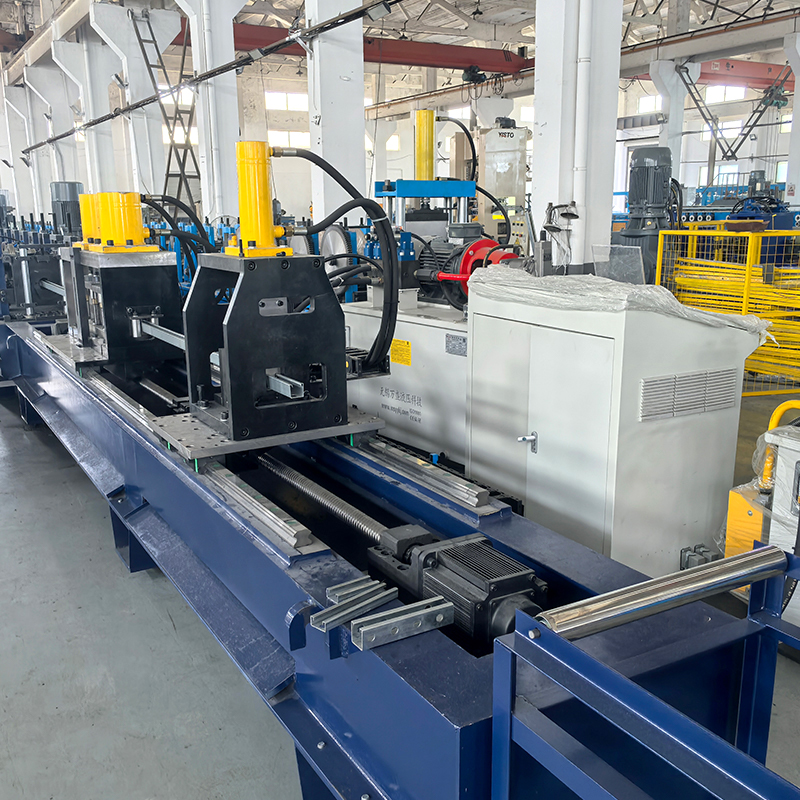
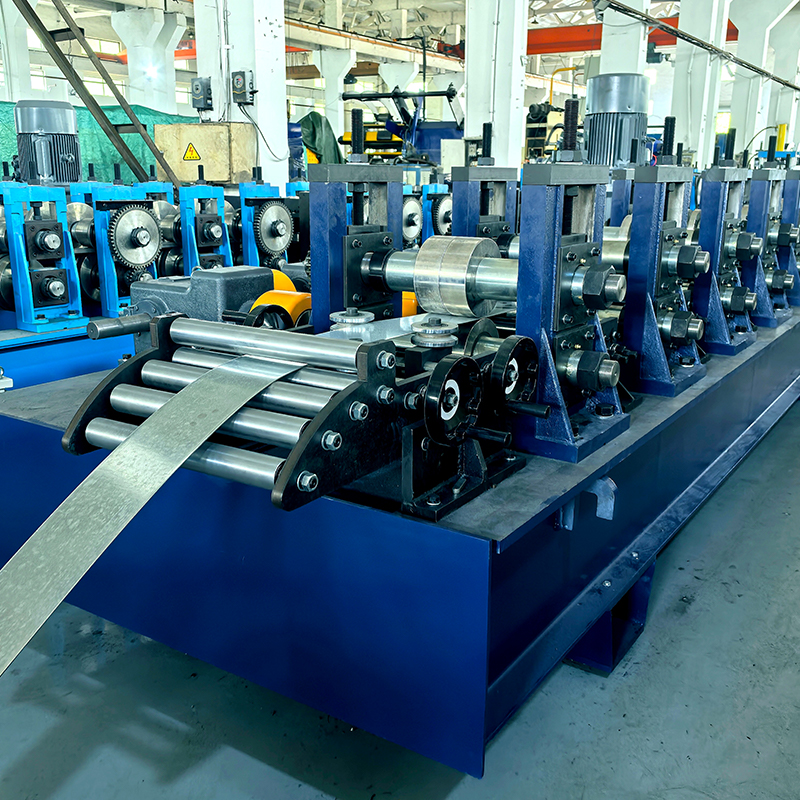
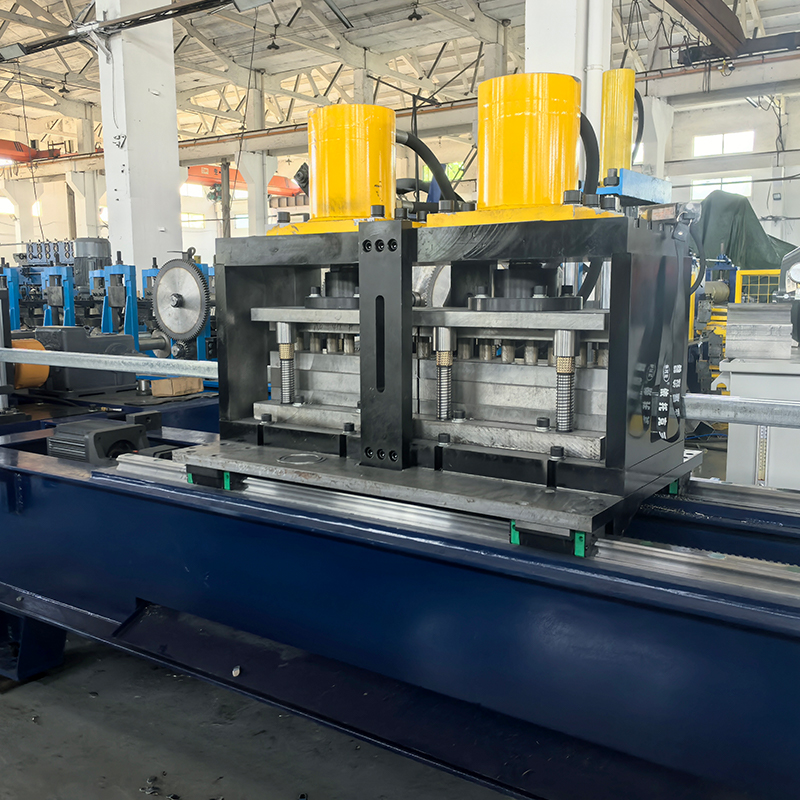
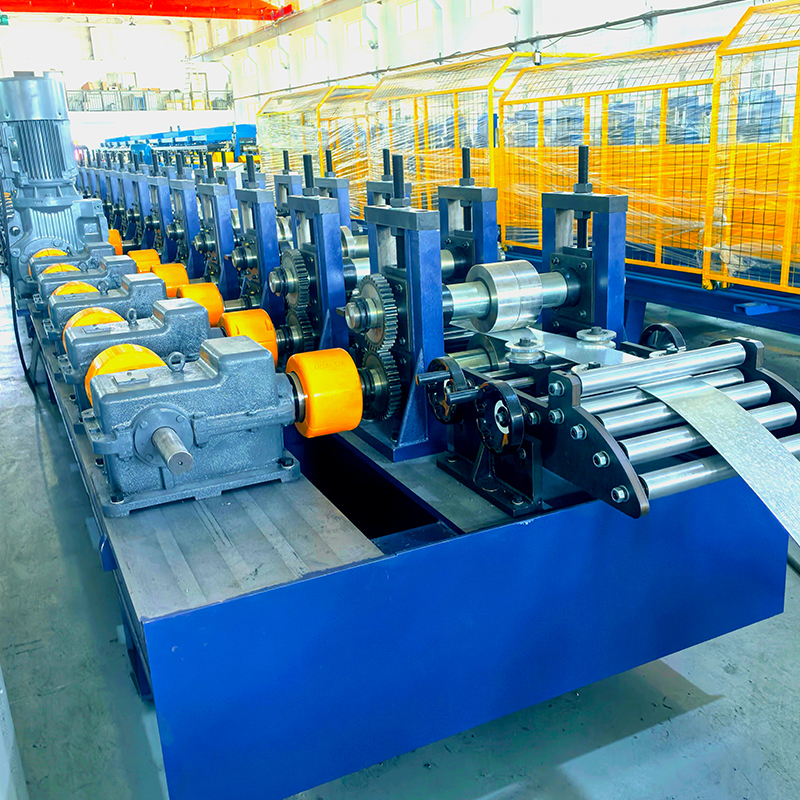
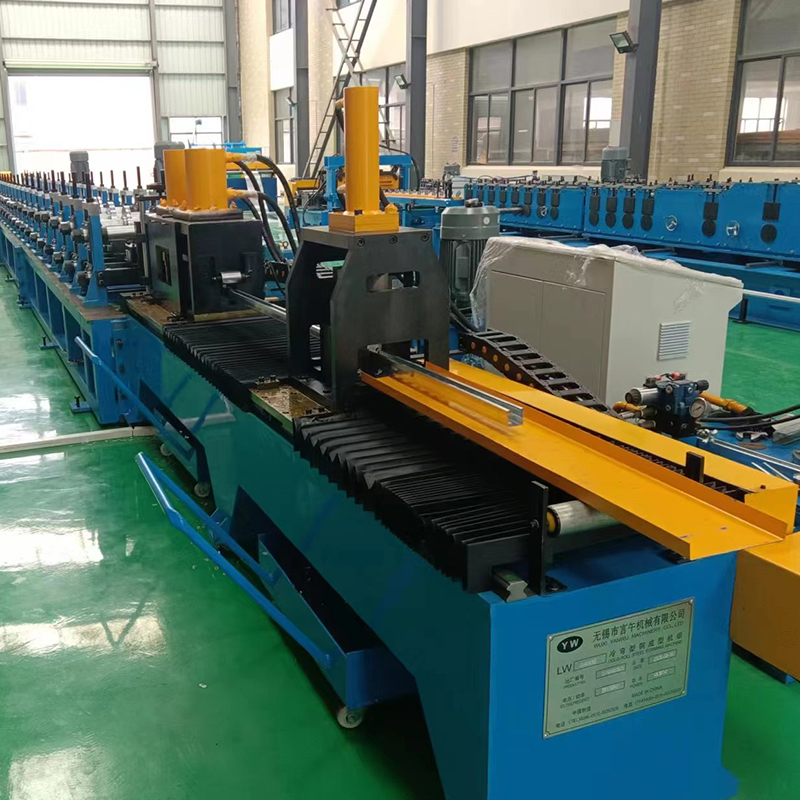
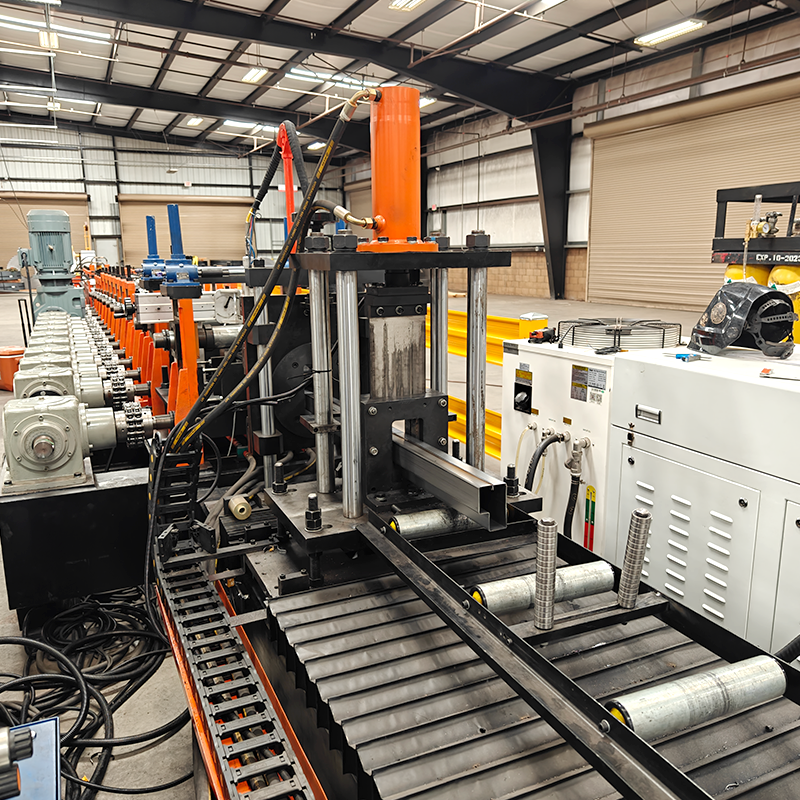
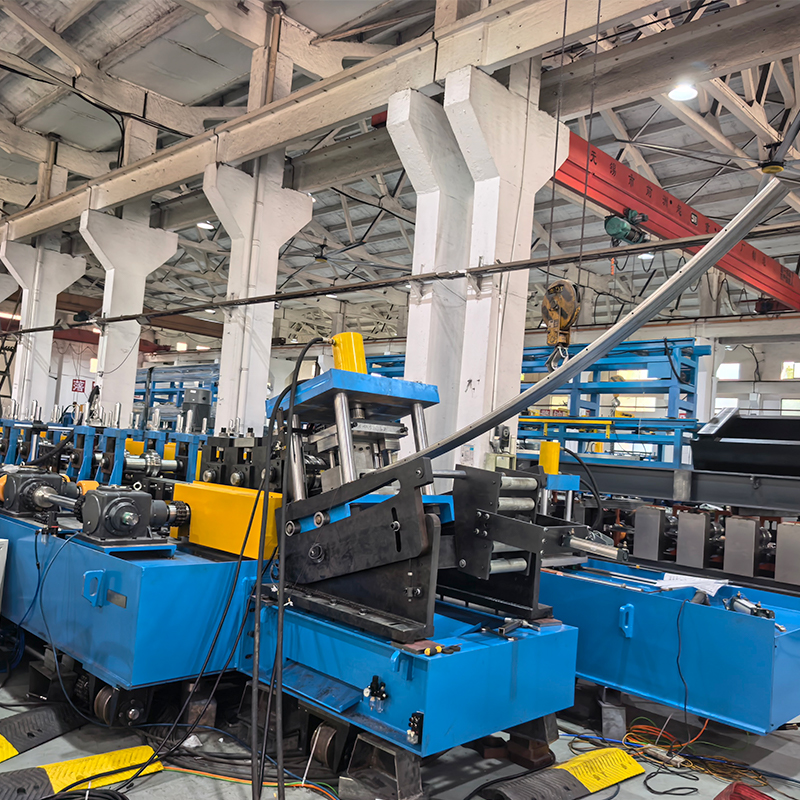
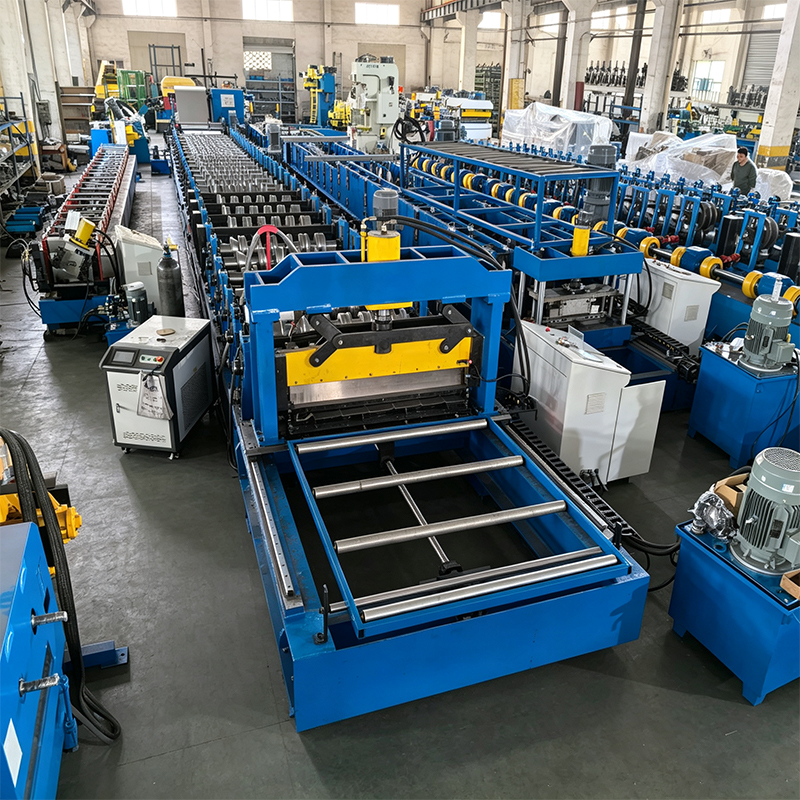
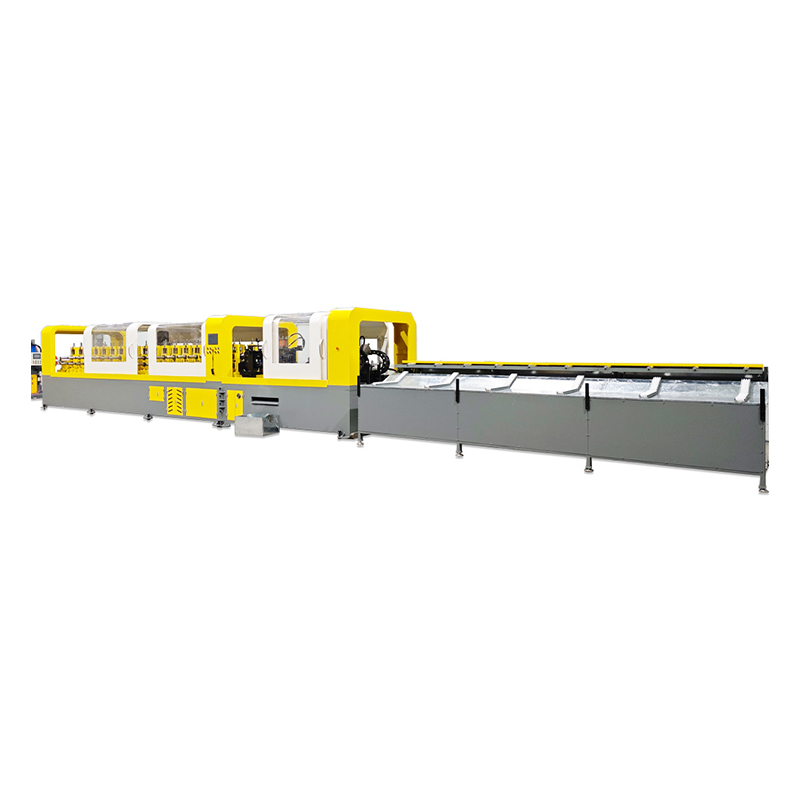
The solar PV mounting cold-roll forming machine is specialized equipment designed for the production of various PV mounting profiles. Utilizing a continuous cold-roll forming process on galvanized steel strip coils, the machine integrates the entire workflow—including uncoiling, guided feeding, clamping and leveling, roll forming, hydraulic punching (with servo tracking), hydraulic cutting (with servo tracking), and product discharge—to directly produce finished PV mounting profiles.
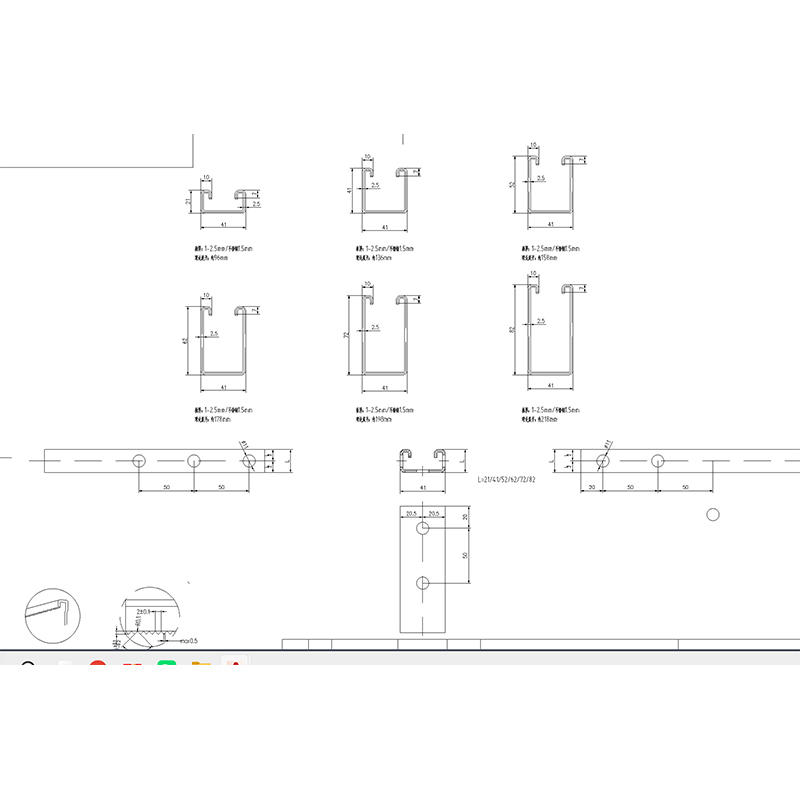
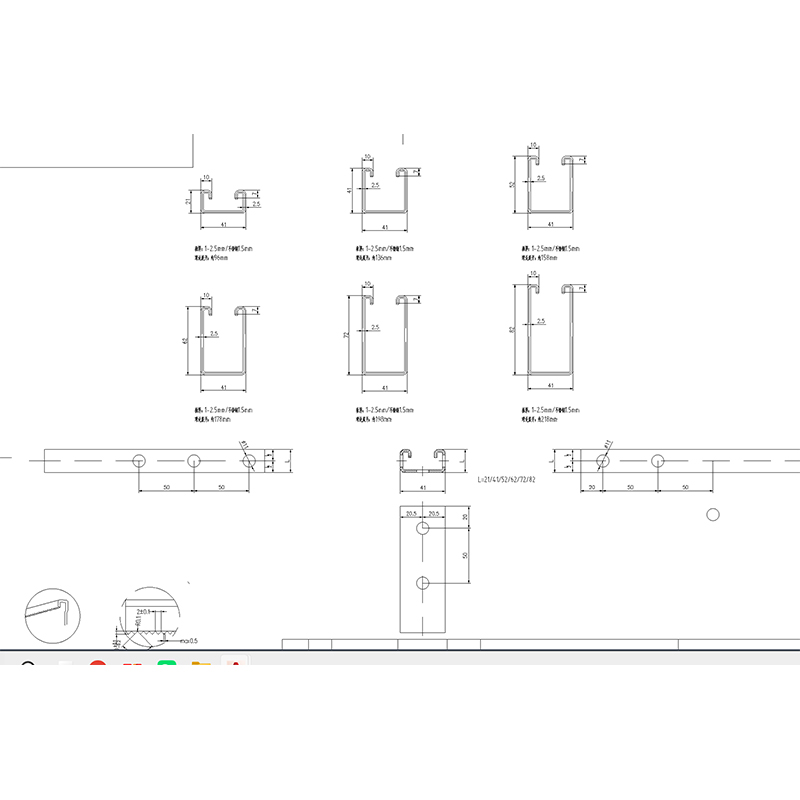
This equipment is specifically designed for galvanized steel strips with thicknesses ranging from 1 mm to 3 mm; a single machine can handle the production of various mounting specifications with side heights between 21 mm and 82 mm. The side ribbing function can be enabled or disabled based on customer requirements: enabling ribbing significantly enhances the profile's structural strength, making it suitable for long-span, high-load applications, while disabling it suits projects requiring lighter loads and superior aesthetics. The entire line features fully automatic PLC control and supports one-touch specification switching, ensuring a continuous, automated process from uncoiling to finished product discharge. Requiring only 1–2 operators for monitoring, it is a core piece of equipment enabling PV mounting manufacturers to achieve flexible and intelligent production.
The equipment accommodates various materials, such as galvanized steel and Al-Zn coated steel, with thicknesses ranging from 1.0 mm to 3.0 mm. It can produce profiles with diverse cross-sections—such as C-shapes and U-shapes—widely used in ground-mounted PV power plants, rooftop distributed PV systems, and agrivoltaic projects.
II. Core Advantages and Selling Points
1. Single-machine coverage of the full 21–82mm specification range with one-touch switching
This is the core advantage that distinguishes this equipment from conventional photovoltaic (PV) mounting production lines.
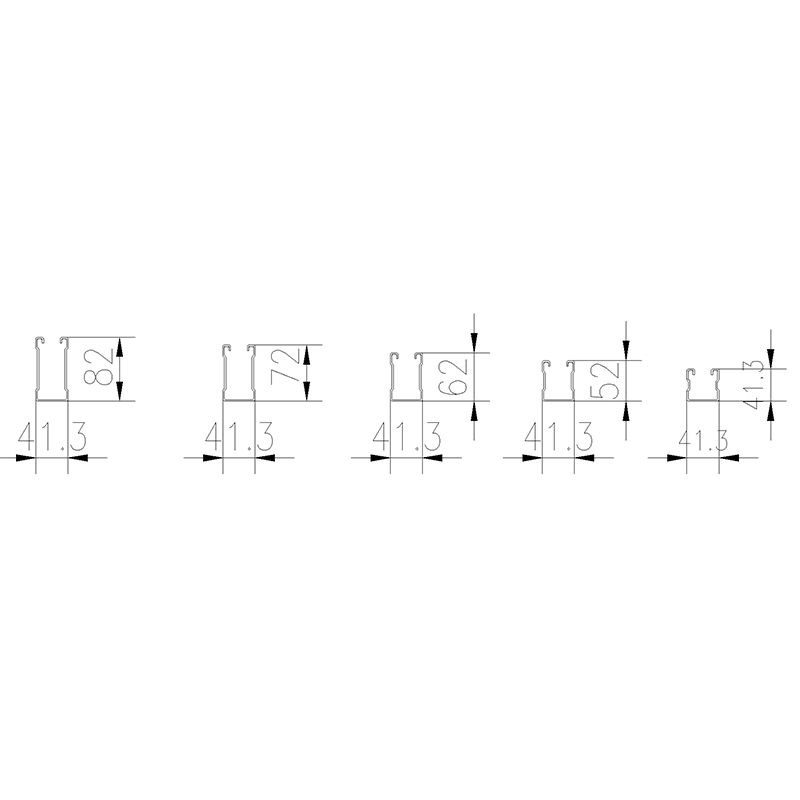
Conventional equipment requires manual roller adjustment or even mold replacement when changing specifications, a process that is time-consuming and complex. This machine utilizes adjustable forming technology, allowing a single unit to cover the entire specification range for side heights of 21–82mm—including mainstream PV mounting sizes such as 41×21, 41×41, 41×62, and 41×82. Specification switching is automated via a PLC-controlled motor system; operators simply input the target parameters on the touchscreen, and the roller positions adjust automatically. There is no need for mold changes, manual adjustments, or repeated trial runs. The switch takes just 3–5 minutes, significantly boosting production efficiency for orders involving multiple product varieties.
2. Flexible switching of side ribbing; select according to needs
The equipment features a side ribbing function that can be enabled or disabled with a single touch based on customer requirements:
Ribbing Enabled: Creates a reinforcing rib structure on the profile's side, significantly enhancing its flexural strength and torsional rigidity. This is ideal for high-strength applications such as long-span mounting systems and installations in areas subject to high wind or heavy snow loads.
Ribbing Disabled: Produces a profile with a smooth, flat surface and a clean, aesthetic appearance. This is suitable for light-load projects and distributed PV installations where visual appeal is a priority.
One machine, two modes—meeting the diverse needs of different projects without requiring additional investment.
3. Uncoiling, Guided Feeding, and Pinch-Leveling: Stable and Efficient
The front section of the line employs a continuous process flow: uncoiling → guided feeding → pinch-leveling.
Uncoiling: A hydraulic or umbrella-type uncoiler supports the steel coil, ensuring stable material release.
Guided Feeding: Automatic material guiding and alignment ensure the strip enters the leveling unit in the correct position, accommodating various strip widths.
Pinch-Leveling: An integrated pinch-and-level design utilizes multi-roll precision leveling to effectively eliminate internal stress in 1–3mm thick strips, ensuring downstream forming accuracy while providing stable feeding power.
These three processes are tightly integrated, ensuring the strip enters the main forming unit in a flat and precisely aligned state, laying the foundation for high-precision forming.
4. Hydraulic Punching (Servo-Tracking): Precision Punching Without Stopping the Line
A servo-tracking hydraulic punching system is used; while the profile moves continuously, the servo system automatically tracks the strip's speed and synchronizes the punching action. Punching occurs without stopping the line, ensuring precise hole placement with positional deviation controlled within ±0.2mm. The "punching-before-forming" sequence allows for precise hole placement according to specifications prior to forming, guaranteeing dimensional accuracy.
5. Multi-Pass Roll Forming: Superior Quality
A multi-pass, progressive cold-roll forming process is employed, featuring precisely designed cross-sectional transitions. The forming pass layout is scientifically optimized to accommodate a wide range of galvanized strip hardness levels without damaging the zinc coating during rolling. The rollers are made of Cr12MoV steel, undergo integral quenching (HRC 56–62), and offer excellent wear resistance. High forming precision and consistency meet the demands of mass production.
6. Hydraulic Cutting (Servo-Tracking): Online Cutting Without Stopping the Line
A servo-tracking hydraulic cutting system is used; while the profile moves continuously at high speed, the system automatically tracks the movement speed and synchronizes the cut-to-length operation. No deceleration or stoppage is required, resulting in high cutting precision and smooth cut edges. Spring-back at the cut opening is < 1 mm. Length dimensions are achieved precisely according to drawing tolerances in a single pass, eliminating the need for secondary processing.
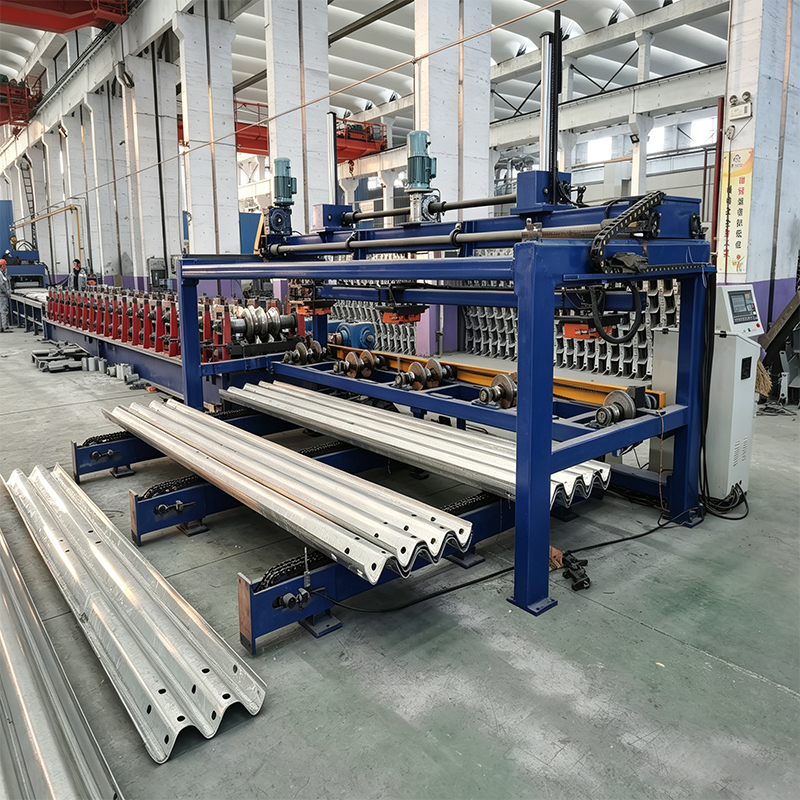
7. Material support and discharge; assistance with finished product handling
Equipped with a material support system to smoothly receive and assist in organizing cut profiles. This effectively prevents deformation or scratching caused by the profile's own weight after cutting, ensuring the quality of the finished product's appearance while facilitating handling and packaging for operators.
8. Cold-bending process: cost reduction and efficiency improvement
Utilizing cold-bending forming instead of hot stamping reduces equipment investment costs by approximately 30%. Cold-bending eliminates the need for heating equipment and complex temperature control systems, resulting in lower energy consumption. Furthermore, as the process takes place at ambient temperature without generating excessive heat, the metal material is less susceptible to oxidation or quality degradation.
9. Intelligent control and ease of operation
Features fully automatic PLC control and a touchscreen HMI, making parameter settings intuitive and convenient. The entire line—from material feeding to discharge—is automated, requiring only 1–2 operators for monitoring. Automatic fault diagnosis and alarm functions facilitate rapid troubleshooting and maintenance.
III. Technical Parameters
Item Parameter
Applicable materials: Galvanized sheet, Al-Zn coated sheet, etc
Material thickness: 1.0–3.0 mm
Side height range: 21–82 mm (including specifications such as 41×21, 41×41, 41×52, 41×62, 41×82)
Side ribbing Switchable (one-key toggle)
Specification changeover: PLC automatic adjustment; completed in 3–5 minutes
Production line speed: 4–15 m/min
Main unit forming speed: 10–15 m/min
Forming precision ≤±0.2 mm
Punching method: Servo-tracking hydraulic punching
Punching precision ≤±0.2 mm
Cutting method: Servo-tracking hydraulic cutting
Cut-end spring-back ≤1 mm
Roller material: Cr12MoV, HRC 56–62
Transmission method: Gearbox drive
Control system: PLC, fully automatic control
Operators: 1–2 persons
IV. Production Process
Uncoiling → Guided Feeding → Pinching & Leveling → Roll Forming → Hydraulic Punching (Servo-tracking) → Hydraulic Cutting (Servo-tracking) → Product Support
Process Description
Uncoiling: A hydraulic or umbrella-type uncoiler supports the steel coil and ensures stable uncoiling.
Guided Feeding: Automatic guiding and alignment ensure the steel strip enters the leveling unit in the correct position.
Pinching & Leveling: Integrated pinching and leveling eliminates internal stress and provides stable feeding power.
Roll Forming: Multi-pass progressive cold-roll forming; adjustable side height (21–82 mm); optional ribbing.
Hydraulic Punching (Servo-tracking): Synchronized punching with servo-tracking.
Hydraulic Cutting (Servo-tracking): Synchronized cutting with servo-tracking; cuts to length without stopping the line.
Product Support: Supports and organizes finished products; prevents deformation and scratching.
V. Application Areas
The bracket products manufactured by the cold bending forming machine for solar photovoltaic brackets are widely used in the following fields:
Ground-mounted photovoltaic power stations: Large-scale ground-mounted power stations, desert and Gobi photovoltaic projects—a complete range of bracket specifications, covering the entire 21-82mm series, to meet different design requirements.
Roof-mounted distributed photovoltaics: Industrial and commercial rooftop photovoltaic systems, residential rooftop photovoltaic systems—1-3mm thickness adaptable to the light load requirements of roofs; ribbed function can be selected as needed.
Agricultural-photovoltaic complementary/fishery-photovoltaic complementary: Photovoltaic brackets above agricultural greenhouses and fishponds—ribbed reinforcement enhances the strength of the profiles, ensuring the safety of large-span structures.
Tracking bracket systems: Flat single-axis, inclined single-axis, and other tracking brackets—high-precision forming ensures long-term stable operation of the tracking system.
Photovoltaic carports: Photovoltaic sunshades for parking lots—aesthetically pleasing profiles, flexible specifications.
BIPV (Building Integrated Photovoltaics): Building integrated photovoltaic projects—ribbed reinforcement can be closed, profile surface is flat and aesthetically pleasing.
VI. Service Support
Solution Design: We provide customized equipment selection and production line layout based on customer product drawings, capacity requirements, and target markets.
Customized Manufacturing: We support non-standard customization, offering full control from roll design to complete line manufacturing.
Installation and Commissioning: Engineers provide on-site installation and commissioning, and train operators to ensure rapid production.
After-sales Guarantee: Long-term technical consultation and spare parts supply; engineers with complete certifications; and global on-site service available at any time.
VII. Why Choose Us
Nearly 20 Years of Manufacturing Experience: Mature Technology, Perfected Processes, Reliable Quality
One Machine Covers the Entire Series: One-button switching between 21-82mm side heights, no mold changes required
Optional Ribs: One-button on/off control, one machine meets two needs
Dual Servo Tracking: Punching + cutting dual servo tracking, continuous production without stopping, ensuring both efficiency and precision
Direct Factory: No intermediaries, high cost-performance ratio
Global Service Network: Complete engineer certifications, rapid response
 English