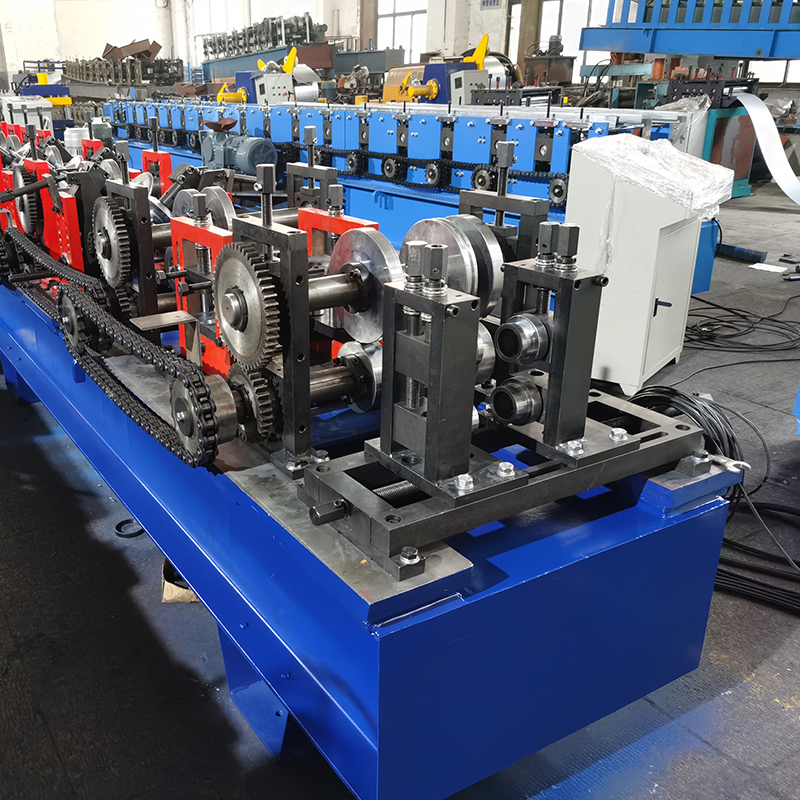
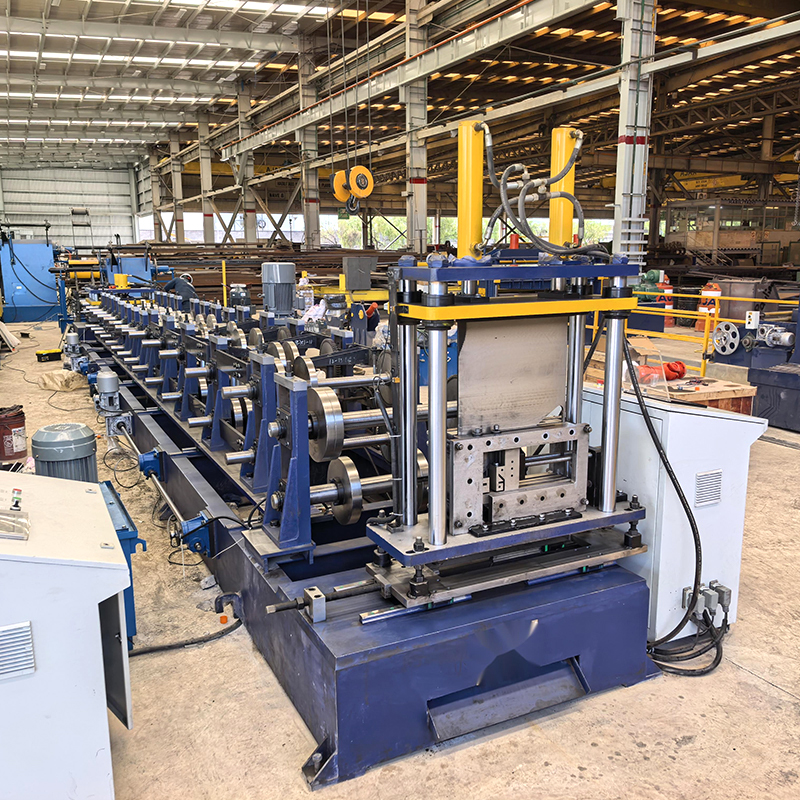
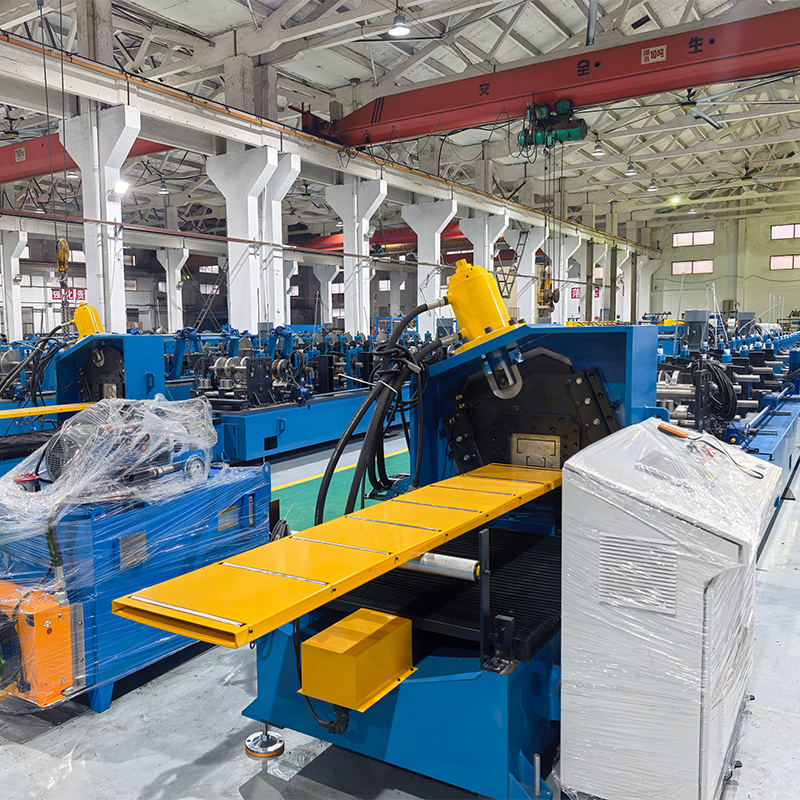
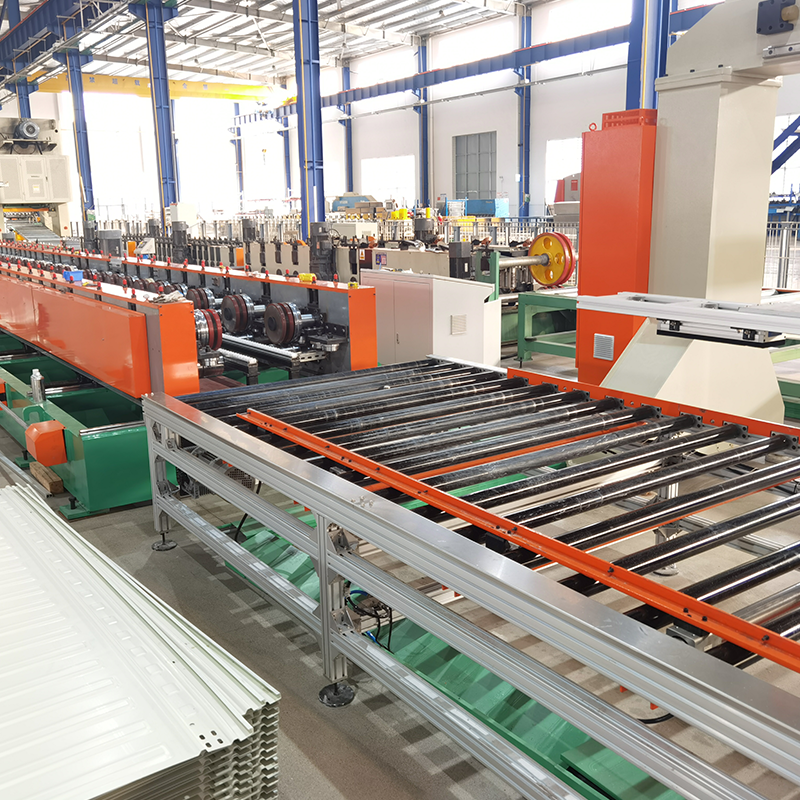
Purlin Quick-Change Equipment Series — Professional manufacturer offering comprehensive solutions; rapid profile switching on a single machine; one-stop delivery from steel strip to finished product.
I.Series Overview
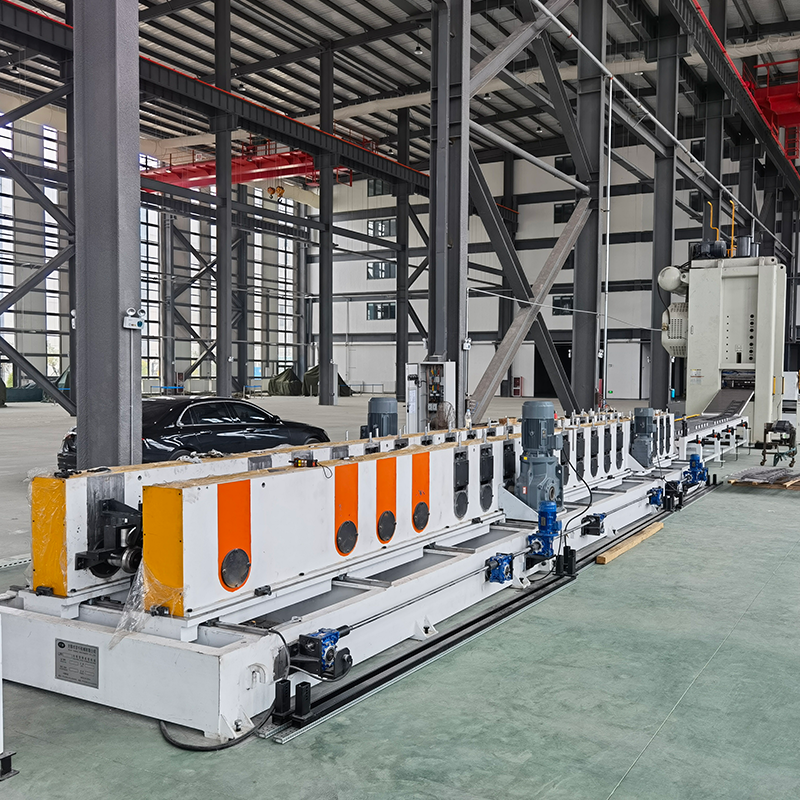
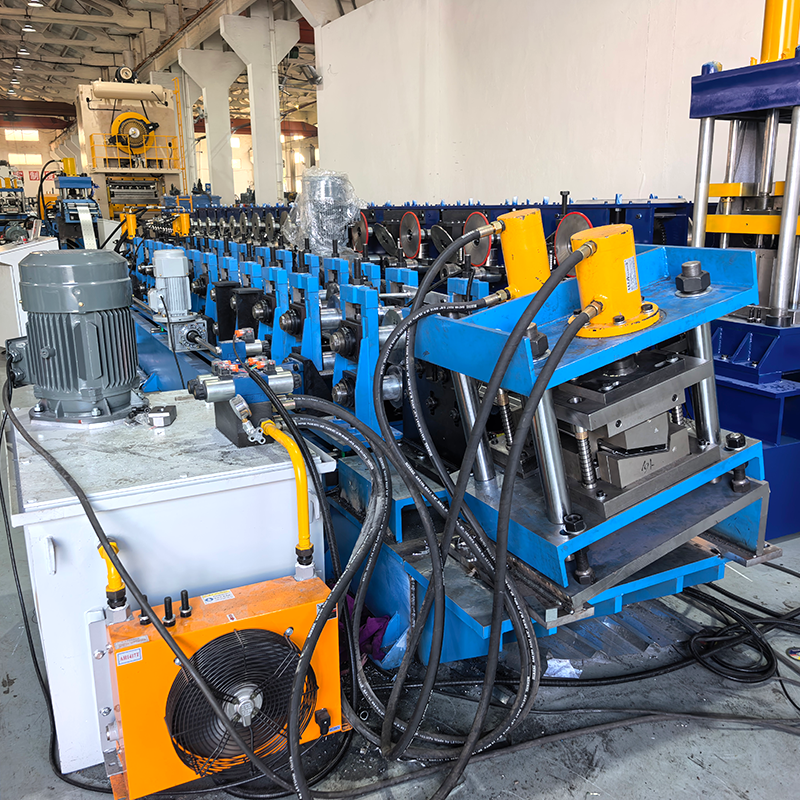
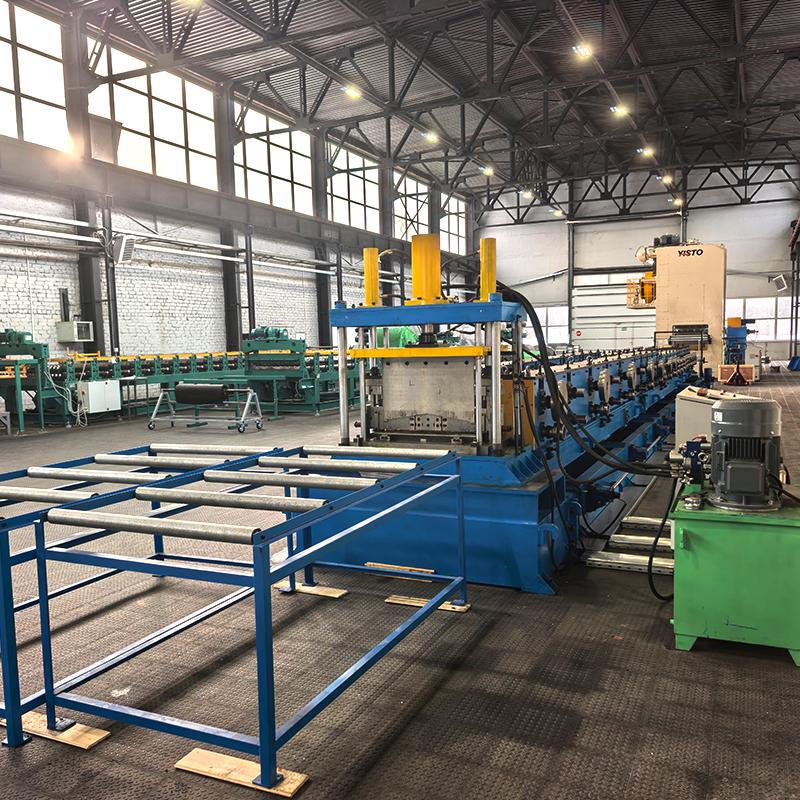
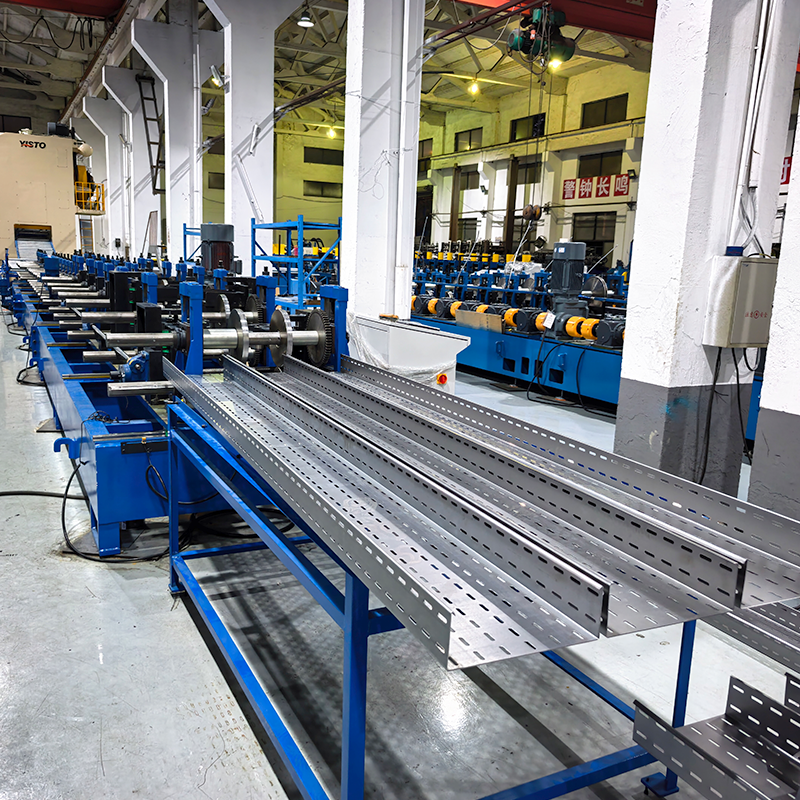
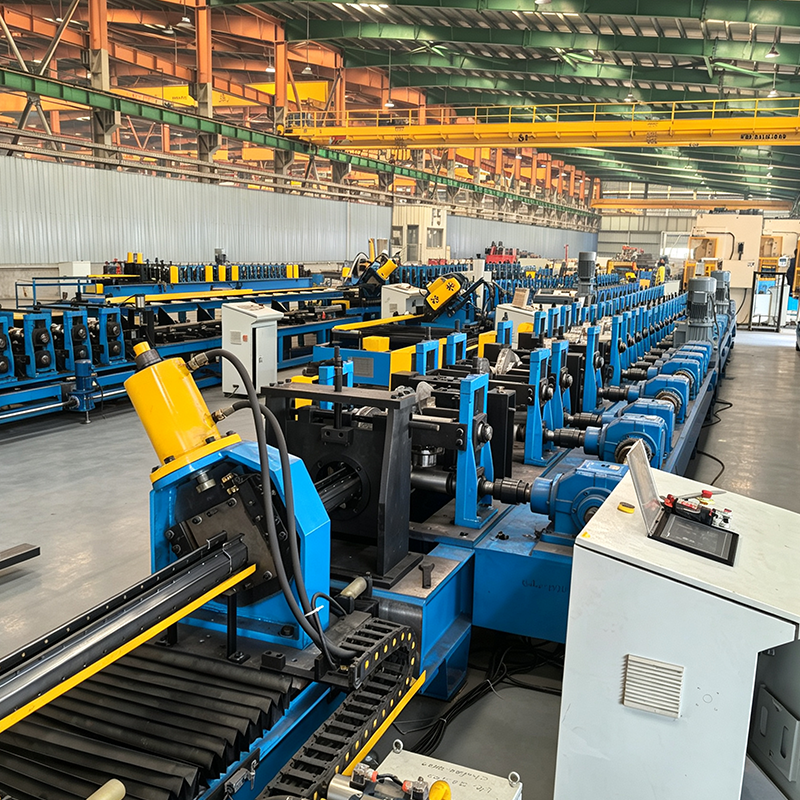
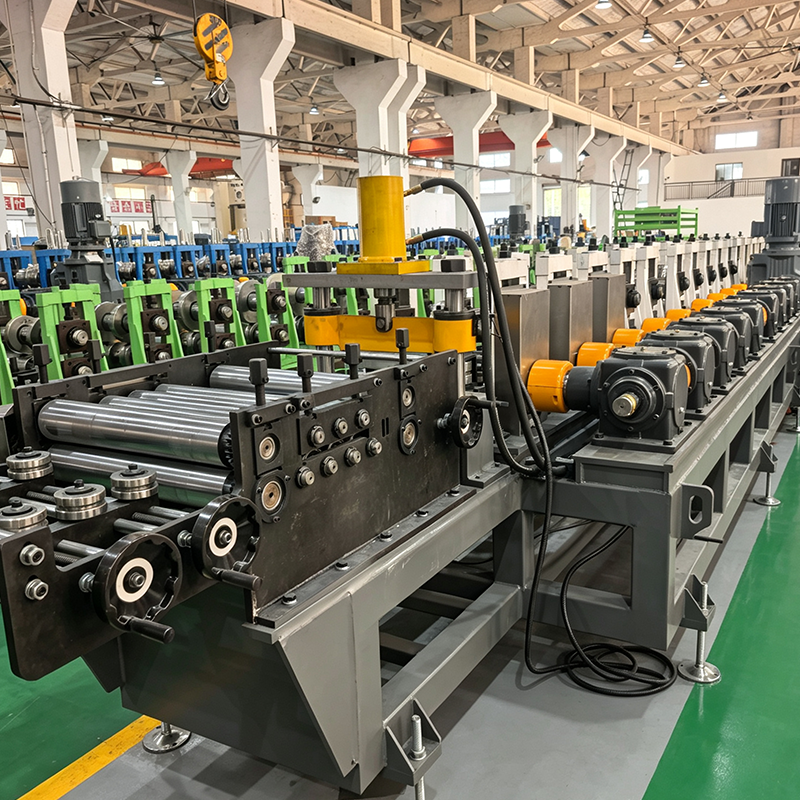
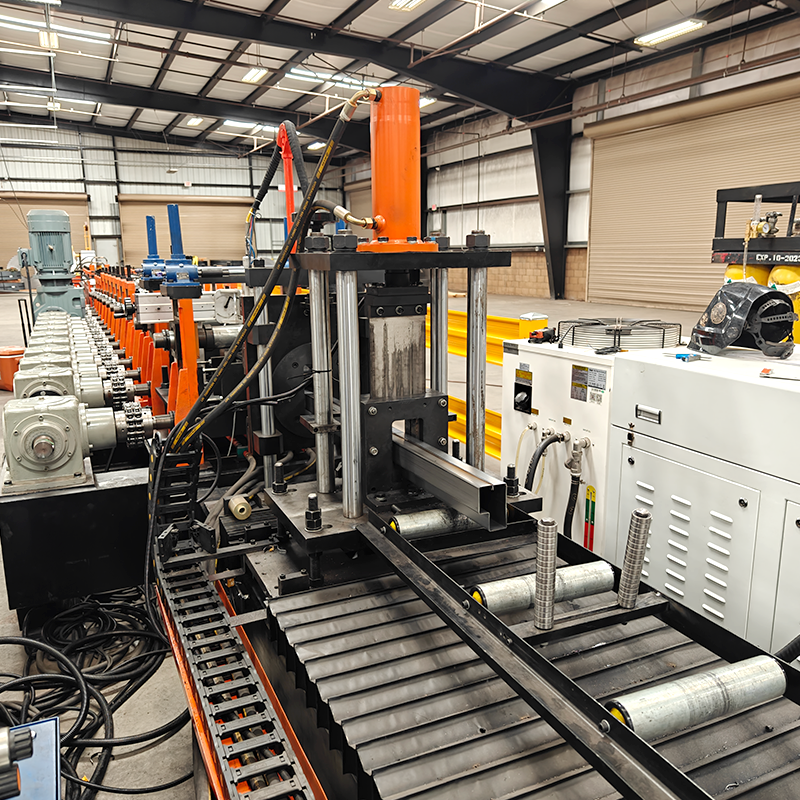
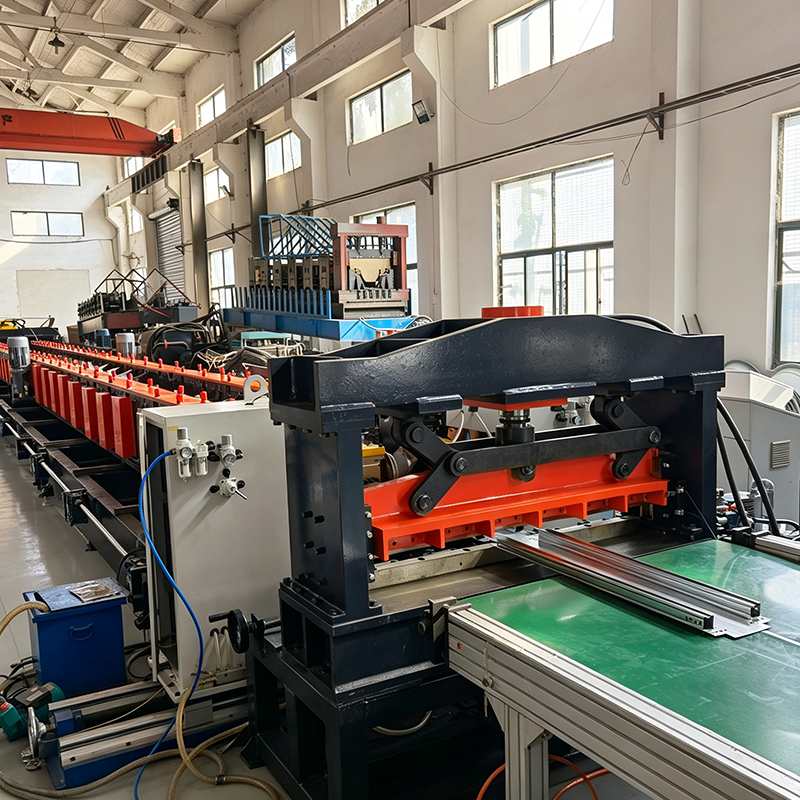
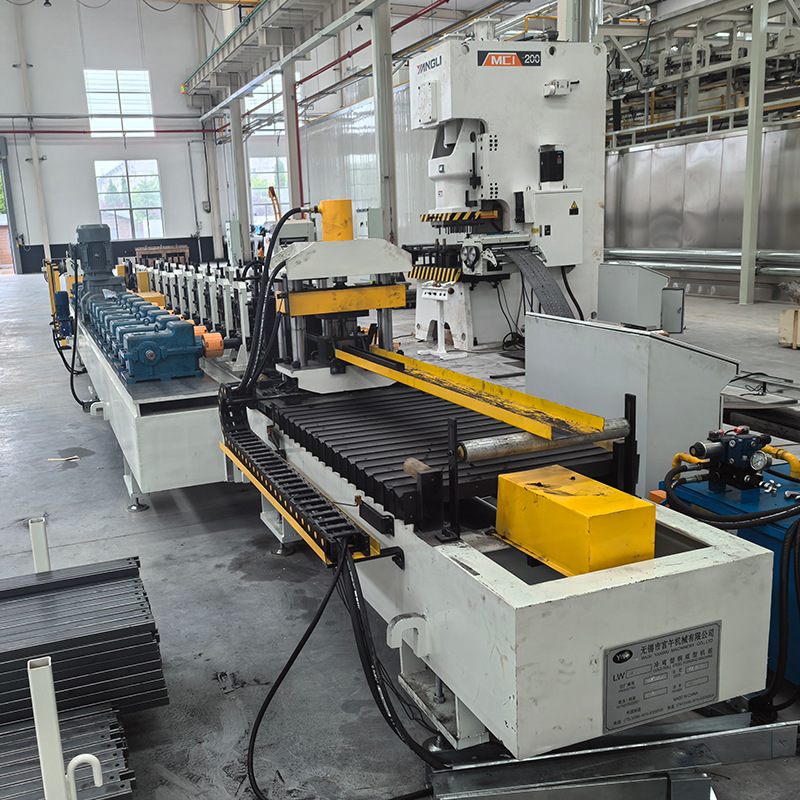
The Purlin Quick-Change Equipment Series consists of complete, quick-change cold-roll forming production lines designed specifically for manufacturing various cold-formed purlin profiles used in steel structure buildings. Purlins serve as critical structural supports for roofs and walls in steel buildings; the precision of their cross-sections and their structural strength directly determine the load-bearing capacity and safety performance of the entire structure. Utilizing a continuous cold-roll forming process, this equipment series transforms metal coils into finished purlin profiles through an integrated workflow—encompassing uncoiling, leveling, punching, roll forming, cut-to-length shearing, and discharge—in a single pass.
This series supports the production of the four mainstream purlin profiles used in steel construction—C-sections, U-sections, Z-sections, and M-sections—and accommodates a wide range of materials, including hot-rolled, cold-rolled, and galvanized steel, as well as high-strength steel, with thicknesses ranging from 0.8 mm to 4.0 mm. The equipment features fully automatic PLC control and a stepless, rapid profile-changing system, operated via a touchscreen HMI, ensuring a fully automated, continuous workflow from uncoiling to finished product discharge.
As demand for steel structure buildings, industrial plants, and prefabricated construction continues to rise, the purlin processing industry is undergoing significant transformation. Traditional production methods—reliant on single specifications and fixed models—struggle to meet the requirements of today’s market, which demands diverse specifications, multi-batch production, and rapid delivery. By enabling quick profile switching, this equipment series drastically reduces downtime and enhances the continuous operational capability of the production line, serving as core equipment for steel processing enterprises aiming to achieve flexible and intelligent manufacturing.
II. Introduction to Equipment Types
1. Quick-Change C-Section Purlin Equipment
Equipment Overview
The quick-change C-section purlin equipment is a specialized cold-roll forming production line designed for manufacturing lipped C-section cold-formed thin-walled steel (C-section purlins). C-section steel is the most widely used type of purlin in steel structure buildings; it is formed by cold-roll forming thin-walled steel sheets. This equipment can produce finished C-section purlins in various specifications using a single set of rollers.
Key Advantages
Excellent Straightness: The produced C-section purlins exhibit superior compressive and flexural strength.
Quick Change (No Roller Swapping): Different specifications can be produced via stepless adjustment, eliminating the need to replace forming rollers.
Wide Application: Suitable for purlin systems in roofs and walls of industrial plants, warehouses, vehicle garages, aircraft hangars, stadiums, and other structures.
Intelligent Control: Automatically performs punching, cutting, and forming based on input parameters such as purlin length, longitudinal hole spacing, and quantity.
Common Specifications: Web width 80–300 mm, web height 30–80 mm, flange lip 10–20 mm.
2. Quick-Change U-Section Purlin Equipment
Equipment Overview
The quick-change U-section purlin equipment is a specialized cold-roll forming production line designed for manufacturing U-section purlins. The U-section steel features a U-shaped cross-section with both flanges extending vertically upwards, offering a simpler cross-sectional profile compared to C-section steel. The machine utilizes a design featuring a fixed frame on one side, an adjustable frame on the other, and a semi-automatic profile-changing mechanism; adjustments to the web width and web height are achieved semi-automatically via manual control buttons.
Key Advantages
Multi-purpose capability: Capable of producing both C-section and U-section purlins simultaneously, saving on equipment investment and floor space.
Simple structure: The U-section profile is simple, requiring fewer forming passes and resulting in high production efficiency.
Flexible configuration: Equipped with both pre-cutting and post-cutting mechanisms; shears can be configured as fixed-type or universal-type based on user requirements.
High material utilization: The cold-forming process requires no heating, resulting in low energy consumption and minimal waste.
Common specifications: 68×30×3.0mm, 190×75×3.0mm, 200×75×25×3.0mm, etc.
3. Quick-Change Z-Section Purlin Equipment
Equipment Overview
This is a specialized quick-change cold-roll forming production line designed for Z-section steel purlins. The Z-section features parallel flanges pointing in opposite directions, offering the unique advantage of reversible overlapping installation; it is widely used in large-span steel structure buildings.
Key Advantages
Reversible overlapping installation: Z-section steel allows for reversible overlapping, enhancing connection strength.
Suitable for large spans: Particularly ideal for large-span structures or for constructing factory buildings in areas with poor geological conditions.
Quick change without roller replacement: The same equipment can produce both C-section and Z-section purlins through stepless adjustment.
Automated control: Integrates functions such as automatic uncoiling, leveling, hydraulic punching, automatic length measurement, and automatic cutting.
Common specifications: Web width 35–80mm, web height 120–300mm, flange lip 10–20mm.
4. Quick-Change M-Section Purlin Equipment
Equipment Overview
This is a specialized cold-roll forming production line designed for M-section truss purlins. Named for its M-shaped cross-section, this profile is primarily used for M-section truss purlins and serves as an important special-profile component in steel structure construction.
Key Advantages
Specialized for Truss Structures: M-shaped purlins are a critical component of M-shaped truss structures, offering high structural strength.
Scalable Production: Executes the entire process—from steel strip feeding and initial forming to final shaping and cutting—in a single pass.
High Production Efficiency: The integrated line encompasses the complete workflow, including uncoiling, leveling, forming, shaping, and cutting.
Broad Applicability: Beyond steel structures, it is suitable for applications such as W-shaped supports in the coal mining industry.
Application Scenarios: M-shaped truss purlins, steel structure bracing members, coal mine W-shaped supports, etc.
III. Core Technical Advantages
1. Rapid, Stepless Profile Switching (No Mold Changes Required)
This is the core advantage distinguishing this series of equipment from traditional single-specification production lines. Traditional equipment requires machine downtime to dismantle rollers and recalibrate parameters when switching profile specifications—a process taking 2–4 hours that severely disrupts production continuity. This series utilizes a stepless adjustment system, allowing for precise, millimeter-level adjustments within the specified range to produce both standard and non-standard profiles. No forming roller changes are required; semi-automatic switching takes just 8 minutes, while fully automatic switching takes only 3 minutes.
2. Multi-Profile Capability and Flexible Production
A single production line can manufacture various types of purlins, such as C- and Z-sections (interchangeable) or C- and U-sections (interchangeable). Unlike traditional setups that require separate production systems for different profiles, this series reduces equipment investment while enhancing production flexibility and equipment utilization. Its ability to roll-form two different profiles saves the user both purchasing costs and floor space.
3. Fully Automated PLC Control and Intelligent Production
The equipment features fully automated PLC control, integrating functions such as automatic decoiling, leveling, hydraulic punching, automatic length measurement, and automatic cutting. It automatically performs punching, cutting, and forming based on input parameters like purlin length, longitudinal hole spacing, and quantity. Key parameters—such as rolling force, current, and temperature—are monitored in real-time; the system triggers an immediate alarm and halts operation upon detecting anomalies, thereby preventing batch defects.
4. High-precision forming and superior quality
Roll shafts are made of 40Cr steel, heat-treated (quenched and tempered) to a hardness of HB280.
Forming dies are made of GCr15 steel, heat-treated (quenched) to a hardness of HRC 56–62.
The transmission system utilizes a gearbox drive; each forming stand is equipped with a dedicated gearbox, ensuring the equipment can operate continuously under high-intensity conditions.
Forming speeds reach up to 15–30 m/min.
Precision during product changeovers is maintained within ±0.1 mm.
5. Robust, durable, stable, and reliable
The machine base is a welded steel structure that has undergone tempering to eliminate internal stress and prevent deformation.
Forming stands feature a cast-iron structure that has been tempered, ensuring high strength and a long service life.
The drive system employs a gear motor with variable frequency control, ensuring accurate and reliable speed regulation, cut-to-length precision, and positioning.
The fully automatic electrical control system includes error-detection capabilities to ensure the safety and stability of the production line.
IV. Technical Parameters of Equipment Series
Item C-Section Equipment U-Section Equipment Z-Section Equipment M-Section Equipment
Applicable Materials: Hot-rolled/Cold-rolled/Galvanized sheet; Hot-rolled/Cold-rolled/Galvanized sheet; Hot-rolled/Cold-rolled/Galvanized sheet; Hot-rolled/Cold-rolled sheet
Material Thickness 1.5–4.0 mm 1.5–4.0 mm 1.5–4.0 mm 1.5–3.0 mm
Forming Stations: 16–22 stations 14–18 stations 16–22 stations 18–24 stations
Production Speed 15–30 m/min 15–20 m/min 15–30 m/min 10–20 m/min
Motor Power 18.5–22 kW 15–22 kW 18.5–22 kW 22–30 kW
Profile Changeover Time: 3–8 minutes Semi-automatic changeover 3–8 minutes Customized upon request
Control System Fully automatic PLC Fully automatic PLC Fully automatic PLC Fully automatic PLC
V. Production Process
Uncoiling → Leveling → Punching → Roll Forming → Cut-to-Length → Discharge
Process Description
Uncoiling: Metal coil is loaded onto a decoiler stand or hydraulic uncoiler for stable material feeding.
Leveling: Precision leveling via a multi-roller leveler to eliminate internal material stress.
Punching: Two hydraulic punching units perform precise punching for mounting holes, connection holes, etc.
Roll Forming: Multi-stage progressive cold-roll forming; specifications are automatically adjusted via a stepless profile-changing system.
Cut-to-Length Hydraulic cutting ensures high length accuracy and clean, smooth cut edges.
Discharge: Finished products are discharged in an orderly manner.
VI. Application Areas
The various purlin products manufactured by the quick-change purlin equipment series are widely used in the following fields:
C-Section Steel Purlins: Purlins for large-scale steel industrial workshops and warehouses; long-span structural buildings; factory construction in areas with poor geological conditions.
U-Section Steel Purlins: Machinery manufacturing; automotive chassis beams and side frame profiles; photovoltaic mounting system components.
Z-Section Steel Purlins: Large-scale steel industrial workshops; long-span structural buildings; applications requiring reverse-lap installation.
M-Section Steel Purlins: M-shaped truss purlins; steel structure bracing struts; W-shaped supports for coal mines.
Photovoltaic & New Energy: C-section steel for solar PV mounting systems (41, 80, and 100 series, etc.), widely used in the construction of large-scale solar PV power plants.
Warehousing & Logistics: Structural components for logistics and warehousing, such as heavy-duty rack uprights, beams, and tie rods.
VII. Market Outlook
Rapid Growth of the Steel Structure Industry: Driven by the rising demand for steel-structured buildings, industrial plants, and prefabricated construction, the purlin processing industry is undergoing significant transformation. Increasingly, manufacturers of cold-roll forming equipment are prioritizing the application of automation and intelligent technologies.
Strong Demand for Flexible Production: Enterprises are increasingly facing complex production requirements rather than just standardized, high-volume orders; these include frequent changes in project specifications, compressed delivery schedules, and heightened expectations for processing precision and production efficiency. Quick-change purlin equipment enables rapid specification switching, thereby minimizing downtime and enhancing the continuous operational capability of the entire production line.
Trend Toward Intelligent Development: As the steel structure manufacturing industry advances toward digitalization, quick-change purlin equipment will see further improvements in intelligence. Integrated control systems can monitor critical parameters—such as rolling force, current, and temperature—in real time, triggering immediate alarms and halting operations upon the detection of anomalies.
VIII. Service & Support
Solution Design: Personalized equipment selection and production line layout based on customer product drawings, capacity requirements, and target markets.
Custom Manufacturing: Support for non-standard customization; production can be initiated from cross-sectional drawings or samples, with full oversight from roll design to complete machine manufacturing.
Installation & Commissioning: On-site installation, commissioning, and operator training provided by engineers to ensure rapid production startup.
After-Sales Support: Long-term technical consultation and spare parts supply; engineers hold valid visas and are available for on-site service worldwide at any time.
Continuous Optimization: Equipment modification and capacity upgrade services available to adapt to changing production needs.
IX. Why Choose Us
Nearly 20 years of manufacturing experience: Mature technology, refined processes, and reliable quality.
Comprehensive product range: One-stop supply of C, U, Z, and M-type purlins.
Stepless, rapid profile switching: Fully automatic changeover in 3 minutes—no mold replacement required; precision within ±0.1mm.
Multi-profile capability: A single production line produces various purlin cross-sections, saving on equipment investment and floor space.
High-precision manufacturing: GCr15 quenched rollers (HRC 56–62), 40Cr heat-treated shafts, and gearbox transmission.
High-efficiency production: Speeds of 15–30 m/min; the entire line can be operated by just 1–2 people.
Intelligent control: Fully automatic PLC with touchscreen interface; features one-touch setup, automatic counting, and cloud data synchronization.
Direct manufacturer: No middlemen, offering excellent cost-performance value.
Global service network: Engineers hold all necessary visas, ensuring rapid response.
 English