Equipment Overview
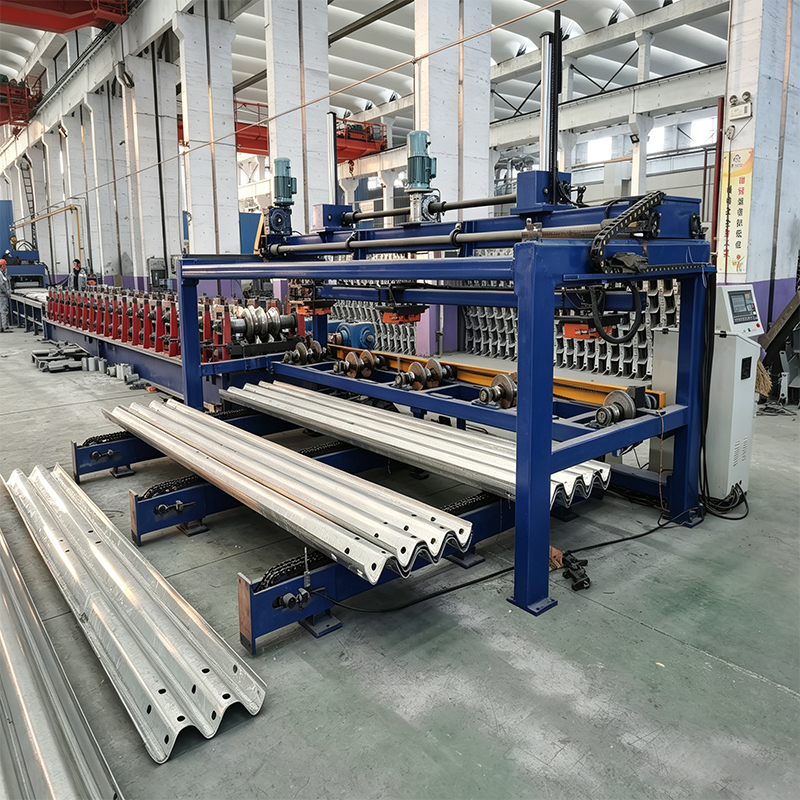
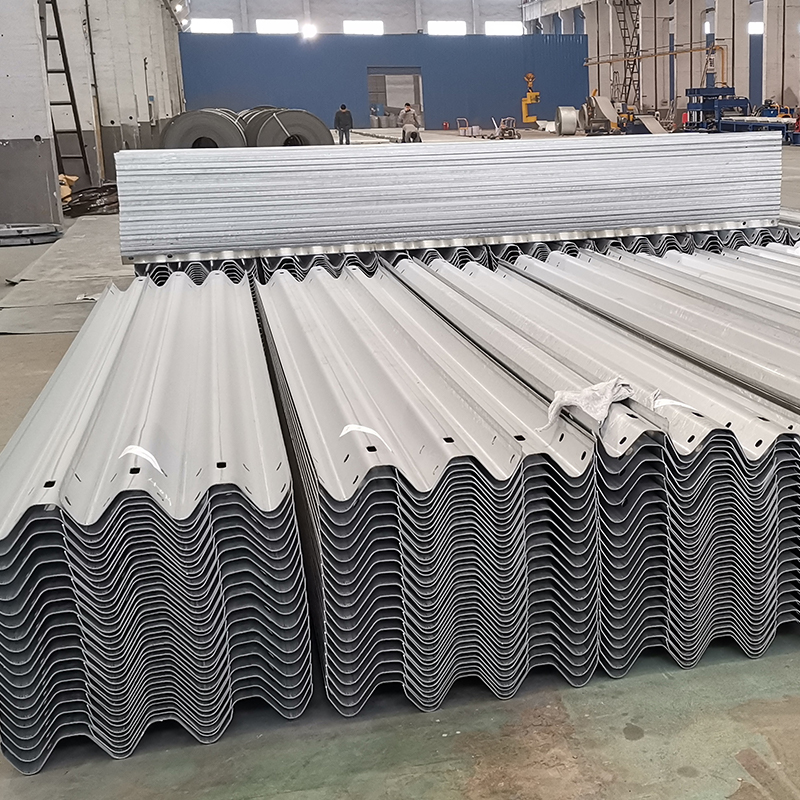
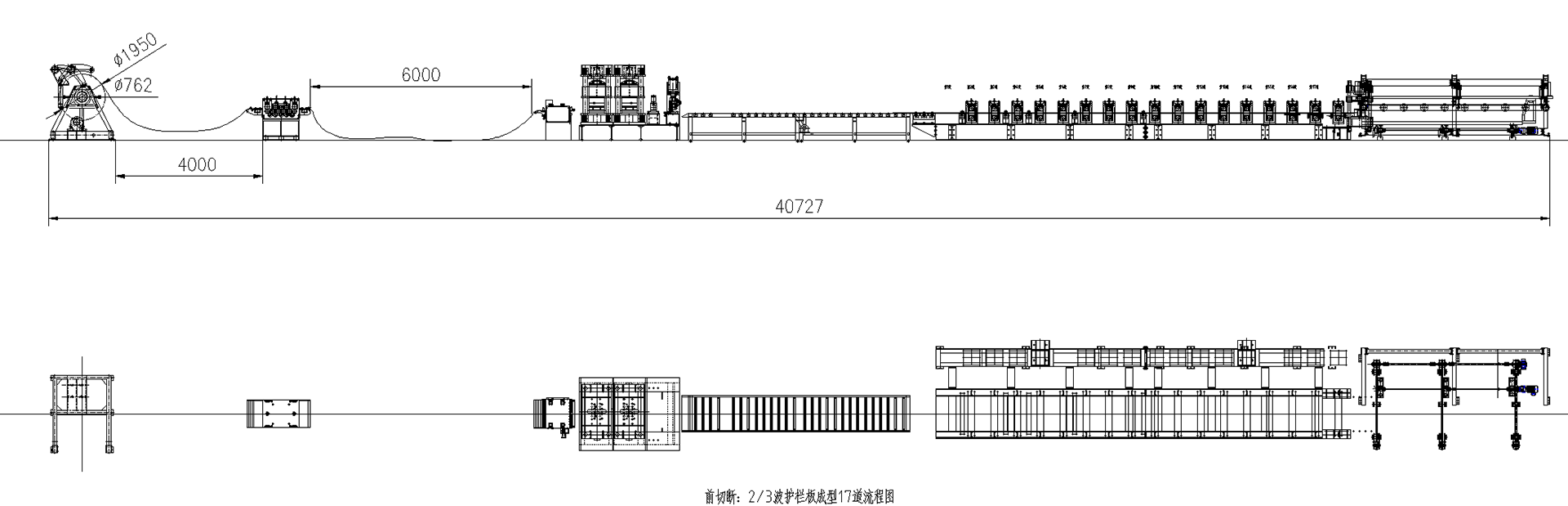
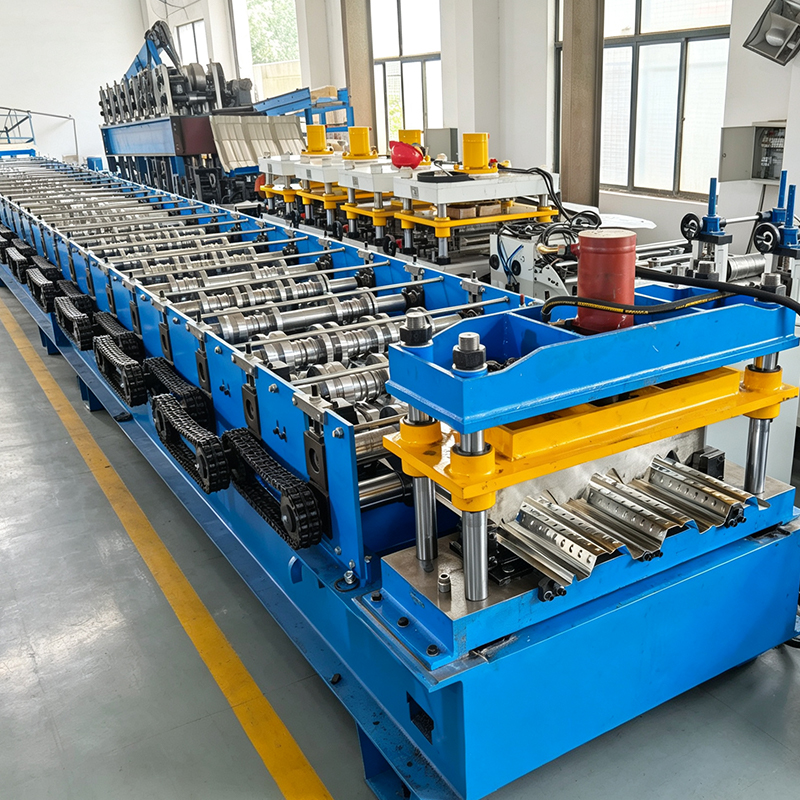
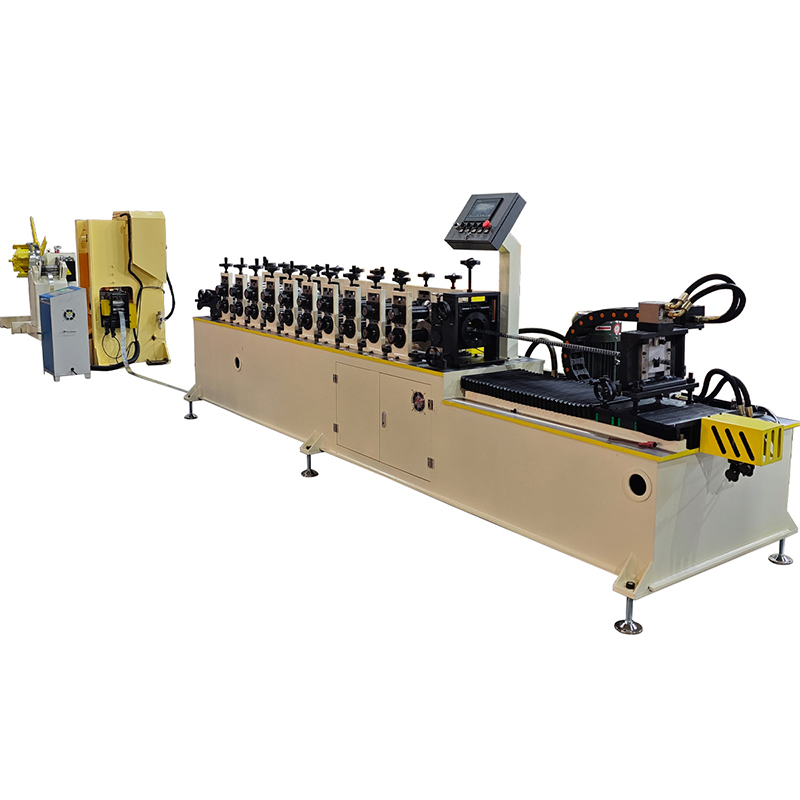
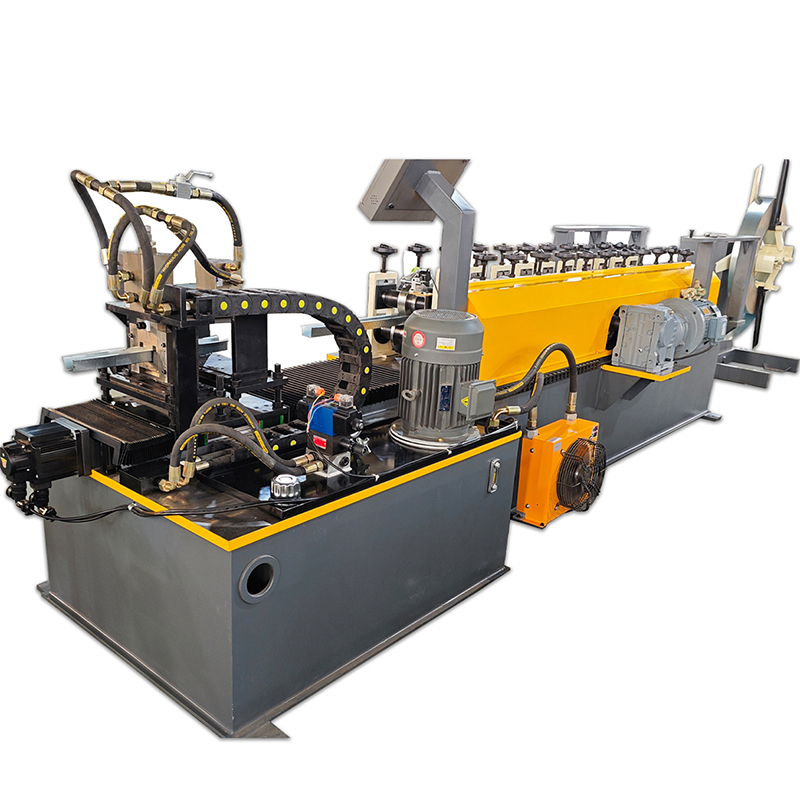
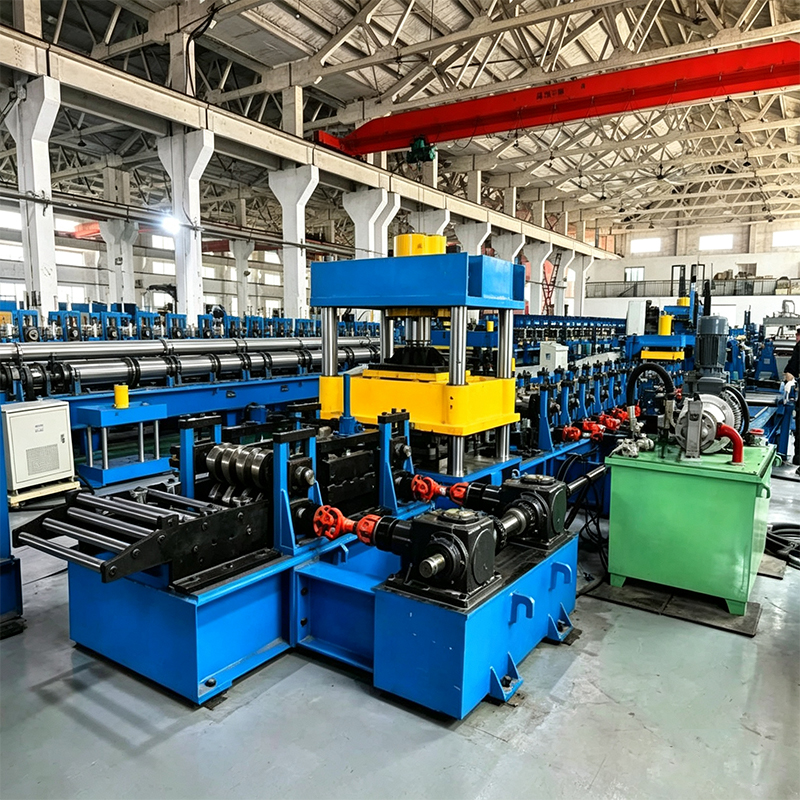
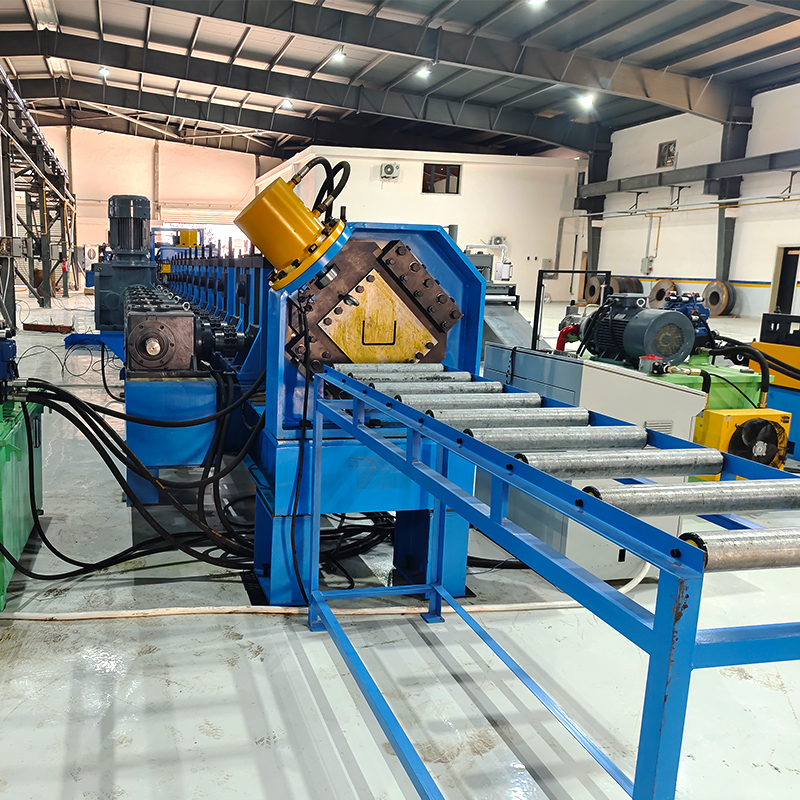
The 2-wave & 3-wave guardrail roll forming machine is specialized cold-roll forming equipment designed for the production of highway corrugated steel guardrail panels (specifically 2-wave and 3-wave profiles). Corrugated steel guardrails are energy-absorbing structures installed along the roadside or in central medians; upon vehicle impact, they absorb energy through structural deformation or by allowing the vehicle to ride up the rail, thereby reducing the severity of occupant injuries. Utilizing a continuous cold-roll forming process, the equipment integrates the entire production workflow—including uncoiling, leveling/feeding, servo-controlled feeding, hydraulic punching and cutting, conveying, roll forming, and stacking—to directly produce finished guardrail panels.
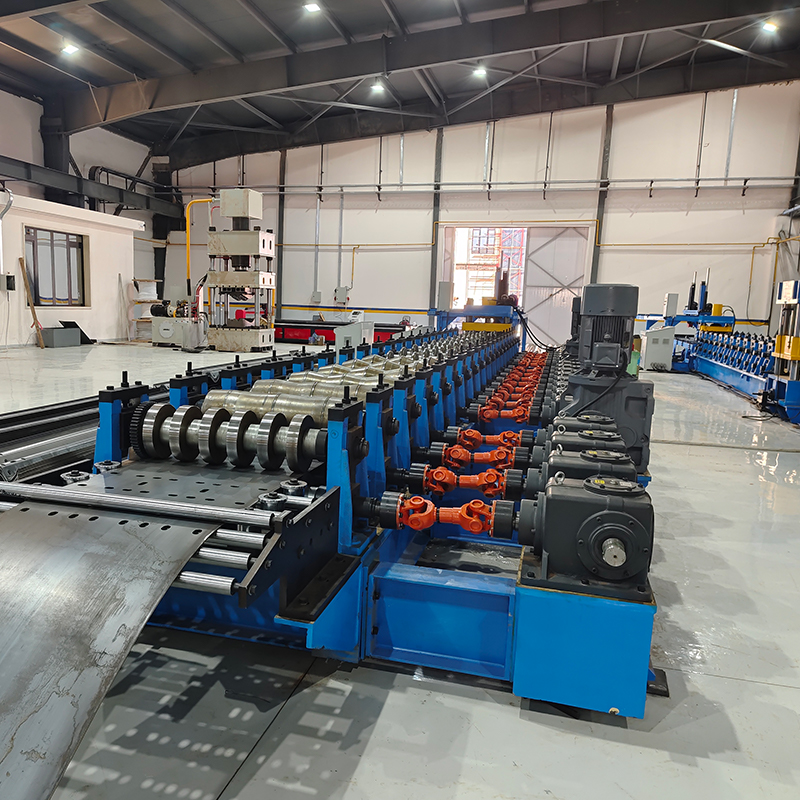
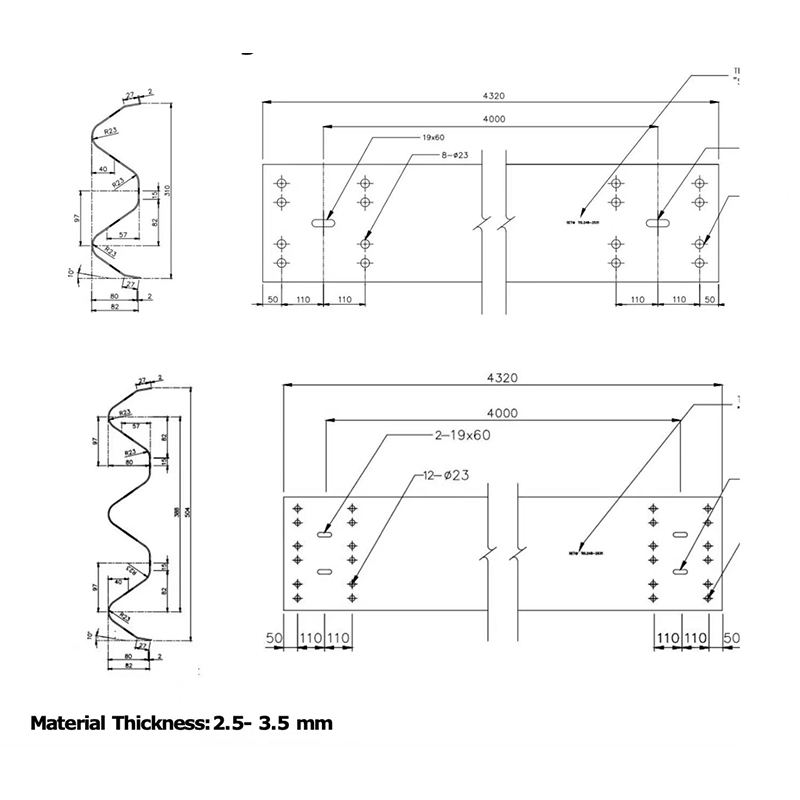
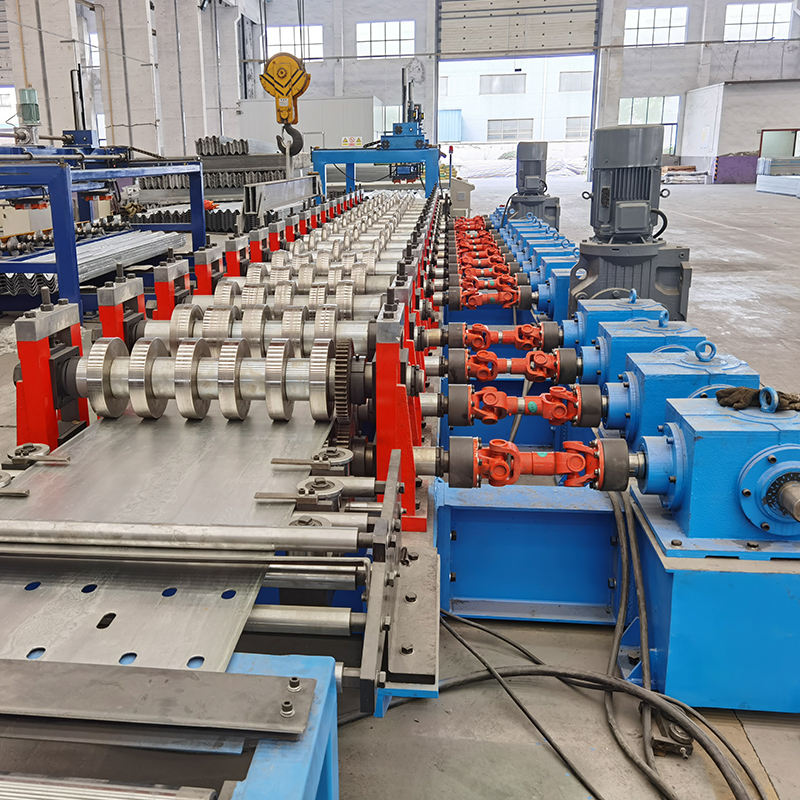
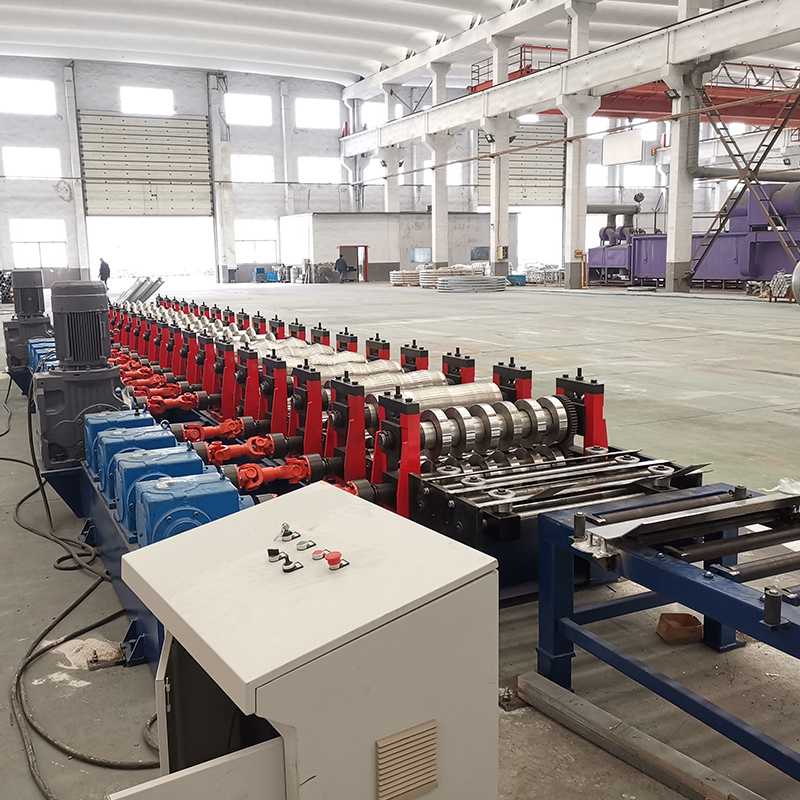
The entire line features fully automatic PLC control and a touchscreen HMI, ensuring a continuous, automated operation from uncoiling to finished product stacking. A single machine can produce both 2-wave and 3-wave guardrail panels, achieving "flexible production with one machine for two profiles." Key components include a five-roller leveling unit, a dual-station four-column hydraulic punching unit, and an 18-station main roll forming unit. It employs a cast-iron arch-style gearbox transmission structure, offering high rigidity, precision, and durability. The equipment is compatible with various materials, such as Q235 and Q345 low-alloy high-strength steel, and handles thicknesses ranging from 2.0 mm to 4.0 mm. It can produce multiple specifications, including 2-wave panels (4320×310×85 mm) and 3-wave panels (4320×506×85 mm). Requiring only 1–2 operators, this line is essential equipment for highway guardrail manufacturers aiming for large-scale, standardized, and intelligent production.
Corrugated guardrail panels are classified into five crashworthiness levels: B, A, SB, SA, and SS. 2-wave panels are suitable for general road sections and moderate protection requirements, while 3-wave panels are designed for sections requiring high levels of protection. Surface treatment options include hot-dip galvanized finishes and galvanized-plus-powder-coated finishes. The guardrail panels produced by this equipment strictly comply with the national standards GB/T 31439.1-2025 *Corrugated Steel Beam Guardrails – Part 1: Two-Wave Corrugated Steel Beam Guardrails* and GB/T 31439.2-2025 *Corrugated Steel Beam Guardrails – Part 2: Three-Wave Corrugated Steel Beam Guardrails*.
Core Advantages and Selling Points
(1) Dual-Profile Capability & Flexible Production
This is the core advantage distinguishing this equipment from conventional single-specification production lines.
Traditional guardrail equipment is typically designed for a single profile type; switching profiles requires dismantling rollers and repeated adjustments, resulting in long downtimes and high costs. This equipment features a modular design, enabling a single machine to produce both 2-wave and 3-wave guardrail profiles. Common specifications include 4320mm × 310mm × 85mm × 3/4mm for 2-wave panels and 4320mm × 506mm × 85mm × 3/4mm for 3-wave panels. The system accommodates various specifications, covering diverse requirements for panel width and wave height. Strip steel width can be flexibly adjusted to meet production needs across a wide range. Profile switching is executed via a one-touch PLC touchscreen interface; no mold changes or specialized technicians are required, allowing standard operators to handle the process. This significantly boosts equipment utilization and drastically shortens lead times for small-batch, customized orders.
(2) High Speed, High Efficiency, and Leading Production Capacity
The entire line integrates fully automated processes, including uncoiling, leveling, punching, forming, and stacking. The forming machine operates at a line speed of up to 15m/min; based on a standard panel length of 4320mm, it produces 3–4 guardrail panels per minute. Daily output reaches hundreds of panels, meeting the high-volume supply demands of major highway projects. Fully automated production requires only 1–2 personnel for monitoring, delivering efficiency several times higher than traditional production methods.
(3) High-Precision Forming and Superior Quality
The system employs an 18-station, multi-pass progressive cold-roll forming process. Mold designs and forming parameters are optimized through precision algorithms to ensure product accuracy at the source. The forming machine utilizes a cast-iron, arch-frame structure that has undergone tempering treatment, ensuring high rigidity and excellent resistance to deformation. Length precision reaches ±1.0mm—far exceeding industry standards—effectively guaranteeing accuracy during guardrail installation and assembly. The product pass rate consistently hits 99%, significantly reducing raw material waste and rework costs. Matching forming and punching dies effectively minimize errors in sheet forming and hole positioning; the resulting continuous, uniform corrugation profile significantly enhances impact resistance ratings. The guardrail panels meet strict standards for straightness and twist, effectively preventing misalignment during installation and splicing.
(4) Five-roll leveling plus dual-roll pinch feeding: Precision material pre-treatment
The leveling unit features a configuration comprising front and rear dual-roll pinch feeders and a five-roll leveling assembly, utilizing leveling rolls with a diameter of 90mm. The pinch feeders ensure stable material delivery, while the precision five-roll leveling system effectively eliminates internal stresses in 2.0–4.0mm thick sheets. This ensures the steel strip enters the subsequent punching and forming stages in a flat, precise condition, laying a solid foundation for high-precision forming.
(5) Two-station, four-column hydraulic punching: High force and precision
The punching unit employs a four-column hydraulic structure (featuring a welded steel frame that has undergone tempering) and a two-station design. The four-column structure offers high rigidity and precise guiding, while the hydraulic system delivers substantial force and cutting power, specifically engineered for 2.0–4.0mm thick sheets. The two-station setup allows for the simultaneous punching of various hole types, such as connection bolt holes and splicing bolt holes. The tempered punching frame effectively eliminates welding stresses and resists deformation over long-term use, ensuring consistent, enduring punching precision.
(6) Robust, Durable, Stable, and Reliable
The equipment is designed and built with materials selected specifically for long-term, continuous, high-load operation:
Forming Machine Structure: Features a cast-iron arch-style gearbox drive system; each forming stand is equipped with an independent gearbox, ensuring high rigidity and smooth power transmission for stable, high-intensity, long-term operation.
Shaft Specifications: Large-diameter (Φ110mm) forming shafts offer high load-bearing capacity and excellent torsional resistance, specifically designed for the high-speed forming of 2.0–4.0mm thick plates.
Main Motor Power: Driven by two high-power 18.5kW motors, providing ample power to ensure continuous, high-speed production.
Roll Tooling: Includes one set of high-precision roll tooling made from Cr12MoV steel; heat-treated (quenched to HRC58–62) for high hardness, superior wear resistance, and extended service life.
Machine Base: Constructed from welded steel plate and tempered to eliminate internal stress and prevent structural deformation.
Forming Stages: Utilizes a 17-stand main roll forming process to ensure precise, stable, and consistent corrugated cross-sectional dimensions.
Key Electrical Components: Uses internationally renowned brands, ensuring low failure rates and long service life.
(7) Intelligent Control and Easy Operation
Features fully automatic PLC control and a touchscreen HMI (Human-Machine Interface) for comprehensive digital process management. Operators can set parameters such as production speed and cut-to-length dimensions with a single touch. The system offers both manual and automatic operating modes to suit various production scenarios. Multiple safety protection measures are integrated to ensure operator safety during normal production. Equipped with real-time monitoring and fault warning systems that automatically trigger alarms and display the cause of any malfunction. Operators can become proficient enough to work independently after just 1–2 days of training, significantly reducing skill requirements.
Technical Parameters
Item | Parameter
Applicable materials | Q235, Q345 low-alloy high-strength steel, etc.
Material thickness | 2.0–4.0 mm
Produced profiles | 2-wave / 3-wave
2-wave specifications | 4320 × 310 × 85 × 3/4 mm
3-wave specifications | 4320 × 506 × 85 × 3/4 mm
Forming machine structure | Cast-iron arch-style frame with gearbox drive
Leveling mechanism | Front and rear dual-roller pinch feed + 5-roller leveling
Leveling shaft diameter | Φ90 mm
Punching mechanism | Four-column hydraulic punching (punching frame: welded steel plate with tempering treatment)
Punching stations | 2 stations
Shaft diameter | Φ110 mm
Main motor power | 18.5 kW × 2
Forming line speed | 0–15 m/min (excluding punching and cutting)
Forming stages | 17 main roller stations
Cut-to-length accuracy | ±1.0 mm
Roller tooling | 1 set
Roller material | Cr12MoV, quenched (HRC 58–62)
Control system | Fully automatic PLC control
Operators | 1–2 persons
Production Process
Uncoiling → Leveling & Feeding → Servo Feeding → Hydraulic Punching & Cutting → Conveying → Roll Forming → Stacking
Process Step | Description
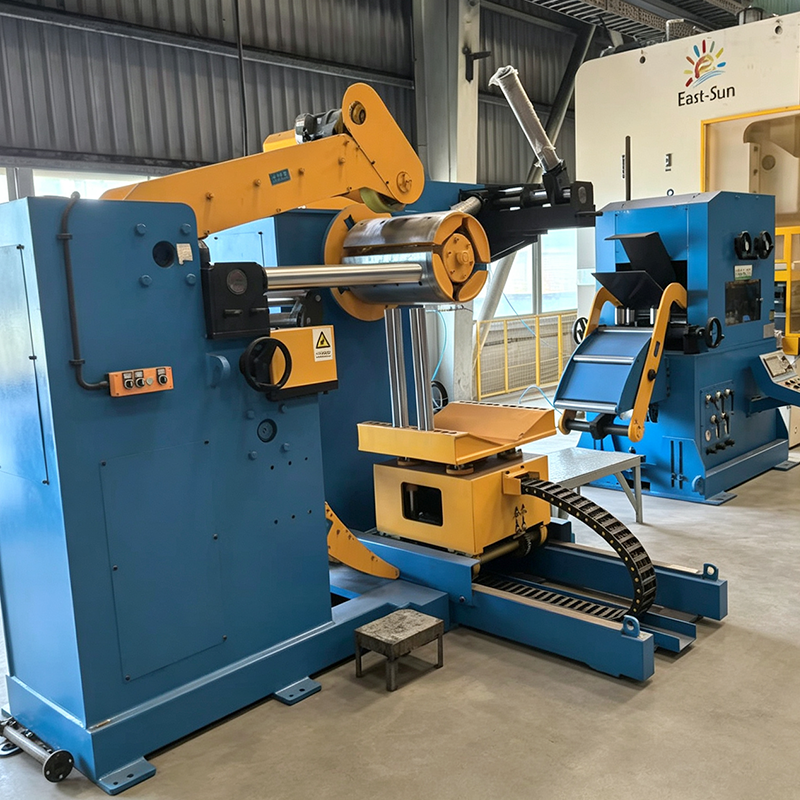
Uncoiling | Loads the steel coil onto the uncoiler to provide a continuous supply of material to the production line.
Leveling & Feeding | Uses front and rear pinch rollers combined with a five-roller leveling unit; precision leveling via Φ90mm shafts eliminates internal stress.
Servo Feeding | Servo system ensures precise feeding and positioning, guaranteeing accuracy in punching locations.
Hydraulic Punching & Cutting | Two-station, four-column hydraulic punching unit performs punching for connection and splicing bolt holes, followed by cut-to-length shearing.
Conveying | Automatically transports material to the main roll-forming unit.
Roll Forming | 17-station progressive cold-roll forming process; one-touch switching between 2-wave and 3-wave profiles.
Stacking | Automatically stacks finished products for neat output.
Application Areas
W-beam guardrail panels (produced by 2-wave and 3-wave high-speed guardrail cold-roll forming machines) are widely used in the following areas:
Expressways: Safety protection along the sides and central medians of expressways—W-beam steel guardrails are the most widely used safety facilities on expressways.
National and Provincial Trunk Highways: Safety protection for Class I and Class II highways—2-wave guardrail panels are suitable for medium protection requirements.
Rural and Mountain Roads: County roads, township roads, and hazardous sections in mountainous areas—2.0–3.0 mm thick guardrail panels offer an economical and practical solution.
Bridges and Tunnels: Bridge transition zones and tunnel entrances/exits—requiring high protection levels; 3-wave guardrail panels are suitable for sections demanding high protection.
Municipal Roads and Urban Expressways: Urban elevated roads and expressways—W-beam guardrails are aesthetically pleasing and durable.
Industrial Parks and Factory Roads: Safety protection for internal roads within large industrial parks and logistics parks.
Tourist Attraction Roads: Winding mountain roads and cliff-side sections within scenic areas—W-beam guardrails provide reliable safety protection.
Airports and Ports: Roads surrounding airports and internal roads within port terminals.
Market Outlook
Driven by the continuous advancement of global infrastructure development, the highway guardrail market is experiencing steady growth. The global market for highway guardrail components is valued at approximately US$1.259 billion in 2025 and is projected to reach US$1.783 billion by 2032, representing a compound annual growth rate (CAGR) of 5.1%. China's roadside safety barrier construction market is estimated at US$1.92 billion in 2025 and is expected to grow to US$2.63 billion by 2031, with a CAGR of 5.43%.
With the global urbanization rate projected to rise from 65% in 2025 to 75% by 2030, the demand for infrastructure—including road guardrails, park fencing, and residential perimeter barriers—continues to grow. As road safety standards rise and new materials are adopted, design and performance requirements for corrugated steel guardrail panels are becoming increasingly stringent, driving sustained demand for high-quality guardrail forming equipment. In 2025, the Standardization Administration of China (SAC) issued the national standards GB/T 31439.1-2025 and GB/T 31439.2-2025 ("Corrugated Beam Steel Guardrails"). These standards further regulate the production and inspection requirements for corrugated guardrail panels, providing clear technical guidelines for manufacturers.
Corrugated beam steel guardrails are a classic example of cold-formed steel products. Continued investment in transportation infrastructure and the ongoing elevation of road safety standards will drive sustained market demand for high-quality, high-precision corrugated guardrail panels, thereby increasing the demand for efficient, intelligent guardrail forming equipment.
Service & Support
Solution Design: Personalized equipment selection and production line layout based on customer product drawings, capacity requirements, and target markets.
Custom Manufacturing: Support for non-standard customization, with full control over the process from roll design to complete line manufacturing.
Installation & Commissioning: On-site installation, commissioning, and operator training provided by engineers to ensure rapid production startup.
After-Sales Support: Long-term technical consultation and spare parts supply; engineers hold valid visas and are available for on-site service worldwide at any time.
Continuous Optimization: Equipment modification and capacity upgrade services available to adapt to changing production needs.
8. Why Choose Us
Nearly 20 Years of Manufacturing Experience: Mature technology, refined processes, and reliable quality
Dual-Profile Capability: One machine handles both 2-wave and 3-wave profiles—no need for duplicate investment
High Speed & Efficiency: Line speed of 15m/min and daily output of hundreds of panels to meet high-volume supply demands
High-Precision Manufacturing: Length accuracy of ±1.0mm and a 99% product pass rate
Rugged Durability: Cast-iron arch-style gearbox transmission, large Φ110mm shaft diameter, and Cr12MoV quenched rollers (HRC 58–62)
Expertise in Thick-Plate Forming: Covers thicknesses of 2.0–4.0mm; specifically designed for highway guardrail panels
Smart Control: Fully automatic PLC system with touchscreen operation; the entire line can be operated by just 1–2 people
Direct Manufacturer: No middlemen, offering excellent value for money
Global Service Network: Engineers with ready visas and rapid response capabilities
 English